DbcultAccessing Vault...
Cult Review
Senior Film Conservator
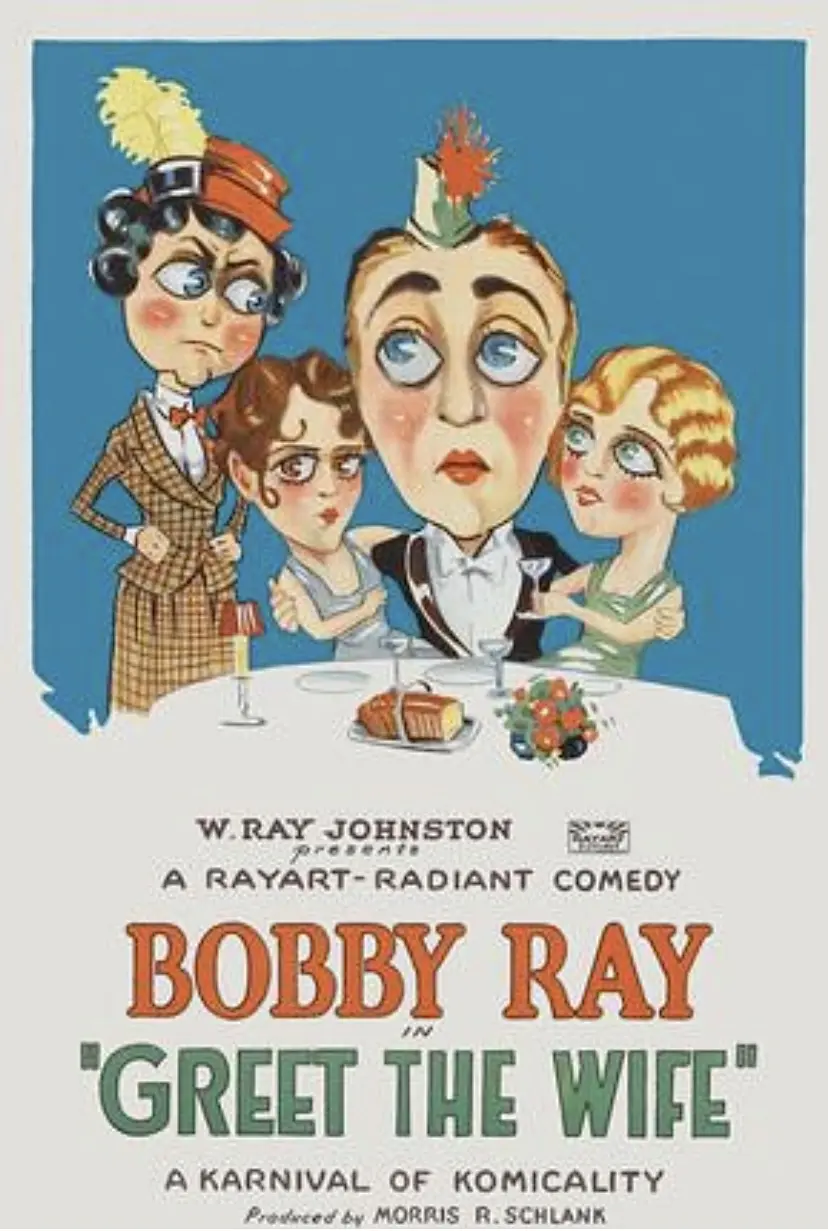
Is 'Greet the Wife' still worth your time today? The short answer is yes, but with significant caveats. This charming, if somewhat dated, domestic comedy offers a fascinating glimpse into a particular style of filmmaking and social humor that can be both endearing and occasionally trying.
It's a film for those who appreciate character-driven narratives, subtle comedic timing, and a deep dive into the dynamics of family. However, it is decidedly not for viewers seeking fast-paced action, modern sensibilities, or a plot free from the occasionally ponderous rhythms of early cinema. If you're willing to meet it on its own terms, 'Greet the Wife' has a lot to offer.
'Greet the Wife' unfurls with a premise as simple as it is universally resonant: the anxiety of introducing a new spouse to one’s family. Arthur, played with a delightful blend of earnestness and increasing exasperation by Bobby Ray, brings his elegant, somewhat reserved bride, Clara, into the whirlwind of his childhood home. This isn't just a house; it’s a living, breathing entity, teeming with well-meaning but utterly overwhelming relatives. From the moment Clara steps over the threshold, the film establishes a delicate, often hilarious, tension between her refined world and the boisterous, uninhibited reality of Arthur’s lineage.
The screenplay, though credited only generally to the era’s sensibilities, excels in crafting a series of escalating social faux pas and comedic misunderstandings. Clara's attempts at polite conversation are frequently steamrolled by Aunt Mildred's unsolicited advice on child-rearing, or Uncle George's booming, off-color jokes. Arthur, caught in the middle, oscillates between desperate attempts to smooth things over and succumbing to the familiar chaos, often making things worse in the process. It's a testament to the film's direction that these moments never feel mean-spirited, but rather like an affectionate, if slightly exaggerated, portrayal of familial love.
This film works because of its unflinching, yet warm, portrayal of family dynamics and Bobby Ray's central, anchoring performance.
This film fails because its pacing can feel sluggish by contemporary standards, and some of its humor is undeniably dated.
You should watch it if you appreciate classic character studies, gentle comedy, and a nostalgic look at early domestic dramas.
Bobby Ray, as Arthur, is the beating heart of 'Greet the Wife.' His performance is a masterclass in understated anxiety, a slow burn of polite discomfort that gradually ignites into full-blown, albeit still very British, panic. Ray doesn't rely on broad slapstick; instead, his comedy comes from his increasingly frantic facial expressions, the subtle tremors in his voice, and the way he physically shrinks into himself as his carefully constructed world crumbles around him. One particular scene, where Arthur attempts to discreetly stop his younger brother from recounting a particularly embarrassing childhood anecdote about Arthur's unfortunate encounter with a prize-winning pig, is a highlight. Ray's eyes dart between his horrified wife and his oblivious sibling, a silent plea for mercy playing out across his face. It’s a nuanced, deeply human portrayal.
His chemistry with the actress playing Clara (uncredited in the provided information, but crucial to the film's success) is palpable. She grounds his frantic energy with a quiet dignity, her exasperation growing in subtle increments rather than overt outbursts. This dynamic prevents the film from descending into pure farce, instead elevating it to a more relatable exploration of marital patience and understanding. Ray’s ability to convey so much with so little, particularly in an era often characterized by more theatrical acting styles, is truly remarkable and a testament to his skill.
The direction of 'Greet the Wife' is surprisingly astute in its use of space. The majority of the film takes place within the confines of Arthur’s family home, and the director (again, uncredited, but deserving of praise) uses this limitation to great effect. The camera often feels like another guest, observing from slightly awkward angles, emphasizing the crowded, bustling nature of the household. There are no grand, sweeping shots; instead, we are immersed in the claustrophobia of close quarters, where every whispered secret and booming laugh echoes through the narrow hallways and overstuffed parlors.
Consider the dinner scene, the film's climactic sequence. The camera remains largely static, capturing the entire table in a medium shot. This choice allows the audience to observe the myriad of reactions simultaneously: Clara's stiff smile, Arthur's sweating brow, the mother's oblivious chatter, and the siblings' conspiratorial glances. It’s a masterclass in staging and ensemble blocking, creating a sense of organic, uncontrolled chaos within a tightly framed shot. The lighting, often naturalistic and slightly warm, further contributes to the intimate, almost voyeuristic feel, drawing us into the family's world rather than merely presenting it.
The pacing of 'Greet the Wife' is undoubtedly a product of its time. It’s a slow burn, allowing scenes to breathe and character interactions to unfold organically. Modern audiences, accustomed to rapid-fire editing and constant plot propulsion, might find the initial segments a tad meandering. However, this deliberate pace is essential to building the comedic tension. Each awkward silence, each prolonged glance, each drawn-out anecdote serves to heighten Clara’s discomfort and Arthur’s escalating desperation. The film understands that true humor in these situations often lies in the agonizing slowness of realization, rather than sudden punchlines.
The tone is a delicate balance of gentle satire and genuine affection. While the film pokes fun at the quirks and eccentricities of Arthur's family, it never descends into cruelty. There's an underlying warmth that suggests these characters, for all their flaws, are ultimately lovable. This prevents the film from feeling cynical. Instead, it becomes a celebration of the messy, imperfect bonds that tie families together. The humor is derived from recognition, from seeing our own families, or at least aspects of them, reflected in the exaggerated antics on screen. It works. But it's flawed.
Beyond the surface-level comedy, 'Greet the Wife' delves into surprisingly deep thematic territory. It explores the tension between individual identity and familial expectation, the struggle to reconcile one's past with one's present, and the ultimate necessity of acceptance. Clara's journey isn't just about meeting new people; it's about confronting the person Arthur was before he met her, and integrating that into her understanding of the man she married. The film subtly suggests that to truly 'greet the wife,' one must also 'greet the family,' with all its glorious imperfections.
One unconventional observation: the film’s true protagonist might not be Arthur or Clara, but the very concept of 'home' itself. The house, with its cluttered décor and constant activity, acts as a character, a repository of memories and expectations that Clara must navigate. It’s a challenging space, but one that ultimately offers a different kind of warmth than she is accustomed to. This focus on the domestic sphere, the intimate theatre of family life, is what gives the film its enduring charm, even as its specific comedic beats may feel a little dusty.
I'd argue that the film's greatest strength lies in its ability to transcend simple genre classification. It's not just a comedy; it's a social commentary wrapped in a domestic drama, hinting at the evolving roles of women and the pressures of societal assimilation.
When viewed alongside other films of its era, 'Greet the Wife' stands out for its relatively grounded approach to comedy. Unlike the broader physical humor often seen in contemporary shorts like A Wild Goose Chase or the more direct emotional appeals of a film like Mother, I Need You, 'Greet the Wife' opts for a more observational, character-driven style. It has less in common with outright farces and more with the emerging 'comedy of manners' seen in later decades, albeit in a nascent form.
It also offers an interesting counterpoint to more dramatic depictions of societal pressure, such as The Poor Rich Man, by applying similar pressures through a comedic lens. The film's portrayal of a new wife navigating an established social structure, while played for laughs, touches upon themes of identity and belonging that resonate across genres and time periods. It's a snapshot of a particular moment in cultural history, reflecting anxieties about social standing and acceptance that are still relevant, even if the expressions of those anxieties have changed.
'Greet the Wife' is more than just a relic of its time; it's a surprisingly enduring piece of social comedy that, despite its occasional slow moments, offers genuine charm and insightful observations about the delightful terror of family. Bobby Ray delivers a performance that anchors the entire film, turning what could have been a simple farce into a relatable and often poignant exploration of marital and familial bonds. While it demands a certain patience from its audience, those willing to settle into its rhythm will find a film that, in its own quiet way, celebrates the beautiful messiness of life. It isn't a masterpiece, but it certainly isn't a film to be easily dismissed. Give it a chance, and you might just find yourself greeting its quirks with a knowing smile.
IMDb 5
1920
Community
Log in to comment.