DbcultAccessing Vault...
Cult Review
Senior Film Conservator
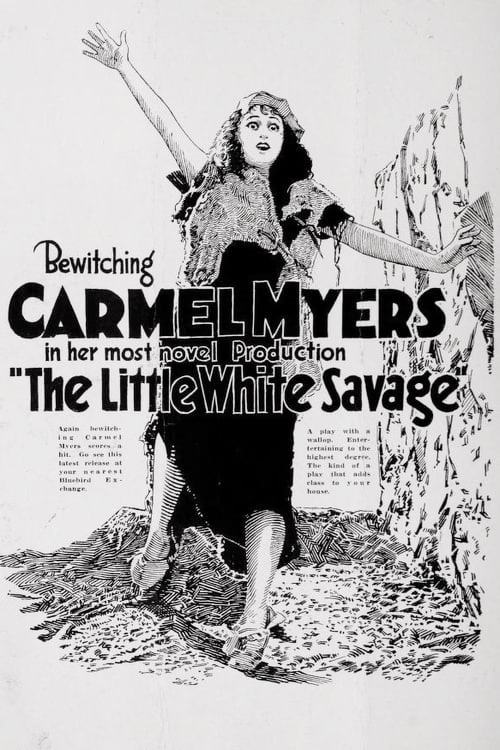
Stepping back into the nascent years of cinema, one encounters narratives that, even a century later, possess a peculiar resonance, often challenging our contemporary notions of storytelling. The Little White Savage, a 1917 offering, is precisely one such artifact, a film that doesn't merely tell a story but rather dissects the very act of narration itself. It's a fascinating, almost meta-textual journey, wrapped in the sensationalism of a sideshow attraction, yet harboring a surprisingly astute commentary on truth, illusion, and the malleability of identity. From the outset, the film establishes a compelling frame narrative: two circus impresarios, Larkey and Kerry, find themselves in a bind, needing to placate an high-strung reporter denied a prime view of their star act, "The Savage." What follows is not just a plot explanation, but an elaborate, richly detailed fabrication, spun with the specific intent of enthralling and pacifying. This narrative device, a story within a story, immediately elevates The Little White Savage beyond a mere adventure flick, positioning it as an early, ingenious exploration of cinematic deception.
The fabricated tale itself is a marvel of early 20th-century exoticism and romantic fantasy. We are transported to a remote South Atlantic island, a geographical anomaly where a lost colony, supposedly descended from Sir Walter Raleigh's ill-fated Roanoke venture, maintains a peculiar linguistic time capsule, speaking archaic English. It's a whimsical, almost fantastical premise, immediately setting a tone of heightened reality, perfectly suited for the circus world from which the tale originates. Here, we meet Minnie Lee, played with captivating energy by Carmel Myers. Minnie is no docile islander; she's a spirited, defiant figure, initially found in stocks – a punishment that immediately establishes her as a character unwilling to conform. Her escape leads her to a pivotal encounter with Kerry, who, in this recounted history, is a minister. The scene of their first meeting is charged with primal wonder: Kerry’s electric light, a symbol of modernity and scientific advancement, becomes, in Minnie's isolated worldview, a beacon of divine power. This misinterpretation forms the bedrock of her subsequent devotion, a love born of awe and perceived divinity, rather than conventional romance. It's a brilliant stroke, illustrating how perception shapes reality, especially for those uninitiated to the outside world.
The dynamic between Minnie and Kerry is central to the inner narrative's emotional core. Minnie, convinced of Kerry's god-like status, expresses her affection with an uninhibited directness that clashes sharply with his ministerial decorum. Kerry, portrayed by John Cook, is initially resistant, embodying the moralistic constraints of his profession. His character arc within this story is one of gradual erosion of these boundaries, forced to confront his own suppressed desires and the limitations of his rigid faith. Meanwhile, Larkey, the consummate showman, played by William Dyer, enters the scene, not as a spiritual guide but as a practical opportunist. His mission: to find strange animals for his circus. He finds something far more compelling in Minnie Lee – a human curiosity, an embodiment of the "white savage" trope, ripe for exploitation and spectacle. His decision to take Minnie back to civilization, ostensibly for the circus, sets the stage for the dramatic culture clash that defines the latter half of the fabricated narrative. This part of the story, though ultimately revealed as untrue, taps into prevalent early 20th-century fascinations with the "other" and the romanticized wildness of untouched lands, a theme explored in films like The Romance of Tarzan.
The return to "civilization" for Minnie is, predictably, a tumultuous affair. When the circus arrives in Kerry's town, Minnie, now "The Savage," is a star attraction, yet still possesses her untamed spirit. Her violent outburst against Larkey, scratching him until she is released, is a powerful assertion of her agency, even within the confines of her exploited identity. Her subsequent intrusion into Kerry's home, where she appears scantily dressed and, unbeknownst to him, sleeps beside him, serves as the ultimate disruption to his conventional life. This scene, undoubtedly scandalous for its time, dramatically illustrates the collision of two worlds: Minnie's primal innocence and Kerry's rigid societal expectations. The fallout is swift and severe; Kerry is dismissed from his pastorship, his reputation irrevocably tarnished by Minnie's uninhibited presence. It is at this nadir, stripped of his clerical identity, that Kerry experiences a profound awakening. He realizes his love for Minnie, a love that transcends societal norms and religious strictures, choosing to abandon his former life to return to the circus with her. This resolution, within the fabricated narrative, offers a romanticized vision of freedom and authentic love found outside the confines of conventional society.
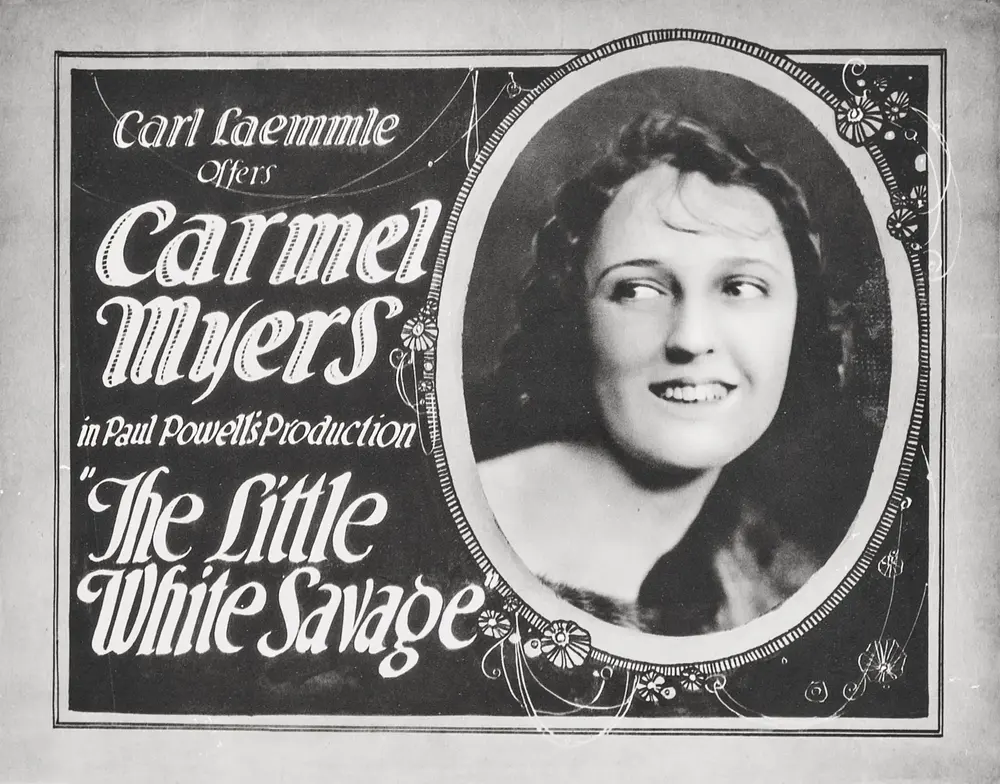
However, it is the film's audacious conclusion that truly sets it apart and cements its place as a remarkably forward-thinking piece of early cinema. The reporter, having been regaled with this fantastical tale, finally gets his chance to question Minnie directly. Her simple, yet devastating, revelation – that the entire preceding saga was a fabrication – pulls the rug out from under the audience, forcing a re-evaluation of everything that came before. This meta-twist is not merely a cheap gimmick; it's a profound commentary on the nature of truth, performance, and the seductive power of storytelling. The audience, like the reporter, has been willingly captivated by a narrative that was, from its very inception, a deliberate construct. The Little White Savage thus becomes an examination of how myths are created, how identities are assigned and adopted, and how the spectacle of the "other" is often manufactured for consumption. It forces us to question the authenticity of what we see on screen, a remarkably prescient theme for a film from 1917, anticipating later cinematic experiments with unreliable narration and meta-commentary.
The performances, even through the lens of early silent film acting conventions, are crucial to selling both the story and its ultimate undoing. Carmel Myers as Minnie Lee, even when portraying a character whose backstory is a lie, imbues her with a vibrant, untamed energy that makes her believable as "The Savage." Her physicality and expressive gestures would have been vital in conveying her wildness, her confusion, and her burgeoning affection without dialogue. John Cook as Kerry navigates the difficult arc from rigid minister to liberated lover, a transformation that, while presented as a narrative device, still requires a convincing portrayal of inner conflict and eventual surrender to emotion. William Dyer's Larkey is the archetypal showman, shrewd and manipulative, yet ultimately serving as the catalyst for the entire narrative, a master of ceremonies for the grand deception. The supporting cast, including Harry Hilliard and Richard Cummings, would have contributed to the overall atmosphere, grounding the more fantastical elements of the story.
Writers Waldemar Young and Frances Nimmo Greene deserve significant credit for crafting such an intricate and self-aware narrative. At a time when many films were straightforward melodramas or simple adventure tales, their decision to introduce a framing device and then explicitly dismantle the central narrative is a testament to their ambition and cleverness. They understood the power of a good yarn, but also the inherent artifice of it. This isn't just about a "savage" girl finding love; it's about the construction of the "savage" archetype itself, and the audience's willingness to believe. The film subtly critiques the very sensationalism it employs, a sophisticated touch for its era. While we might not have the visual record to analyze specific directorial choices or cinematography, the strength of the screenplay alone suggests a film that was conceptually rich and daring.
Comparing The Little White Savage to other films of its period reveals its distinctiveness. While films like Big Timber or The High Hand might have offered adventure or drama, they rarely ventured into such self-reflexive territory. Even adventure films dealing with exotic locales, such as the aforementioned The Romance of Tarzan, tended to play their narratives straight, inviting full immersion without questioning the underlying premise. The Little White Savage, by contrast, invites a critical distance, a meta-awareness that foreshadows later developments in cinematic storytelling. This makes it a particularly valuable subject for study, offering insights into the evolving sophistication of narrative techniques in early Hollywood. It's not just a product of its time; it's a film that subtly pushes against the conventions of its time.
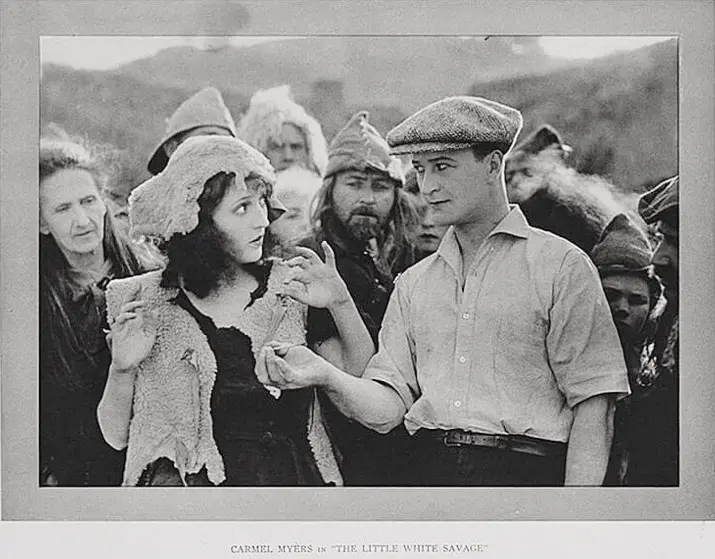
The film's exploration of cultural clash and the "civilized" encounter with the "wild" is also worth noting. Minnie Lee, in the fabricated narrative, represents the untamed, the natural, challenging the artificial constructs of society and religion. Her actions force Kerry to shed his own societal conditioning and embrace a more authentic, albeit unconventional, path. This theme, while presented within a fictionalized context, reflects broader societal anxieties and fascinations of the era regarding colonialism, exploration, and the perceived purity of "primitive" cultures versus the corruption of modern life. The irony, of course, is that this entire exploration is itself a fabrication, a performance designed to entertain and distract, highlighting the performative nature of such cultural narratives. The film, therefore, acts as a prism through which to view not just a story, but the societal impulses that generate such stories.
The ingenious plot twist at the end transforms the entire viewing experience from a passive consumption of an adventure story into an active engagement with the nature of storytelling itself. It's a jolt, a sudden revelation that forces the audience to re-evaluate every scene, every character interaction, every emotional beat. Was Minnie's "wildness" a genuine reflection of her character, or merely a performance honed for the circus ring? Was Kerry's transformation a true awakening, or merely a convenient narrative device within a lie? The film doesn't provide easy answers, instead leaving the audience to ponder the blurry lines between reality and artifice. This ambiguity, this deliberate withholding of a definitive "truth," is a remarkably modern touch for a film of its vintage, making it feel less like a relic and more like a proto-postmodern text. It's a testament to the power of narrative to shape perception, and the ultimate fragility of that perception when confronted with an unvarnished truth.
In an era dominated by straightforward narratives, the boldness of The Little White Savage lies in its willingness to play with audience expectations. It understands that the allure of the exotic, the thrill of the forbidden, and the romance of transformation are potent ingredients for entertainment. But it also subtly winks at the audience, reminding them that what they are consuming is, after all, a show. This dual consciousness – both indulging in the fantasy and exposing its mechanics – is what makes the film so compelling. It's a cinematic tightrope walk, executed with surprising grace and foresight. The impact of such a narrative choice on early audiences must have been considerable, potentially sparking discussions about the veracity of news, the sensationalism of entertainment, and the ethical implications of presenting constructed realities as truth. This makes it not just an entertaining film, but a significant cultural document.
The character of Minnie Lee, whether real or fabricated, stands as a powerful symbol. As "The Savage," she is both objectified and empowered. She is presented as an exotic commodity, yet her actions within the story consistently demonstrate agency and an unyielding spirit. This paradox is central to the film's thematic depth. Even if her story is a lie, the effect of that lie – both on the reporter and potentially on the audience – is very real. It speaks to the power of myth-making in shaping public perception and the construction of celebrity. The film invites us to consider who profits from these narratives, and at what cost to the individuals at their center. It's a poignant reflection on how easily identities can be manufactured and consumed in the marketplace of entertainment.
Ultimately, The Little White Savage is far more than its sensational title suggests. It’s a sophisticated narrative experiment, thinly veiled as a circus adventure. It challenges its audience to look beyond the surface, to question the stories they are told, and to appreciate the artistry involved in crafting compelling fictions. For a film from 1917, this level of self-awareness is truly remarkable, solidifying its status as a piece of cinematic history that not only entertained but also subtly provoked thought about the very nature of truth and illusion in the burgeoning medium. Its legacy lies not just in its engaging plot, but in its audacious deconstruction of that plot, leaving a lasting impression that transcends its silent film origins and speaks to universal themes of narrative and perception.
IMDb 6.1
1933
Community
Log in to comment.