DbcultAccessing Vault...
Cult Review
Senior Film Conservator
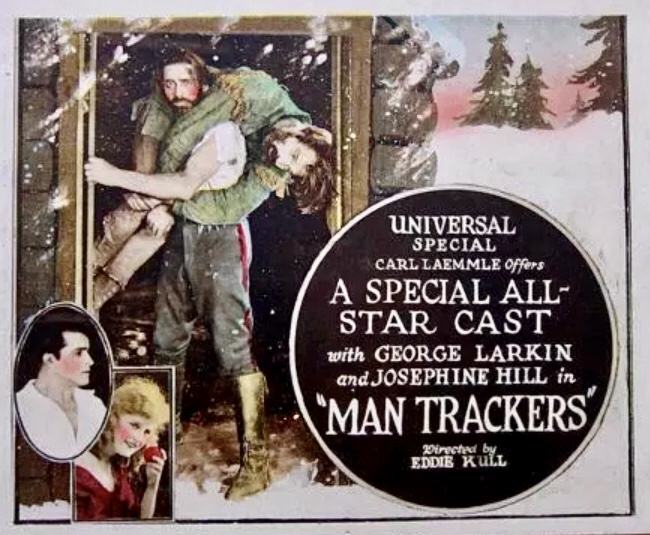
The Man Trackers (1930), a lesser-known gem of the pre-Code Western genre, unfolds like a dusty ledger of moral dilemmas and romantic entanglements. Set in the untamed Canadian frontier, the film juxtaposes the stoic authority of the Royal Mounties with the sly machinations of a civilian outcast. While its narrative occasionally succumbs to the melodramatic tendencies of its era, the film remains a compelling artifact of a time when Hollywood Westerns grappled with the duality of law and lawlessness.
Molly Killbride, portrayed with radiant intensity by Ruth Royce, is the emotional nucleus of the story. Her character’s internal conflict—torn between love for trooper Jimmy Hearn (Harold Holland) and the seductive allure of Harry Morgan (Barney Furey)—anchors the film in a timeless exploration of human frailty. The tension reaches a fever pitch when Morgan, a man whose wealth masks a criminal underbelly, incites a brawl that lands Jimmy in prison. This act of calculated cruelty sets the stage for a redemption arc that is as much about justice as it is about personal integrity.
The film’s moral landscape is as murky as the shadowy alleys where Morgan and his gang operate. George H. Plympton and Edward A. Kull’s script walks a tightrope between idealism and cynicism, reflecting the complexities of a society in transition. While the Mounties represent the law’s unwavering gaze, characters like Jules, the half-witted Indigenous figure played by George Larkin, complicate this tidy dichotomy. Jules’ role in Jimmy’s exoneration—an act that hinges on his perceived simplicity—invites critical scrutiny. Though his character is a product of its time, the film’s reliance on him as a narrative device feels both quaint and troubling, a reminder of Hollywood’s often reductive portrayals of Indigenous peoples.
Jimmy’s journey from disgraced trooper to vindicated hero is a familiar arc, yet it gains resonance through Holland’s understated performance. His portrayal of quiet determination contrasts sharply with Furey’s smirking villainy, creating a dynamic that drives the plot forward. The prison sequences, shot with stark realism for the era, highlight the dehumanizing effects of injustice. Yet, the film’s heart lies in the quieter moments: Molly’s pained glances, the weight of unspoken regrets, and the fragile hope that flickers in the darkest corners of the narrative.
From a technical standpoint, The Man Trackers exhibits the hallmarks of early sound cinema. The use of naturalistic lighting in the prison scenes, for instance, casts an unflinching light on the harsh realities of incarceration. The score, though modest, underscores key emotional beats with a haunting simplicity. The landscape itself becomes a character, its vastness and silence echoing the emotional desolation of the protagonists.
The film’s pacing, however, is not without its flaws. The middle act, which details Morgan’s gradual seduction of Molly, drags with a soporific quality that risks alienating modern viewers. Yet, these lulls are balanced by the climactic mountain chase, where Jimmy’s confrontation with Hanley (George Larkin) is rendered with taut, breathless urgency. This sequence, a masterclass in suspenseful direction, showcases the film’s ability to blend action with thematic depth.
Positioned within the broader landscape of 1930s Westerns, The Man Trackers finds kinship with films like Courts and Convicts (1930) in its focus on institutional corruption and personal redemption. Both films grapple with the tension between individual morality and systemic failure, though Courts and Convicts leans more heavily into courtroom drama. In contrast, The Man Trackers opts for a grittier, more visceral approach to its themes.
The film also shares thematic DNA with Manhattan Madness (1932), another pre-Code entry that explores the corrosive effects of greed and ambition. However, where Manhattan Madness dwells in urban settings, The Man Trackers grounds its narrative in the rugged wilderness, using the frontier as a metaphor for untamed human nature. This environmental subtext is further enriched by the presence of Jules, whose childlike innocence serves as a counterpoint to the adult world’s moral decay.
Royce’s portrayal of Molly is a tour de force, capturing the character’s evolution from a lovesick daughter to a woman grappling with the consequences of her choices. Her performance is nuanced, with subtle shifts in expression conveying layers of emotion that dialogue alone could not. Similarly, Holland’s Jimmy is a study in restraint, his quiet intensity making him a compelling figure of resilience.
Furey, as the antagonist, brings a suave menace to the role, though his character’s motivations occasionally veer into cartoonish villainy. This is most evident in scenes where his manipulation of Molly feels less like a psychological battle and more like a chess match between two flawed players. George Larkin’s dual role as both Jules and Hanley is a technical feat, though the latter character’s lack of development weakens the film’s final act.
Though The Man Trackers may not rank among the pantheon of classic Westerns, it remains a valuable artifact of its era. Its exploration of loyalty and betrayal resonates with a timeless quality, while its flaws—both narrative and ideological—offer fertile ground for scholarly analysis. For contemporary audiences, the film serves as a window into the cinematic sensibilities of the 1930s, when Hollywood was still grappling with the complexities of morality in a rapidly changing world.
In the context of modern viewership, the film’s problematic tropes—particularly its portrayal of Indigenous and marginalized characters—demand critical engagement. Yet, these very elements can be reframed as a starting point for discussions about representation in early cinema. For historians and film enthusiasts alike, The Man Trackers is a film that invites both admiration and scrutiny, a duality that is perhaps the hallmark of all great art.
Fans of The Man Trackers may also appreciate The Clock (1945) for its exploration of love amidst societal upheaval, or Two-Gun Betty (1932) for a more stylized take on Western justice. For those interested in the genre’s darker edges, Des Goldes Fluch (1921) offers a German Expressionist counterpoint to the American Western.
IMDb —
1923
Community
Log in to comment.