DbcultAccessing Vault...
Cult Review
Senior Film Conservator
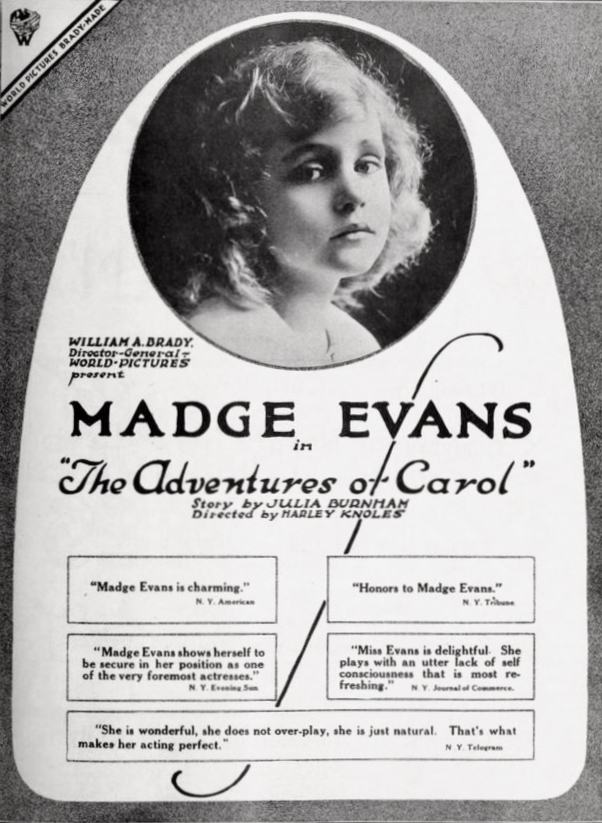
In the grand tapestry of early cinema, where narratives often leaned into the melodramatic or the simplistic, Julia Burnham’s *Adventures of Carol* emerges as a surprisingly nuanced and emotionally resonant work. This silent film, a compelling journey through the eyes of a child, transcends its era to offer observations on communication, trust, and the intricate web of human relationships. It's a film that, despite its age, speaks volumes about the enduring power of innocence to unravel the most complex adult entanglements, a testament to the universal themes that great storytelling, regardless of its medium, consistently explores.
The narrative commences with a rather quaint, yet pivotal, scene: Commander Montgomery, portrayed with a stern paternalism by Jack Drumier, issues a solemn warning to his family concerning national security and the perils of loose lips. This initial premise, seemingly a mere plot device to initiate Carol’s misadventure, actually lays the groundwork for a deeper exploration of how adult anxieties and instructions can be misinterpreted or, indeed, taken too literally by a child. Little Carol Montgomery, brought to life with captivating earnestness by Madge Evans, internalizes her father’s admonition against answering questions about herself. This seemingly innocuous advice becomes the catalyst for her extraordinary journey.
Her subsequent separation from her mother on the bustling subway is fraught with an almost palpable sense of urban alienation. The sheer scale and impersonality of the city, captured through effective, if rudimentary, cinematography, serve as a stark contrast to the intimate domesticity Carol has known. Her refusal to identify herself to a concerned police officer, a direct consequence of her father's words, isn't an act of defiance but rather a profound demonstration of a child's unwavering obedience, even when it leads to peril. This sequence subtly critiques the rigid adherence to rules without context, a theme that resonates even today. One might draw parallels to the psychological complexities explored in films like The Master of the House, where domestic directives, however well-intentioned, can lead to unforeseen emotional consequences.
Carol’s subsequent encounter with Beppo, the organ grinder (Carl Axzelle), introduces a poignant element of found family and the kindness of strangers. Beppo, a figure often relegated to the margins of society, offers Carol not just shelter, but a new, albeit transient, purpose within his street performance. Their journey south is depicted with a sense of romantic wanderlust, yet it's underscored by Carol's continued displacement. This segment of the film beautifully illustrates the resilience of childhood and its capacity to adapt to new, often challenging, circumstances. It's a testament to the human spirit's ability to find connection and even joy amidst uncertainty, a narrative thread that can be observed in other silent-era explorations of individual journeys, such as The Feast of Life, albeit through a different lens.
The climax of Carol’s adventure unfolds at the Fairfax plantation, a setting ripe with Southern Gothic undertones, where familial estrangement has cast a long, cold shadow. Mrs. Fairfax, portrayed with a compelling gravitas by Kate Lester, embodies a stoicism born of profound grief and unforgiveness. Her refusal to speak to anyone, a self-imposed exile from emotional connection, mirrors Carol's earlier refusal to speak about herself, creating an intriguing thematic echo. The film masterfully demonstrates how Carol’s unblemished innocence acts as a powerful solvent, dissolving years of bitterness and misunderstanding. Her presence, a beacon of guileless charm, gradually softens Mrs. Fairfax’s hardened heart, leading to a reconciliation with her husband (George MacQuarrie) and, ultimately, the revelation that their long-lost daughter is Carol’s own mother (Rosina Henley). This narrative twist, while perhaps convenient, provides a deeply satisfying emotional resolution, underscoring the film’s central message: the profound interconnectedness of lives and the redemptive power of forgiveness, particularly when mediated by the pure heart of a child. The thematic weight here, of fractured families and eventual mending, echoes the domestic dramas found in films like One Law for Both, though *Adventures of Carol* injects a unique, child-centric perspective.
The success of *Adventures of Carol* hinges significantly on the caliber of its performances, particularly given the constraints of the silent medium. Madge Evans, as the titular Carol, delivers a performance that is nothing short of remarkable. Her ability to convey a complex range of emotions – from initial confusion and fear to burgeoning curiosity and unwavering resolve – without a single spoken word is a testament to her nascent talent. Her wide-eyed wonder and subtle gestures communicate more effectively than pages of dialogue ever could, anchoring the film’s emotional core. She avoids the saccharine sentimentality that could easily plague such a role, instead infusing Carol with a believable blend of vulnerability and resilience. This is a performance that stands shoulder-to-shoulder with other iconic child portrayals of the era, showcasing an innate understanding of the camera's gaze and the audience's empathy.
Kate Lester, as the embittered Mrs. Fairfax, provides a powerful foil to Carol's innocence. Lester’s portrayal is a masterclass in restrained emotion, her facial expressions and posture conveying years of unspoken sorrow and resentment. The gradual thawing of her character, precipitated by Carol’s presence, is subtly and convincingly rendered, making the eventual reconciliation deeply moving. George MacQuarrie, as Mr. Fairfax, complements Lester’s performance with a portrayal of quiet regret and longing. Their scenes together, particularly towards the film’s conclusion, are imbued with a profound sense of catharsis, a testament to the actors' ability to convey complex inner lives through purely visual means. The dynamic here, of an estranged couple finding their way back, is a timeless one, reminiscent of the emotional landscape explored in films like The Hater of Men, where personal grievances often overshadow the potential for reconciliation.
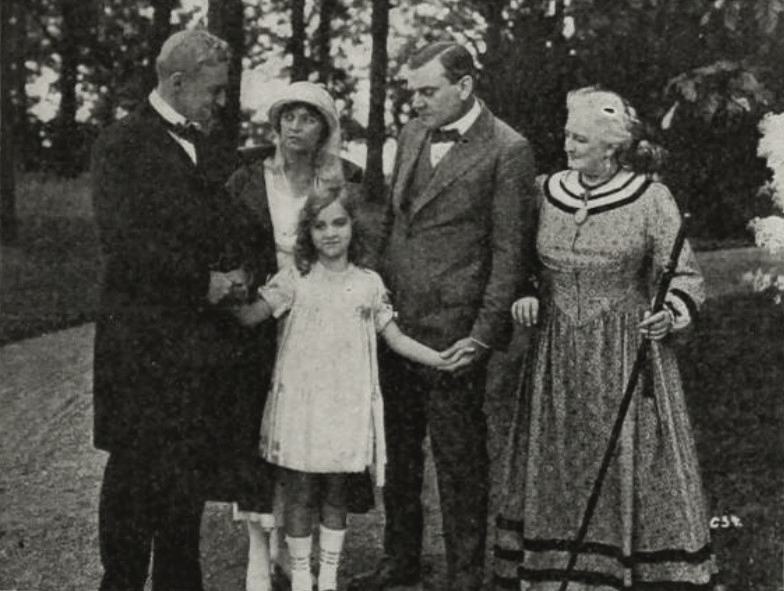
The supporting cast, including Rosina Henley as Carol’s mother, Nick Long Jr., and Frances Miller, all contribute effectively to the film's rich tapestry. Carl Axzelle’s Beppo is particularly noteworthy, presenting a character who could easily descend into caricature but instead offers a portrayal of gentle, weary benevolence. The nuanced interactions between Beppo and Carol highlight the film’s underlying humanism, suggesting that kindness can be found in the most unexpected places. Even the brief, yet impactful, appearance of Jack Drumier as Commander Montgomery sets the stage for the entire adventure, his stern demeanor creating the initial dramatic tension. The collective strength of these performances ensures that the emotional beats of the story land with considerable impact, transcending the visual-only nature of silent film to create a truly immersive experience.
While the director of *Adventures of Carol* is not explicitly credited in the provided details, the film itself demonstrates a thoughtful approach to silent storytelling. The pacing is deliberate, allowing the audience to absorb the visual information and emotional nuances of each scene. The use of intertitles is judicious, providing necessary exposition without overwhelming the visual narrative, a balance that was crucial for effective silent film. The cinematography, while perhaps lacking the elaborate flourishes of later silent epics like The Woman God Forgot, is effective in establishing mood and setting. The bustling cityscapes convey a sense of anonymity and potential danger, while the pastoral tranquility of the Fairfax plantation offers a contrasting backdrop for emotional healing. The visual language employed effectively guides the audience through Carol’s journey, using framing and composition to emphasize her isolation, her burgeoning relationships, and ultimately, her role as a catalyst for change.
The production design, though simple, is evocative, particularly in its depiction of both urban squalor and Southern gentility. The tenement hallways where Carol seeks refuge contrast sharply with the stately, if somewhat melancholic, interiors of the Fairfax home. These visual distinctions not only serve the narrative but also subtly comment on societal stratification and the disparate worlds Carol traverses. The costume design, appropriate for the era, further aids in character definition, from the Commander’s uniform to Beppo’s more humble attire, and the elegant, albeit somber, garments of Mrs. Fairfax. These elements, though often overlooked in a retrospective analysis of silent films, were integral to creating a believable and immersive cinematic experience for contemporary audiences.
Julia Burnham’s writing is the undeniable backbone of this film. Her ability to craft a narrative that is both adventurous and deeply emotional, with a satisfying, almost poetic, resolution, speaks volumes about her skill as a storyteller. The intricate plot, with its layers of miscommunication, separation, and eventual reunion, is handled with a delicate touch that avoids excessive contrivance. The way she weaves together disparate elements – a father’s warning, a lost child, an organ grinder, and an estranged family – into a cohesive and moving whole is truly commendable. It’s a narrative that explores the ripple effects of individual actions and the profound impact of unforeseen connections, much like the intricate character studies found in A Man and the Woman, which delves into the complexities of human relationships with similar depth.
Even a century after its initial release, *Adventures of Carol* retains a remarkable power to captivate and move. Its themes of childhood innocence, the complexities of family dynamics, and the redemptive nature of human connection are timeless. The film serves as a poignant reminder that communication, or the lack thereof, can be both a source of great misunderstanding and, paradoxically, a catalyst for unexpected journeys of self-discovery and reconciliation. Carol’s literal interpretation of her father’s words highlights the fragile nature of instruction and the importance of context, a lesson that remains relevant in any era.
Moreover, the film stands as an important artifact of early cinematic storytelling, showcasing the ingenuity and artistry of filmmakers working within the constraints of the silent era. It demonstrates how powerful narratives could be constructed through visual storytelling, expressive performances, and well-crafted intertitles, proving that emotional depth and thematic complexity were not exclusive to the advent of sound. For enthusiasts of film history, it offers a fascinating glimpse into the evolution of cinematic language, highlighting how early directors and writers experimented with narrative structure and character development to engage audiences.
The journey of Carol, from a lost child in a big city to the unwitting catalyst for a profound family reunion, is a testament to the enduring appeal of stories that champion the underdog and celebrate the unexpected triumphs of the human spirit. It is a film that, despite its age, continues to resonate with audiences, reminding us of the simple yet profound truths about love, loss, and the eternal hope for reconciliation. Its legacy endures not just as a historical curiosity, but as a genuinely affecting piece of cinema that speaks to the heart. Much like the profound impact of personal choices and their far-reaching consequences depicted in The Highest Bid, *Adventures of Carol* emphasizes how even the smallest actions can lead to monumental shifts in the lives of many, ultimately weaving a narrative of hope and interconnectedness.
IMDb —
1928
Community
Log in to comment.