DbcultAccessing Vault...
Cult Review
Senior Film Conservator
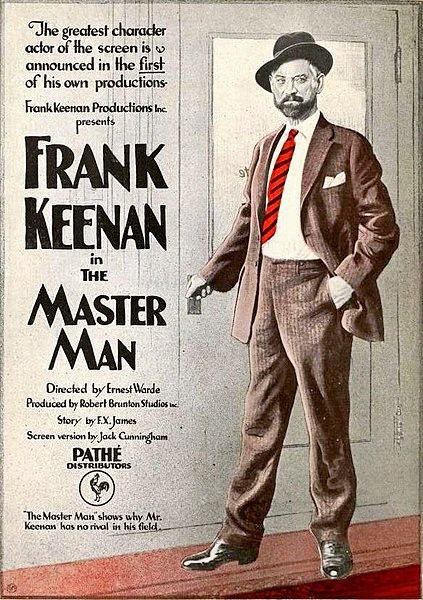
In the annals of early cinema, few narratives unravel with the intricate moral tapestry and audacious character transformations found within The Master Man. This cinematic artifact, a profound exploration of political machination, personal culpability, and the arduous path to redemption, transcends its era, offering a timeless meditation on the human capacity for both profound depravity and transcendent grace. Directed with an unflinching gaze and penned by Jack Cunningham and F.X. James, the film presents a world where power corrupts absolutely, yet even the most entrenched corruption can be eroded by the relentless tides of conscience and empathy. It’s a compelling, often shocking, journey that challenges viewers to confront the very nature of justice and societal obligation.
At the heart of this intricate drama lies Attorney General Emanuel Blake, portrayed with a chilling blend of calculated intellect and ruthless ambition by Joe Ray. Blake is no mere politician; he is the undisputed master of the state’s political machine, a puppet master pulling strings from the shadows, his influence stretching into every corner of governance and industry. His initial gambit, a seemingly straightforward directive to McCullough Davenport (Joseph McManus) to procure a compromising document from Governor Wheeler, quickly spirals into a tragedy that stains his soul indelibly. The document, holding the potential to dismantle Blake's empire and expose the illicit dealings of iron magnate George R. Vanter (J. Barney Sherry), becomes the catalyst for a chain of events that will irrevocably alter Blake's destiny. Davenport's fatal encounter with Governor Wheeler isn't just a political misstep; it’s a murder that sets the stage for Blake’s grand, albeit ultimately flawed, scheme of deception.
Blake's subsequent maneuver to frame State Senator Mitchell Murray (Frank Keenan), a man whose burgeoning labor reforms threaten the established order, reveals the depth of his cynical genius. He meticulously crafts a web of circumstantial evidence, ensnaring Murray in the governor's murder, thus neutralizing a political adversary while simultaneously diverting suspicion from himself. This calculated manipulation of justice, a hallmark of Blake’s character, paints a stark portrait of unchecked power. One cannot help but draw parallels to the insidious political maneuvering depicted in films like The Stainless Barrier, where the gears of the political machine grind down individuals for the sake of maintaining a corrupt status quo. However, The Master Man pushes this theme further, exploring not just the mechanics of corruption but its profound spiritual cost.
The narrative deepens with the introduction of Janice Ritter (Kathleen Kirkham), Vanter’s ward, a woman of quiet strength and integrity who unwittingly becomes a pawn in Blake’s intricate game. Both Blake and Murray harbor affections for Janice, adding a layer of tragic romance to the political machinations. Vanter's marriage to Janice, a union that further entrenches her within the corrupt elite, is tragically cut short when her crazed father, in a moment of profound delusion, poisons him. This second, unexpected murder complicates the already convoluted plot, shifting the focus from purely political intrigue to a more personal, emotional landscape of loss and accusation. Janice, now doubly entangled in the aftermath of violence, stands vulnerable, a testament to the destructive ripple effects of Blake's initial transgression.
Blake, ever opportunistic, attempts to leverage the ongoing chaos. To thwart Murray’s progressive labor bill – a piece of legislation that threatens the very foundation of Vanter’s iron empire and, by extension, Blake’s power – he leaks his fabricated evidence implicating Murray in Governor Wheeler’s murder. Yet, fate, or perhaps a glimmer of justice, intervenes. During a pivotal questioning, McCullough Davenport, the instrument of Blake’s initial crime, cracks under pressure, implicating Blake himself. This moment is a crucial turning point, a crack in the seemingly impenetrable façade of the "master man." It’s a testament to the idea that truth, however buried, eventually finds a way to surface, echoing the thematic undercurrents of films like The Avenging Conscience: or 'Thou Shalt Not Kill', where guilt and moral reckoning are inescapable forces.
Cornered, Blake employs his most audacious deception yet: he fakes his own death by committing himself to a sanitarium run by his loyal, albeit morally compromised, cohorts. This elaborate charade allows him to vanish from public life, escaping immediate retribution. However, this disappearance is not an escape into freedom but a descent into an unexpected form of purgatory. Shedding his identity, Blake finds himself working anonymously in the very iron mills that were once the foundation of his ill-gotten power. This forced immersion into the harsh reality of the working class is the crucible of his transformation. Stripped of his authority, wealth, and identity, he experiences firsthand the grueling labor, the meager wages, and the pervasive injustices faced by the common worker. This period of incognito labor isn’t merely a plot device; it’s the profound catalyst for Blake’s moral awakening. His privileged worldview shatters, replaced by a visceral understanding of the societal inequities he once perpetuated.
This segment of the film is particularly poignant, showcasing a rare cinematic willingness to depict a powerful antagonist undergoing a genuine, empathetic shift. It’s here that the "master man" begins to understand the true cost of his machinations, not just in terms of political power or personal gain, but in the suffering of real people. The film subtly argues that true leadership, or indeed true humanity, cannot exist in a vacuum of self-interest. The insights Blake gains from his time in the mill resonate with the social commentary found in films like Ignorance or Trouble Makers, which often highlighted the stark disparities and struggles of the working class in that era. However, The Master Man uniquely positions its central villain within this struggle, forcing him to confront the consequences of his own system.
The narrative culminates in a dramatic courtroom showdown. Janice Ritter is on trial for the murder of George R. Vanter, a crime she did not commit. Blake, now a man profoundly changed, sees an opportunity not for self-preservation, but for atonement. Leveraging his old connections one last time, he manipulates the system to secure a place on the jury, placing himself in a unique position to influence the outcome. This act, while still a form of manipulation, is now in service of justice, a stark contrast to his past endeavors. Within the confines of the jury box, a powerful, almost spiritual vision descends upon him. This isn't merely a moment of intellectual realization but a profound emotional and moral reckoning. He confronts the full weight of his past actions, acknowledging his undeniable responsibility for Governor Wheeler's murder.
Blake's public confession, a stunning act of self-incrimination, not only clears Janice's name but also dismantles the elaborate edifice of lies he had constructed. It's a moment of breathtaking courage, born from genuine repentance. The film posits that true redemption demands not just recognition of wrongdoing, but a public, unequivocal acceptance of consequences. Janice, grateful and perhaps still harboring feelings for the man Blake once was, offers him a chance to escape with her, to evade the legal repercussions of his confession. But the transformed Blake refuses. His journey through the mills, his vision, and his confession have instilled in him a new moral compass. He recognizes that true atonement requires him to "pay his debt to society," a profound statement on personal accountability that resonates powerfully. His final plea to Janice – to dedicate her life to helping working people – solidifies his transformation from a self-serving political titan to an advocate for social justice. This selfless act of urging her towards a life of public service, rather than personal happiness with him, underscores the depth of his character arc.
The performances in The Master Man are remarkably nuanced for their time. Joe Ray, in particular, delivers a compelling portrayal of Emanuel Blake, charting his character's complex evolution from a Machiavellian political boss to a man humbled by experience and driven by a newfound moral imperative. His performance avoids simplistic villainy, instead portraying a character capable of growth and profound change, making his redemption feel earned rather than merely convenient. Frank Keenan as Senator Murray provides a strong counterpoint, embodying the integrity and progressive ideals that Blake initially sought to crush. Kathleen Kirkham's Janice Ritter is equally commendable, portraying a woman caught in the crosscurrents of political intrigue and personal tragedy with grace and resilience. The supporting cast, including Joseph McManus as the conflicted McCullough Davenport and J. Barney Sherry as the conniving Vanter, contribute significantly to the film’s rich tapestry of characters.
The film's direction, while perhaps constrained by the technical limitations of its era, effectively conveys the escalating tension and the emotional weight of its narrative. The use of visual storytelling to depict Blake’s internal struggles, particularly during his time in the mill and his courtroom vision, is particularly effective. While it doesn't possess the overt experimentalism of some contemporaries, its strength lies in its clear, purposeful narrative progression and its focus on character development over spectacle. The themes explored in The Master Man – political corruption, class struggle, personal redemption, and the search for genuine justice – remain as relevant today as they were upon its release. It serves as a potent reminder that even those who wield immense power are not immune to the call of conscience, and that true strength often lies not in control, but in accountability and self-sacrifice.
What truly elevates The Master Man beyond a mere historical curiosity is its profound commitment to the idea of transformation. It’s not simply a story of a villain getting his comeuppance, but rather a nuanced portrayal of a soul’s arduous journey from darkness to light. Blake’s "death" and subsequent rebirth in the anonymity of the iron mill are more than just narrative devices; they are symbolic of a spiritual cleansing, a stripping away of hubris and a rediscovery of essential humanity. This narrative arc, in its depth and daring, stands out. It's a film that asks uncomfortable questions about the nature of power and the possibility of change, even for those seemingly beyond redemption. Its legacy lies not just in its intricate plot, but in its unwavering belief in the transformative power of empathy and the profound obligation individuals have to a society they once sought to exploit.
In an age where political machinations and social inequalities continue to dominate headlines, The Master Man offers a surprisingly resonant commentary. It reminds us that behind every grand political scheme, there are human lives affected, and that ultimately, the pursuit of justice and the embrace of empathy are the true hallmarks of a master man, not the ability to control and manipulate. It is a compelling watch for anyone interested in the evolution of cinematic storytelling, character-driven drama, and the enduring power of a moral awakening.
IMDb 4.1
1909
Community
Log in to comment.