DbcultAccessing Vault...
3.2/10
Senior Film Conservator
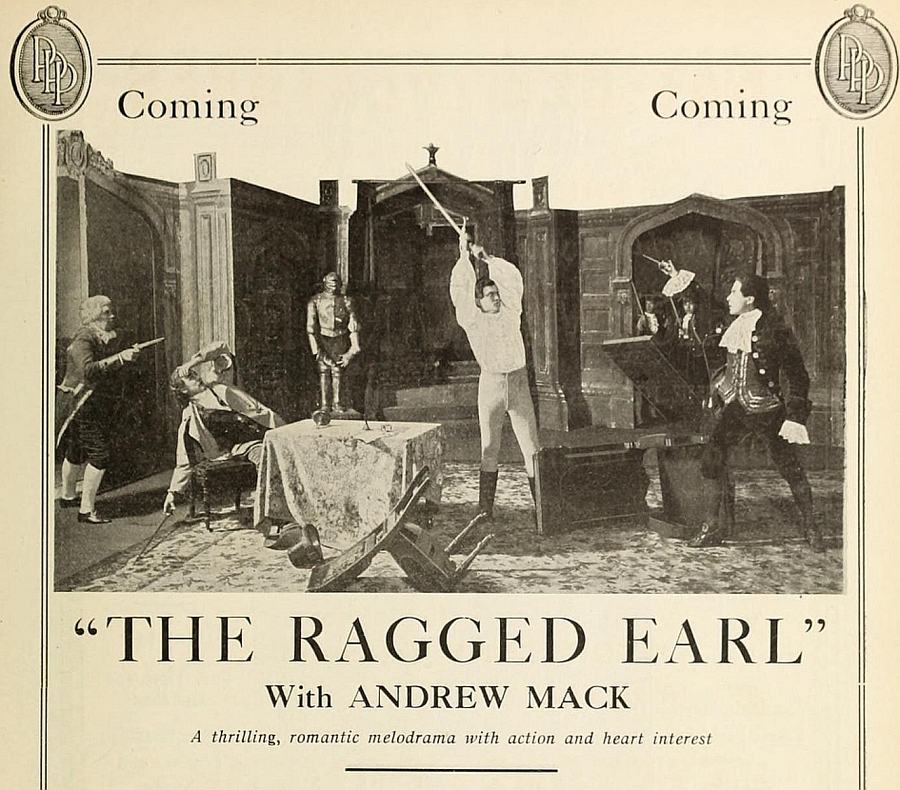
A definitive 3.2/10 rating for a film that redefined the boundaries of cult cinema. The Ragged Earl remains a cornerstone of transgressive art.
What does a man do when his last quarterly rent yields barely enough to buy a decent saddle?
In The Ragged Earl, Gerald Fitzgerald—equal parts poet and pauper—laughs like a man who has already pawned tomorrow. The film, released in the autumn of 1920, belongs to that exquisite twilight when silent cinema had perfected visual grammar yet still flirted with the theatrical flourish of gas-lit melodrama. Director Arthur Rosson (often uncredited in surviving lobby cards) stages the Anglo-Irish aristocracy as a crumbling diorama: damp stone, ancestral portraits blistered by mildew, hounds too bony to muster a decent bay. Into this decay strides William Conklin, whose profile could have been sketched by Aubrey Beardsley—angular, amused, forever on the verge of a cigarette that never materializes. Conklin’s Earl is not the whey-faced martyr of Victorian fiction; he is a flaneur of ruin, a man who treats insolvency as a parlour game.
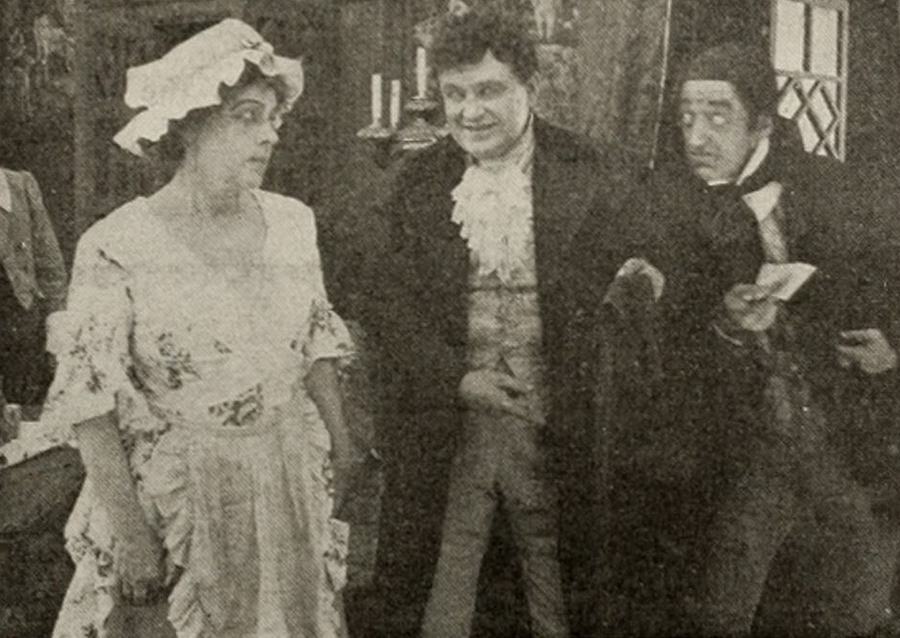
Cinematographer Ross Fisher lenses Kilkea Castle like a ghost that refuses to admit it is dead. Note how the camera lingers on a frayed tapestry—its unicorn missing a hind leg—while creditors in pudding-stove hats stamp snow from their boots. The palette is dominated by slate and sepia, yet every so often a lurid burst of crimson appears: a draggled pennant, a drop of sealing wax, Kathleen’s cloak when she bolts into the night. These crimson stabs anticipate the blood-orange sunsets of John Ford’s The Informer by fifteen years, hinting that Irish Gothic can flourish without audible brogue or Emerald-green tourism.
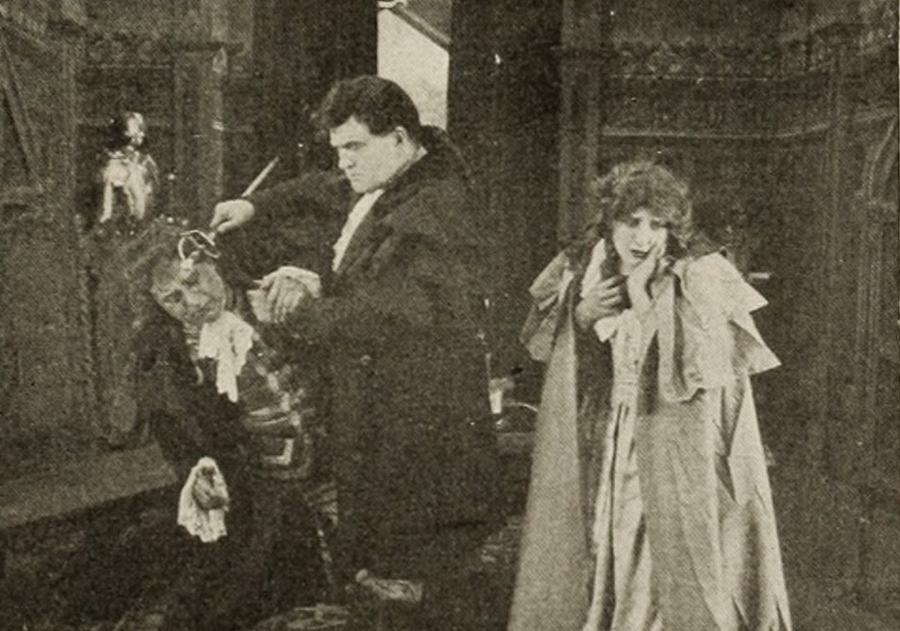
Ormi Hawley’s Kathleen undergoes the obligatory Shakespearean breeches-role, yet the film refuses to treat the disguise as mere plot hinge. When she hacks off her dark braids with a pen-knife beside a waterfall, the splice is rendered in ominous silhouette—an act of self-creation as much as self-preservation. Her subsequent scenes in doublet and hose carry an erotic charge precisely because they remain chaste; Gerald’s affection for the "handsome page Edward" hovers in that liminal attic where camaraderie, jealousy and sublimated desire cohabit. A modern viewer will catch a whiff of Der fremde Vogel’s gender-fluid melancholy, though Hawley’s performance is sprightlier, more hoof-and-thunder than continental ennui.
The screenplay—cobbled by no fewer than five writers—treats creditors like a Greek chorus in top hats. They pop from behind yew hedges, flourish sheaves of unpaid bills, then retreat under a hail of rotten apples hurled by the Earl’s retainers. This burlesque never fully tips into farce because the economic dread is too tangible: twenty-three pounds, counted coin by coin on a scarred escritoire, becomes a minimalist icon of looming dispossession. One recalls the equally cash-strapped antics of A Ticket in Tatts, though that Australian romp opts for sunlit racetracks whereas The Ragged Earl keeps its humour moon-drenched and mossy.
For a production reportedly budgeted at thirty-five thousand dollars, the climactic siege boasts surprising athletic bravura. Conklin performs his own balcony leap—no rear projection, no mattress visible—landing on a banquet table that splinters like kindling. The duel with Sir Henry (Edward Peil Sr., all hooded eyes and venomous courtesy) showcases an authentic two-handed claymore, its heft forcing the actors to fight in pendulum arcs rather than the fencing-flicker of Douglas Fairbanks. When Gerald crashes through the stained-glass window, shards painted in lurid cobalt and blood-orange scatter in slow-motion billows, a tableau pre-figuring the stained-glass carnage of The Life and Death of King Richard III.
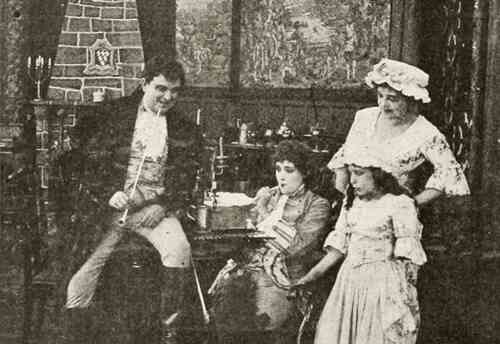
Conklin’s trademark is a sleepy half-smile that can flip into arctic resolve; watch how his voiceless close-ups still suggest he is humming a bawdy tavern song only he can hear. Opposite him, Eleanor Dunn’s Una functions as the requisite dew-eyed chorus, yet she earns a private moment of steel when she bars a bedchamber door with a warming pan, defying Wildbrook’s senescent leer. Andrew Mack, as the paternal retainer Larry, supplies Hibernian comic relief without tumbling into stage-Irish caricature—a welcome restraint when compared with the broader shillelagh shenanigans of Die Insel der Seligen.
Survival prints screened at Pordenone carried a contemporary Irish folk medley arranged by Garth Knox: uilleann pipes, bodhrán and a solo fiddle that keens during Kathleen’s flight, then mutates into a jaunty reel when Gerald commandeers the claymore. The juxtaposition lends the film a sonic ethnicity often erased in early 1920s Americana. Be wary of the 16mm bootlegs on certain auction sites; they splice in generic library music that reduces every emotional beat to oompah-piano pastiche.
Place it on the shelf beside The Love Tyrant for its matrimonial chess-game, or beside Gambler's Gold for its genteel-on-the-skids protagonist. Yet note the specifically Celtic DNA: the absentee landlord, the estate as both paradise and prison, the marriage market that doubles as colonial ledger. These motifs would resurface, far more grimly, in One Hundred Years Ago, but here they are corseted into escapist romance.
Because The Ragged Earl proves that swashbuckling need not be a sun-kissed Caribbean affair; it can sprout from mildewed Irish basalt, fed by debt, desire and the perpetual threat of rain. Because cross-dressing in silent film is seldom accorded this level of narrative payoff—when Kathleen reappears in kirtle and caul, the moment lands like a conjurer’s reveal, not a punch-line. Because William Conklin’s insouciant grin might convince you that solvency is a bourgeois superstition. And because, in an age when every streaming thumbnail screams algorithmic sameness, here is a story that still smells of peat smoke and sealing wax, a relic that, once glimpsed, clings to your cuffs like thistledown.
Verdict: 8.5/10 — A rousing, rose-strewn romp through insolvency, swordplay and gender masquerade; essential for aficionados of Irish Gothic and late-silent derring-do.
IMDb —
1927
Community
Log in to comment.