DbcultAccessing Vault...
Cult Review
Senior Film Conservator
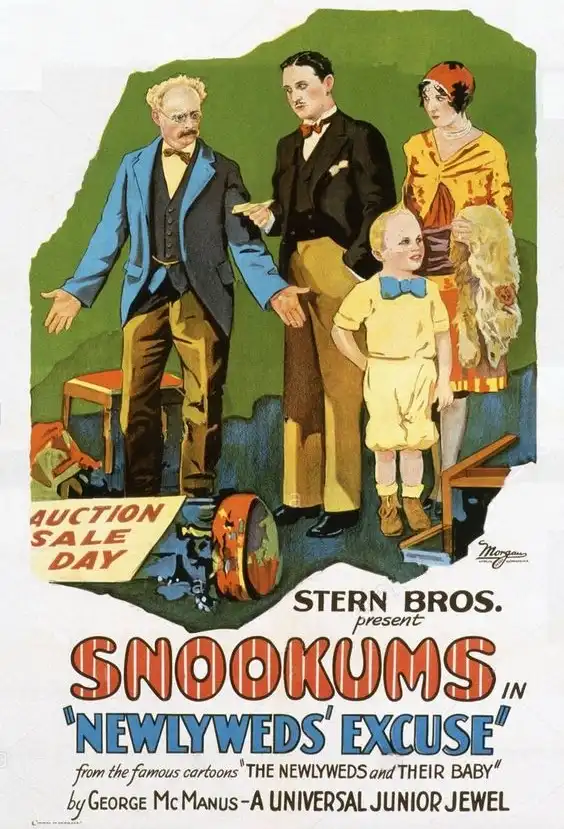
Okay, so The Newlyweds' Excuse is definitely one for the silent film enthusiasts, or maybe just anyone curious about a quick, old-timey laugh. If you're hoping for grand drama or sweeping romance, you'll probably find it a bit thin. But if a breezy, slapstick-adjacent story about a couple trying to keep a secret sounds good, this might just hit the spot.
The premise is simple enough: a fresh-faced married couple, played by Jack Egan and Derelys Perdue, finds themselves in a tight spot. They need to come up with a believable story to get out of trouble, and that's where all the fun starts. It's a classic setup for a reason, even back in 1925.
Jack Egan, as the husband, has this fantastic way of looking flustered that just sells the whole thing. His eyes darting around when he's trying to lie? *Classic*. You can almost feel his character sweating through the screen.
Derelys Perdue, as the wife, has a real knack for those big, expressive silent film reactions. There's a particular moment where she gives this look of *utter despair* that’s just perfect, even though the situation isn't that dire. It’s a good contrast to Egan's more frantic energy.
One reaction shot lingers so long it becomes funny. It’s a close-up on Perdue after a particularly bad lie, and she just holds it. The silence starts to feel awkward rather than emotional, then you just chuckle. It's a neat trick.
The inclusion of Sunny Jim McKeen, I assume as some kind of meddling friend or rival, adds a nice bit of physical comedy. He's got a mustache that just about steals every scene he's in. It's so perfectly villainous for the time, even if his character is more bumbling than truly bad.
There's a bit where Perdue tries to hide something behind her back, and the object just keeps peeking out. It’s such a simple gag, but it got a real chuckle out of me. The director, George McManus, clearly knew how to let that moment breathe.
The title cards are pretty standard for the era, but there's one that just says 'Oh, dear!' and the way Perdue reacts, you *felt* the exasperation. No fancy words needed, just a good actor selling the moment.
The whole sequence with the misplaced hat near the start felt like it went on a little too long. You're just waiting for it to resolve. But then it paid off with a pretty funny reveal. *Pacing can be a weird thing* in these old films, sometimes feeling stretched, other times lightning fast.
You can tell they used every trick in the book for some of the visual gags. Like when they show a character's "inner thoughts" with wavy lines around the edges. It’s quaint, but it works, giving it that dreamlike quality.
The crowd scenes have this oddly empty feeling, like half the extras wandered off. Or maybe they just couldn't afford more people. Either way, it makes some moments feel a bit lonely, a strange contrast to the lighthearted story.
I kept thinking about Love and Kisses, another one from that era, while watching this. Not quite as intricate in its plot, but both share that light touch, focusing on domestic misunderstandings. This one feels a touch more *frantic* though.
There’s a specific close-up on a teapot — a teapot! — that just stays there for what feels like an eternity. I'm still trying to figure out what it was supposed to convey. Was it symbolic of domestic bliss? Or did someone just forget to yell 'cut'? 🤔 It’s these little, odd moments that stick with you.
The movie gets noticeably better once it stops taking itself seriously, which, for a silent comedy, is most of the time. But there are a few brief moments of genuine tension that feel a bit out of place.
The ending felt a bit abrupt. Like, 'Oh, okay, that's it then.' No big bows or grand revelations. But then, maybe that's just how they did things back then. No need for a grand wrap-up, just a simple resolution. It leaves you wanting just a tiny bit more, which is kinda nice, I guess.
So, is it a masterpiece? No, not really. But it's a perfectly charming little piece of film history. It's got heart, some genuinely funny moments, and it doesn't overstay its welcome. A good watch if you have an hour to spare and a soft spot for the silent era. Just don't expect too much deep meaning from a teapot.
IMDb 6.9
1921
Community
Log in to comment.