DbcultAccessing Vault...
6.9/10
Senior Film Conservator
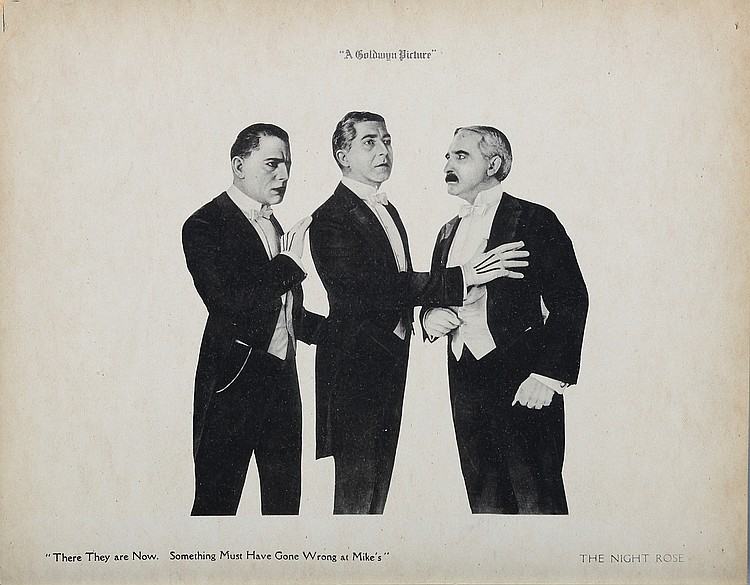
A definitive 6.9/10 rating for a film that redefined the boundaries of cult cinema. Voices of the City remains a cornerstone of transgressive art.
Voices of the City, a shadow-draped relic from the 1920s, pulses with the raw energy of a city where every corner hides a secret. Directed with a deft hand by an uncredited crew (credited writers Leroy Scott and Arthur F. Statter), the film weaves a narrative that feels both timeless and claustrophobic, its tension simmering in the smoke of cafés and the silence of hotel rooms. At its heart lies Georgia Rodman (Mary Warren), a character whose quiet dignity becomes a beacon in a world of moral ambiguity. When her peaceful life is shattered by a single gunshot—a cop felled in a San Francisco café—the film transforms into a study of how violence fractures even the sturdiest of bonds.
The opening act, a masterclass in visual storytelling, establishes the city as a character in its own right. The café, a hive of whispered conspiracies and clinking cups, becomes the stage for O'Rourke’s (John Cossar) first act of cruelty. His manipulation of Jimmy (Lon Chaney, in a role that feels like a warm-up for his later iconic performances) is chillingly subtle. Chaney’s portrayal of Jimmy—a man who trusts too easily and pays the price—is a testament to his range. There’s a poignancy in how his character’s optimism is stripped away, scene by scene, until he’s left with nothing but the scars of betrayal.
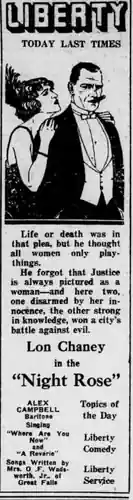
Betrayal is the film’s central motif, but it’s rendered with such nuance that it avoids cliché. O’Rourke’s decision to turn Georgia and Jimmy into pawns is not just a plot device; it’s a commentary on the transactional nature of power. The couple’s forced stay in O’Rourke’s hotel becomes a metaphor for their entrapment—a gilded cage where every door is a lie. Assistant District Attorney Steven Graham (John Bowers) represents the fragile hope of justice, his investigation a slow unraveling of the lies that bind the city. Yet, even he is not without flaws; his obsession with the case borders on self-destructive, a reminder that righteousness can have its own corrupting allure.
Sally (Leatrice Joy), O’Rourke’s ex-mistress, is the film’s most fascinating figure. Her betrayal of O’Rourke is not born of malice but of a weary understanding that his world cannot coexist with her own. When she alerts Georgia to the planned assassination, it’s not just an act of heroism—it’s a rejection of the moral code that has governed her life. Her final act, a gunshot that echoes through the ballroom, is both catharsis and tragedy. The film never lets us forget that in this world, even justice is a compromise.
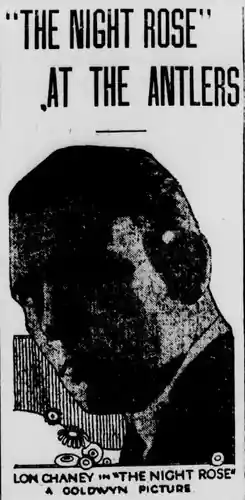
The film’s visual language is deceptively simple. Shadows are not just aesthetic choices but psychological tools, used to mirror the characters’ internal states. Georgia’s transformation from a woman of quiet grace to a figure of steely resolve is mirrored in the lighting—soft, diffused light giving way to stark, high-contrast scenes. The café sequence, with its low-angle shots and deep focus, creates a claustrophobic tension that lingers long after the credits roll.
Lon Chaney’s performance as Jimmy is a masterclass in understatement. His physicality—slumped shoulders, hesitant gait—communicates a man whose faith in the world has been worn down by constant disappointment. Mary Warren, as Georgia, brings a quiet strength to the role. Her eyes, often wide with unspoken fear, are windows to a soul battered but unbroken. The chemistry between the two is palpable, a testament to their ability to convey unspoken emotions through glances and gestures.
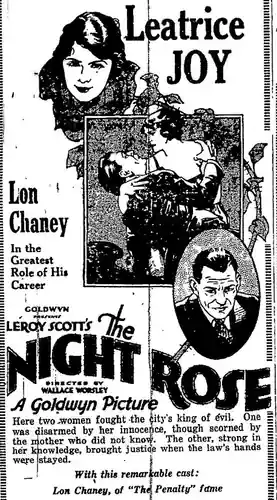
Voices of the City shares DNA with other classics of the era. Like Shadows, it explores the corrosive effects of poverty and crime on familial bonds. However, where Shadows is a tale of racial identity and social exclusion, Voices of the City focuses more on the personal cost of ambition and betrayal. The film also echoes The Night Rider, another noir-inflected story of moral compromise, though its pacing is more deliberate, almost languid, in contrast to the latter’s frenetic energy.
Visually, it owes a debt to The Black Circle, with its use of light and shadow to create a sense of foreboding. Yet Voices of the City avoids the surrealism of that film, opting instead for a more grounded, almost documentary-like realism. The influence of Confession—a similarly themed film about guilt and redemption—is evident in the way the narrative unfolds through a series of confessions and revelations.
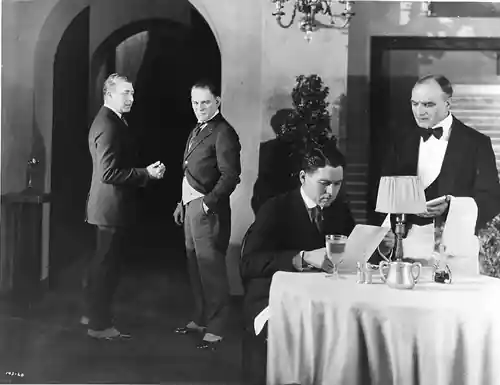
San Francisco in Voices of the City is not just a backdrop—it’s a character. The fog-draped streets, the cramped hotel rooms, the cavernous ballroom where the final act unfolds—all these spaces reflect the film’s themes. The café, for instance, is a microcosm of the city’s duality: a place of warmth and connection by day, a den of vice by night. The hotel room, with its peeling paint and creaking floorboards, becomes a prison for Georgia and Jimmy, a physical manifestation of their entrapment.
Symbols are woven into the narrative with care. The recurring image of a broken teacup—a gift from Georgia to Jimmy—serves as a reminder of their shattered domesticity. The ballroom, with its gaudy chandeliers and polished floors, is a stark contrast to the grimy alleys they’ve navigated, a metaphor for the fragility of social order. Even the film’s title, Voices of the City, is a double entendre: it refers both to the city’s cacophony of human experience and to the silences that speak volumes.
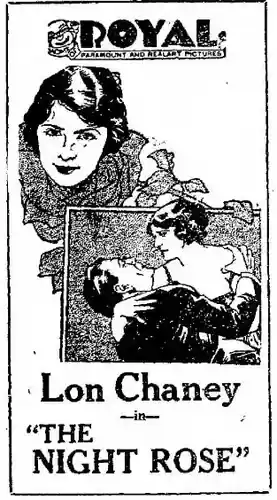
The film’s narrative structure is a tight spiral, each scene tightening the noose around the characters. Georgia’s arc is the most compelling. She begins as a passive observer, a woman whose life is disrupted by events beyond her control. But as the story progresses, she becomes an agent of her own fate. The moment she takes action—seeking out Jimmy after the shooting—is a turning point. Her journey from victim to avenger is rendered with such nuance that it feels authentic, not contrived.
Jimmy’s arc is more tragic. His unwavering trust in O’Rourke is both his greatest strength and his fatal flaw. The film spares no sympathy for his naivety, yet it also resists the temptation to reduce him to a caricature of foolishness. His death, though not the central focus, is a quiet tragedy that underscores the film’s central theme: trust is a luxury the city cannot afford.
O’Rourke, the antagonist, is a study in ambiguity. He is not the cartoonish villain of dime-store crime novels but a man whose moral decay is incremental, almost imperceptible. His manipulation of others is not driven by malice but by a cold calculation of self-interest. This makes him far more dangerous—and far more realistic—than a typical screen villain.
Given the era in which it was made, the film’s sound design is surprisingly evocative. The silence in key moments—after the gunshot, in the tense pauses between Jimmy’s questions to O’Rourke—adds to the film’s oppressive atmosphere. The score, though minimal, is used effectively to underscore emotional beats. A wailing violin during Georgia’s reunion with her family is a stark contrast to the brass-heavy themes of earlier scenes, highlighting the shift from despair to tentative hope.
Voices of the City may have been made in a different century, but its themes are undeniably modern. The film’s exploration of trust, betrayal, and redemption is as resonant today as it was in the 1920s. Its portrayal of a city as both a sanctuary and a trap is a familiar narrative in contemporary cinema, yet it feels fresh here, unmarred by the cynicism that often plagues modern remakes.
For film enthusiasts, the movie is a treasure trove of early cinematic techniques. The use of lighting to convey mood, the deliberate pacing that allows the audience to breathe, and the understated performances all point to a time when filmmaking was an art form rather than a spectacle. It’s a reminder of why we still study the classics—not for their nostalgia, but for their timeless lessons on the human condition.
In an age where crime dramas often prioritize plot over character, Voices of the City stands as a counterpoint. It’s a film that trusts its audience to sit with the discomfort of moral ambiguity, to find meaning in silence, and to see beauty in loss. For those willing to give it the attention it deserves, it offers not just a story, but a mirror—a reflection of our own world, where the line between right and wrong is as blurred as the fog over San Francisco’s streets.
IMDb —
1925
Community
Log in to comment.