DbcultAccessing Vault...
Cult Review
Senior Film Conservator
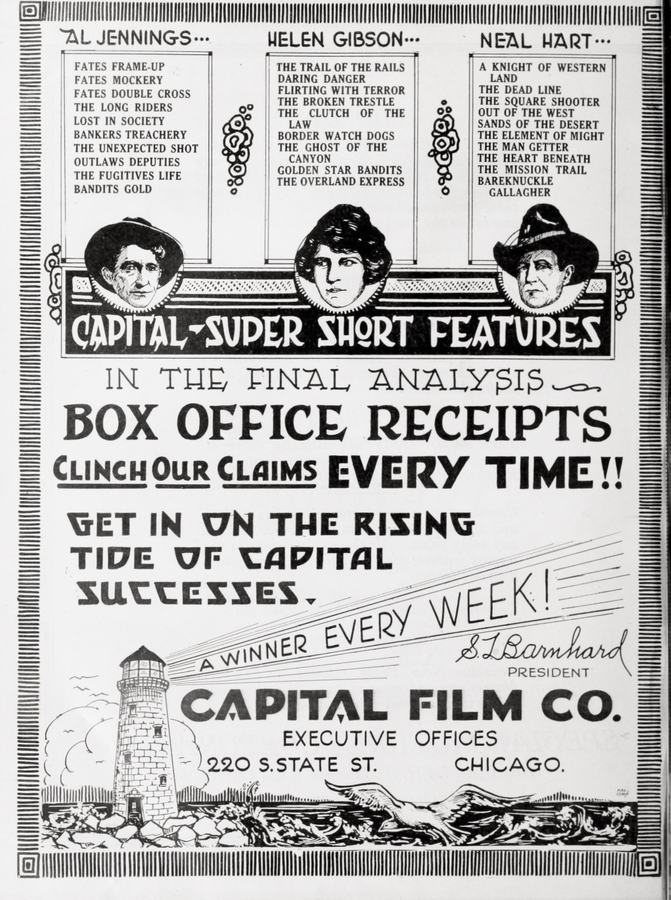
Imagine the moment when steel teeth bite track and the whole world shrinks to the width of a rail gauge—that is the universe The Overland Express insists you inhabit for seventy-two oxygen-thin minutes. Long before CGI turned peril into pixel soup, director Leon D. Smith strapped his camera to a real 4-4-0 engine, let the landscape unspool like torn ribbon, and allowed gravity to audition as co-star. The resulting 1926 railroad noir feels, even now, like a slap shot of bootleg whiskey: it burns, it blinds, it leaves you dizzy enough to swear the theater itself is rocking.
Plot synopses flatten this film into a macguffin chase—missing payroll, masked bandits, plucky telegrapher. Yet the narrative is only the trellis over which the movie drapes its real obsession: velocity as metaphysics. Each frame thrums with the knowledge that a locomotive is a horizontal guillotine; if you stagger, if you love, if you hesitate, the universe will slice you in half. Against this existential chopping block Helen Gibson’s character, Dale Hadley, rides bare-knuckled, her bobbed hair whipping like a pennant of rebellion. She is both courier and confessor, collecting the secrets of every male predator who boards, then paying their moral debts with her own vertebrae.
Gibson, famous for leaping onto moving trains from standing horses, performs stunts here that would make Tom Cruise hyperventilate. She clambers across carriage roofs while cinders gnaw her cheeks, drops through trapdoors into hay-bale darkness, and—most famously—dangles from the coupling rod inches above the rail bed, the wheels drumming a funeral march that only she refuses to attend. The camera never blinks, because there is no rear-screen projection to cheat the distance between flesh and steel. You feel every jolt in your molars.
What is the pouch Dale clutches? A fortune in war bonds, the script says, yet Smith photographs it like the Grail—backlit, haloed, humming. As towns blur past—wooden façades slapped together by Manifest Destiny—every passenger sniffs the air for money the way wolves sniff for blood. The train becomes a rolling stock market, trading in treachery: a banker who shorted miners’ pensions, a preacher who pocketed widows’ tithes, a dance-hall girl peddling laudanum to kids. Each stop adds sin-weight; the pistons groan harder, until you suspect the engine itself might repent and refuse to roll.
Halfway through, Dale stumbles upon a stowaway: a ten-year-old orphan whose only possession is a wanted poster bearing the face of the very marshal escorting the pouch. The film’s moral gears grind audibly: if the lawman is a bounty-snatching fraud, then every badge is a nickel-plated lie. In a lesser western this revelation would detour into courtroom bombast; Smith instead stages a wordless midnight confrontation inside the caboose, moonlight knifing through slats, the child’s saucer eyes reflecting the marshal’s Colt. Dale’s solution—she handcuffs the law to his own hypocrisy, literally, with his cuffs—takes thirty seconds yet ricochets through the rest of the story like a bullet trapped in a boxcar.
Silent-era editing rhythms were often dictated by projector hand-cranking, yet Frank Cotner’s cutter splices The Overland Express like a man trying to outrun a twister. Cross-cutting between cab interiors and exterior long shots creates a kinesthetic vertigo: you read a conductor’s raised eyebrow, then instantly feel the undercarriage wheels screech around a bend. The average shot length clocks under four seconds, predating the hyper-kinetic montage that William S. Hart would popularize the same year. The effect is narcotic; your pulse aligns to the clack-clack metronome until dialogue cards feel like intrusive stop signs.
Gibson’s contemporaries—Pearl White, Ruth Roland—performed serial perils week-to-week, yet those cliffhangers were narrative ploys. Gibson’s jeopardy is existential. She refuses the damsel’s fainting couch, just as she refuses the cowboy’s six-shooter. Her body is argument enough: when she sprints across the coal tender, the camera lingers on calves knotting under corduroy, a manifesto written in ligament. Critics who label such scenes as proto-feminist wish fulfillment miss the darker implication: in a world where capital moves at 70 mph, only those willing to become machinery can survive.
Compare her arc to Anita Jo’s eponymous heroine, who weaponizes guile rather than muscle, or the widows of A Widow’s Camouflage who stitch disguises from grief. Dale Hadley rejects camouflage altogether; she faces the world with a face already bleeding from cinder scabs. The film’s closest cousin might be The Splendid Sin, where locomotion also serves as moral litmus, yet that narrative lingers in drawing-room perfume. Smith’s western drags you into the coal-smoke brute reality where perfume would combust.
Distributed in black-and-white, the surviving prints shimmer with two-strip red-green tinting that ignites during the climactic trestle fire. Crimson gushes across the night sky like molten scripture, while viridian moonlight bathes Dale’s eyes in eerie calm. The contradiction—hell above, ghostly serenity below—compresses the entire American psyche into a single gelatin frame. When the burning trestle buckles and the engine noses into the ravine, the tinting shifts to bruise-purple, as though the film itself has suffocated. Most restorations bleach these hues for archival neutrality; if you ever chance upon a tinted 16 mm dupe at a flea-market, guard it like plutonium.
Beneath its riveted surface the movie hums a Marxist lullaby. Every commodity—coal, bourbon, flesh—rides the same rails, priced by mile markers. Dale’s eventual triumph is not the rescue of the pouch but her refusal to hand it over once she learns the bonds were issued to bankroll a private militia poised to evict striking copper miners. She flings the satchel into the firebox, turning blood money into steam, literally powering the workers’ train back to town. The act is so swift you could sneeze and miss it, yet it reframes every preceding stunt as class warfare staged on rolling stock.
This subtext positions The Overland Express closer to Soviet agit-prop than to Cap’n Eri’s coastal whimsy. Smith, rumored to have smuggled Eisenstein’s early shorts across the Atlantic, borrows the montage dialectic: man vs machine, labor vs capital, but grafts it onto the iconography of Manifest Destiny. The resulting chimera is as American as a union strike in a church pew.
Silent prints shipped with cue sheets instructing pit pianists to weave Liszt’s Preludio between steam-whistle sound effects created by wooden ratchets. Modern revivals often default to folksy banjo, neutering the film’s Wagnerian sting. Seek instead the 2015 Bologna restoration featuring a Maurice Horvat score—strings screeching like metal fatigue, brass punching boiler-press chords. Horvat’s cue for the trestle collapse syncs a low contrabass bow with subwoofer rumble; the sensation is not just hearing but inhabiting a 200-ton dinosaur gasping its last.
Viewed today the film foreshadows every speed as salvation trope from Speed to Runaway Train, yet its DNA splinters further. The 2010 video-game Red Dead Redemption lifts its train-heist structure wholesale; even the pixel layout of the baggage car mirrors Smith’s establishing shot. Meanwhile Christopher Nolan screened a 9 mm print while prepping Inception, claiming the zero-gravity hallway fight was his attempt to replicate Gibson’s rooftop scramble minus gravity. The lineage is unmistakable: cinema’s obsession with bodies hurtling through engineered space begins here, in a forgotten reel nobody studies except stunt coordinators and insomniac auteurs.
Academics, those shy nocturnal creatures, occasionally bracket the film with Rebuilding Broken Lives as twin chronicles of post-war trauma, one urban, one locomotive. The comparison limps; Smith’s movie is no therapy session but a daredevil exorcism, flinging trauma into the firebox and watching it flare.
For all its kinetic bravura the picture is not spotless. The comic-relief brakeman—a Dutchman named Otto who slips on every banana peel of plot—derails tension like a clown barging into a funeral. His pratfalls, mercifully few, feel grafted by producers hedging against too much existential dread. Likewise the intertitles flirt with purple doggerel: “Fate rides the throttle, Hope clings to the cowcatcher.” Such dime-store philosophizing punctures the raw visceral pact between viewer and image. Smith should have trusted the clatter of wheels to speak for itself.
And yet, when the final iris closes on Dale walking away from the wreck, silhouette against dawn, soot streaking her cheeks like tribal warpaint, you forgive every bum line. The image lingers longer than most studio logos; it tattoos the retina with a question: once you have outrun civilization at 70 mph, how do you learn to walk again?
The film languishes in the public-domain twilight, so YouTube hosts a 480p ghost scarred with VHS dropouts. A better bet: Grapevine Video’s DVD-R ripped from a 16 mm show-at-home print; contrast is milky but the tinting survives. For purists, the UCLA Film Archive holds a 35 mm nitrate negative—projectable but not screened since 1987. Lobby them; bring a fire marshal; the risk of combustion is real, but so is the ecstasy of seeing cyan fire ripple across nitrate grain.
If you curate micro-cinemas, pair it with Souls Adrift for a double bill on capitalist shipwrecks, or counter-program with The Imp’s slapstick anarchy to remind audiences that speed can also be silly. Either way, schedule a live steam-whistle accompaniment; local train museums rent them cheap, and the audience will levitate when that 110-decibel shriek syncs with the on-screen boiler blowout.
Great cinema either holds a mirror to your terror or straps you to the front of a locomotive and makes you taste the oncoming wind. The Overland Express does both, simultaneously, while humming a union anthem. Ninety-seven years after its premiere the film still feels like tomorrow’s thrill ride, partly because we no longer allow humans to risk their necks for art, partly because capital still rides the throttle and hope still clings to the cowcatcher. Climb aboard, if only to remember what it felt like when movies were not content but velocity—when every frame could skin your knees.
IMDb 6.6
1934
Community
Log in to comment.