DbcultAccessing Vault...
Cult Review
Senior Film Conservator
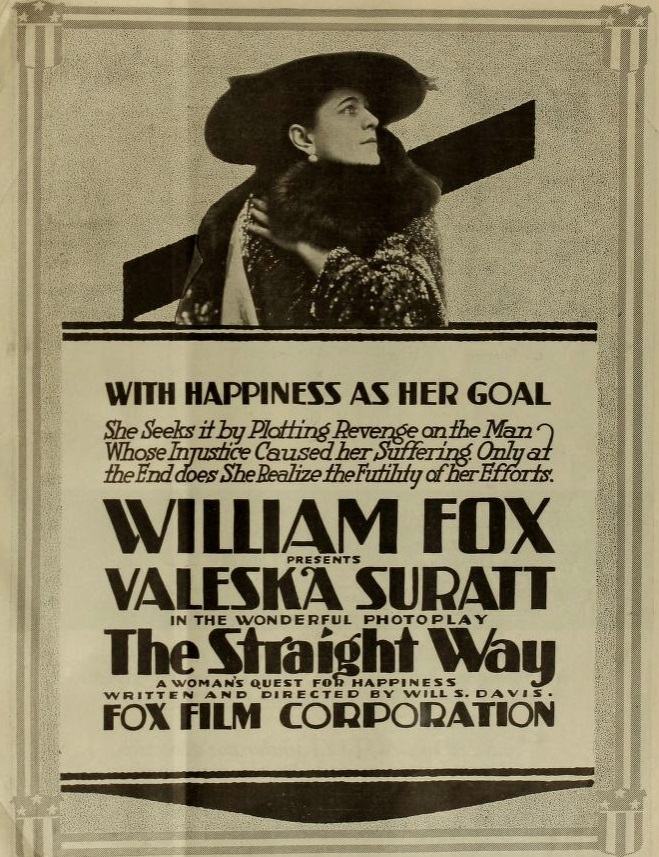
Stepping back into the cinematic crucible of 1916, we encounter The Straight Way, a silent drama that, even over a century later, still resonates with a raw, almost visceral emotionality. This isn't merely a historical artifact; it's a testament to the enduring power of narrative, a grand, sweeping melodrama that weaves a tapestry of injustice, amnesia, vengeance, and ultimately, a hard-won reconciliation. Directed by Will S. Davis, and featuring a cast that includes the compelling Valeska Suratt, this film plunges into the moral complexities of human frailty and the long, winding path to redemption.
The narrative core of The Straight Way is a masterclass in escalating dramatic irony. We are introduced to Mary Madison, a woman whose life is irrevocably shattered by a baseless accusation of infidelity from her husband, John. This initial act of marital betrayal, a poison seeped into the very foundation of their union, sets off a chain reaction of events that would stretch the bounds of belief in a less artfully constructed melodrama. Mary, ostracized and heartbroken, seeks solace and privacy at her aunt's home, a sanctuary where she intends to bring her child into the world. But fate, ever the cruel orchestrator, intervenes with a brutal train wreck. This catastrophic event not only robs Mary of her memory, plunging her into an amnesiac fog, but also tragically convinces John of her demise. He is left to raise their infant daughter alone, a solitary figure haunted by a past he believes is permanently severed. This early segment of the film, with its rapid succession of misfortunes, might feel overwrought to a modern audience, yet it perfectly encapsulates the heightened emotional stakes characteristic of early 20th-century cinema. It reminds one of the grand, operatic tragedies like The Last Days of Pompeii, where individual lives are tossed about by forces far beyond their control, be it volcanic eruption or the crushing weight of misunderstanding.
Years unfurl, carrying with them the quiet passage of time that mends some wounds while deepening others. John Madison has rebuilt his life, finding companionship in a new marriage, his daughter now a vibrant young woman, the apple of his eye. Mary, meanwhile, slowly reclaims her lost memories, a fragmented past piecing itself back together with agonizing clarity. Yet, the most crucial piece of information—her daughter's survival—remains stubbornly elusive. The film expertly builds tension here, allowing the audience to feel the growing chasm between Mary's painful recollection and her ignorance of her child's fate. This narrative device, where the audience possesses knowledge denied to the protagonist, is a powerful tool, generating a profound sense of anticipation and dread. The story’s dramatic power rests heavily on this imbalance of information, a common but effective trope in silent films, which relied heavily on visual storytelling and emotional cues to convey complex internal states.
The true heart of The Straight Way beats with the dark rhythm of revenge. Mary, learning of John's profound love for his daughter (a love she interprets as a cruel mockery of her own suffering), decides to unleash a calculated, devastating retribution. Her plan is insidious: to disgrace the daughter, to soil the very purity John cherishes, thereby inflicting a wound far deeper than any physical harm. She enlists an ex-convict, a man who served time on a trumped-up charge, to seduce the innocent young woman. This element introduces a fascinating moral ambiguity. While Mary's motive is understandable, her method is chillingly cold, illustrating the corrosive nature of unbridled anger. The film cleverly positions the ex-convict not as a simple villain, but as another victim of societal injustice, making his involvement in Mary's scheme all the more poignant. This subtle critique of the justice system, where individuals can be wrongly imprisoned, echoes themes found in other early social dramas, even those with more overt political undertones, though perhaps less directly than something like Europäisches Sklavenleben, which delves into systemic exploitation.
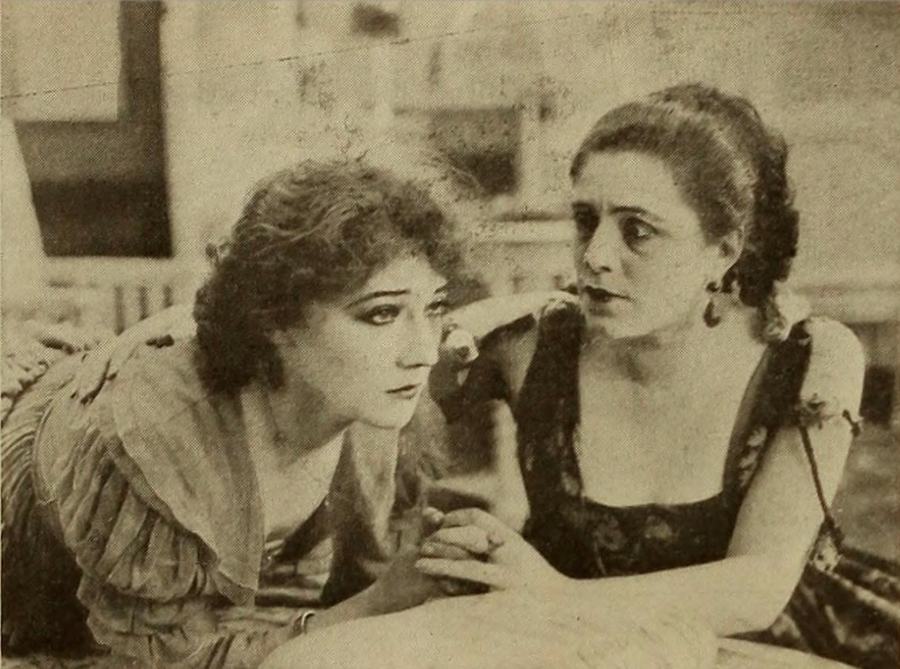
Valeska Suratt, as Mary Madison, delivers a performance that must have been electrifying for audiences of the era. Her portrayal of a woman consumed by grief and then by a burning desire for revenge is central to the film's impact. Suratt, known for her vampish roles and theatrical flair, brings a powerful intensity to Mary's transformation. Her expressions, her gestures, her very posture would have conveyed the seismic shifts in Mary's emotional landscape, from despair to calculating fury. One can almost feel the weight of her suffering and the chilling resolve of her vengeance through her silent performance. The film relies heavily on such nuanced non-verbal communication, a hallmark of the silent era, making the actor's ability to convey complex emotions paramount. Suratt’s presence is magnetic, drawing the audience into Mary’s tormented world. Her ability to pivot from a wronged wife to a vengeful manipulator, and then to a woman shattered by her own actions, showcases a remarkable range.
The meticulously laid plans for revenge, however, encounter an unexpected obstacle: genuine human connection. The ex-convict and John's daughter, rather than falling into a cynical trap, genuinely fall in love. Their burgeoning romance, depicted with a tenderness that contrasts sharply with Mary's dark intentions, becomes the unexpected catalyst for the story's climax. This development is crucial; it elevates the film beyond a simple tale of vengeance to explore the redemptive power of love and the unpredictability of human emotions. The audience is left to ponder whether Mary's scheme, born of bitterness, can truly corrupt pure affection. Their eventual marriage is not just a plot point, but a symbol of hope, a testament to the idea that even in the shadow of calculated malice, true love can blossom.
The ultimate revelation is a gut-punch of dramatic irony: Mary discovers that the woman she sought to ruin, the unsuspecting bride of the ex-convict, is her own long-lost daughter. This moment, surely intended to elicit gasps from contemporary audiences, is the emotional fulcrum of the entire film. The weight of her actions, the horrific irony of her vengeance, crushes Mary's hardened heart. It is a moment of profound recognition and agonizing self-condemnation. The film doesn't shy away from the devastating consequences of Mary's choices, but rather uses this revelation as a powerful catalyst for transformation. This kind of shocking familial revelation, though perhaps less overtly fantastical, shares a certain dramatic DNA with films like The Fugitive, where characters grapple with intense personal dilemmas and the unforeseen repercussions of their pasts.
With her vengeful spirit utterly broken, Mary Madison embarks on the final, most challenging leg of her journey: seeking reconciliation. She approaches John, not with anger or accusation, but with a humility born of immense suffering and newfound clarity. The film culminates in their reunion, a poignant and long-awaited moment of forgiveness and understanding. It’s a powerful statement on the possibility of healing, even after profound trauma and self-inflicted wounds. The title, The Straight Way, takes on a multifaceted meaning here – perhaps referring to the path of righteousness that Mary ultimately finds, or the direct, unyielding trajectory of consequence. It suggests that despite all the detours of anger and despair, there is a fundamental human need to return to a path of truth and love.
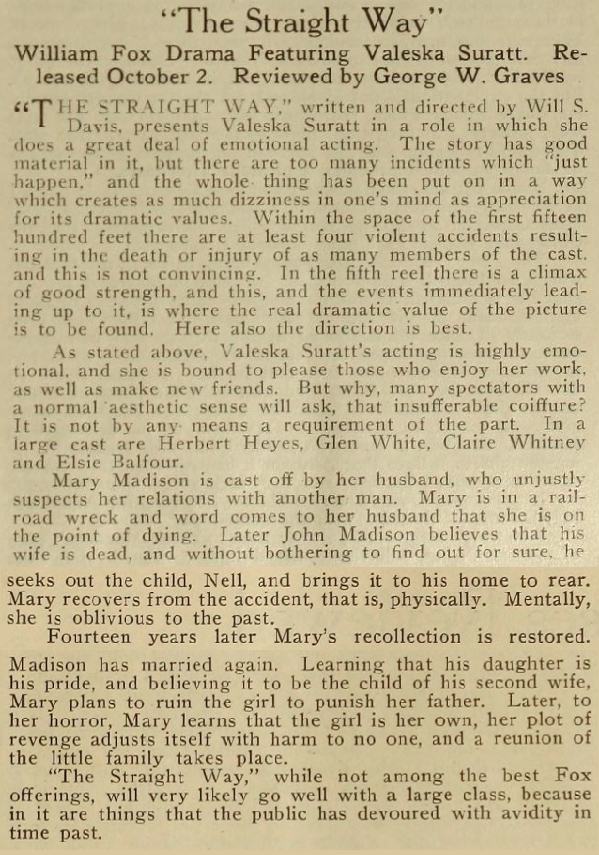
Will S. Davis, the director, navigates this complex narrative with a steady hand, a testament to the burgeoning sophistication of cinematic storytelling in 1916. Silent films, by their very nature, demanded a unique approach to direction, relying heavily on visual cues, exaggerated expressions, and clear, uncluttered mise-en-scène to convey meaning. Davis masterfully employs these techniques, ensuring that the audience is always clear on the emotional state of the characters and the progression of the intricate plot. The pacing, while deliberate by modern standards, allows for the full impact of each dramatic twist to land. His use of intertitles would have been crucial, not just to advance the plot, but to provide insights into characters' thoughts and motivations, acting as a narrative voice that guides the viewer through the moral maze. The visual language of the film, though perhaps lacking the avant-garde experimentation of some European contemporaries like Filibus, is nonetheless effective in its directness and emotional clarity. Davis understands the power of close-ups to capture the intensity of Valeska Suratt’s performance, and wide shots to establish the dramatic scale of events like the train wreck.
The cinematography, while constrained by the technology of the era, would have focused on clear composition and lighting to enhance the mood. One can imagine the stark contrasts between scenes of domestic tranquility and the chaotic aftermath of the train accident, or the shadowy spaces where Mary plots her revenge. The visual aesthetic would have been crucial in conveying the film’s moral landscape, from the innocence of the daughter to the brooding intensity of Mary. Early cinema often used symbolic imagery, and it's likely The Straight Way would have employed such visual metaphors to underscore its themes of light and darkness, good and evil, and the eventual triumph of love. The film's ability to communicate such complex themes without spoken dialogue is a remarkable achievement, relying on the universal language of human emotion.
Beyond Suratt's magnetic presence, the ensemble cast contributes significantly to the film's resonance. Herbert Heyes, as John Madison, portrays a man burdened by loss and later, by the unexpected joy of fatherhood, only to be confronted by the ghosts of his past. His performance would have required a nuanced depiction of grief, resilience, and eventual forgiveness, mirroring Mary's own arduous journey. Claire Whitney, likely playing the daughter, would have needed to embody innocence and burgeoning love, creating a stark contrast to Mary's vengeful machinations. Her purity of spirit is what makes Mary's plot so heinous and her eventual love story so redemptive. The ex-convict, perhaps played by Richard Rendell or Fred Jones, would have had to convey both a sense of injustice and a capacity for genuine affection, avoiding a one-dimensional villainy. The success of silent films hinged on the actors' ability to project inner turmoil and profound feelings through their physicality and facial expressions, and this cast, under Davis's direction, appears to have risen to that challenge. The interplay between these characters, their silent reactions and interactions, forms a delicate ballet of human drama.
The supporting cast members like T. Tamamoto, Glen White, Richard Turner, and Elsie Balfour would have filled out the world of The Straight Way, providing the necessary depth and context for the main drama. Their contributions, even in smaller roles, would have been vital in establishing the societal backdrop against which Mary's personal tragedy unfolds. In an era before sophisticated sound design, every visual element, every flicker of expression, every carefully choreographed movement was a crucial part of the storytelling fabric. The collective effort of this ensemble would have been instrumental in conveying the film’s intricate emotional landscape and ensuring its dramatic impact on the audience, much like the detailed character work required in grand ensemble pieces such as Far from the Madding Crowd, albeit in a different narrative style.
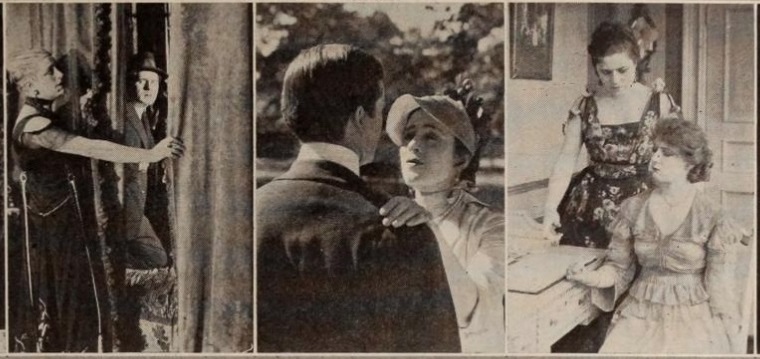
In an age often characterized by its burgeoning experimentation, The Straight Way stands as a robust example of a well-executed melodrama, a genre that consistently captivated audiences. It explores themes that remain eternally relevant: the destructive nature of revenge, the redemptive power of forgiveness, the unpredictable hand of fate, and the enduring strength of familial bonds. While some might view its plot as overly dramatic or coincidental, it is precisely this heightened reality that allows it to tap into fundamental human emotions with such potent force. It’s a film that asks us to consider the consequences of our actions, the fragility of truth, and the long, often painful, journey towards understanding and peace. Its narrative complexity and emotional depth position it as more than just a relic; it's a vibrant piece of cinematic history that continues to speak to the human condition.
For those interested in the evolution of storytelling, the craft of silent acting, or simply a compelling tale of human resilience, The Straight Way offers a rich experience. It reminds us that even in the absence of spoken dialogue, the power of visual narrative, coupled with compelling performances and a gripping plot, can create an unforgettable cinematic journey. It's a testament to the ingenuity of early filmmakers like Will S. Davis and the expressive capabilities of stars like Valeska Suratt, who together crafted a film that, despite its age, still charts a surprisingly straight path to the heart of its viewers. This film, like many of its contemporaries, laid the groundwork for the more complex cinematic narratives that would follow, proving that the silent screen was anything but silent in its emotional impact. Its exploration of moral ambiguity and the search for justice resonates with the human struggle across all eras, making it a timeless piece of art.
The film’s title, The Straight Way, itself invites interpretation. Is it the straight way of justice, of retribution, or ultimately, the straight way to reconciliation and truth? The film suggests that the latter, though often the most arduous, is the one that truly leads to peace. It’s a journey Mary Madison undertakes, full of twists and turns, but ultimately leading her back to herself and her family, albeit irrevocably changed. This profound exploration of moral navigation makes the film a compelling watch for anyone interested in the foundational narratives of early cinema. It stands as a powerful example of how silent film, through its unique artistic constraints, could achieve a profound depth of human drama.
Ultimately, The Straight Way is more than just a historical curiosity; it's a vibrant, emotionally charged drama that speaks to universal themes of love, loss, vengeance, and forgiveness. Its carefully constructed plot, powerful performances, and skillful direction make it a significant contribution to silent cinema, deserving of continued appreciation and study. It solidifies its place not just as a film of its time, but as a timeless narrative about the human capacity for both profound error and ultimate redemption. It’s a compelling argument for the enduring power of classic melodrama to engage, provoke, and move an audience, even a century after its initial release.
IMDb 6.4
1926
Community
Log in to comment.