DbcultAccessing Vault...
Cult Review
Senior Film Conservator
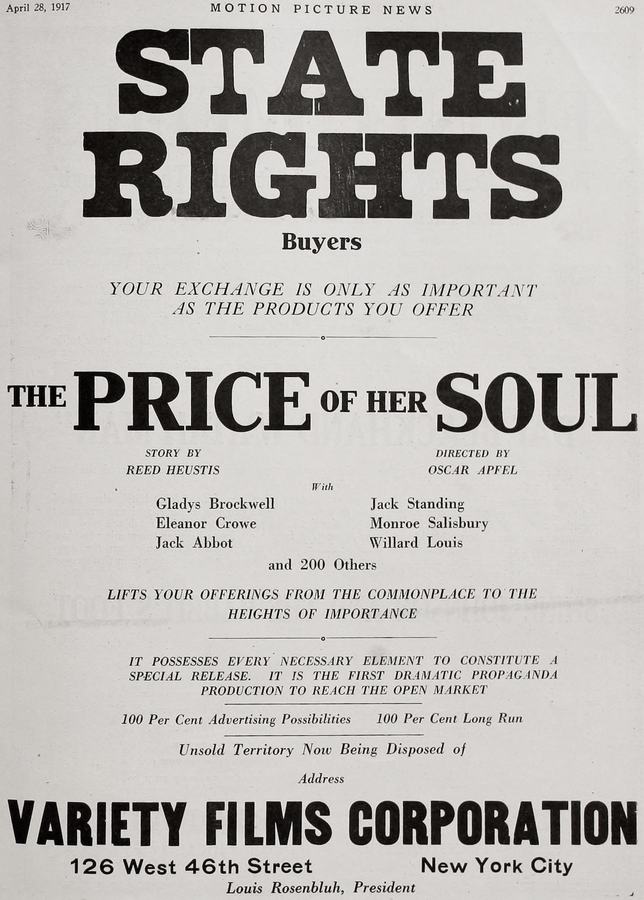
Stepping back into the cinematic landscape of an earlier era, one encounters films like 'The Price of Her Soul' – a work that, even a century after its creation, resonates with a stark, unsettling power. This isn't merely a silent melodrama; it's a profound exploration of human frailty, the corrosive nature of vengeance, and the arduous path to redemption. Its narrative, while rooted in the sensibilities of its time, touches upon universal themes that continue to challenge and provoke thought. The film presents a moral labyrinth, forcing its audience to grapple with the complex interplay of justice, retribution, and the profound cost of destructive choices.
The story pivots on Gun Connor, a protagonist whose initial motivations are deeply rooted in personal tragedy. The discovery of his brother's enslavement to a pervasive drug epidemic ignites within him a furious desire for justice. This isn't a measured, legalistic pursuit; it's a visceral, almost primal urge to dismantle the machinery of suffering. Monroe Salisbury, in the role of Connor, likely conveyed this simmering intensity through the exaggerated yet deeply expressive techniques characteristic of silent film acting. His eyes, his posture, the very tension in his frame would have spoken volumes about a man driven by a profound sense of wrong. What truly elevates this narrative beyond a simple revenge tale is the revelation that the architect of this drug empire is the father of Ailene Graham, the woman Connor loves. This twist doesn't just complicate his mission; it imbues it with a crushing moral dilemma. How does one reconcile a quest for justice with the potential devastation of an innocent life, especially one so dear?
Connor’s subsequent actions propel the film into truly audacious territory. Rather than merely exposing the drug lord, he embarks on a chillingly calculated course: to make Ailene, the very daughter of the villain, succumb to the narcotic's influence. This is not an accidental consequence but a deliberate, albeit agonizing, strategy. His motive, born of a twisted desire for revenge, is to force the father to witness the horrors he has inflicted upon countless others, made manifest in his own flesh and blood. This phase of the narrative is where 'The Price of Her Soul' truly distinguishes itself. It dares to portray a protagonist who, in his pursuit of what he perceives as justice, becomes an agent of the very evil he seeks to eradicate. The daily letters, meticulously detailing Ailene's growing helplessness, serve as a psychological torture, a slow-motion unraveling designed to break the father's moral imperviousness. This is a dramatic device of considerable power, a testament to the writers' willingness to explore the darker facets of human motivation.
Gladys Brockwell, playing Ailene Graham, would have been tasked with portraying a character whose journey is nothing short of harrowing. From a woman beloved by Connor to a victim of a cruel, deliberate manipulation, her performance would have demanded a nuanced understanding of despair, vulnerability, and the slow erosion of self. Her eventual presentation to her father, a helpless shell of her former self, represents the narrative's emotional zenith. It is a moment designed to shock, to horrify, and ultimately, to catalyze profound change. This scene, devoid of spoken dialogue, would have relied entirely on the power of visual storytelling – the father's dawning horror, Connor's grim satisfaction, and Ailene's silent, tragic testament to the drug's destructive force. It's a moment that could rival the emotional intensity of similar confrontations in films like The Masked Heart, where personal betrayals lead to devastating reckonings.
The film's resolution, while perhaps offering a more optimistic outlook than a purely cynical modern audience might expect, is nonetheless earned through the crucible of suffering. The father, confronted with the devastating reality of his trade reaching his own fireside, is finally compelled to cease his dealings. This act of cessation, however, is merely the first step. The true redemptive arc unfolds in the subsequent months, as Connor takes Ailene and his own brother to a mountain retreat. This setting, often symbolic of purity and fresh beginnings, underscores the film's belief in the possibility of rehabilitation and healing. The notion of a ‘cure’ being effected, both for Ailene and Connor’s brother, speaks to an era where such ailments were often viewed through a lens of moral failing rather than purely medical understanding, yet the film's emphasis on care, isolation from temptation, and the power of love points towards a progressive understanding of recovery.
Connor's love, initially entangled with revenge, transforms into a purer, more selfless devotion. His reward isn't just Ailene's reciprocated affection but the satisfaction of having not only dismantled a destructive enterprise but also facilitated profound healing. This journey from avenger to healer is a central theme, suggesting that true justice may lie not in punishment alone, but in the restoration of what was broken. The contentment that reigns at the film's close is hard-won, a testament to the characters' endurance through immense personal and moral struggle. This arc of redemption, while perhaps appearing straightforward on paper, would have been conveyed with the heightened emotionality and visual cues that characterized silent cinema, making the audience deeply feel the weight of their journey.
To fully appreciate 'The Price of Her Soul', one must consider the unique artistic language of silent film. Without dialogue, the burden of storytelling fell squarely on visual composition, the actors' expressive performances, and the evocative power of intertitles. The director, working with Reed Heustis's script, would have meticulously crafted each scene to convey the complex emotions at play. The contrast between the dark, shadowy world of the drug trade and the eventual sun-drenched mountain sanctuary would have been vital. Close-ups on the faces of Monroe Salisbury, Gladys Brockwell, and Willard Louis (likely the father) would have been crucial in communicating their inner turmoil, their dawning realizations, and their ultimate transformations. The pacing, often dictated by the emotional beat rather than dialogue, would have built suspense during Connor's machinations and provided moments of poignant reflection during the recovery period.
The film's exploration of drug addiction was particularly salient for its time. The early 20th century saw growing awareness and concern about narcotics, and cinema often served as a powerful medium for social commentary. Much like The Straight Road or Le coupable might have tackled social ills or moral failings, 'The Price of Her Soul' confronted a pressing societal issue head-on. It didn't shy away from depicting the devastating consequences of addiction, nor did it offer simplistic solutions. Instead, it presented a narrative that, while melodramatic, sought to provoke empathy and understanding, even for those who might have initially been condemned. The film’s boldness in depicting a protagonist who actively inflicts the very suffering he decries is a remarkable artistic choice, showcasing a willingness to delve into the moral grey areas that define human experience. This complexity distinguishes it from more straightforward morality plays of the era.
While the style of acting and presentation might feel distant to a contemporary viewer accustomed to sound and rapid-fire editing, the core themes of 'The Price of Her Soul' remain strikingly relevant. The battle against addiction, the ethical tightrope walked by those seeking justice, and the transformative power of love and forgiveness are perennial human concerns. The film challenges us to consider the line between justice and vengeance, and whether the ends truly justify the means, particularly when those means involve inflicting harm, even for a perceived greater good. It asks profound questions about accountability, not just for the perpetrators of societal ills, but also for those who seek to remedy them through ethically dubious methods.
Comparing it to other films of its era, one might find parallels in the dramatic intensity of The Tiger or the emotional depth of character in Nina, the Flower Girl, but 'The Price of Her Soul' carves out its own distinct niche through its audacious plot. It’s a testament to the power of early cinema to tackle weighty subjects with both artistic flair and a keen understanding of the human condition. The film, despite its age, offers a compelling argument for the enduring power of narrative to explore moral dilemmas and the often-painful journey toward personal and societal healing. Its legacy lies not just in its historical significance, but in its ability to provoke contemplation on themes that continue to shape our world. The artistry of these early filmmakers, captured in works like this, demonstrates a sophisticated understanding of human psychology and narrative construction, proving that the silent era was far from unsophisticated. The film, in its quiet yet profound way, reminds us that the price of any soul, especially one lost to the machinations of others, is immeasurable, and its redemption, a truly priceless endeavor. The journey of Gun Connor, from a man consumed by vengeance to one who facilitates profound healing, is a powerful illustration of the transformative capacity within the human spirit. This film stands as a compelling artifact, urging us to reflect on our own moral compasses and the pathways we choose when confronted with the insidious tendrils of evil.

IMDb 7.3
1931
Community
Log in to comment.