DbcultAccessing Vault...
Cult Review
Senior Film Conservator
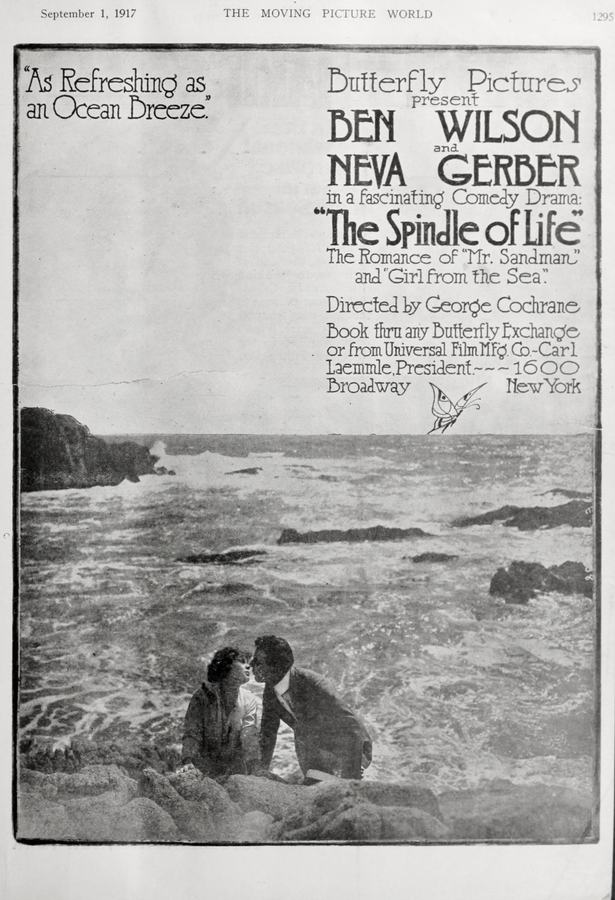
Stepping back into the nascent days of cinema, we encounter The Spindle of Life, a 1917 silent drama that, despite its vintage, spins a surprisingly modern yarn about ambition, integrity, and the enduring power of authentic connection. Directed by Ben F. Wilson and penned by the collaborative talents of Sidney Robinson and Karl R. Coolidge, this film transcends its era, offering a poignant commentary on societal expectations, class divides, and the often-perilous pursuit of wealth. It's a testament to the evocative storytelling possible even without spoken dialogue, relying instead on nuanced performances, compelling intertitles, and the universal language of human emotion.
At its core, The Spindle of Life deftly navigates the treacherous waters of social climbing, personified by the formidable Mrs. Harrison, portrayed with convincing aristocratic hauteur by Jessie Pratt. Her arrival in the idyllic Harborsport is not for leisurely pursuits but to meticulously orchestrate a socially advantageous marriage for her daughter, Gladsome, to Vincent Bradshaw, the son of her trusted financial advisor, James Bradshaw. This familial machination immediately sets a tone of calculated aspiration that feels both familiar and tragically timeless. The film wastes no time in establishing this central conflict: a mother’s desire for status clashing vehemently with her daughter’s burgeoning independence and innate sense of justice.
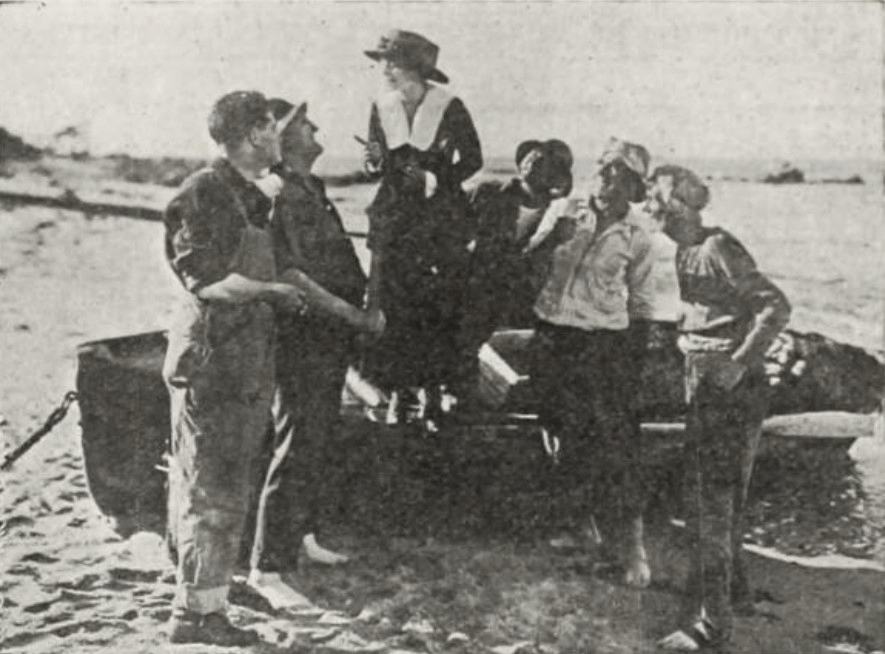
Gladsome, brought to vibrant life by the remarkable Neva Gerber, is no mere pawn in her mother's grand scheme. Gerber imbues Gladsome with a spirited defiance that is both captivating and believable. Her immediate empathy for the local fishermen, a class Mrs. Harrison and James Bradshaw deem beneath their notice, serves as the narrative’s initial spark. When James Bradshaw, played by Willard Wayne with a suitably smarmy condescension, attempts to forcibly remove these working-class individuals from his property, Gladsome’s moral compass guides her to action. She doesn't just sympathize; she mobilizes, inspiring the fishermen to reclaim their rightful space. This act of 'rabble-rousing' leads to her arrest, a pivotal moment that, paradoxically, liberates her from the immediate confines of her mother's suffocating social agenda. It’s a powerful early assertion of female agency, a theme explored with similar vigor in films like Patsy, where female protagonists often challenge established norms.
Bailed out by the very man whose son she is meant to marry, Gladsome’s world soon expands beyond the provincial concerns of Harborsport. Her encounter with 'Alphabet' Carter, a vacationing financial wizard portrayed with engaging charisma by A.E. Witting, introduces the film's romantic heart. Witting’s portrayal of Carter is one of quiet strength and undeniable intellect, creating an immediate and palpable chemistry with Gerber’s Gladsome. Their attraction is instantaneous, a connection forged not on social standing but on mutual respect and genuine affection. Carter’s subsequent proposal, however, is met with Gladsome’s poignant hesitation, a moment of vulnerability where she reveals the intricate web of her mother's social aspirations. This scene, devoid of dialogue, speaks volumes through Gerber’s expressions and Witting’s patient understanding, highlighting the film’s reliance on visual storytelling.
The plot then deftly weaves financial intrigue into the romantic narrative. Carter’s return to the bustling, cutthroat environment of Wall Street brings him face-to-face with the insidious underbelly of high finance. He uncovers James Bradshaw’s egregious misdealings, specifically his squandering of Mrs. Harrison’s fortune. This revelation is a masterstroke by writers Sidney Robinson and Karl R. Coolidge, transforming a social drama into a gripping tale of financial malfeasance and moral reckoning. The tension mounts as Carter confronts Bradshaw, whose fear of exposure drives him to accelerate the forced marriage between Gladsome and Vincent. This narrative arc, where financial deception underpins personal relationships, echoes the intricate plots seen in films like The Intrigue, where secrets and betrayals often dictate the characters' fates.
The success of a silent film hinges entirely on the expressiveness and conviction of its cast, and The Spindle of Life benefits immensely from a talented ensemble. Neva Gerber, as Gladsome, is truly the film’s lodestar. Her performance is a masterclass in silent acting, conveying a vast spectrum of emotions – from youthful idealism and spirited defiance to poignant vulnerability and resolute strength – all without uttering a single word. Her eyes, her posture, and her gestures speak with an eloquence that many contemporary actors struggle to achieve. She embodies the film’s central conflict, serving as a beacon of integrity in a world riddled with artifice.
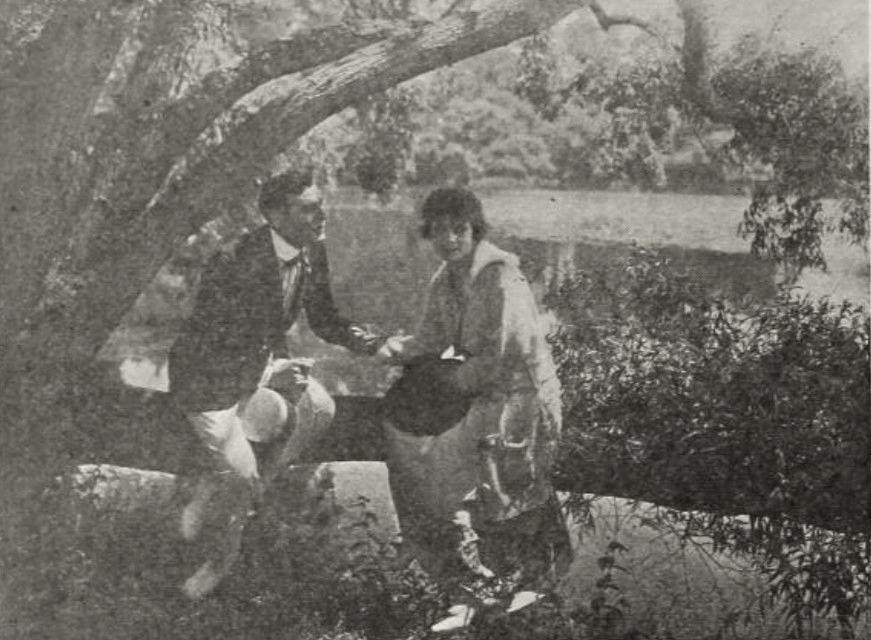
A.E. Witting, as 'Alphabet' Carter, provides an excellent foil to Gerber. His portrayal is one of understated power, a man whose quiet demeanor belies a sharp intellect and unwavering moral compass. He is the antithesis of the manipulative James Bradshaw, bringing a much-needed sense of justice and genuine affection to the narrative. The chemistry between Gerber and Witting is undeniable, providing the emotional anchor for the film's romantic resolution. Their scenes together are imbued with a tender sincerity that resonates deeply.
The supporting cast also delivers memorable performances. Jessie Pratt's Mrs. Harrison is perfectly cast as the ambitious, socially conscious matriarch, her expressions of disapproval and eventual reconciliation providing crucial emotional beats. Willard Wayne's James Bradshaw is suitably villainous, a man consumed by greed and fear, whose actions drive much of the plot's tension. Dick La Reno, Hayward Mack, Ben F. Wilson (who also directed), Ed Brady, and Winter Hall round out the cast, each contributing to the rich tapestry of Harborsport's society, from the exploited fishermen to the unwitting participants in Bradshaw's schemes. The collective effort ensures that every character, no matter how minor, serves to deepen the film's thematic resonance.
Ben F. Wilson's direction of The Spindle of Life demonstrates a keen understanding of silent film aesthetics and narrative pacing. He masterfully uses visual cues and blocking to convey power dynamics and emotional states. The scenes of Gladsome organizing the fishermen are particularly effective, showcasing her leadership and the collective strength of the community through dynamic group shots and close-ups on determined faces. Wilson’s ability to build suspense around Bradshaw’s financial machinations, and then to deliver a satisfying, albeit tense, climax, speaks to his directorial prowess. The film never feels rushed, allowing moments of emotional weight to breathe, nor does it drag, maintaining a steady, engaging rhythm throughout its run time.
The screenplay by Sidney Robinson and Karl R. Coolidge is remarkably intricate for its time, successfully intertwining a romantic drama with biting social commentary and a thrilling financial expose. They craft a narrative that, while adhering to certain melodramatic conventions of the era, feels remarkably prescient in its critique of unchecked ambition and corporate malfeasance. The character arcs are well-defined, particularly Gladsome’s journey from a somewhat protected daughter to a woman of strong conviction who ultimately chooses her own path. The intertitles are used judiciously, providing necessary exposition without overwhelming the visual narrative, a delicate balance essential for effective silent storytelling.
The film's title itself, The Spindle of Life, is a beautiful metaphor for the threads of destiny, choice, and consequence that intertwine to form each individual's journey. It suggests a careful, deliberate process, much like the intricate plotting that unfolds on screen. The writers skillfully manipulate these threads, pulling them taut with tension and then gently weaving them into a harmonious resolution, reminiscent of the complex familial and societal structures often explored in films like Emmy of Stork's Nest, which also delves into personal choices amidst demanding circumstances.
The visual language of The Spindle of Life is, like many silent films, a form of poetry. While specific cinematographers are often uncredited in films of this period, the camera work here effectively captures the contrasting worlds of Harborsport: the rugged beauty of the fishing community against the opulent, yet morally compromised, world of the wealthy. The use of natural light, the framing of shots to emphasize emotional states, and the careful composition of scenes all contribute to a rich visual experience. The film employs techniques to convey urgency and emotion, from quick cuts during moments of tension to lingering close-ups that allow the audience to connect deeply with the characters' inner lives. For instance, the silent anguish on Gladsome's face as she contemplates her forced marriage is rendered with heartbreaking clarity through a simple, yet powerful, shot.
The production design, though perhaps not as lavish as some epics of the era, is effective in establishing the contrasting social strata. The humble settings of the fishermen starkly highlight the grandeur, albeit superficial, of the Bradshaw estate. This visual dichotomy reinforces the film's thematic exploration of class struggle and the inherent value of honest labor versus ill-gotten gains. Such visual contrasts were a staple of early cinema, effectively conveying complex social dynamics without the need for extensive dialogue, much like the stark realities depicted in The Squatter and the Clown, which also used visual storytelling to highlight societal divides.
In an age dominated by spectacle and sound, it is easy to overlook the quiet power of early cinema. However, The Spindle of Life serves as a potent reminder of the foundational artistry that shaped the medium. Its themes – the corrupting influence of wealth, the struggle for personal autonomy, and the triumph of love and integrity over societal pressures – are as relevant today as they were over a century ago. The film’s narrative, though unfolding in a specific historical context, taps into universal human experiences, making it accessible and engaging for modern audiences willing to embrace its unique aesthetic.
The film stands as a valuable artifact, not just for its entertainment value, but for its historical significance in the development of cinematic storytelling. It showcases the growing sophistication of narrative structures and character development in the silent era. For fans of classic cinema, or those seeking to understand the roots of modern storytelling, The Spindle of Life offers a compelling and emotionally resonant journey. It’s a beautifully preserved piece of cinematic history that continues to spin its tale, inviting viewers to reflect on the choices we make and the values we uphold.
Ultimately, The Spindle of Life is more than just a historical curiosity; it is a vibrant, engaging drama that holds its own against more celebrated works. Its narrative arc, from social manipulation to financial exposure and ultimately to heartfelt reconciliation, is meticulously crafted and emotionally satisfying. Neva Gerber's performance alone is worth the price of admission (or, in this case, the time spent viewing), anchoring the film with her powerful yet nuanced portrayal of Gladsome. The film reminds us that while the technological aspects of cinema have evolved dramatically, the core elements of compelling storytelling – relatable characters, significant stakes, and resonant themes – remain timeless. It's a film that quietly asserts the power of individual choice and the ultimate triumph of genuine human connection over the ephemeral allure of status and wealth. A recommended viewing for anyone with an appreciation for the rich tapestry of early American cinema.
IMDb —
1922
Community
Log in to comment.