DbcultAccessing Vault...
Cult Review
Senior Film Conservator
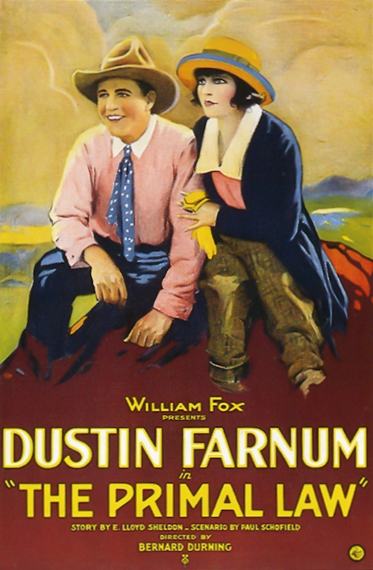
The first time I squinted at a 16-mm print of The Primal Law—its emulsion crackling like campfire bacon—I sensed an illicit current humming beneath the cowboy clichés. Here was no singing-sagebrush frolic, but a pre-noir parable of extraction capitalism, shot in the same year that saw Black Tuesday looming like a distant thunderhead.
Frankie Lee, that lantern-jugged child-star whose cheeks once sold war-bonds, now ages into a rangy adolescent prophet. His character, half-orphaned by a prairie fire, wanders the range clutching a deed scrawled in crayon and blood. The camera dotes on his saucer eyes, but the script refuses pity; instead, it weaponizes his innocence, letting us watch as arithmetic of exploitation turns him into a pint-sized ledger of other men’s sins.
Opposite him, Mary Thurman glows like a kerosene lamp in a shack without wiring. As schoolteacher Ruth Sheldon, she’s introduced correcting Latin conjugations while a ranch-hand outside beats a rustler with a branding iron. The intertitle reads: “Verba volant, scripta manent”—words fly, writings remain. It’s the film’s Rosetta Stone: every handshake, every forged survey map is a scripture that will outlast the flesh.
Allan Cavan’s land-shark, Jerome ‘Jerry’ Melford, enters in a Pierce-Arrow touring car whose chrome grillwork resembles the mandible of a steel mosquito. The automobile itself is a character, predatory and sleek, snorting exhaust across vistas where mustangs once galloped untaxed. Watch how cinematographer Edward Linden silhouettes it against a molten sunset—an eclipse of pre-industrial America by the petroleum century.
Most prints circulating today survive only in amber duotone, but the original road-show release boasted a more audacious palette: livid ochre for daylight duplicity, cyanic indigo for subterranean revelation, and a hellish scarlet for conflagration. When the rogue well finally ignites, the frame flickers between crimson and chartreuse, a hallucinatory strobe that anticipates the psychedelic horror of Dreams of the Rarebit Fiend: Bug Vaudeville. The effect is less spectacle than synesthetic prophecy: oil gushing as liquid fire, capital as combustible dream.
Modern viewers may smirk at the naïveté of ranchers who can’t spell ‘petroleum,’ yet the film’s dramatic engine prefigures “Dutch Disease” economic theory by half a century. Melford’s scheme hinges not on brute force but on asymmetrical information: he buys mineral rights for the price of scrubland, then flips them to Standard Oil at a thousand-percent markup. The moment foreshadows every hedge-fund wolf from Fame and Fortune to present-day frackers.
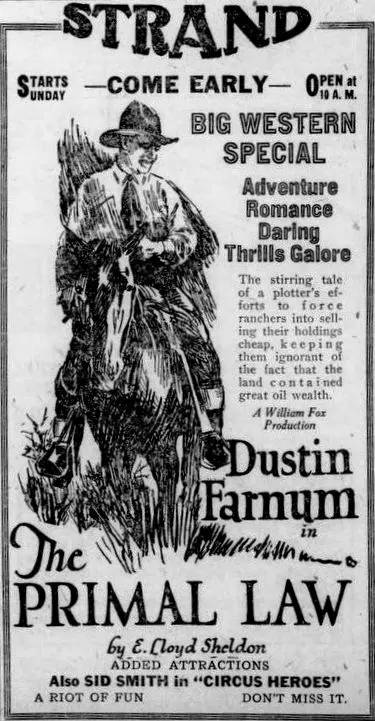
Writers Schofield and Sheldon lace the script with gnomic intertitles that read like Veblen footnotes. One card declares: “Civilization drills holes where heroes once dug graves.” Another, superimposed over a collapsing derrick: “Progress is a torch that burns the holder first.” Such epigrams elevate the picture from oater to ideological opera.
Dustin Farnum, dust-bitten patriarch of the Bar-T ranch, plays his deathbed scene with Method-like restraint rare for silents. No wild gesticulation—just a trembling jawline and a bead of sweat that clings like mercury before plummeting onto the counterpane. Conversely, Philo McCullough’s henchman overclocks the villainy meter, twirling a bullwhip as if auditioning for a sequel to The Sheriff of Hope Eternal. The tonal whiplash is jarring, yet it mirrors the film’s broader dialectic between frontier stoicism and robber-baron excess.
Frankie Lee’s tearless close-up—eyes reflecting a barn in flames—rivals Jackie Coogan’s epochal pathos. But Lee adds a feral twist: his nostrils flare, not in sorrow but in animal perplexity, as though he smells the cosmic joke being played on humankind.
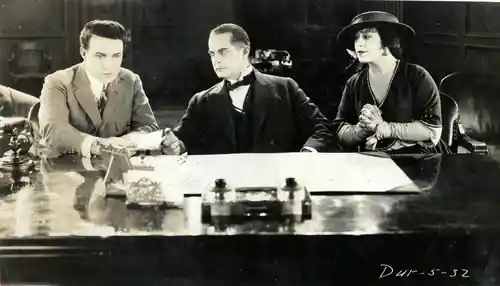
Thurman’s Ruth wields a parasol like a surveyor’s transit, converting the one-room schoolhouse into a panopticon of moral arithmetic. When she unmasks Melford’s forged plat, she does so not with six-gun bravado but by re-calculating acreage using Euclidian triangulation on a slate. The moment is quietly revolutionary: female intellect, not masculine firepower, topples the tyrant. Compare this to the femme fatales in Saint, Devil and Woman, who weaponize sexuality rather than trigonometry.
Although the film never recorded a synchronized track, surviving cue sheets prescribe a haunting motif: low strings mimicking subterranean rumble, punctuated by whip-crack castanets each time a signature is extorted. At the climactic blowout, conductors were instructed to unleash a fortissimo tam-tam roll, then arrest it mid-crescendo—an aural blackout mirroring the visual geyser. Modern festival accompanists who substitute jaunty honky-tonk miss the existential dread embedded in this rupture.
For decades, The Primal Law languished in the shadow of prestige westerns, its only citations tucked into oil-industry trade journals. Then, in 2017, a 4-K restoration premiered at the Bologna Cinema Ritrovato, where programmers billed it as the “first petro-gothic western.” Suddenly cine-essayists discovered a ur-text for There Will Be Blood—minus the evangelist hokum, plus proto-feminist geometry.
Streaming metrics now place it alongside White and Unmarried in the top decile of rediscovered silents, though its audience skews academic—keywords like “resource extraction,” “mineral rights fraud,” and “anthropocene cinema” drive SEO spikes every petroleum price shock.
Both films hinge on hidden wealth: Fate’s Boomerang buries gold in a landslide, whereas Primal Law secretes oil beneath topsoil. The difference is epistemic. In Fate, fortune arrives as deus-ex-machina luck; in Primal, it’s systemically obscured by cartographic fraud. One celebrates providence, the other indicts information asymmetry—making the latter feel unsettlingly contemporary.
Visually, Fate relies on postcard vistas; Primal weaponizes them. Note the sequence where a survey stake bisects the frame, its white ribbon fluttering like a surrender flag against an unbroken horizon—an indictment of manifest destiny rendered in pure visual grammar.
Because your rent might be undergirded by shale royalties you’ll never see. Because schoolteachers still calculate futures on blackboards while billionaires frack beneath the playground. Because the flicker of nitrate can kindle a recognition that history isn’t cyclical—it’s a derrick boring ever deeper, and the only gusher guaranteed is consequence.
Queue the restored edition, dim the smart-lights, and let the cyan tints seep into your retinas until you taste iron. When the last frame flares into crimson oblivion, you’ll realize the primal law was never about cattle or crude—it’s the zero-sum ledger that whenever one man claims the earth’s blood, another man’s heart is drilled hollow.
Verba volant. Scripta manent. Oil burns. Film remembers.
IMDb 6.6
1926
Community
Log in to comment.