DbcultAccessing Vault...
Cult Review
Senior Film Conservator
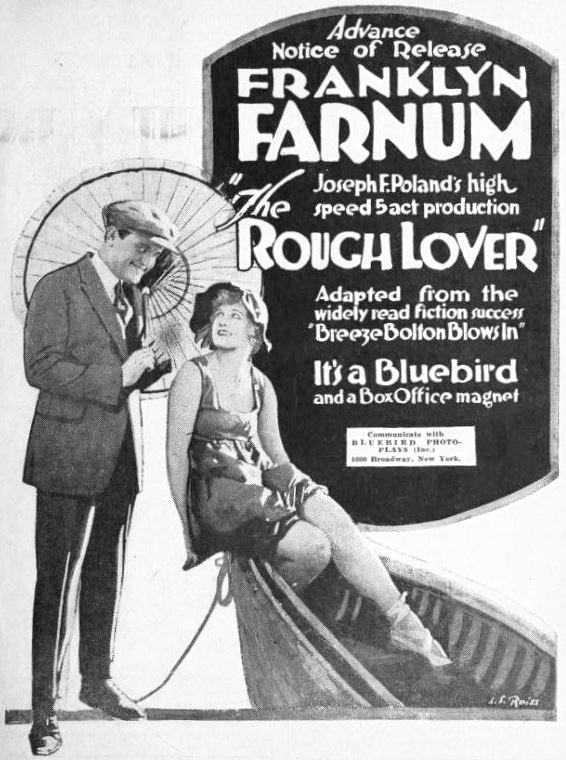
Picture a moonlit pier in 1924: jazz drifts from a distant hotel, salt stings your cheeks, and somewhere between the celluloid grains a timid scholar drifts face-down in indigo water, faking his own demise to escape a libido that refuses to take no for an answer. That single image—bookish Richard Bolton suspended between life and afterlife—anchors The Rough Lover, a buoyant, bawdy, often overlooked silent farce that feels like Oscar Wilde sparring with Douglas Fairbanks inside a hall of mirrors.
Joseph F. Poland and Charles Kenyon’s screenplay treats personality like a pocket square: fold, refold, yank out, stuff back in. Richard’s meekness is not merely temperament—it’s camouflage, a survival tactic in a predator-parlor where countesses trade glances like loaded dice. Once the aquatic escape hatch opens, the film pivots into doppelgänger nirvana: enter Spike O’Brien, a prizefighter whose biceps are registered lethal weapons in twelve counties. The gag isn’t just that the two men share a face; it’s that moral gravity inverts—timidity bobs to the surface while brutality dons a tuxedo and learns to simper.
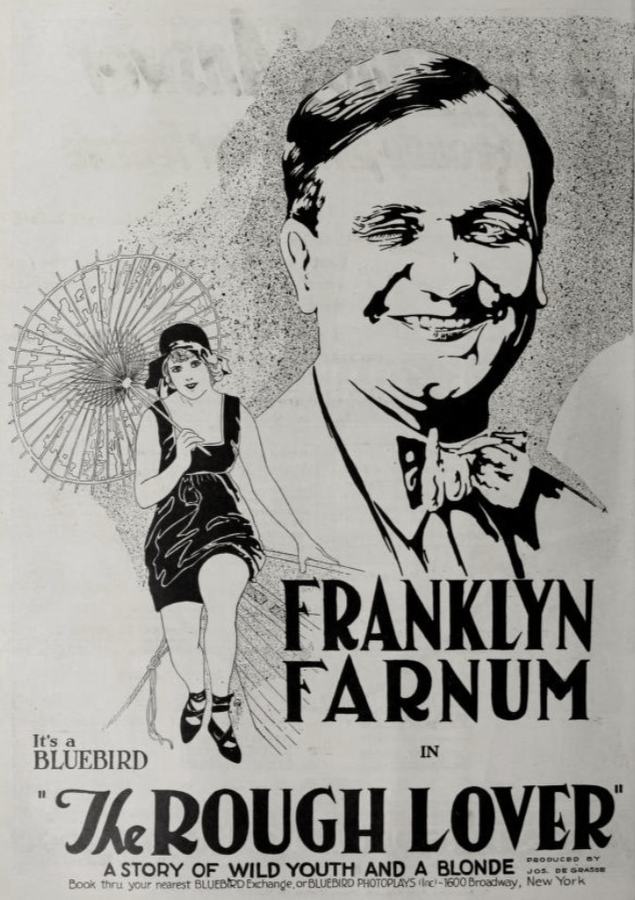
Franklyn Farnum, a name unjustly sanded off most cinema retrospectives, executes a high-wire act without a net. Watch his micro-gestures: Richard’s fingers flutter near his collar as though words might sprout from cloth; Spike’s knuckles crack like breakfast cereal. Farnum differentiates the duo less through exaggerated swagger than through ocular choreography—Richard’s pupils chase the floorboards, Spike’s gaze lasers through bodices. When the final reel unmasks the switcheroo, the actor lets Richard’s newfound poise bloom gradually, shoulders squaring in real time, a metamorphosis that feels earned rather than scripted.
Catherine Henry’s Countess Wintershin slinks through each frame like cigarette smoke—dangerous, aromatic, impossible to fence in. She embodies liberated flapper ennui while hinting at wounds the film never verbalizes. Juanita Hansen’s Helen, first sketched as porcelain arm-candy, gradually fractures the mold; her scream upon realizing Spike’s deception is silent-era gold, a raw chord that reverberates beyond the intertitle. And Martha Mattox, channeling a proto-Morticia as Aunt Mary, steals every séance scene, eyes rolling skyward like billiard balls hunting for celestial pockets. Her spiritualist fervor supplies both comic buoyancy and Gothic dread, a tonal cocktail rarely attempted in slapstick of the era.
Though no auteur signature burnishes the prints, the anonymous director orchestrates spatial gags worthy of Lubitsch: note the mirrored wardrobes in the hotel suite, framing both selves in a single shot, or the underwater ripple-effect accomplished by shooting through an aquarium. Day-for-night beach scenes flirt with chiaroscuro, waves lapping like ink around ankles. The duel at dawn transpires in silhouetted long-shot, rapiers flickering like antennae of enraged insects—a stylistic flourish that anticipates later swashbucklers.
Stack The Rough Lover beside The Girl of the Golden West and you find operatic grandeur swapped for bedroom farce; pair it with Neft vä milyonlar sältänätindä’s petroleum melodrama and the tonal whiplash is delicious. Meanwhile, The Deserter moralizes over wartime cowardice—our film treats desertion as a comic reset button, erasing guilt with a single back-stroke. Only The Romantic Journey parallels its river-of-identity motif, yet lacks the séance-sizzle that makes Rough Lover a hotfooted hallucination.
Clocking a hair under an hour, the picture sprints like a pickpocket chased by a motorcycle cop. Each reel ends on a cliff-hanger: drowning, séance, seduction, duel, revelation—plot beats pile high yet never topple. Contemporary viewers weaned on Netflix sprawl may balk at the brevity, but the compression is the point; every intertitle crackles like a telegram you tear open with teeth.
Yes, the film flirts with the “woman-as-predator” trope, yet Helen’s final choice re-centers agency. She decides that vulnerability trumps braggadocio, upending the alpha-male template. The Countess, conversely, is punished for appetites the film itself titillates—a contradiction endemic to the twenties, yet her comeuppance feels less moralistic than situational, collateral damage in a universe governed by chance more than virtue.
Surviving prints often screen with improvised piano, but a thoughtful curator could mash a foxtrot with a tango, letting brass blare each time Spike flexes, then slide into Debussy-esque arpeggios for Richard’s aquatic reveries. The séance practically begs for a theremin, decades before sci-fi claimed it.
No pristine negative floats in the Library of Congress vaults; what circulates is a 16 mm reduction print flecked with emulsion rot. Yet the narrative bones are sturdy enough to warrant a 4K reconstruction should an archivist unearth an internegative. Color tinting—amber for interiors, cerulean for waves—would resurrect the film’s original temperature, turning a museum curiosity into a midnight-movie riot.
The Rough Lover is a shot of Prohibition-era moonshine—sharp, sweet, liable to make you hallucinate doppelgängers in your bathtub. It skewers class pretense while delivering pratfalls, lands sociopolitical jabs without sermonizing, and reminds us that identity is less monolith than masquerade. In an age when algorithms flatten cinema into comfort-blanket formulas, here is a movie that pirouettes on the precipice of sense, beckoning you to dive in, hold breath, and resurface laughing.
IMDb 4.9
1930
Community
Log in to comment.