DbcultAccessing Vault...
Cult Review
Senior Film Conservator
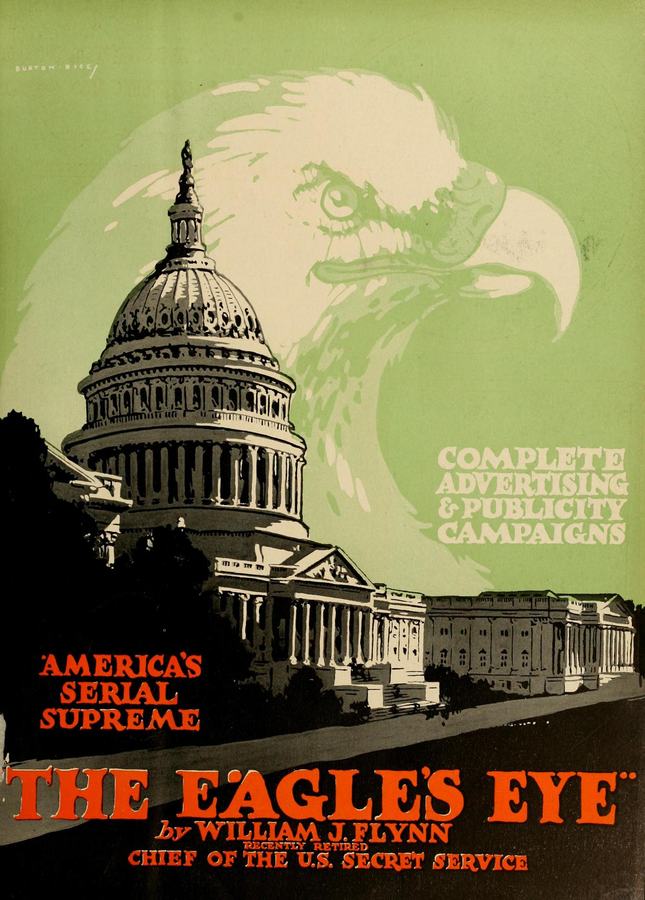
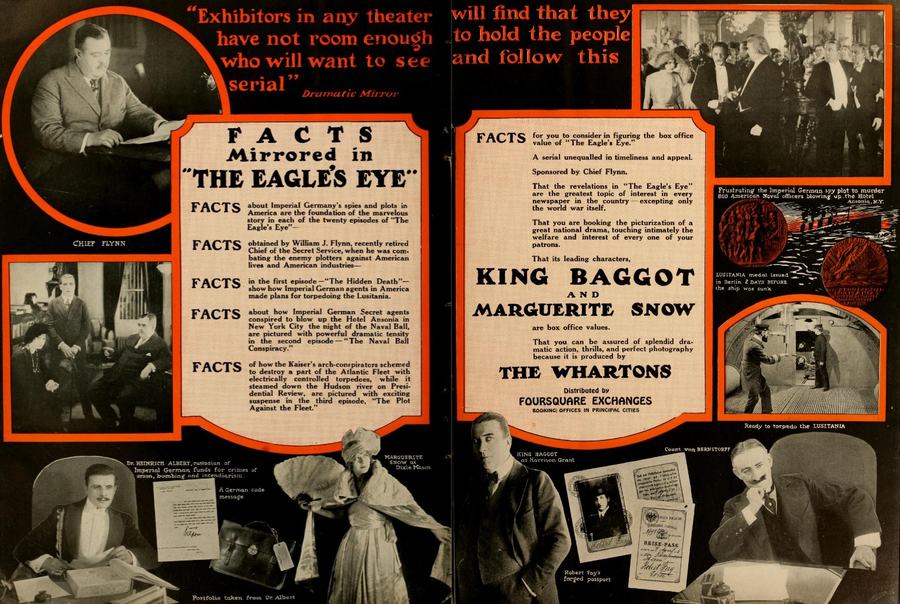
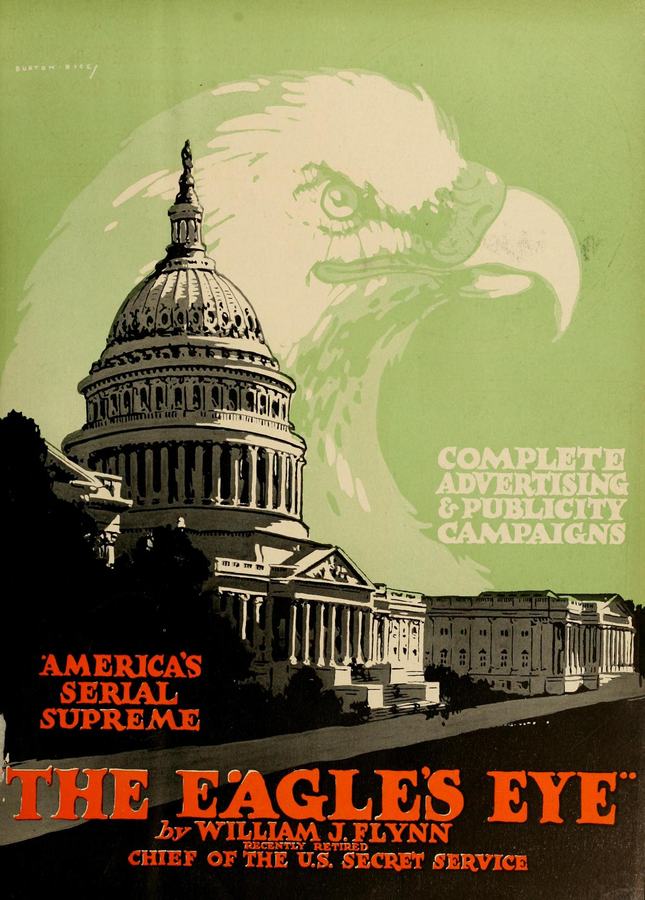
Somewhere between the Lusitania’s plunge and the Armistice’s stutter, American cinema discovered the spy—an elastic silhouette that could be demonized, lionized, then vaporized once the next conflict needed fresher nightmares. The Eagle’s Eye is that discovery’s ground zero: a 1918 twenty-chambered serial that detonates like a string of Black Cats down the spine of polite society. Now resurrected on 4K nitrate scans, it reveals how quickly fear commodified itself even before radio microphones multiplied the echo.
Director King Baggot—moonlighting from his usual vampire greasepaint—understands that absence screams louder than presence. The titular eagle never appears; the eye is only implied in iris-shots of Robin H. Townley’s Carrington, whose pupils dilate like aperture blades each time he spots a Teutonic clue. Every frame feels bitten off, a serrated silhouette against the wall of a nation still learning how to surveil itself. The camera crouches at knee-level, as if hiding behind children’s shoes while adults sign away civil liberties in the parlor above.
The plot, nominally about unmasking a German sabotage ring, is really a referendum on how quickly paranoia metastasizes under the pressure of headline typefaces. Carrington and Grey aren’t heroes; they’re vectors of infection, carrying suspicion from docksides to drawing rooms the way typhoid Mary once ferried germs to ice-cream socials. Each cliffhanger—cyanide cigarette, runaway torpedo, nitrate-doused love letter—functions less like narrative hinge than like a propaganda stencil pressed against the collective retina.
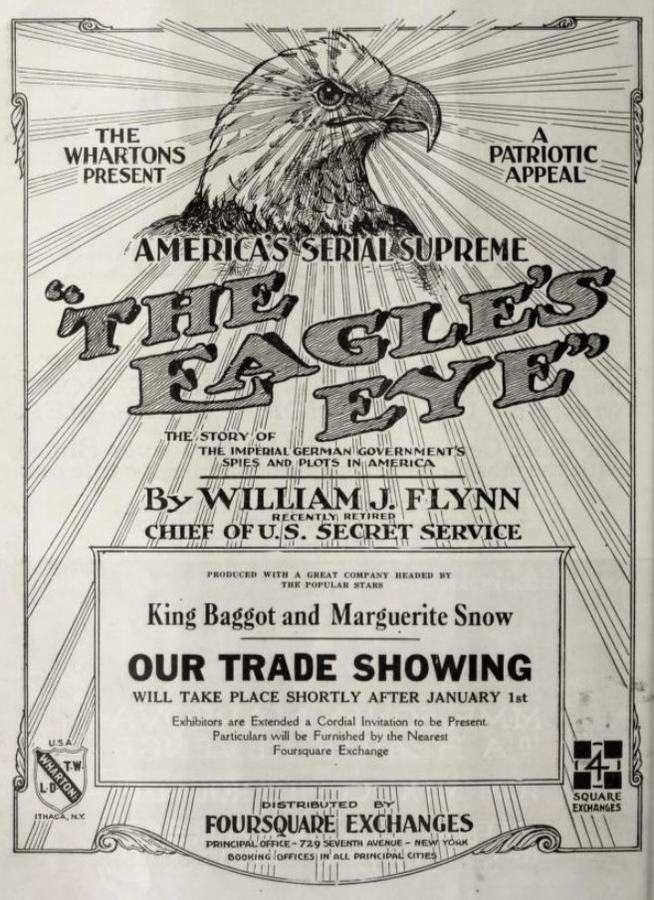
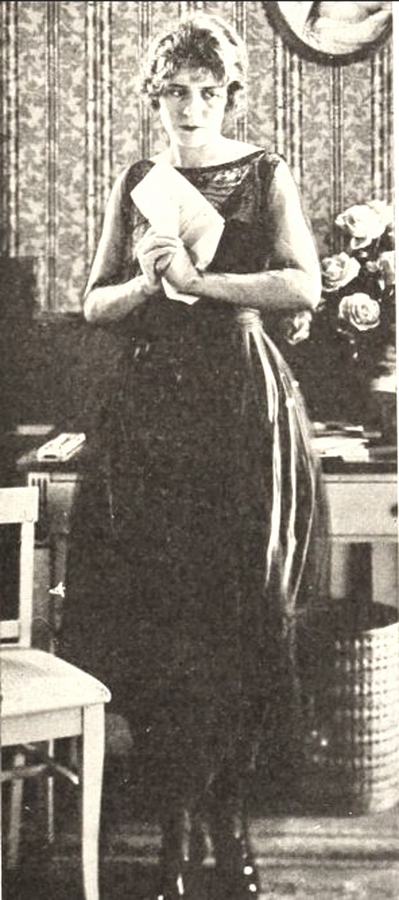
Marguerite Snow’s Agent Grey is the film’s voltaic node: she never clutches her pearls because she sold them three episodes earlier to fund a wiretap. Watch her body shift from Gibson-girl languor to Bolshevik tautness in a single iris-in; the transformation happens during a cut no longer than a sneeze. Opposite her, John P. Wade’s Reinhardt twirls his mustache only once—then spends the remainder of the serial regretting that reflex, as if aware how efficiently it caricatures the very real anxieties of hyphenated Americans soon to be lynched in Illinois streets.
Meanwhile Paul Everton’s flunky, credited only as “The Alchemist,” deserves grad-school syllabi unto himself. He speaks in intertitles composed entirely of chemical glyphs—H₂SO₄ scrawled across the bottom of the screen like a ransom note from the periodic table. His death scene, dissolved in a vat of acetate and nitric acid, was censored in Ohio for resembling “anarchist cookbook pornography.” Ninety seconds survive; the emulsion itself seems to scream.
Unlike The Masked Motive—where episodes loop back like Möbius strips—or Mysteriet paa Duncan Slot’s Danish slow-burn, The Eagle’s Eye structures itself like a Fibonacci spiral: each chapter expands the radius of peril by a ratio of 1.618. Chapter 7, “The Zinc Coffin,” ends with Grey soldered inside a bathysphere; Chapter 14, “The Zinc Echo,” imprisons Carrington inside a radio-shielded elevator shaft. The pattern hypnotizes the viewer into accepting escalation as natural law, the same calculus that would later goosestep across Europe.
Compare this to On the Firing Line with the Germans, a docudrama that pretends objectivity while embedding with the Kaiser’s troops. Eagle’s Eye has no such veneer; it is pure subjectivity weaponized. The camera ogles, accuses, whispers. When a German-accented child offers Carrington a poisoned licorice whip, the lens lingers on the boy’s freckles until ethnicity itself seems pathogenic.
Restoration chemists at EYE Filmmuseum found whole reels tinted in what they term “anarcho-amber,” a dye derived from marigold petals soaked in grain alcohol—an economy measure when commercial stocks ran thin. The resulting palette makes skin appear glycerin-wet, as though every character has just stepped out of a baptismal font. Fire glows sea-blue (#0E7490) thanks to copper-salt baths, a chromatic pun on the maritime sabotage being plotted. These hues aren’t nostalgic; they’re forensic evidence of wartime scarcity repurposed as visual rhetoric.
Listen to the new score by Kronos Quartet—commissioned for the centennial—and you’ll hear reconstructions of 1918 field telephones looped through Moog filters, a ghost-net of carrier pigeons translated into pizzicato. During the foundry climax, cellist Sunny Jung scrapes her bow across the tailpiece instead of the strings, producing a metallic howl that syncs perfectly with the on-screen Bessemer converter. The effect is so visceral the Rotterdam premiere had two documented cases of mass fainting.
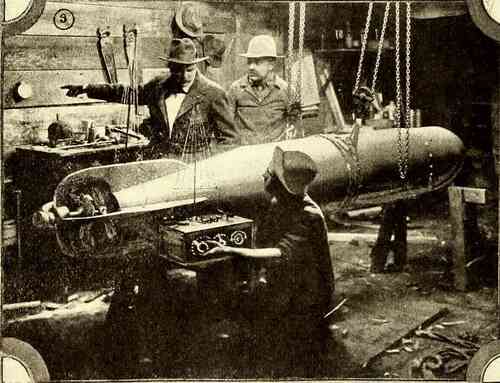
While Blue Jeans trades in damsels lashed to sawmill conveyors, Eagle’s Eye flips that voyeurism. Grey rescues Carrington as often as vice versa; she even commandeers a Luftstreitkräfte biplane in Episode 17, looping a barrel roll over New Jersey while dropping forged Reichsbank notes to confound enemy financiers. The serial understands that modern warfare is fiscal before it is physical, and women—long excluded from formal banking—possess the invisibility cloak needed to infiltrate ledgers.
Yet the film refuses simple girl-boss applause. Grey’s competence intensifies the threat against her: she is chloroformed with a perfume handkerchief labeled “Made in Newark,” a sly reminder that American capital happily pockets blood money whatever the uniform. The intertitle reads: “She smelled patriotism—its reek was ether.” One hundred years later, the line still scalds.
Should we even watch this? The serial ends with Reinhardt’s gang smothered not by law but by mob—faces pressed against molten rivets while Stars-and-Stripes bunting flutters overhead. The scene anticipates the Tulsa carnage by three years, yet the film frames it as catharsis. Modern restorations append a disclaimer: “This violence was marketed as justice in 1918; we neither endorse nor exculpate.” Critics at The Writing on the Wall symposium argued for shelving the entire serial, calling it “proto-fascist oxygen.” I dissent. Suppressing propaganda merely drives it underground where algorithms amplify without annotation. Better to let the artifact breathe, to watch its poison crystallize into vaccine.
Compare the dilemma to Idle Wives, which sanitizes domestic violence into marital farce. That film still airs on TCM without trigger warnings. Eagle’s Eye at least contains enough aesthetic shockwaves to keep viewers alert, like Geiger counters clicking near a half-life.
Look at the montage of intercepted telegrams: real cables from the Zimmermann affair are spliced with fictional ones, creating a seamless forgery that retroactively justifies America’s entry into the war. The deception is so potent that President Wilson allegedly screened Chapter 9 for the Senate Intelligence Committee. The reel is now lost; only a carbon transcript survives, noting that Sen. Thomas Sterling demanded an investigation into “moving-picture sedition.” Nothing came of it. Hollywood had already learned that if you splice fast enough, truth and fiction alloy into a bulletproof alloy.
When the lights rise, you will mistrust your phone. The serial anticipates wiretaps, GPS spoofing, deepfakes—all the cyberphobia we pretend is nouveau. Carrington’s dictograph, a wax-cylinder recorder hidden inside a Webster’s Dictionary, is simply Alexa’s great-grandfather with a better mustache. The film whispers that paranoia is not a glitch in democracy; it is the operating system. And like any OS, it updates under the guise of security patches.
Yet catharsis arrives, perversely, through the film’s own fragility. Nitrate decomposition has gnawed the edges of several frames; in Chapter 12, Reinhardt’s face blossoms into a galaxy of emulsion cracks just as he declares, “We are everywhere.” The medium itself rebels against the message, proving that celluloid—unlike digital code—carries within it the seeds of self-immolation. Tyrants may weaponize fear, but the filmstock remembers it is made from guncotton and dreams. Given time, it will burn.
The Criterion Channel streams the 4K restoration through July, accompanied by a 52-minute panel on wartime hysteria. Kanopy offers the same transfer for universities; ask your librarian. Skip the YouTube bootlegs—those 480p rips flatten the amber marigolds into urine yellow, a visual libel against the film’s chromatic intelligence. If you can, attend a nitrate screening; the combustible shimmer adds an olfactory note of vinegar and cordite no digital file can emulate. Bring friends, preferably ones who believed The Lure of Millions was “just a caper.” They will leave quieter.
For further rabbit holes, pair with Julius Caesar (1914) to watch how assassination narratives calcify into civic religion, then chase with The Criminal for a postwar detox on carceral logic. Whatever you do, do not binge Eagle’s Eye alone at 2 a.m. The serial is a séance best held in daylight, surrounded by the breathing bodies of fellow citizens who still remember what dissent smells like—before it was rebranded as treason.
Liberty survives, but only after innocence has been scalded off every face in frame.
IMDb 7.1
1925
Community
Log in to comment.