DbcultAccessing Vault...
6.2/10
Senior Film Conservator
A definitive 6.2/10 rating for a film that redefined the boundaries of cult cinema. The Run-Away Bride remains a cornerstone of transgressive art.
Ah, the silent era! A canvas of pure visual storytelling, where emotions were writ large on the faces of actors, and narratives unfurled with a poignant elegance often lost in the cacophony of sound. Among the myriad treasures from this period, The Run-Away Bride, a Danish gem from 1927, stands as a testament to the enduring power of simple, heartfelt comedy intertwined with a dash of adventure and romance. It’s a film that, even nearly a century later, manages to captivate with its charm, wit, and the utterly delightful antics of its central duo, Pat and Patachon.
Lau Lauritzen, a name synonymous with Danish cinema of the period, directs this cinematic escapade, co-writing the screenplay with A.V. Olsen. Their collaboration produces a narrative that, while ostensibly straightforward, is imbued with a warmth and sincerity that elevates it beyond mere slapstick. The film immediately introduces us to Pat (Carl Schenstrøm) and Patachon (Harald Madsen), a pair of vagabonds whose very existence seems to be a perpetual state of good-natured wandering. Their dynamic is instantly recognizable: Pat, the lanky, somewhat dandyish figure, and Patachon, the shorter, rounder, more earnest counterpart. This comedic pairing, a staple of early European cinema, finds its stride here, proving once again that the chemistry between two well-defined characters can carry a film through any plot contrivance.
Our story truly kicks off in the intimate, almost melancholic setting of a late-night bar. It’s here that Pat and Patachon, in their characteristic blend of curiosity and compassion, encounter Per Hammer, a young man shrouded in an palpable aura of sorrow. His despondency, rather than being a repellent, serves as a catalyst for an immediate and profound connection. This isn't just a casual meeting; it's the genesis of a bond forged in shared humanity, a moment that sets the entire narrative in motion. The swiftness with which these three disparate souls become 'firm friends' speaks volumes about the film's optimistic view of human connection, an almost idealistic portrayal of camaraderie that transcends social strata.
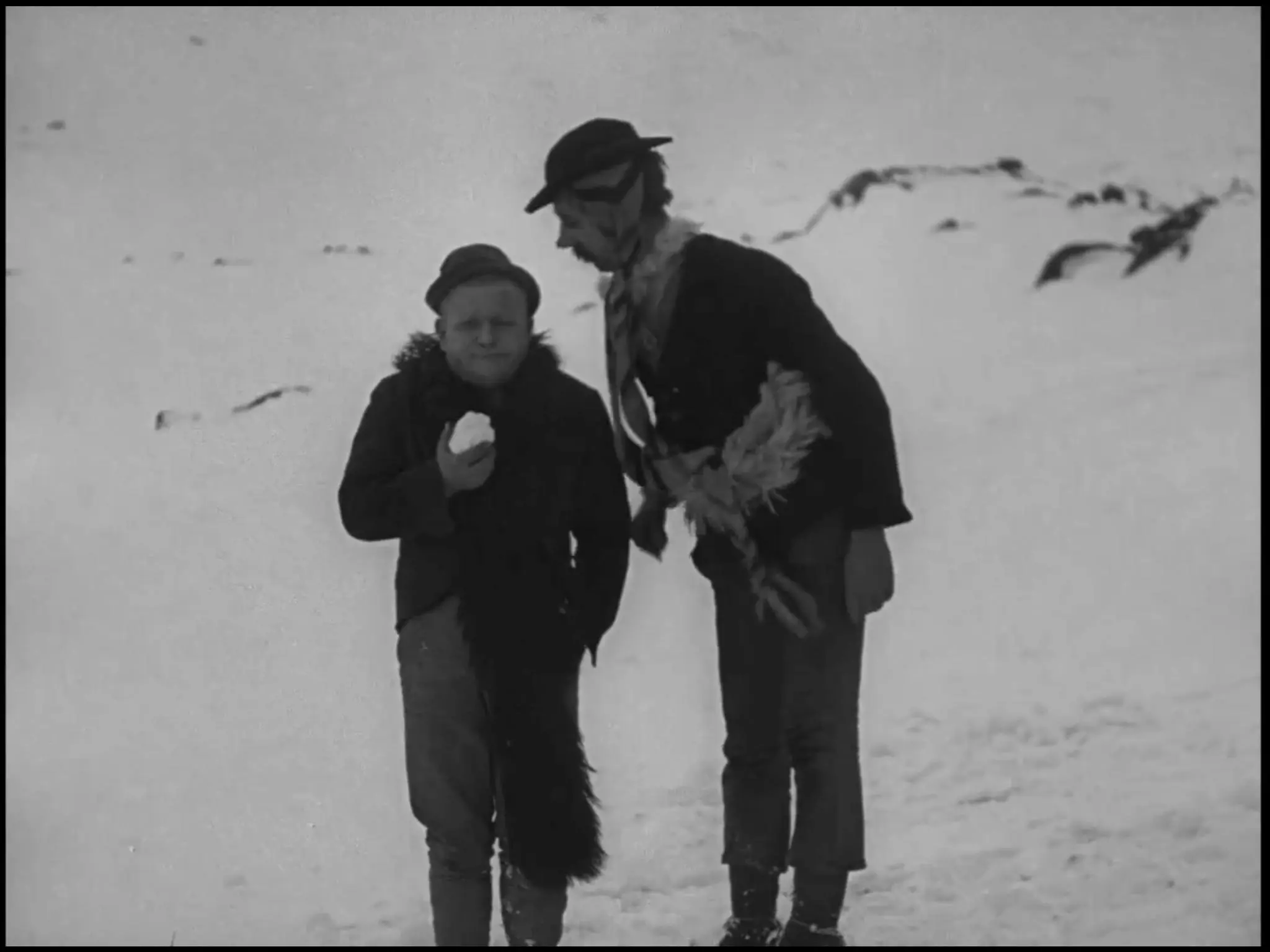
The whimsical nature of Pat and Patachon's existence is underscored the very next morning when their temporary abode—a repurposed moving van, a symbol of their nomadic freedom—unexpectedly lurches into motion. This spontaneous journey transports them, quite literally, into a world of breathtaking contrasts: the stark, yet stunning, snow-clad mountains of Norway. The cinematography, though limited by the technology of the era, manages to convey the sheer scale and pristine beauty of this Nordic landscape. It's a stark departure from the smoky confines of the bar, a visual metaphor for the unexpected turns life can take, especially when guided by the capricious whims of a moving vehicle.
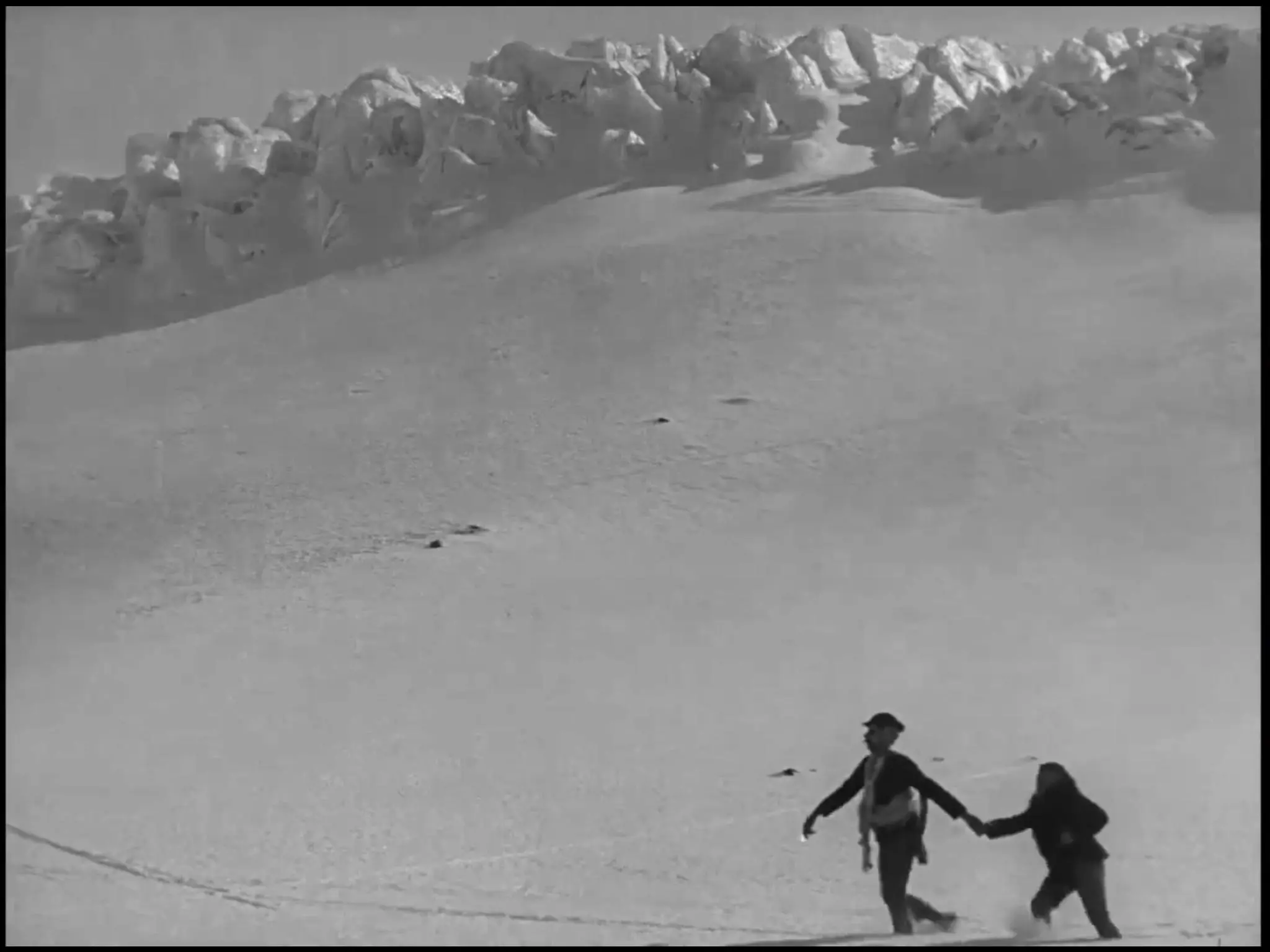
It is in this majestic, yet perilous, environment that fate intervenes once more. They stumble upon a young woman, Ellen (Violet Molitor), lying unconscious in the snow, a victim of the unforgiving cold. This moment is imbued with a classic melodramatic touch, a trope seen in countless narratives, yet here it feels fresh, propelled by the urgent, unselfish actions of our heroes. Their quick thinking and compassionate nature save her from certain death, ushering her into the relative safety of an abandoned ski cabin. The cabin itself is a delightful contrivance, happily proving to be amply supplied with firewood, canned goods, and, perhaps most crucially for the spirit, alcohol. This unexpected bounty provides a cozy, almost magical, refuge against the harsh exterior, a testament to the film's inherent optimism and its belief in serendipitous good fortune.
Ellen's subsequent revelation provides the central conflict and the emotional core of the film. She is none other than Per Hammer’s girlfriend, forcibly brought to Norway by her father (Philip Bech) who wishes her to marry a Mr. Ludvigsen (Jørgen Lund) against her will. This 'run-away bride' trope, while played for comedic effect here, echoes a common societal pressure of the time, where women’s autonomy in marriage was often curtailed. Films like Do You Take? or even the more dramatically charged Bride 13, though vastly different in tone and genre, explore the anxieties and rebellions surrounding matrimonial expectations. Here, however, the gravity is leavened by the inherent good nature of Pat and Patachon, whose immediate instinct is to help, to right the wrong, and to reunite the lovers.
Ever eager to assist, and fueled by their burgeoning friendship with Per, Pat and Patachon spring into action. Their plan is simple, yet effective: a telegraph message to their new friend, informing him of Ellen's whereabouts and setting the stage for their reunion. This act of selfless intervention underscores the film's thematic emphasis on loyalty and the profound impact of unexpected camaraderie. It’s a classic narrative device, the communication across distances, but it’s imbued with a particular charm here, driven by the earnestness of the comedic duo. The simplicity of their solution belies the genuine emotional weight of their actions.
The performances in The Run-Away Bride are, as one would expect from a silent film, largely physical and expressive. Carl Schenstrøm as Pat and Harald Madsen as Patachon are masters of their craft. Their nuanced facial expressions, their synchronized (and often comically unsynchronized) movements, and their impeccable timing are what truly bring the humor to life. Rasmus Christiansen as Per Hammer conveys the necessary pathos without descending into caricature, making his character’s plight genuinely sympathetic. Violet Molitor, as Ellen, embodies the classic damsel in distress with grace, her performance conveying both vulnerability and an underlying strength of conviction. The supporting cast, including Philip Bech as the stern father and Jørgen Lund as the undesirable suitor Mr. Ludvigsen, provide effective foils, their performances painting a clear picture of the societal forces Ellen is trying to escape.
Lau Lauritzen's direction is assured, balancing the comedic elements with moments of genuine suspense and heartfelt emotion. He understands the rhythm of silent comedy, allowing gags to breathe while maintaining a steady narrative pace. The use of the Norwegian landscape is particularly striking; it’s not merely a backdrop but an active participant in the story, alternately threatening and beautiful. The stark white of the snow against the darker figures of the characters creates a visually compelling contrast, a testament to the aesthetic sensibilities of the era.
Thematically, The Run-Away Bride champions the ideals of true love and friendship over societal expectations and material gain. It’s a narrative that, while lighthearted, carries a subtle undercurrent of rebellion against arranged marriages and the subjugation of individual desires. This theme, while presented humorously, finds resonance with more dramatic explorations of female agency in films like Du Barry or Marie, Queen of Rumania, albeit through vastly different lenses. The film also celebrates the spirit of adventure and the unexpected joys that can arise from embracing the unknown, a sentiment that might even be loosely compared to the adventurous spirit, though entirely different in context, found in films like Out of the Clouds, where characters embark on journeys that reshape their destinies.
The writing by Lauritzen and Olsen is remarkably efficient, conveying complex emotions and comedic situations with minimal intertitles. This economy of storytelling is a hallmark of good silent cinema, allowing the visuals and performances to speak volumes. Their script ensures that every plot point, every comedic beat, serves the larger narrative, culminating in a satisfying resolution that affirms the power of love and friendship.
Comparing Pat and Patachon’s brand of humor to other cinematic offerings of the time reveals their unique appeal. While not as overtly anarchic as some American slapstick, their comedy is characterized by a gentle absurdity and a profound humanism. Their escapades, while sometimes far-fetched, are always grounded in a relatable desire to help others or simply to navigate the quirky challenges of life. This contrasts sharply with the more intense, dramatic character studies found in films like David Garrick, where the focus is on psychological depth rather than physical comedy. Even within the realm of silent cinema, the distinct flavor of their humor sets them apart, offering a comforting, often heartwarming experience.
In conclusion, The Run-Away Bride is more than just a historical artifact; it's a vibrant, engaging piece of cinema that continues to resonate. It’s a delightful blend of adventure, romance, and quintessential Pat and Patachon humor, all set against the stunning backdrop of the Norwegian wilderness. It reminds us of the universal appeal of stories about overcoming obstacles for love, about the kindness of strangers, and about the sheer joy of a well-executed comedic performance. For those eager to delve into the rich tapestry of silent European cinema, or simply in search of a heartwarming and genuinely funny film, this Danish classic is an absolute must-watch. Its legacy endures not just as a significant work by Lau Lauritzen, but as a timeless testament to the power of cinematic storytelling without a single spoken word, leaving audiences with a smile and a renewed belief in the power of human connection, even in the most unexpected circumstances.
The simplicity of its narrative, coupled with the magnetic charm of its protagonists, ensures that The Run-Away Bride remains remarkably accessible to modern audiences. It doesn't rely on complex plot twists or avant-garde techniques; instead, it leverages universal themes and the timeless appeal of physical comedy. This makes it a perfect entry point for those new to silent films, showcasing how much emotion, humor, and narrative depth could be conveyed through purely visual means. The film is a gentle reminder that sometimes, the most profound stories are told with the lightest touch, leaving an indelible mark on the heart long after the final frame has faded.
IMDb 4.7
1931
Community
Log in to comment.