DbcultAccessing Vault...
Cult Review
Senior Film Conservator
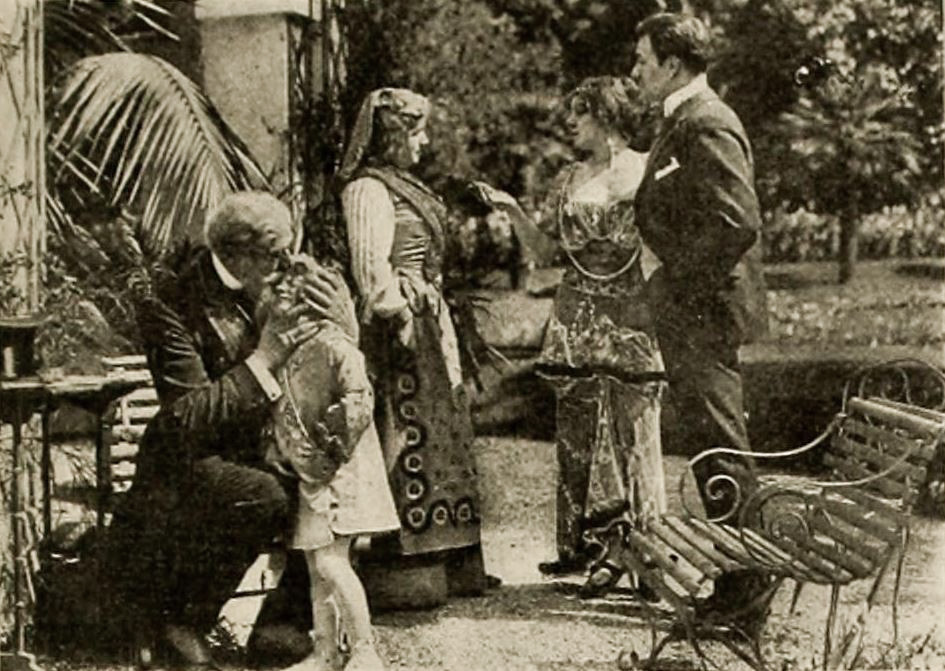
Jean Angelo stalks through the flickering iris of Vendetta like a man who has swallowed moonlight and found it scalding. The film, released in 1914 when Europe was still rehearsing the apocalypse it would officially premiere that August, feels prophetic: a sepia-toned fever dream where cholera becomes the choreographer of destiny and a coffin becomes both cradle and crucible.
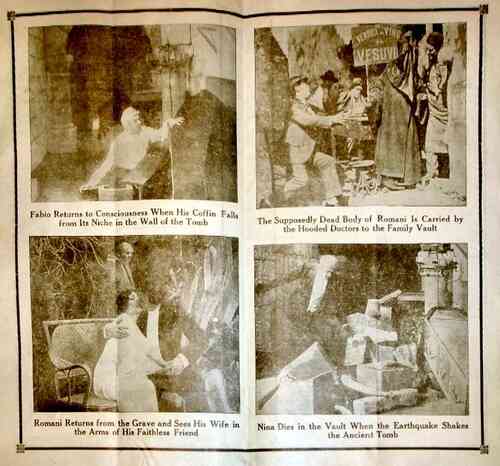
The opening reels bathe us in languor—white linen flapping on Neapolitan terraces, oleander scent mingling with childish laughter, the camera lingering on Nina’s ankle as she descends marble steps like some Greco-Roman goddess who has mislaid her sense of foreboding. Louis Mercanton’s intertitles, florid even by the standards of the day, announce a paradise so ripe it must implode. And implode it does—spectacularly—when Fabio, riding into plague-thick alleys on an altruistic errand, collapses in a pietà of vomit and delirium. The hooded sanitary squad, half Inquisitors, half raven-beaked Charons, pronounce him cadaverous and pitch him into the family vault whose rusty key hasn’t turned since the Bourbons fled.
There is a moment—so brief you could sneeze and miss it—when the camera frames Fabio’s hand twitching inside the splintered crate. It is the twitch that topples a millennium: the coffin slides, dislodging a lower sarcophagus whose lid fractures to reveal doubloons glinting like malignant suns. In 1914 audiences had already tasted Fantômas’s urban phantasmagoria, but pirate gold hidden generations earlier and disinterred by pure narrative sadism? That was new. The iris closes on Fabio’s hair blanching from umber to hoarfrost, a visual coup achieved by tinting each frame a progressively lighter sepia until the tonal alchemy feels like watching someone’s soul being bleached by chlorine.
Reborn in a Savile-Row silhouette accessorised with peridot-tinted spectacles that refract every gaze into suspicion, Fabio purchases entry into salons where gratitude is auctioned by the ounce. Angelo’s body language modulates from proprietary languor to coiled surveillance; the glasses function like a one-way mirror, letting him study the adulterous geometry of Guido and Nina while masking the furnace behind his corneas. The sequence where he first re-enters his former villa is staged in depth: foreground servants bowing to the mysterious Count, mid-ground Nina’s fan fluttering like a trapped sparrow, background Guido’s hand frozen mid-caress on her nape. No cutaways, no exposition—just spatial tension thick enough to butter bread.
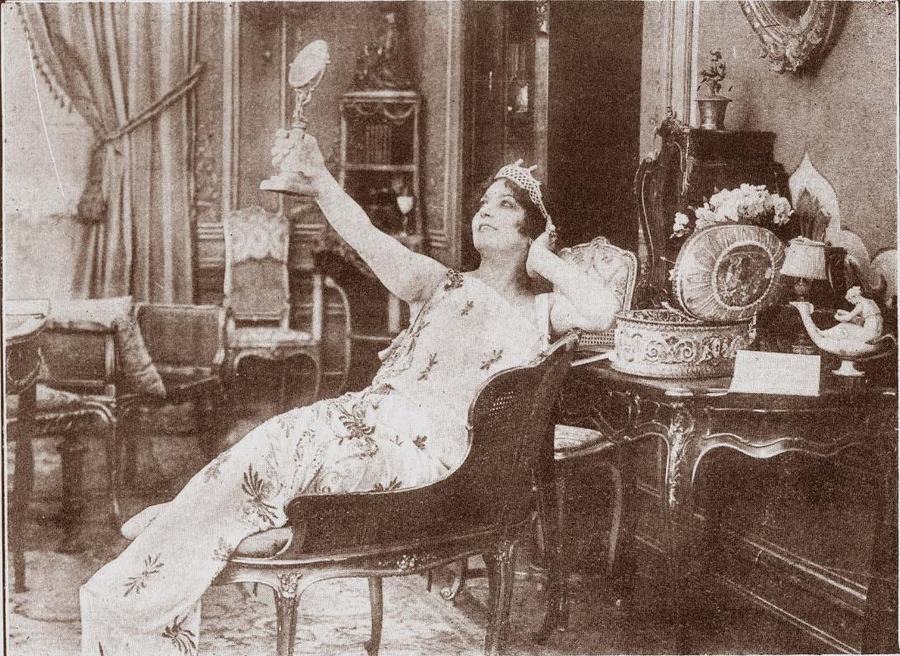
Regina Badet’s Nina is no femme fatale cliché; rather, she embodies the mercurial egotism of someone who has never been denied a whim. Watch her pupils dilate when Fabio—still incognito—presses an uncut Colombian emerald into her palm; the gemstone becomes a synecdoche for her own commodified heart. The film slyly critiques the transactional erotics of the haute bourgeoisie: every embrace carries the invisible price tag of what the beloved might one day inherit. Compared with the moral absolutes of The Cloister and the Hearth, Vendetta offers a universe where redemption is merely another currency debased by circulation.
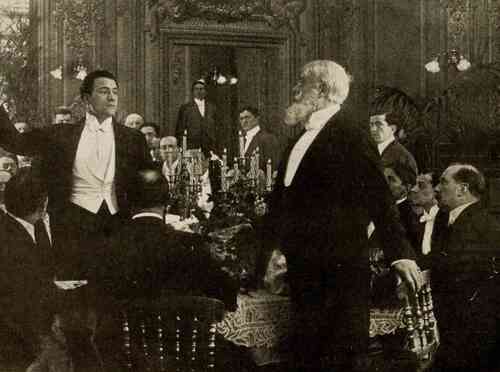
Guido’s return is celebrated with a banquet whose tableaux echo the Last Supper re-imagined by Machiavelli. Footmen in powdered wigs circulate silver tureens; a string quartet scrapes a minuet that sounds, on the tinny optical track, like skeleton teeth chattering. At the precise instant when guests raise crystal to lips, Fabio clinks knife against goblet and announces his betrothal to Nina. The camera cuts to Guido: a close-up so tight the pores on his cheek resemble bullet holes. The ensuing duel—fought not with rapiers but with cavalry sabres stolen from a retired cuirassier—takes place outdoors, blades flashing against a cyclorama of cypresses clawing at a livid sky. René Hervil’s direction favours long shots that let bodies dwarf architectural fragments, emphasising how personal vendettas desecrate both geography and genealogy.
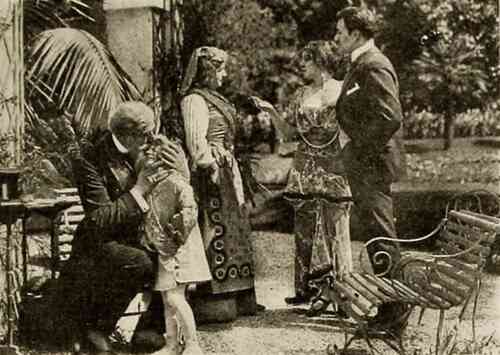
When Guido collapses, Angelo cradles him in a pieta inversion, removes the green spectacles, and permits the dying man to recognise the friend he betrayed. The moment is wordless; the intertitle merely reads “Morte” in stark white on black. Yet the emotional payload lands harder than pages of dialogue could achieve, proving that silent cinema at its apex could be as laconic and lethal as a stiletto.
The wedding sequence is a bacchanal of the macabre: guests wear domino masks shaped like skulls, torches spout tar-black smoke, and a Wagnerian orchestra grinds out a funeral march in waltz time. Fabio, costumed in a tailcoat whose lapels are embroidered with tiny silver hourglasses, leads Nina—veiled in lace as fragile as arsenic—through the corridors of her former home and down the spiral stairs into the vault. The camera assumes a high oblique angle, transforming the staircase into a vortex that seems to suck souls into the earth’s bowel. Once inside the crypt, Fabio locks the iron gate with a key forged from a melted-down doubloon, an alchemical joke that turns lucre into incarcerator.
The revelation unfolds in chiaroscuro: Fabio lifts a lantern to his own face, the flame painting his skin the colour of molten bronze. Nina’s pupils explode into full black circles; her mouth contorts into a soundless scream that the intertitle translates as “Madness.” She claws at the treasure, stuffing rubies into her mouth as if to swallow value itself, and begins to caper among the bones in a grotesque parody of childhood hopscotch. The camera captures her reflection in a polished breastplate—Nina multiplied into infinity, each replica more deranged than the last.
Just as Fabio’s resolve wavers—his hand half-extended as though to retrieve Nina from the abyss—the ground quivers. Dust snows from the ceiling; a pillar snaps like a femur. In a single tracking shot that anticipates 1970s disaster cinema, the camera retreats while the vault implodes, stones tumbling in what feels like deliberate retribution. A monolithic slab pins Nina, her blood mingling with emeralds until gems and veins become indistinguishable. Fabio flees, not in triumph but in terror, hair streaming like comet tail against the night. The final intertitle, superimposed over an erupting Vesuvius stock-footage miniature, reads: “Thus the gods settle accounts.”
Critics who compare Vendetta to What the Gods Decree miss the film’s heretical twist: divinity here is not an external arbiter but the aggregate weight of guilt itself, a geological force that grinds the guilty into pigment. The earthquake is not deus ex machina; it is the subconscious made tectonic.
Restoration prints reveal a sophisticated tinting strategy: Naples exteriors bathe in amber suggestive of infected sunlight; ballroom scenes flicker between cerulean and magenta, the palette of bruised flesh; subterranean sequences are painted viridian, a hue that makes gold look like congealed blood. The cinematographer, uncredited in surviving negatives, employs side-lighting borrowed from German Expressionism two years before The Cabinet of Dr. Caligari existed. Shadows carve cubist angles across Angelo’s cheekbones, turning his face into a battlefield where conscience and vengeance trade blows.
Architecture functions as moral diagram: the Romani villa’s colonnades, initially symbols of patrician permanence, morph into prison bars once Fabio becomes spectator rather than proprietor. Conversely, the vault—traditionally a space of claustrophobic dread—briefly feels limitless when the treasure chest yawns open, only to contract again into a sarcophagus for the living. The camera’s vertical traversals (descending staircases, ascending debris) echo the moral plummet and apocalyptic ascension of the characters.
Jean Angelo’s acting style straddles the liminal era between theatrical semaphore and cinematic introspection. Watch the micro-moment when, as Count Oliva, he first hears Nina’s laughter off-screen: his left eyebrow arcs a millimetre, a gesture that in close-up reads like a hairline fracture in a porcelain mask. Regina Badet, a tragedian of the Comédie-Française, utilises her dancer’s balance to make Nina’s madness a choreographic dissolution—each stumble across the treasure is an arabesque of avarice. René Hervil, doubling as both co-star and co-director, plays Guido with the brittle charm of a man who has mistaken loyalty for licence, his final recognition conveyed through eyes that seem to calcify as the life ebbs.
Shot in 1914, the film prefigures Europe’s own premature burial in trench warfare; the cholera that razes Naples stands in for the nationalist fevers soon to scorch continents. The pirate’s hoard can be read as imperial plunder returning to haunt its descendants, while the duel evokes the aristocratic codes whose bankruptcy the Great War would expose. In a post-MeToo lens, the narrative of a woman punished for sexual transgression while the male adulterer receives battlefield absolution feels problematic, yet the film complicates such readings by making Fabio’s revenge a self-annihilating pyre rather than a triumph. His survival at the end is not catharsis but curse: he emerges from the rubble a ghost chained to a guilt heavier than the stones that crushed Nina.
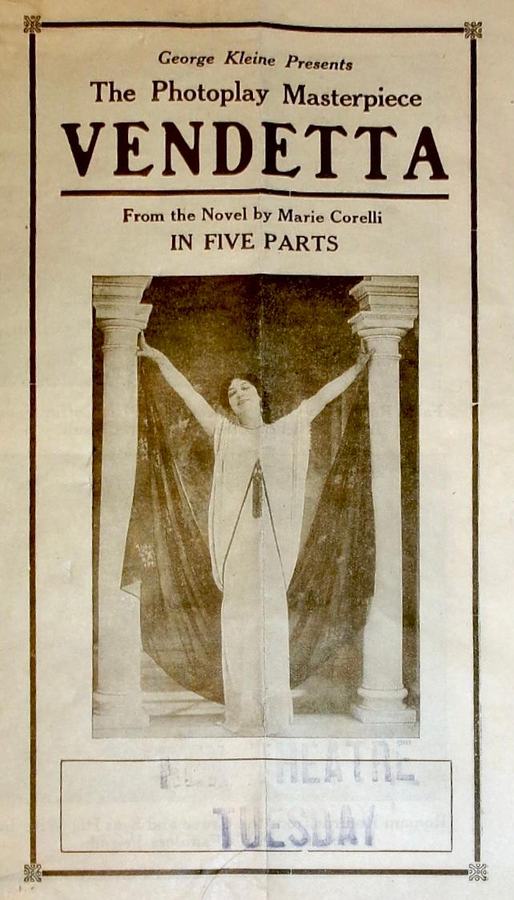
For viewers raised on the kinetic sadism of Fantomas or the ethnographic surrealism of In the Land of the Head Hunters, Vendetta offers a more measured, metaphysical brand of suspense—one where the true cliffhanger is whether conscience can outrun catastrophe.
Visuals: 9/10 — Tinting and chiaroscuro rival the best of early Italian spectacles.
Performances: 8.5/10 — Angelo’s transition from uxorious husband to marble-hearted revenant is hypnotic.
Narrative: 8/10 — Convoluted, yes, but every convolution is a Möbius strip of poetic justice.
Historical Value: 10/10 — A missing link between the theatrical melodrama of the 1900s and the psychological noir of the 1920s.
Seek out the 2022 4K restoration by Cinémathèque Napoli; the new score—performed on period mandolins and a dulcitone rescued from a dilapidated sanatorium—adds a tremolo of authenticity that makes each torch flicker feel like a neuron misfiring in your own brain. Watch it at midnight, curtains drawn, volume high enough to hear the dust motes settle. Then, when the final earthquake roars, glance at your reflection in the darkened screen and ask yourself which of your own relationships would survive a premature burial—and which would demand an afterlife of retribution.
IMDb —
1924
Community
Log in to comment.