DbcultAccessing Vault...
7/10
Senior Film Conservator
A definitive 7/10 rating for a film that redefined the boundaries of cult cinema. The Seashell and the Clergyman remains a cornerstone of transgressive art.
Germaine Dulac’s 1928 experimental short, The Seashell and the Clergyman, is not a film for casual viewing. If you’re a cinephile, a student of silent cinema, or someone deeply interested in the origins of surrealism in film, then yes, it’s absolutely worth seeking out. It’s a foundational text, a bold, unsettling plunge into the subconscious that predates much of what we now consider experimental cinema. However, if you’re looking for a conventional narrative, clear character arcs, or a film that delivers easily digestible emotional beats, you will likely find it frustrating, baffling, and potentially quite tedious. This is a film that demands patience and a willingness to surrender to its dream logic, rewarding those who appreciate its historical significance and visual daring rather than its entertainment value.
Dulac, working from a script by Antonin Artaud, crafts a visual language that feels both of its time and remarkably ahead of it. The film opens with the Clergyman (Alex Allin) pouring a viscous liquid into a seashell, a gesture that immediately establishes a sense of ritual and disquiet. From this point, the film largely abandons linear storytelling in favor of a series of loosely connected, often disturbing, visions. Dulac employs a barrage of cinematic techniques to convey the Clergyman's fractured state: rapid cuts, superimpositions, slow-motion, and distorted camera angles are all deployed to disorient the viewer and mirror the protagonist's internal chaos.

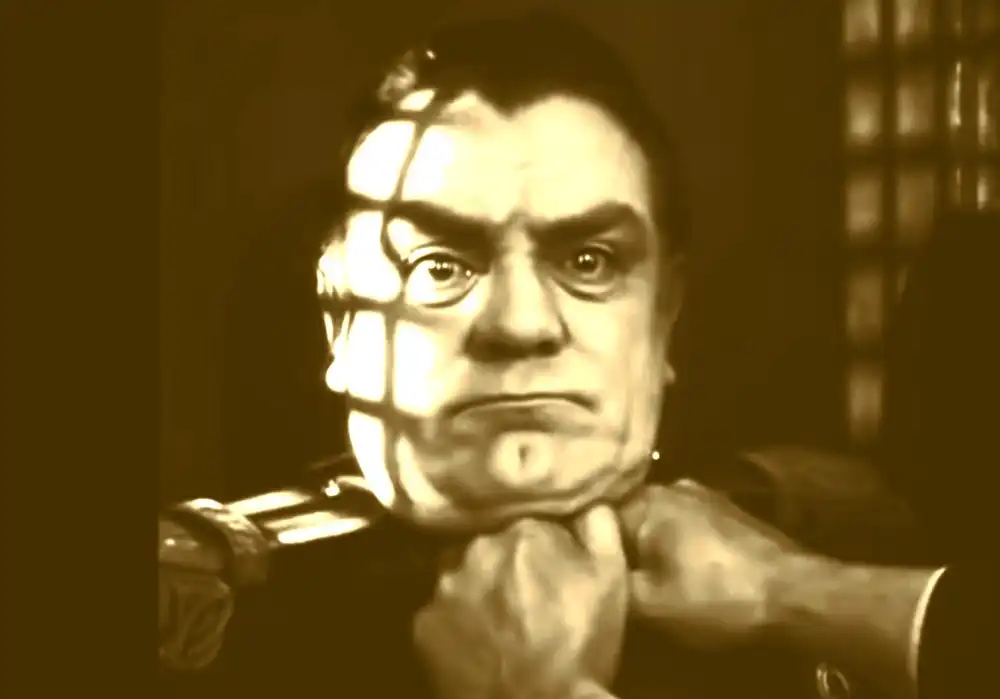
One particularly striking visual motif is the constant shifting of the General's uniform. Early on, the General (Lucien Bataille) is shown in full military regalia, but his uniform frequently dissolves or transforms, sometimes appearing as just a jacket draped over a chair, other times vanishing entirely, only to reappear on another character. This fluidity of costume, coupled with the way the General himself often seems to materialize and dematerialize, underscores the hallucinatory nature of the Clergyman's world. It’s a subtle but persistent detail that hints at the deep psychological instability at play, suggesting that even figures of authority are mere projections of the Clergyman's mind.
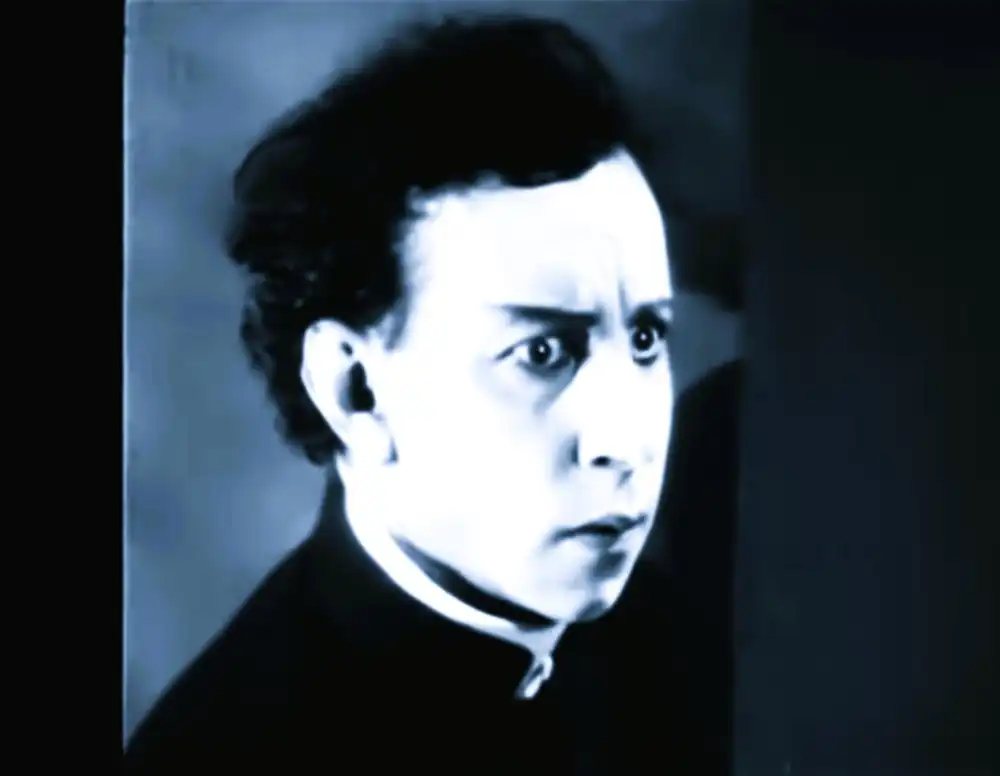
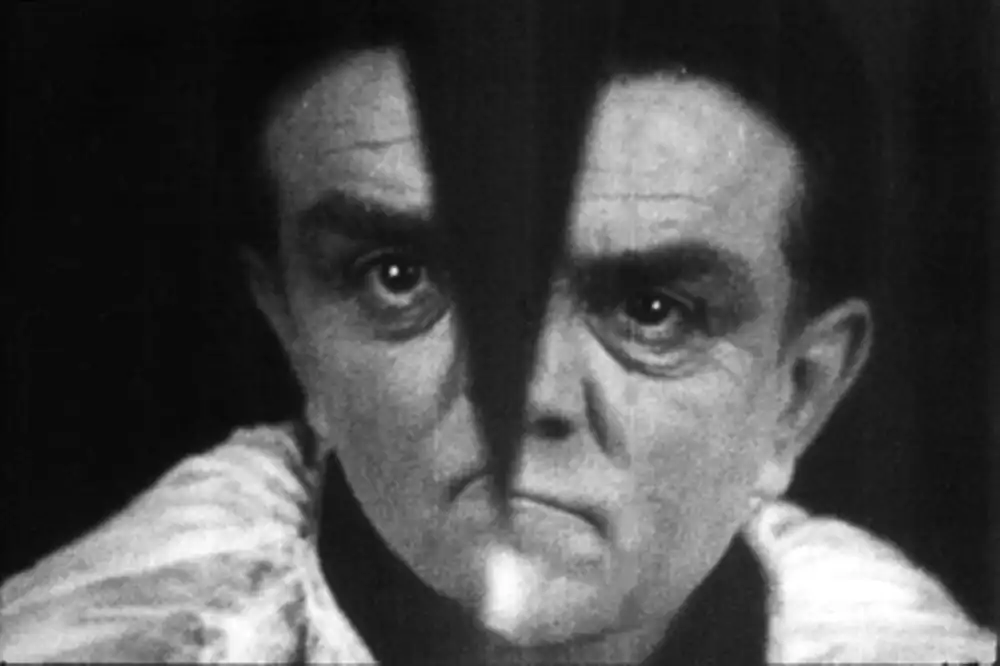
The performances in The Seashell and the Clergyman are, by necessity, highly theatrical and symbolic rather than naturalistic. Alex Allin as the Clergyman carries the weight of the film through his exaggerated facial expressions and frantic body language. His wide, often terrified eyes and contorted mouth communicate a man on the brink, constantly struggling against unseen forces. There’s a particular moment where he attempts to remove his clerical collar, pulling at it with increasing desperation, as if it’s a physical manifestation of his suffocating repression. The struggle feels genuinely physical, almost painful to watch, and perfectly encapsulates his internal torment.

Genica Athanasiou, as the object of his obsession, the General’s Wife, remains largely enigmatic. She floats through the film with a detached, almost ethereal quality, often smiling faintly or looking away, never quite engaging directly with the Clergyman’s fervent advances. Her presence is less about character and more about symbol – the unattainable, the forbidden, the source of both desire and torment. Lucien Bataille's General is a stern, imposing figure, often appearing to block the Clergyman's path, a recurring obstacle in a nightmarish labyrinth. Their interactions are less dialogue and more a series of symbolic gestures and confrontations, perfectly suited to the film’s surrealist ambitions.
The pacing of The Seashell and the Clergyman is deliberately disjointed and dreamlike. There are moments of rapid, almost frantic cutting, particularly during the Clergyman's more agitated states, which then give way to longer, more contemplative shots of objects or lingering reaction shots. This uneven rhythm can be challenging. The film doesn't build tension in a traditional sense; instead, it creates an accumulating sense of unease and psychological pressure. There are stretches where the repetition of certain actions or the lingering on a bizarre image can feel prolonged, testing the viewer's patience. For instance, the sequence where the Clergyman repeatedly attempts to enter a room, only for the door to vanish or transform, feels intentionally drawn out to emphasize his futility and entrapment.
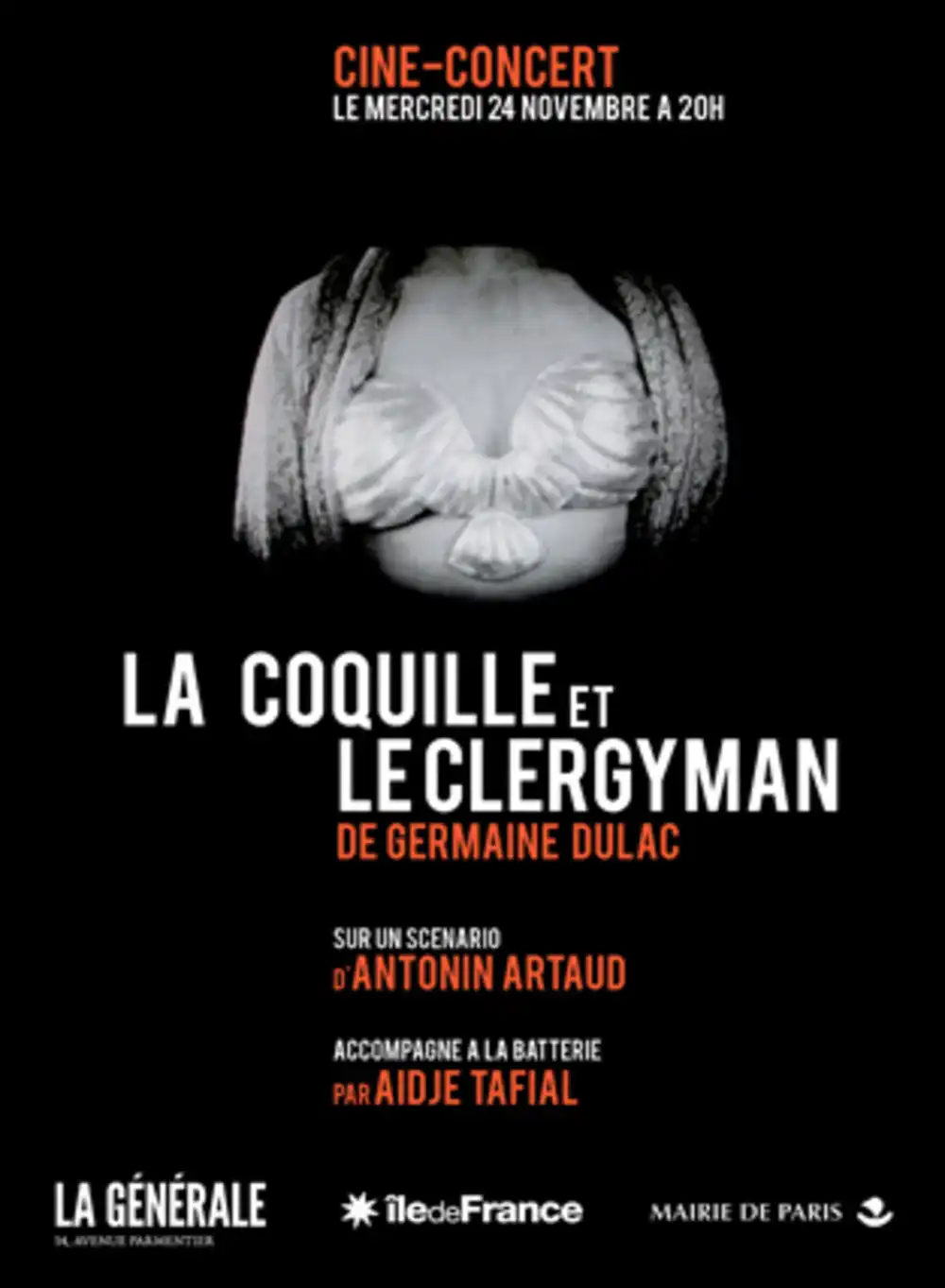
The tone is consistently unsettling, erotic, and at times, darkly comedic in its absurdity. Dulac masterfully blends these elements, never allowing the film to fully settle into one mood. The eroticism is not explicit but rather implied through symbolism – the seashell, the general’s sword, the Clergyman's intense gaze. The abrupt shifts in setting and logic often elicit a bewildered chuckle, even as the underlying themes remain serious. It's a film that asks you to accept its own internal, illogical consistency, much like a dream. The persistent, almost oppressive silence of the film (as it is a silent film, of course) amplifies the strangeness, making the visual events feel even more isolated and impactful.
The primary strength of The Seashell and the Clergyman lies in its sheer audacity and its pioneering spirit. It is widely considered the first surrealist film, and its influence on subsequent experimental cinema, from Un Chien Andalou to more contemporary works, is undeniable. Dulac’s command of cinematic language, her willingness to break narrative conventions, and her fearless exploration of complex psychological states make it a landmark achievement. The film's ability to evoke a palpable sense of internal struggle and repressed desire, using only visual cues, is remarkable. It proves that cinema doesn't always need a coherent story to be deeply resonant and thought-provoking.
For all its historical importance, the film's non-linear, often opaque narrative can be a significant barrier for modern audiences accustomed to more direct storytelling. Its deliberate slowness in certain sequences, coupled with the abstract nature of its symbolism, can easily lead to disengagement. While its dream logic is a strength for some, for others it will simply feel like a lack of coherent direction. The highly stylized, almost pantomime acting, while effective for its era and genre, might strike some viewers as overly dramatic or stiff. It requires a specific kind of viewing mindset, one that embraces ambiguity and visual poetry over plot progression.
The Seashell and the Clergyman remains a vital piece of film history, a fascinating, challenging, and often perplexing journey into the subconscious. It’s a film that should be experienced by anyone serious about understanding the evolution of cinematic expression and the radical potential of early experimental cinema. However, approach it not as entertainment, but as an artifact, a visual poem, or a disquieting dream. It will not spoon-feed you answers, nor will it offer a comforting resolution. Instead, it will linger, a strange, unsettling echo of a mind grappling with its own forbidden depths. Watch it if you’re prepared to be challenged and intrigued, but skip it if you're seeking conventional pleasure.

IMDb —
1919
Community
Log in to comment.