DbcultAccessing Vault...
Cult Review
Senior Film Conservator
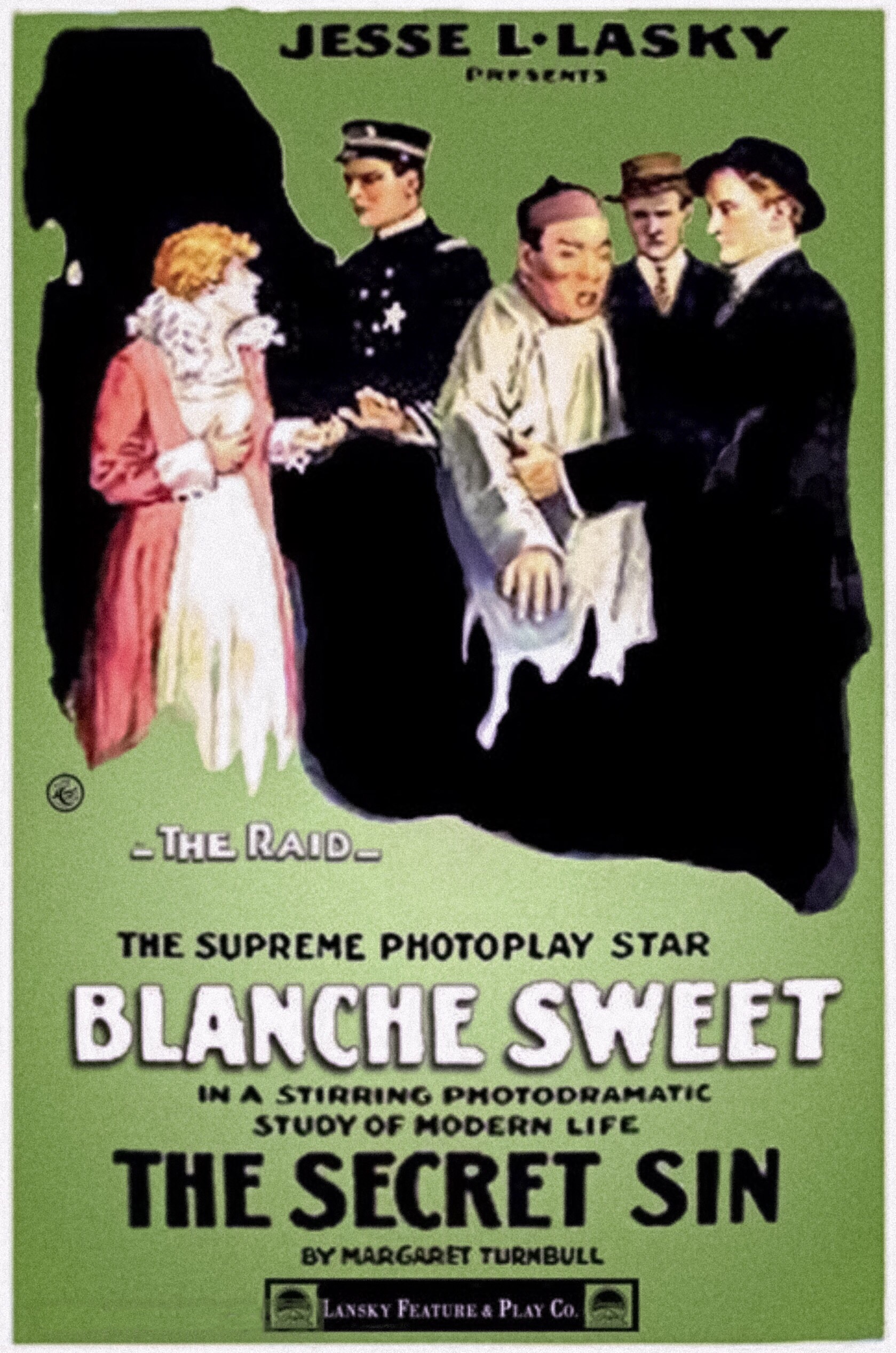
Imagine a nickelodeon in 1915, its air thick with coal dust and ambition, when Margaret Turnbull’s scenario for The Secret Sin unspools like a velvet ribbon soaked in laudanum. The film arrives as both moral fable and voyeuristic thrill, stitching together the era’s twin obsessions: instant wealth and the white plague of narcotics. Within the first flicker, cinematographer Frank B. Good (uncredited yet indispensable) paints chiaroscuro extremes—oil derricks clawing a pewter sky while Chinatown lanterns smear sulfur across wet cobblestones. You feel the chill of the sewing-room lamp even now, a ghostly sodium glow that makes every thimble tap sound like a death knell.
Blanche Sweet’s Edith embodies reticent grace, her darting eyes cataloguing each rent bill, each spool, each sigh her father suppresses. Sweet had already proved in The Shepherd of the Southern Cross that she could balance piety and passion; here she peels back a subtler layer—quiet endurance calcifying into moral steel. Opposite her, the camera adores Alice Knowland’s Grace, whose consumptive beauty curdles into frantic need. Knowland never tips into grotesque; instead she lets the camera discover the tremor in her gloved fingers when a prospective suitor brushes her wrist. That microscopic quake speaks louder than any intertitle.
Enter Sessue Hayakawa, still months away from shattering Hollywood’s racial ceiling in The Cheat. As the urbane Chinatown dealer, he glides through scenes with panther stillness, silk sleeves whispering over tattooed forearms. Hayakawa’s performance—measured, almost tender—complicates the era’s Yellow Peril clichés; his opium den feels less a trap than a sanctuary where social corsets loosen. When he offers Grace the long stem, the close-up holds on his eyes: not predatory but resigned, as though he too is servant to the sickly perfume in the lamp.
The Secret Sin is less a sermon than a syringe: it delivers its moral payload straight to the bloodstream, then leaves the viewer pulsing with complicity.
Director Frank Reicher, best remembered for shepherding The Ghost Breaker and Officer 666, orchestrates set pieces with Wagnerian flair. Note the abrupt tonal lurch when the sisters’ shabby parlor—its wallpaper peeling like wet bark—explodes into oil-boom opulence. A cut, a fade, and suddenly Klieg lights bleach marble columns; a butler materializes as if conjured by Rockefeller himself. That dizzying juxtaposition foreshadows Grace’s own fall: wealth arrives too fast for wisdom to keep pace.
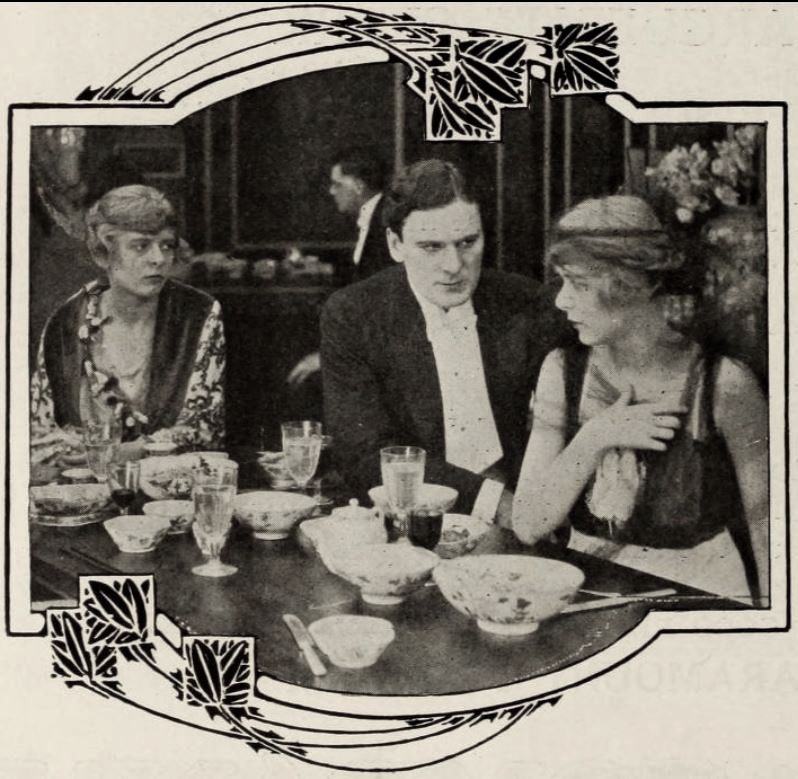
Jack Herron, essayed by a dashing Hal Clements, enters as a walking contradiction: roughneck manners, Gatsby wardrobe. Clements lacks the hypnotic menace of later Hayakawa vehicles, yet his earnest ardor anchors the film. Watch how his shoulders slacken the instant Edith accepts his dance; the man’s entire fortune, scraped from tarry earth, suddenly feels trivial against the warmth of her gloved hand. Their courtship waltz—shot in an unbroken medium take—glides through a ballroom drenched in canary light, a rare moment where the film exhales pure romantic oxygen before plunging back into narcotic gloom.
Turnbull’s screenplay, adapted from a now-lost novella in The Ladies’ Home Journal, weaponizes coincidence like a master magician. Grace’s machinations hinge on a single mislaid address: one numeral reversed, and Edith stumbles into the wrong den just as federal agents batter down the door. Contemporary critics sneered at the contrivance, yet the narrative sleight-of-hand mirrors the era’s faith in Progress while fearing its shadow. In 1915, America balanced on a fulcrum between temperance and indulgence; the film’s tonal whiplash—sentiment, satire, horror—feels truer to national psyche than more sober social dramas like A Question of Right.
Consider the opium sequence itself, a fever dream of superimposed smoke rings that swell until they occlude the camera lens. Reicher overlays Grace’s slack face with a slow dissolve of Edith’s horrified reflection, creating a visual palindrome: each twin embodies the other’s suppressed terror. The effect predates European Expressionism by half a decade; one wonders whether Robert Wiene caught a stateside print before crafting Caligari.
Blanche Sweet’s final close-up—eyes glistening yet unbroken—ranks among the silent era’s most haunting codas. No wedding cake, no confetti; only a gust of wind rattling the sanitarium gates as Grace disappears into pastoral mist. The image freezes, not on connubial bliss, but on Edith’s ambiguous half-smile: triumph or survivor’s guilt? That refusal to fully resolve moral equations lifts The Secret Sin above contemporaneous cautionary tales such as Moths.
Technically, the surviving 35 mm print (held by the Library of Congress) bears scars—vertical scratches like lightning forks—yet these blemishes amplify the film’s raw immediacy. A mis-timed aperture flare during the raid scene flares the image into sulphurous abstraction; rather than a flaw, it becomes accidental poetry, as though the celluloid itself recoils from the drug’s toxicity.
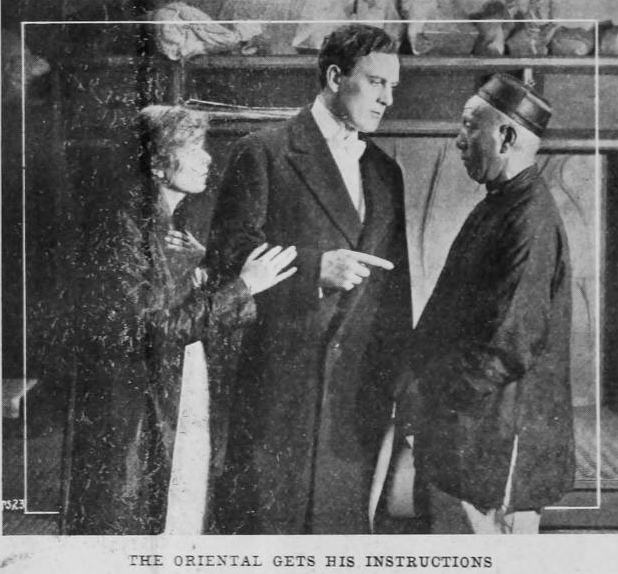
Compare the picture to D. W. Griffith’s The Squaw Man cycle: both luxuriate in Victorian dichotomies—virgin vs. vamp, light vs. heathen. Yet where Griffith wields uplift like a bludgeon, Reicher prefers a scalpel. His Chinatown is neither heaven nor hell, merely a space where social scripts dissolve. When Edith, clad in corseted propriety, steps across the threshold, the camera tilts five degrees—barely perceptible—signaling tectonic shift. No intertitle announces ‘Descent into Infamy’; the visual grammar alone unsettles.
Modern viewers, weaned on anti-hero complexity, may scoff at the tidy sanitarium solution. Yet 1915 audiences craved such salves; post-Victorian morality demanded redemption, however token. Turnbull’s coup lies in embedding cynicism within the cure: the sanitarium’s white façade, framed against looming pines, resembles nothing so much as a mausoleum. Grace’s departure is framed through a barred window; her carriage recedes until she becomes another wavering silhouette—an addict exorcised yet unabsolved.
One cannot discuss The Secret Sin without confronting Hayakawa’s erotic charge. His chemistry with Knowland smolders beneath Production Code levels, communicated through the flare of a match or the brush of fingertips transferring a folded prescription. Censors in Chicago trimmed 42 feet of footage, reportedly ‘to extinguish suggestive languor.’ Those lost frames haunt film historians; their absence reminds us that early cinema teemed with illicit vitality long before Pre-Code libertinism.
Score accompaniment on the Kino Blu-ray—an original 2019 composition by Guenter Buchwald’s chamber ensemble—mirrors the narrative’s oscillation between salon propriety and narcotic reverie. Violins slither into microtonal unease during the opium montage, then resolve into a jaunty cakewalk as the newly rich clan parades down Market Street. The cognitive dissonance is delicious, recalling the way jazz rags of the period masked moral panic beneath syncopated cheer.
Viewed today, the film resonates with America’s opioid reckoning. Substitute OxyContin for morphine, strip malls for Chinatown dens, and the plot could air as prestige miniseries. Yet modern tales—think Euphoria or Beautiful Boy—rarely grant female addicts the agency that Grace briefly wields. Her vindictive lie, despicable yet comprehensible, complicates the victim narrative; she weaponizes stigma itself, flipping the scarlet letter onto her healthy twin.
Ultimately, The Secret Sin endures because it refuses pat binaries. Oil gushes, fortunes invert, lovers unite, yet the final iris-in leaves a curl of smoke lingering like an unanswered question. The film knows that addiction—whether to opium, to wealth, to the intoxicating gaze of a camera—is less a demon to exorcise than a hunger to manage. One hundred eight years later, the hunger persists, and so does the film’s dark shimmer.
For the cine-curious, seek this overlooked gem alongside Reicher’s The Ghost Breaker or Sweet’s earlier vehicle The Actress’ Redemption to trace the actress’s evolution from plucky ingénue to tragedienne of granite resolve. Stream it during a rain-slick midnight, volume high enough to hear the faint crackle of nitrate breathing. Let its toxic perfume settle in your lungs; exhale, and watch the smoke rings drift toward a century’s worth of secrets we still refuse to name.
IMDb —
1926
Community
Log in to comment.