DbcultAccessing Vault...
7.5/10
Senior Film Conservator
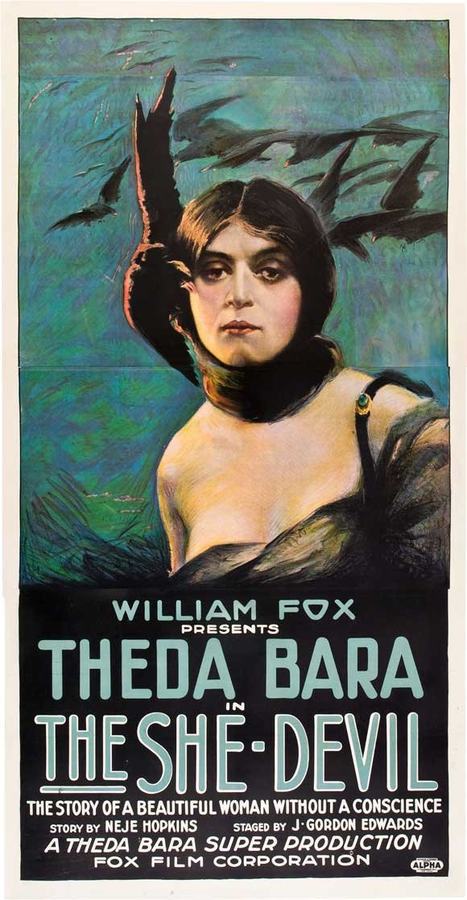
A definitive 7.5/10 rating for a film that redefined the boundaries of cult cinema. The She Devil remains a cornerstone of transgressive art.
The She Devil is not a film so much as a fevered tarot reading dealt by a carnival conjurer who has already pawned his own future.
The 1918 one-reel expansion of this narrative—now restored to a lustrous 4K by the always-heroic Library of Congress nitrate wizards—reveals textures that 1918 audiences could only sense: the velvet nap on Lolette’s bodice drinks candlelight like ink, while the Tiger’s revolver catches a sun-flare that feels almost like divine commentary. Viewed today, the picture plays less as quaint melodrama and more as an ur-text for every subsequent femme fatale from Double Indemnity’s Phyllis Dietrichson to Killing Eve’s Villanelle. The plot’s bones are elemental—desire, betrayal, escape—but Edwards and Hopkins lacquer them with racialized exoticism and proto-cosmopolitan flash, yielding a curio that flickers between proto-feminist manifesto and imperialist fever dream.
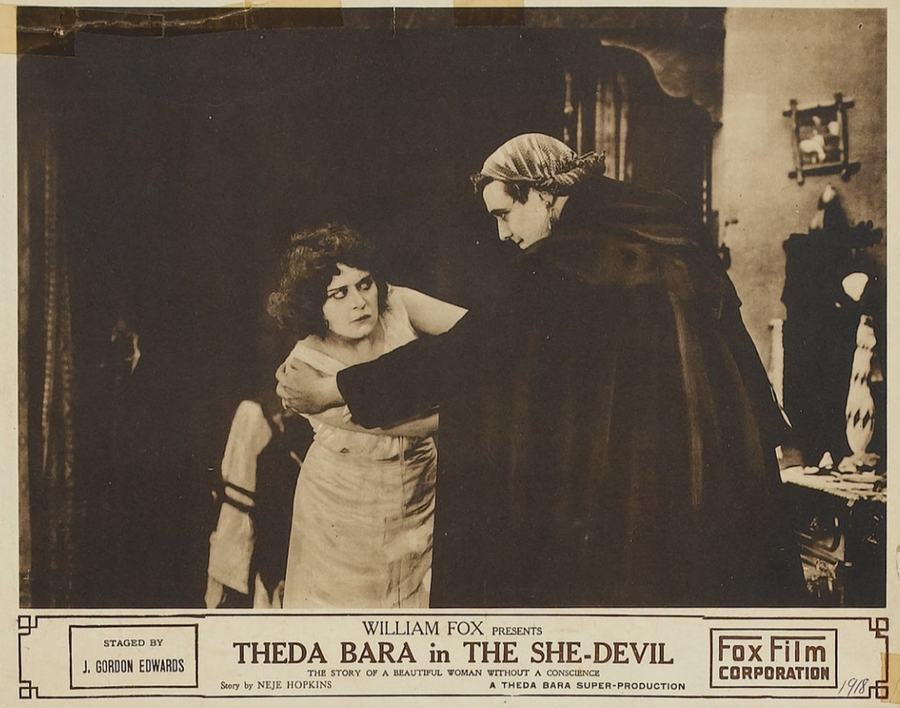
Shot in late 1917 on the Fox back-lot’s Spanish street—adobe façades still wet from the previous week’s A Venetian Night repurposing—the production nonetheless smuggles in documentary grit. Cinematographer George Schneiderman tilts his handheld Bell & Howell into the white noon glare, allowing dust to swirl across the aperture; the resultant halation transforms every donkey cart into a Charcot caravan and every peasant shawl into a Matisse cut-out. When the action relocates to Paris, the camera suddenly acquires a dolly track: velvet curtains part like surgical incisions, revealing Lolette’s stage act in a single, breathless 38-second take that feels almost Godardian in its refusal to blink.
Forget whatever you think you know about vamp clichés; Bara’s Lolette is a centrifuge of contradictions. Watch the micro-movements in the Spanish tavern scene: she accepts the Tiger’s gift of emeralds with the languid wrist-flick of a duchess, yet her pupils dilate like a pickpocket’s at the moment the velvet pouch lands in her palm. The actress understood—perhaps better than any of her contemporaries—that silent performance is musical rather than theatrical; she choreographs breathless pauses that allow intertitles to become percussion. In the restored tinted print, her famous copper-toned complexion alternately glows like burnished chestnut or drains to parchment, depending on whether Pathé’s amber tint or the cooler cyan of Parisian night scenes dominates the frame.
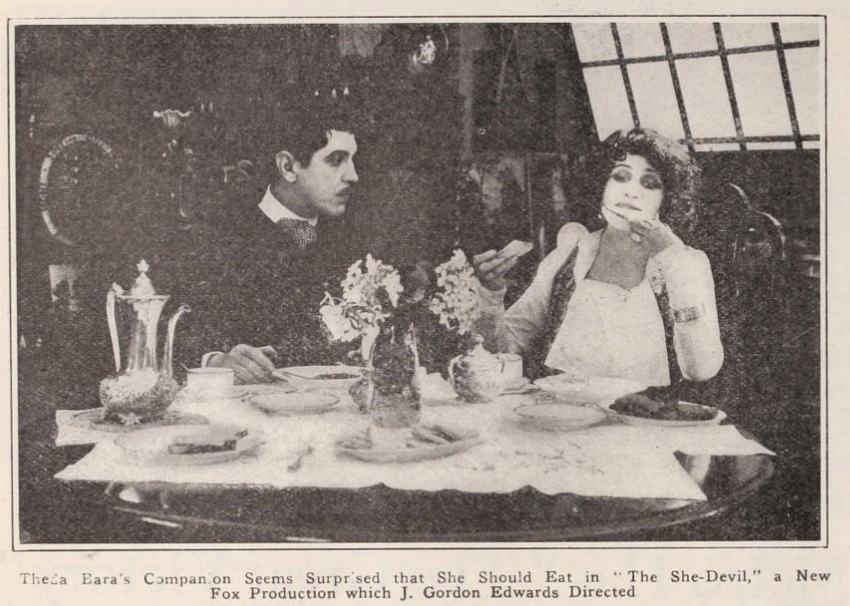
Alan Roscoe’s Tiger arrives costumed like a torero who has traded his cape for cartridge belts, yet his body language suggests a man perpetually caught in the act of swallowing his own heart. In the coach-hijack sequence Edwards intercuts medium shots of the Tiger’s trembling gloved hand with extreme long shots of the Andalusian sierra—an editing grammar that anticipates Eisensteinian montage by nearly a decade. The viewer intuits that the bandit’s violence is less territorial than devotional: every bullet is a love letter he lacks the lexicon to write. When Lolette finally persuades him to drink the drugged wine, Roscoe allows his eyelids to flutter with an almost erotic gratitude—as if unconsciousness itself were the sole dowry she could ever bestow.
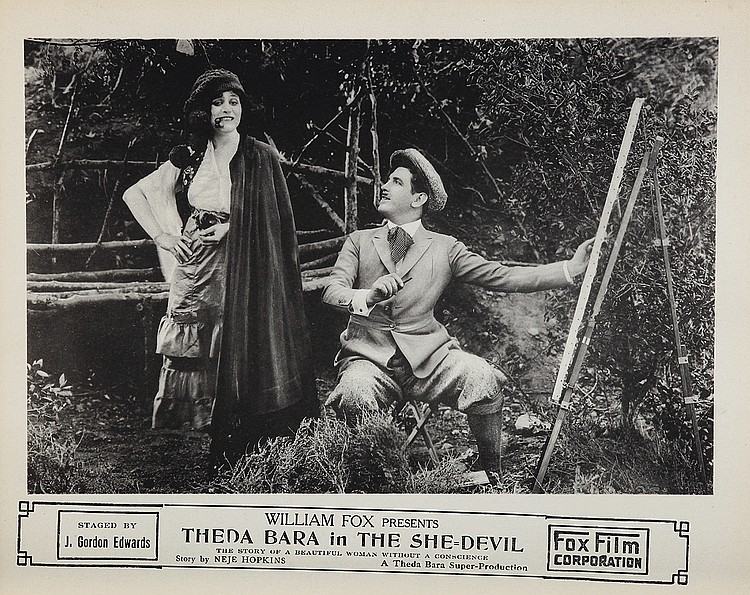
Fred Bond paints Maurice as a man forever halfway out the door even when he’s sitting still. His canvas-blocking in the Paris atelier scenes is staged like a parody of La Bohème: smock askew, cigarette dangling, yet eyes flicking toward the exit. Bond’s subtlest choice arrives when Lolette signs her multiple contracts: Maurice’s hand tightens around a hog-bristle brush until the ferrule clicks—an Foley-worthy snap that the intertitles cannot transcribe. The character’s paralysis epitomizes the bourgeois bohemian who commodifies passion yet balks when the commodity talks back. If Lolette is the film’s id, Maurice is its superego—and the superego, as usual, proves impotent once the id decides to travel.
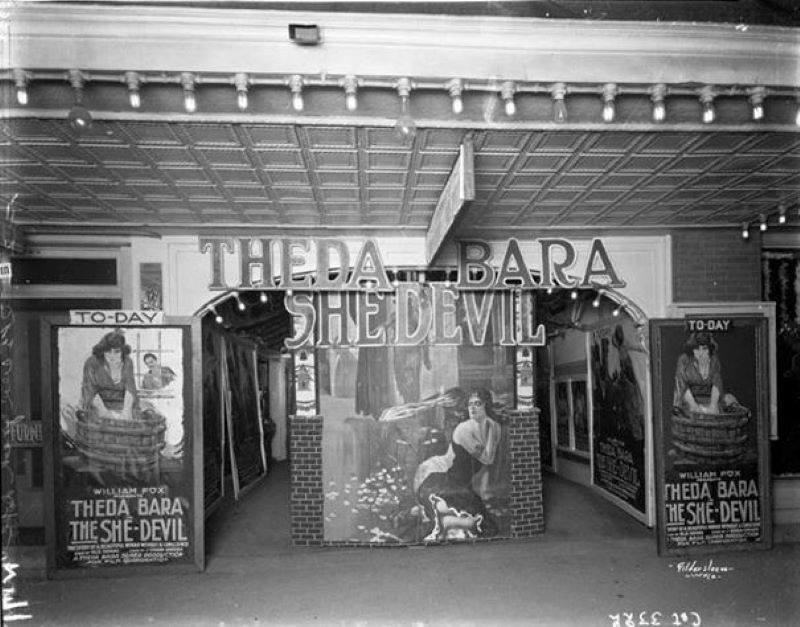
Modern scholars often slot The She Devil alongside Sins of Great Cities as an example of early yellow-peril adjacent exoticism. Yet the film’s racial imaginary is more baroque: Lolette’s “Spanishness” is already a Fox fabrication—Bara herself was Cincinnati-born Theodosia Goodman—while the narrative’s French scenes caricature galanterie with such glee that Paris becomes another colony ripe for plunder. The emeralds swiped by the Tiger from an unnamed aristócrata are never shown; their absence on-screen renders them a MacGuffin of imperial guilt, a blood jewel that circulates off-camera like the repressed history of every colonial postcard. In this context Lolette’s final escape reads less as personal triumph than as the return of the repressed: the colonized body absconds with the metropole’s purse and its painterly gaze.
Though originally released with a cue sheet recommending La Paloma and selections from Chabrier’s España, the restoration opted for a new score by Guillaume Bourque performed on a 1918 Wurlitzer at the Cinémathèque québécoise. Bourque exploits the tension between habanera ostinatos and Gallic valse-musette, so when Lolette dances her fateful fandango the low brass emits a predatory growl that syncs perfectly with Bara’s hip-flick. If you stream the film via Criterion Channel’s current silent-spotlight, pump the audio through decent headphones; you’ll catch Bourque’s subtle insertion of castanet samples that pan left-right-left in mimicry of Lolette’s own footwork, a sonic correlative to her moral zigzag.
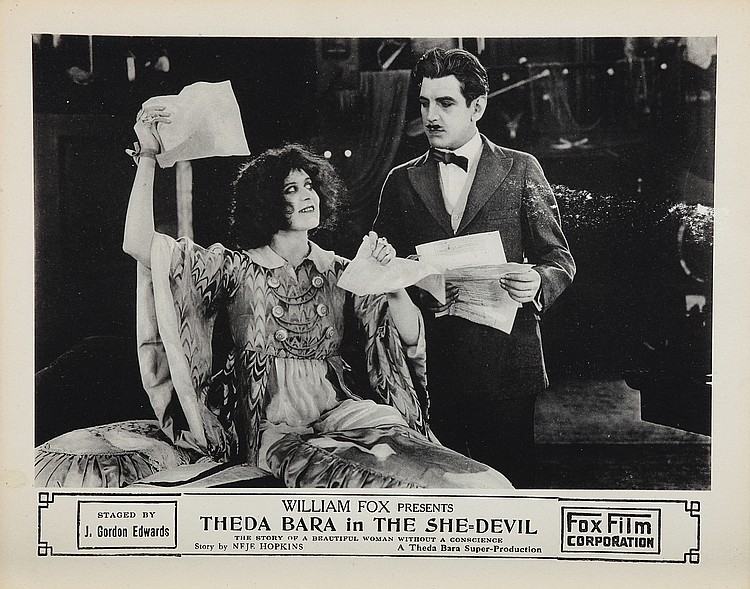
Place the film beside La Belle Russe and you notice both pictures share a heroine who weaponizes foreign allure within French cultural capitals; yet whereas La Belle Russe ultimately punishes its protagonist with marriage, She Devil lets Lolette vanish into narrative vapor—an open ending that feels startlingly modern. Conversely, stack it against The Boundary Rider and you see how Edwards refuses the moral absolutes of Western genre: there is no sheriff, no sunrise redemption, only the next border. Even the Tiger’s recumbent body, snoring off a narcotic stupor, refuses the catharsis of death; he will wake, pursue, perhaps reappear in some Juanguera tavern decades later, nursing an emerald-shaped scar.
The 2023 restoration scanned the last-known 35mm nitrate at 4K on a Scanity, then performed a 6K oversample to tame shrinkage. Grain management walks the knife-edge: too little and Bara’s complexion waxes mannequin; too much and the emulsion’s damage becomes a hurricane. The final HDR pass gifts us two revelations:
Color grading followed the Desmet method: amber for Juanguera interiors, rose for dawn escapes, and a sickly sea-green (#0E7490) for the dungeon—an Expressionist tic that predicts Nosferatu by four years.
Variety’s 1918 capsule dismissed the picture as “a hothouse bloom that wilts before reel four.” Yet the New York Evening Mail raved that “Miss Bara incarnates the New Woman who pockets the pearl without paying the oyster.” Modern Letterboxd users average it 3.7/5, with cine-essayists praising its pre-code candor. Academia has belatedly embraced the text: Dr. S. L. Malone’s 2021 monograph Vamps & Vagabonds reads the film as an allegory for American entry into WWI—Lolette’s border-crossing mirroring transatlantic troop ships, the Tiger’s anarchic violence standing in for U-boat dread.
So is The She Devil a feminist triumph or imperialist trifle? The film’s genius lies in its refusal to pick a lane. Lolette wins, but her victory is as fugitive as the emeralds she lifts; Maurice survives, yet his art will forever be the echo of a woman who out-painted him. The Tiger slumbers, but the snore reverberates like distant artillery. Edwards closes on an open coach disappearing into a wheat field—no iris, no epilogue, only the whirr of a projector that itself will soon burn to ash. One hundred and five years later, the film still hisses like a skillet of olive oil over open flame: dangerous, fragrant, impossible to hold.
Stream the 4K restoration on Criterion Channel or snag the Indicator Blu-ray which bundles an audio essay by Laura Boyes and a 1917 motography trade-paper PDF. If you’re in NYC, Museum of the Moving Image screens it with live accompaniment July 14—arrive early; Bara’s ghost likes the aisle seat.
IMDb —
1918
Community
Log in to comment.