DbcultAccessing Vault...
Cult Review
Senior Film Conservator
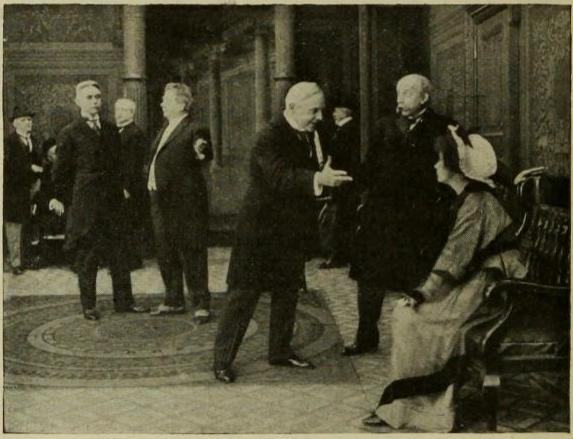
Stepping back into the nascent years of cinematic storytelling, before the cacophony of sound irrevocably altered its essence, we encounter The Senator (1915), a silent film that, despite its vintage, resonates with a surprising modernity in its exploration of political maneuvering, romantic entanglements, and the intricate dance between personal ambition and public duty. Penned by Sydney Rosenfeld, this narrative unfolds with a keen eye for human nature, presenting a tapestry woven with threads of aspiration, deception, and ultimately, genuine affection. It's a testament to the enduring power of character-driven drama, proving that even without spoken dialogue, the human heart's complexities can be eloquently conveyed through gesture, expression, and the potent language of silence.
The film introduces us to Senator Rivers, portrayed with a compelling gravitas by Charles J. Ross, as he embarks on his tenure in the United States Senate from the State of Missouri. His arrival heralds not just a new legislative voice, but a catalytic force in the lives of those he encounters. The Washington D.C. of The Senator is a microcosm of societal aspirations and veiled intentions, where social gatherings serve as much for networking as for leisure. It’s a world where a long-forgotten Revolutionary War claim, the “Denman Claim,” still casts a shadow, personified by the earnest, if somewhat beleaguered, Silas Denman (Ben Graham), who has fruitlessly pursued its recognition for years. This historical artifact of a claim is more than a mere plot device; it symbolizes the lingering echoes of the past, demanding justice in the present, a theme that occasionally surfaces in other historical dramas like The Reign of Terror, albeit with vastly different stakes.
Senator Rivers emerges as a character of considerable depth and strategic acumen. He is not merely a politician; he is a statesman whose moral compass, though tested by the exigencies of the political landscape and personal desires, ultimately points true. His initial interest in the Denman Claim is sparked not just by its inherent justice, but by a burgeoning admiration for Silas’s daughter, Mabel. This dual motivation, a blend of public duty and private affection, lends his character a relatable complexity. Charles J. Ross imbues Rivers with a subtle intensity, conveying conviction through his posture and the resolute set of his jaw. When Mrs. Hillary (Dixie Compton), a widow whose social dexterity aids Mabel, drops the bombshell of Mabel's supposed engagement to the smooth-talking Count von Strahl (William Corbett), Rivers’ reaction is a masterful study in contained shock. Yet, instead of receding, he redoubles his efforts for the Denman bill, now envisioning it as a dowry for the woman he silently admires. This pivotal moment underscores Rivers’ selflessness and his commitment, even in the face of personal heartbreak. It’s a compelling portrayal of a man who prioritizes another’s perceived happiness above his own, a romantic ideal often explored in films like Young Romance, though with a more mature and politically seasoned protagonist.
Gene Luneska, as Mabel Denman, captures the delicate balance of youthful innocence and burgeoning awareness. Her journey from being captivated by the superficial charm of Count von Strahl to recognizing the profound integrity of Senator Rivers forms the emotional core of the narrative. Mabel, a music teacher, is initially drawn to the Count, a figure of European sophistication and allure, a common trope in early cinema, often representing a dangerous, yet enticing, foreign element. Her father, Silas, sees the Count as a valuable asset for his claim, blinding him to the Count’s true nature. Mabel's initial infatuation is understandable, a reflection of societal pressures and the allure of a seemingly grander life. However, her character is not static; she evolves. The film carefully charts her growing discomfort with von Strahl's character, culminating in the dramatic revelation of his perfidy. This arc of disillusionment and enlightenment is crucial, allowing her to appreciate Rivers’ quiet strength and moral fortitude. Her realization that she is in love with Rivers, despite the societal implications of an age difference, speaks to the film's progressive leanings in valuing character over superficiality, a theme that resonates with the emotional depth found in movies like The Battle of Love.
William Corbett’s portrayal of Count von Strahl is a masterclass in silent film villainy. He is suave, manipulative, and utterly devoid of genuine affection, a classic cad whose schemes extend beyond mere romantic conquest to include exploiting the Denman Claim for his own enrichment. His planned elopement with Mrs. Armstrong (Constance Mollineaux), the wife of the Secretary of State (Philip Hahn), is the ultimate act of social transgression, a direct challenge to the established order. This subplot introduces a delicious layer of intrigue, showcasing the moral decay beneath the polished veneer of high society. The Count's rascality, while a common narrative device, is effectively utilized here to provide a stark contrast to Rivers’ principled actions. This kind of moral dichotomy is a powerful engine in many early films, creating clear heroes and villains, much like the clear-cut good-versus-evil narratives in a film such as The Destroying Angel.
The sequence involving the interception of Mrs. Armstrong and Count von Strahl is arguably the film's most thrilling and illustrative of Senator Rivers' genius. Learning of the impending elopement from Mrs. Hillary, Rivers orchestrates a brilliant counter-move. He dispatches Ling Ching (Joseph A. Burke), the Chinese Ambassador, to the Armstrong home, knowing that Mrs. Armstrong, bound by diplomatic courtesy, cannot easily dismiss him. This tactical delay allows Secretary Armstrong, subtly alerted by Rivers to von Strahl’s carriage being at his home, to arrive and witness the compromising situation. This “neat trick” is not just a plot device; it’s a demonstration of Rivers’ profound understanding of social etiquette, human psychology, and the precise application of leverage. It’s a moment that elevates the film from a simple romance to a sophisticated political drama, reminiscent of the intricate strategic play seen in films like Across the Pacific, though on a more personal scale.
Having successfully turned the tables on von Strahl, Rivers rushes back to the Senate, where, with another “neat trick,” he secures the passage of the Denman bill. This legislative victory is the culmination of his public duty, but the true triumph lies in the personal realm. The exposure of von Strahl’s true character is not merely a consequence of Rivers’ actions; it is the catalyst for Mabel’s emotional awakening. She sees the Count for the scoundrel he is, and in doing so, truly recognizes the virtue and genuine affection of Senator Rivers. Her initial attraction to superficial charm gives way to a deeper appreciation for substance and integrity. Gene Luneska effectively conveys this shift, her expressions transitioning from youthful infatuation to a mature understanding of love. The film masterfully portrays her realization that, despite Rivers’ age, his actions, his moral courage, and his unwavering devotion appeal to “every particle of her nature.” This powerful resolution, where the hero wins both the legislative battle and the heart of his beloved, provides a satisfying closure, reinforcing the idea that true worth ultimately prevails over deceit. It echoes the sentiment of enduring love and moral vindication found in narratives like Temptation, where characters navigate moral quandaries to find their true path.
The Senator, while perhaps not as widely remembered as some of its contemporaries, offers a compelling glimpse into the narrative sophistication achievable during the silent era. Its strength lies in Sydney Rosenfeld’s well-structured plot, which interweaves political intrigue with a heartfelt romance, ensuring that neither overshadows the other. The performances, particularly by Charles J. Ross and Gene Luneska, are nuanced, communicating complex emotions without the aid of dialogue. Ross’s Senator Rivers is a prototype of the principled leader, a figure whose integrity makes him both formidable in the Senate and endearing in matters of the heart. Luneska’s Mabel is a character who grows, learns, and ultimately chooses love based on substance rather than superficiality.
The film’s portrayal of Washington D.C. society, with its undercurrents of gossip, ambition, and moral fragility, serves as a timeless backdrop for the unfolding drama. It reminds us that the human motivations driving political and personal decisions remain remarkably consistent across eras. The inclusion of characters like Mrs. Hillary, who acts as a crucial confidante and catalyst, and Ling Ching, the Chinese Ambassador, who becomes an unwitting pawn in Rivers' grand design, adds layers to the narrative, showcasing the interconnectedness of various social strata.
In an era where cinema was still finding its voice, The Senator speaks volumes through its carefully choreographed actions and evocative intertitles. It stands as a testament to the power of a well-told story, demonstrating that even without the convenience of spoken words, a film can explore profound themes of justice, deception, and the triumph of genuine affection. It's a delightful cinematic journey that reminds us of the enduring allure of classic storytelling, urging us to look beyond the absence of sound and appreciate the rich, visual language of early film.
For those interested in the evolution of political dramas or romantic narratives in early cinema, The Senator provides valuable insight. Its ability to balance complex legislative maneuvering with a deeply personal love story, all while maintaining a brisk pace and engaging character arcs, makes it a noteworthy entry in the annals of silent film. It’s a story where the hero doesn't just win the day, but wins the heart, proving that sometimes, the most powerful speeches are delivered not on the Senate floor, but through acts of quiet courage and unwavering devotion. The film leaves us with the satisfying notion that true character, much like a long-standing claim, eventually finds its due recognition.
Comparing it to other films of the period, one might find echoes of its romantic idealism in The College Orphan, or its sense of moral uprightness against corruption in The Curious Conduct of Judge Legarde. The intricate social web and the exposure of deceit can be loosely paralleled with the dramatic reveals in Who's Who in Society, albeit with different thematic foci. While it lacks the epic scale of Atlantis or the intense political machinations of a film like De røvede Kanontegninger, The Senator carves its own niche through its focused narrative and compelling character development. It’s a film that quietly asserts its place, not with grand pronouncements, but with a nuanced portrayal of human foibles and triumphs.
IMDb 5.1
1923
Community
Log in to comment.