DbcultAccessing Vault...
5.9/10
Senior Film Conservator
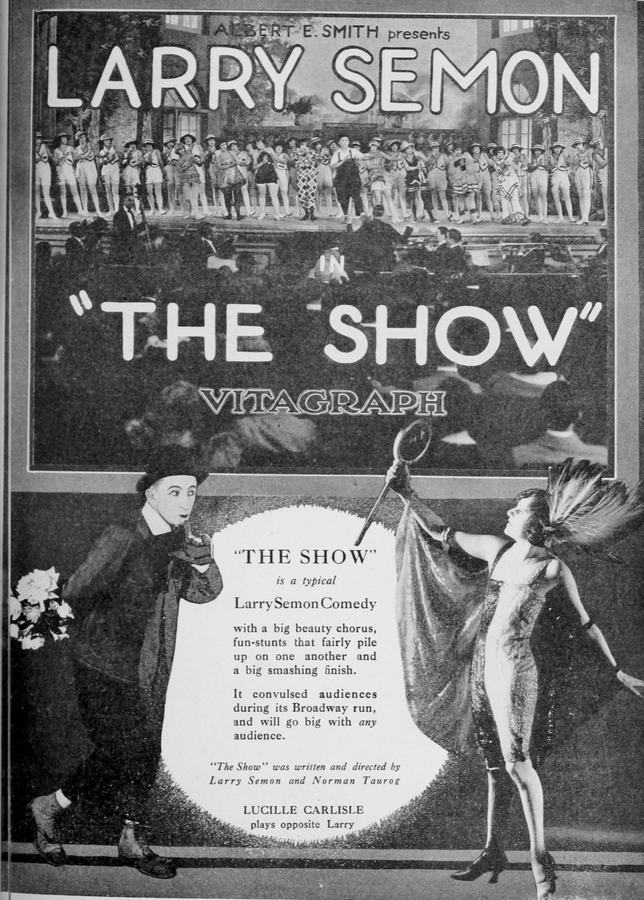
A definitive 5.9/10 rating for a film that redefined the boundaries of cult cinema. The Show remains a cornerstone of transgressive art.
Imagine a film print left too close to a campfire: edges curling, nitrate bubbling, images jittering like guilty secrets. That scorched vitality is what The Show feels like a century on—a two-reel stick of dynamite masquerading as a backstage comedy. Norman Taurog and Larry Semon cram more visual invention into twenty minutes than most blockbusters manage in two hours, and they do it with nothing but cardboard, greasepaint, and a barnyard fowl rigged to explode.
The plot, if one insists on such bourgeois scaffolding, is a clothesline from which Semon drapes escalating catastrophes. A propman (Jack Miller, sporting the hunted eyes of a man who has seen God and found Him wanting) must keep a tatty revue afloat while saboteurs—posing as stagehands—plot to loot the box-office receipts. The narrative engine is less cause-and-effect than chain reaction: a wind machine belches cyclone; the cyclone upends a flatscape; the flatscape flattens a rooster; the rooster retaliates with TNT.
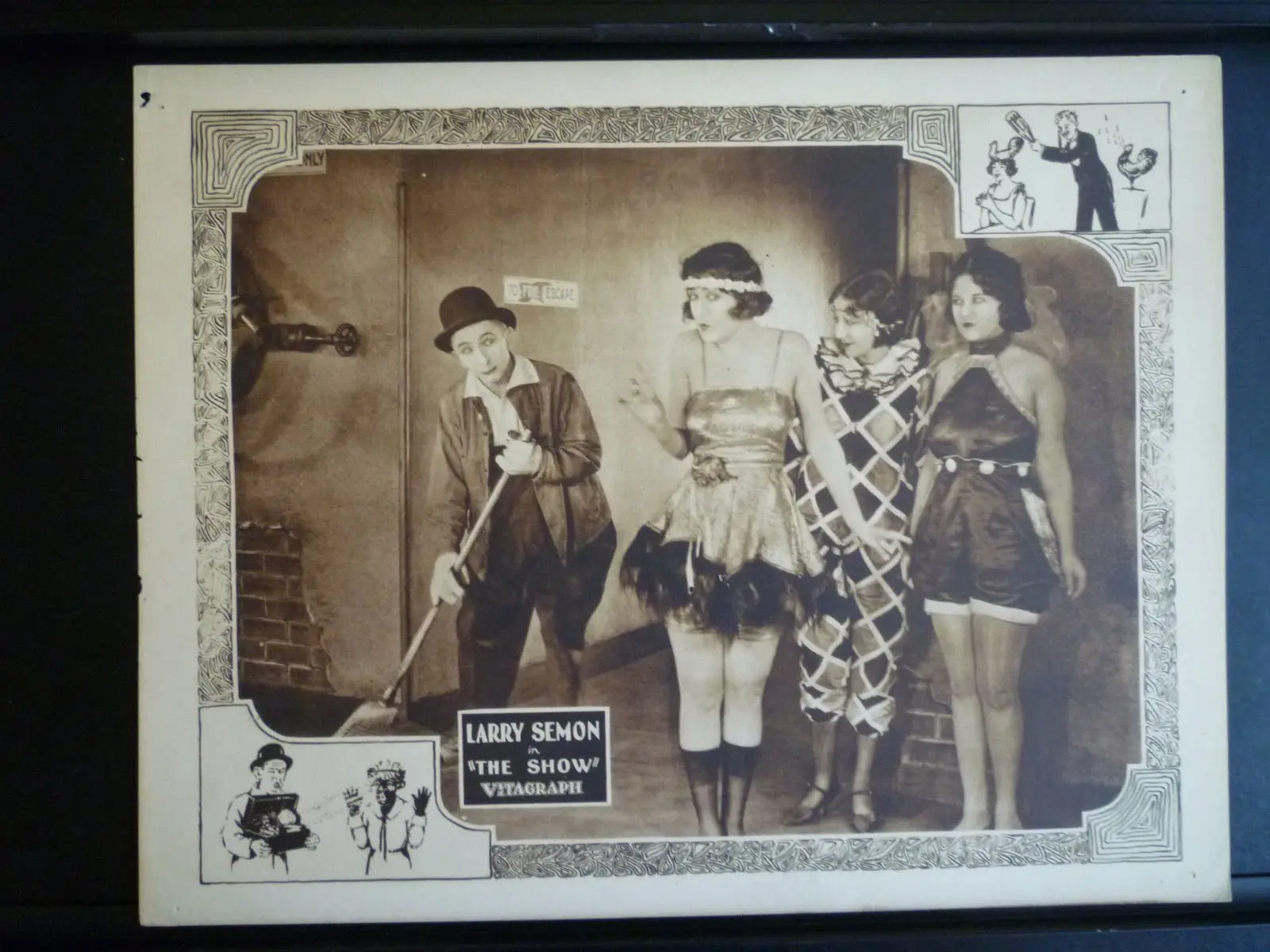
Semon’s camera—never sedentary—glides, pirouettes, and crash-zooms, predating every hyperactive music-video flourish by seven decades. Watch how he frames the heist gang in a diagonal choke of shadows, then tilts the horizon so the world itself seems complicit in the larceny. Silent cinema rarely gets credited for expressionist DNA, yet here it is, pulsing beneath the slapstick skin.
Let us linger on that combustible cockerel, because he is the film’s jester-philosopher. Studios in 1922 could have painted a hen scarlet and called her phoenix; instead Semon builds a punchline that doubles as metaphysical grenade. Each squawk cues a detonation whose smoke plume forms a briefly legible omen: art is fragile, laughter is volatile, and both will peck your eyes out if caged. The gag lands harder because the bird is not anthropomorphised—he remains stubbornly poultry, oblivious to his own destructive divinity.
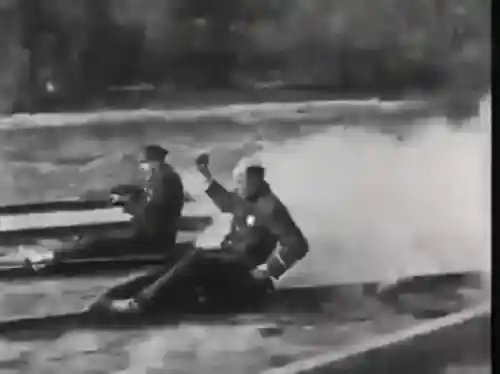
Four years before teaming with Stan Laurel, Oliver Hardy appears as a hulking stagehand whose necktie behaves like a trapped snake. He is still Babe Hardy here, mountainous yet malleable, registering disbelief with the slow burn that would become trademark. His single scene—trying to corral the nitro-rooster while nursing a bruised dignity—operates as a seed crystal: you can already glimpse the comic titan he will become. When he tumbles backwards into a tuba, the instrument’s brassy belch foreshadows the sonic rim-shots of Hal Roach comedies yet unmade.
Money bags change hands in flickering silhouette; yet the loot is irrelevant. What matters is the theatre itself—a cathedral of frayed velvet where gaslight ghosts mingle with the living. Semon milks every nook: fly-loft becomes precipice, trapdoor becomes portal, curtain rope becomes gallows. By the finale, the proscenium arch is less architectural feature than event horizon. When our bedraggled hero stuffs the villains into a property trunk and shoves them through the fourth wall, the gesture feels both triumphant and nihilistic: the stage swallows its own.
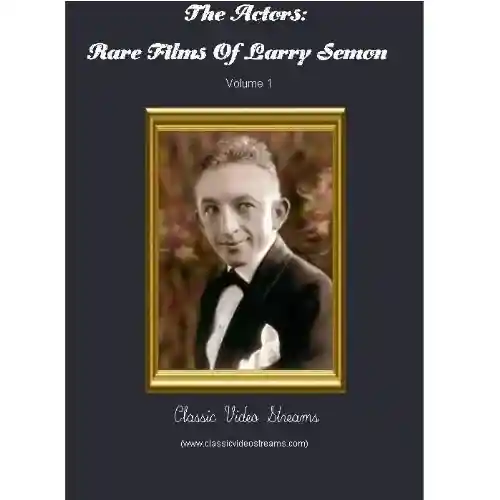
Betty Young’s chorus girl dodges the standard damsel clichés; she swaps kisses for wrenches, rescuing machinery with the same gusto she rescues men. In one blink-and-miss cut she hip-checks a safecracker into an upright piano, slamming the lid like a gangster’s coffin. The moment is electric precisely because it refuses didactic applause—her agency emerges from the same anarchic soup that spawns flying timbers and fowl-bombs.
Viewers weaned on Dolby thunder may need a breath to recalibrate. The Show demands you supply the clang of collapsing scaffolding, the wheeze of overtaxed bellows, the sizzle of chemical fuses. Paradoxically this participatory void renders the stakes tactile—every viewer becomes Foley artist, orchestra, and Greek chorus. I screened a 16-mm dupe for friends at rooftop midnight; the city’s ambient sirens braided with the onscreen mayhem until fiction and metropolis merged into a single anxious organism.

Where 45 Minutes from Broadway gentrifies backstage shenanigans into sentimental hokum, The Show refuses catharsis. Its nearest spiritual cousin might be Nugget Nell’s mining-camp delirium, yet Semon’s picture eschews even that film’s frontier optimism. If you crave continental cynicism, glance at Europa postlagernd—but Teutonic despair feels arthritic compared with Semon’s caffeinated nihil.
Surviving prints bear scuffs like dueling scars—every scratch a testament to projectors that once rattled in nickelodeons. The best restoration, a 4-K scan from a Dutch master positive, still flickers during dissolves, as though the film itself is nervous about disappearing. These imperfections do not mar; they amplify. Impermanence is the text. When the rooster’s final detonation leaves a frame speckled with white-hot emulsion, you are witnessing cinema’s mortality—and its defiant last crow.
Today’s algorithmic comedy favors setups pixel-perfect and punchlines focus-grouped. The Show offers a chaos that feels almost radioactive by comparison—an uncontrolled reaction of flesh, wood, and chemistry. In an age when digital backlots can conjure Armageddon at click, the tangibility of Semon’s collapsing flats restores danger to spectacle. You sense the splinters; you smell the gunpowder. The film reminds us that laughter is not safe—it is a controlled detonation on the fault line between order and entropy.
I have sat through Kubrick’s star-gates and Cameron’s tidal waves, yet nothing rewires my pulse quite like the final minute of this battered curtain-raiser. When the house lights theoretically brighten and the gangsters tumble into the orchestra pit, the film does not grant serenity; it gifts us a dare: go make something this alive, this fragile, this combustible. Accept the dare, and you may find yourself cackling in the dark, ears ringing with a rooster’s echo, heart racing like a wind machine gone feral.
Watch The Show at maximum volume—if not of decibels, then of nerve. Let it scorch you. Let it teach you that every screen is a backstage, every viewer a propman juggling hand grenades disguised as jokes. And when the lights finally rise, check your pulse: if it isn’t galloping, you may already be a flat in Semon’s hurricane.
IMDb 7.4
1934
Community
Log in to comment.