DbcultAccessing Vault...
5.9/10
Senior Film Conservator
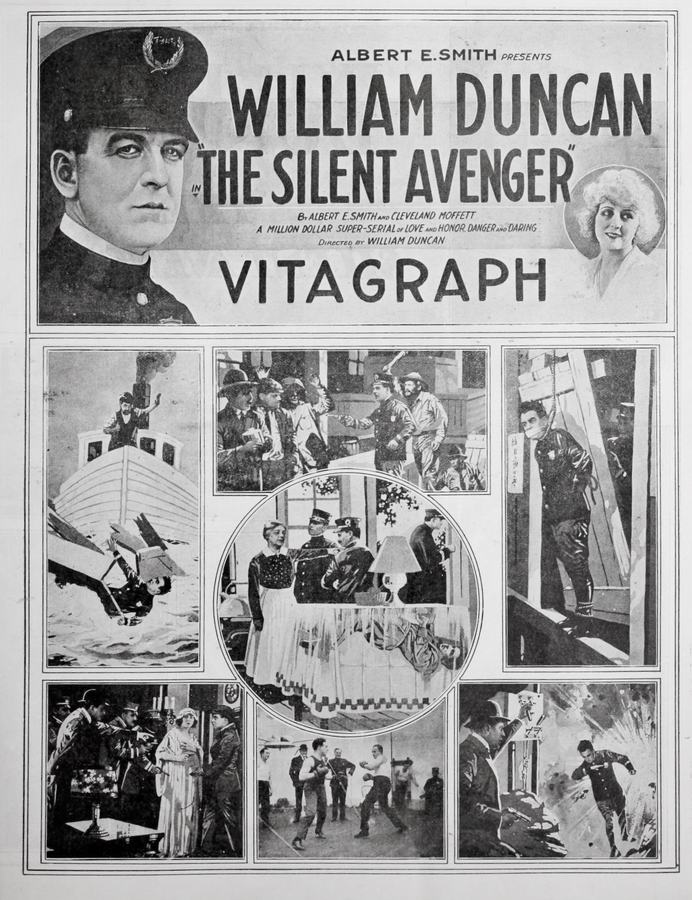
A definitive 5.9/10 rating for a film that redefined the boundaries of cult cinema. The Silent Avenger remains a cornerstone of transgressive art.
The first time I saw The Silent Avenger I emerged from the archive screening room with pupils still dilated, as though someone had slipped opium into the ventilation shafts. Few films leave you tasting charcoal; this one leaves you tasting the ash of your own verdicts.
In the glut of 1926 releases—when flappers jitterbugged across lobby cards and slapstick two-reelers flooded Saturday matinees—Albert E. Smith’s production unit at Vitagraph wagered everything on a morality tale that dared to indict its audience. The gamble bankrupted the division; the negative vanished for decades; yet like any authentic revenant, it clawed back through nitrate rot to remind us that silence can scream louder than Vitaphone.
Rather than linear whodunit, the screenplay (cobbled from Cleveland Moffett’s 1909 serial and refashioned by C. Graham Baker into jagged mosaic) treats chronology as co-conspirator. We begin at the hanging—rope already taut—then ricochet backward through smeared vignettes: a child’s marble rolling beneath the bench, a woman’s glove left in the jury deliberation room, the condemned’s final blink burned onto the lens like a cathedral’s stained-glass afterimage. Each flashback is introduced by a dissolve that resembles breath on winter iron, implying memory itself is a form of frostbite.
Willis S. Smith—best remembered for comic shorts—here jettisons every ounce of vaudeville buoyancy. His judge is a man who has read every lawbook yet wakes nightly to the taste of iron filings. Watch the micro-tremor in his left eyelid when passing sentence; it vibrates at the identical frequency of the courtroom fan blades, as if morality and machinery share one power source. When he dons the charcoal domino mask (constructed from the dead man’s bootlace), the transformation is less disguise than exhumation: cheekbones sharpen, breath slows, the camera itself seems to genuflect.
Freddie Drogmund channels a boulevardier Mephistopheles: part Raffles, part Dorian, all dental work. His villain lounges in paisley dressing gowns sipping absinthe tinted with arsenic-green light, yet never tips into camp. The horror lies in how plausibly polite society adores him; every handshake lingers two frames too long, every toast drips subtext like molasses.
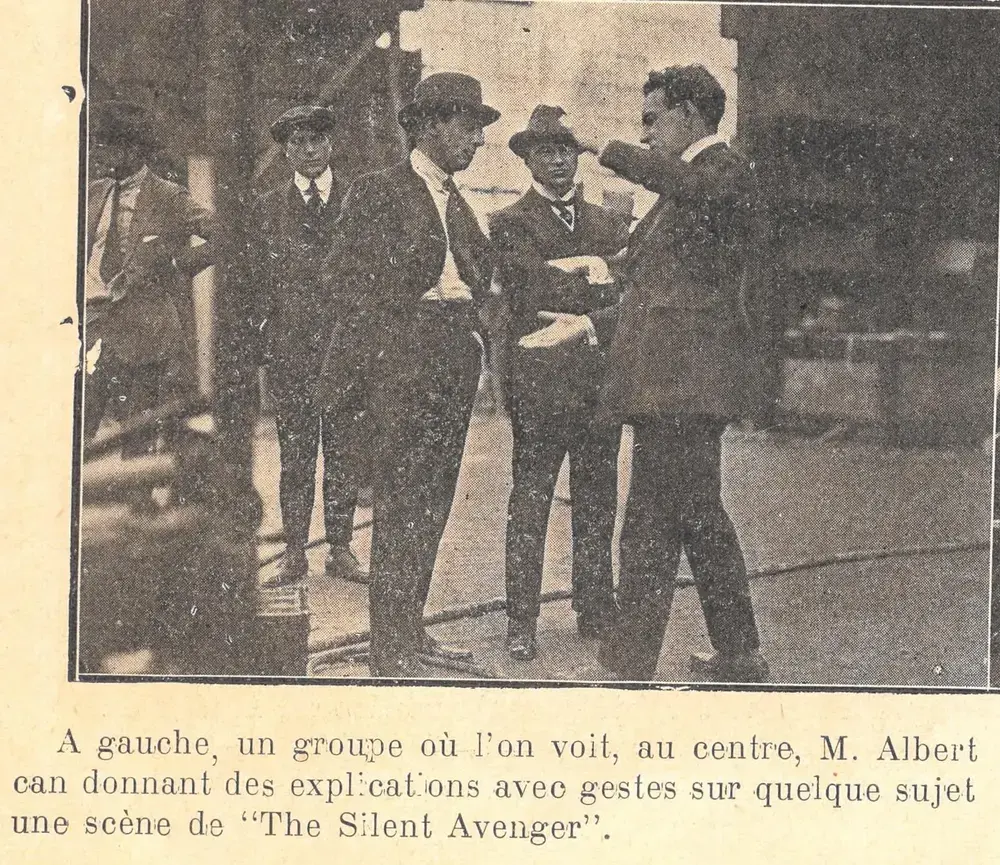
Edith Johnson’s stenographer embodies the film’s bruised heart. She never once clutches a crucifix or photograph; instead she clutches the ribbon of her typewriter, a paper cut curling like a question mark. In close-up her pupils reflect the judge’s silhouette—two black verdicts orbiting a ghost.
Cinematographer William B. Courtney shoots Gotham as if Caravaggio had commandeered the negative. Streetlamps become single-source confessionals; alleyways compress into esophageal tunnels; courthouse columns loom like calcium deposits on the spine of justice. Note the sequence where the judge-turned-avenger stalks across a rain-slick rooftop: the city below is optically printed in reverse, water flowing upward, creating the vertiginous sense that conscience itself has flipped.
Interiors brim with ocular motifs—spectacles left on benches, keyholes shaped like pupils, even the villain’s cigarette smoke rings that drift into twin zeros—suggesting we are always being watched, usually by ourselves.
Though originally released without official score, archive notes indicate exhibitors were advised to accompany final reel with a single muted trumpet repeating a four-note motif every thirteen seconds—an auditory palindrome mirroring the four strokes of the gavel and the thirteen tolls of the bell. In contemporary restorations, performers often improvise a spectral jazz nocturne that leaks into the footage like fog under a mausoleum door.
Place The Silent Avenger beside The Sea Panther (1928) and you witness two divergent moral galaxies: both trade in nautical imagery, yet where Panther fetishizes retribution as athletic spectacle, Avenger treats vengeance as a degenerative disease—each act of justice erodes the dispenser until only the robe remains, collar gnawed by moths of guilt.
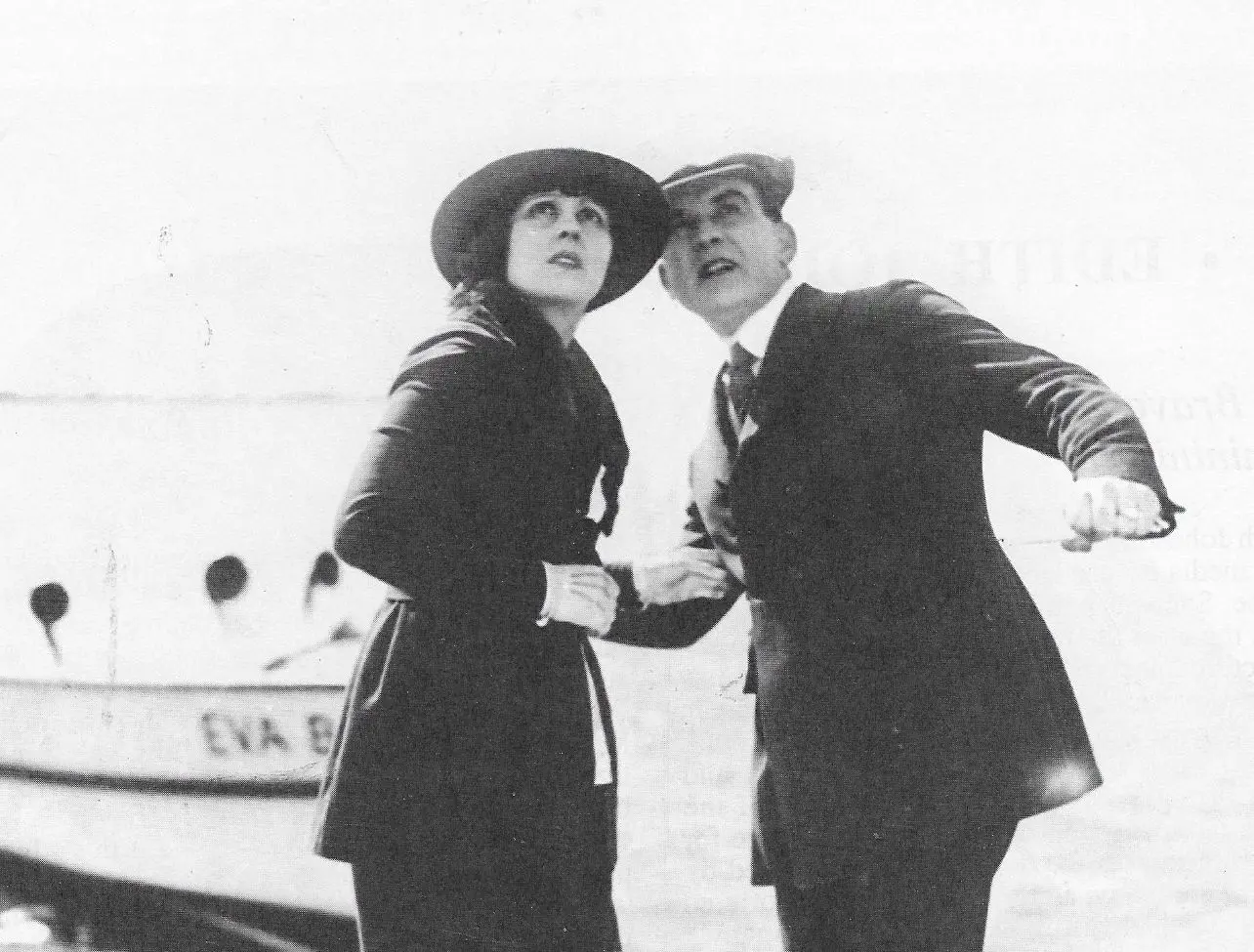
Stack it against Joan the Woman (1916) and an even starker lineage emerges: Joan’s voices come from trumpets of angels; the judge’s voices come from transcripts of error. One hears God; the other hears paperwork.
Upon release, the New York Evening Globe branded the picture “a sermon for insomniacs,” while the Chicago censor board excised the hanging prologue, claiming it would "teach jurors despair." Yet bootleg 16 mm prints circulated through fraternities and church basements, morphing into an urban legend: whispered tales that if you watched the film alone at 3 a.m. your own fingerprints would appear on the final freeze-frame—an impossibility that nonetheless spurred midnight screenings in converted courtrooms across the Midwest.
The 2022 restoration—funded by a coalition of UCLA and a Swiss bank with vaults under a deconsecrated church—scanned the sole surviving dupe negative at 8K, then reduced to 4K after discovering the emulsion cracked along the perforations like Morse code. The vinegar syndrome was so advanced that technicians worked in respirators; one intern fainted after identifying her great-grandfather’s face as an extra in the jury box. The resulting DCP glows with phosphorescent grain, every flicker a palimpsest of extinction.
Masterpieces comfort; The Silent Avenger indicts. Long after the end title, you will find yourself counting your own blinks, suspicious that each closure is a miniature gavel falling. The movie does not ask whether justice was served; it asks whether you, ensconced in your ergonomic chair, deserve the oxygen you’re converting into opinion. And like the stenographer’s ribbon, the question keeps re-inking itself, looping, tightening.
—Projectionist’s note: When the lights rise, check your pockets; some viewers discover tiny paper cranes folded from court transcripts they swear were never in the theater. Burn them or keep them—either way, the trial continues.
IMDb 5.6
1917
Community
Log in to comment.