DbcultAccessing Vault...
6/10
Senior Film Conservator
A definitive 6/10 rating for a film that redefined the boundaries of cult cinema. Meyer from Berlin remains a cornerstone of transgressive art.
In the nascent days of cinematic storytelling, when the world was still grappling with the profound visual language of the moving image, a certain German filmmaker began to etch his unique imprint upon the silver screen. Ernst Lubitsch, a name that would eventually become synonymous with sophisticated wit and an unparalleled 'touch,' offered audiences a delightful peek into the foibles of human nature with his early comedic endeavor, Meyer from Berlin (1919). Far from being a mere historical curiosity, this film stands as a vibrant testament to the enduring power of character-driven farce and a foundational piece in the Lubitsch oeuvre. It’s a work that, even a century later, retains its effervescent charm and sharp observational humor, proving that the complexities of marital malaise and the absurdities of self-delusion are truly timeless comedic fodder.
The narrative, deceptively simple, unfurls with a captivating blend of lightheartedness and subtle social critique. We are introduced to Meyer, portrayed with a magnificent blend of bluster and vulnerability by Lubitsch himself, a man whose domestic life has evidently become a source of profound, if self-inflicted, ennui. He yearns for an escape, a brief reprieve from the perceived shackles of matrimony, and decides upon a solo vacation, a journey into the unknown where he might, perhaps, rediscover a version of himself untainted by responsibility. This premise, a common enough trope, is elevated by Lubitsch’s nuanced portrayal of Meyer’s internal world, a realm populated by inflated self-importance and a desperate longing for uncomplicated pleasure. His journey is not just geographical; it is an attempted psychological liberation, a quest for a fleeting moment of unadulterated self-indulgence.
Meyer, as a character, is a masterclass in comedic self-deception. His initial vacation is less about genuine relaxation and more about the affirmation of his own perceived desirability and freedom. Lubitsch, with keen insight, crafts a protagonist who is simultaneously relatable in his desire for personal space and utterly ludicrous in his execution of it. He is the archetype of the man who believes himself far more suave and sophisticated than he actually is, a common figure in farcical cinema. His every gesture, from his self-satisfied strolls to his exaggerated attempts at nonchalance, broadcasts an air of carefully constructed affectation. This is a man who has convinced himself that his domestic troubles are the result of external forces, rather than his own bumbling ineptitude or lack of attentiveness.
The moment Meyer encounters the attractive young woman, also on vacation, played with captivating vivacity by Ossi Oswalda, his carefully constructed facade begins to crack. Oswalda's character is not merely a romantic foil; she is a catalyst, an unwitting agent of chaos who exposes the fragility of Meyer's self-perception. Her youthful charm and independent spirit stand in stark contrast to Meyer's staid, almost desperate attempts at flirtation. The dynamic between them is instantly engaging, built on a foundation of humorous misunderstanding and Meyer's increasingly elaborate, and often pathetic, attempts to impress her. This interaction forms the comedic core of the film, showcasing how Meyer's desire for an illicit romance blinds him to the impending realities of his situation. One might draw parallels to the protagonist's misguided romantic pursuits in The Love Hermit, where characters similarly grapple with the often-humorous pitfalls of seeking connection in isolation.
The absence of Meyer's wife is, ironically, a dominant presence in the film. Her spectral influence hangs over Meyer's every decision, a constant reminder of the life he is attempting to escape. This unseen character shapes Meyer's motivations, pushing him towards increasingly audacious acts of rebellion against his domestic constraints. The humor here lies in the audience's understanding that Meyer's freedom is entirely self-imposed and perpetually threatened by the looming possibility of his wife's discovery. It speaks to a universal human desire to momentarily shed responsibilities, but also to the inevitable consequences of such escapism. In a way, the film subtly critiques the societal expectations placed upon married men of the era, exploring the quiet desperation that could lead to such a flight of fancy.
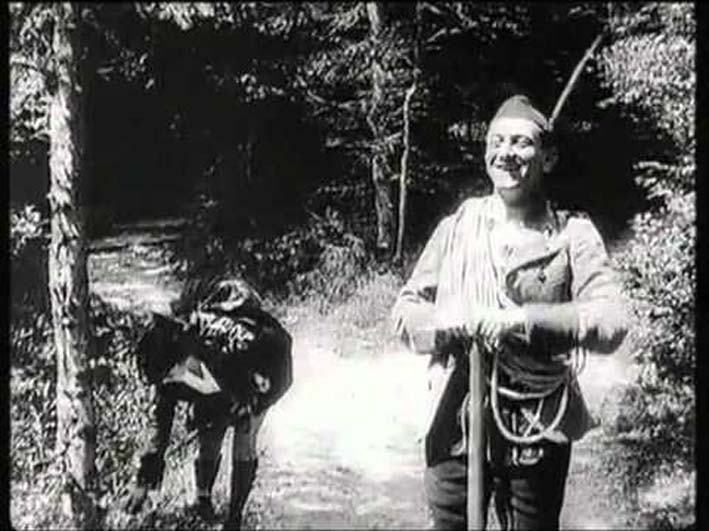
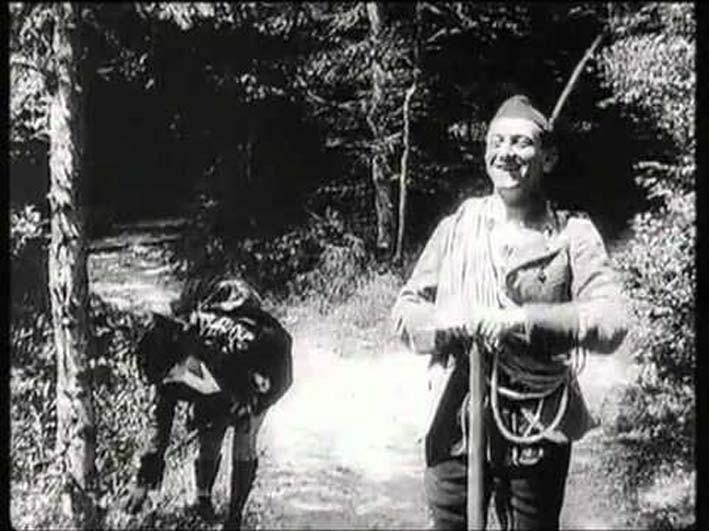
The decision to embark on a mountain climb together serves as the film's central dramatic, and comedic, turning point. What begins as a picturesque adventure, an opportunity for Meyer to further ingratiate himself with the young woman, quickly devolves into a series of escalating misfortunes. The majestic, unforgiving landscape of the mountains becomes a formidable antagonist, relentlessly exposing Meyer's physical inadequacies and his utter lack of preparedness. His bumbling attempts at mountaineering, his inability to navigate the terrain, and his general discomfort with anything beyond the comforts of urban life are played for maximum comedic effect. The mountain, initially a symbol of freedom and adventure, transforms into a crucible of humiliation for our protagonist.
The physicality of the comedy in these sequences is a highlight, showcasing Lubitsch's early mastery of visual gags and slapstick, albeit with a refined European sensibility. Unlike the more exaggerated, often destructive, slapstick of contemporary American comedies, Lubitsch’s humor stems from character and situation. Meyer’s struggles are not just external; they are deeply personal, reflecting his internal battle against his own limitations and inflated ego. The mountain climb sequence is a brilliant metaphor for Meyer's entire escapist endeavor: an idealistic pursuit that quickly crumbles under the weight of reality. The harsh elements and physical demands strip away his pretensions, leaving him exposed and vulnerable, a truly pathetic figure whose attempts at heroism are continually undermined by his own ineptitude.
Even in this relatively early work, the nascent elements of the famed 'Lubitsch Touch' are discernible. The director's ability to convey complex emotions and sophisticated humor through subtle gestures, knowing glances, and impeccably timed reactions is already evident. He doesn't rely on overt declarations or lengthy exposition; instead, the narrative unfolds through visual storytelling and the expressive performances of his cast. The pacing of the film is remarkably fluid for its era, transitioning seamlessly from the bustling streets of Berlin to the serene, then perilous, mountainscapes. Lubitsch demonstrates a keen understanding of cinematic rhythm, allowing moments of quiet character reflection to breathe before plunging into the next comedic set-piece.
The screenplay, penned by Erich Schönfelder and Hanns Kräly, works in perfect tandem with Lubitsch's direction. Their collaboration creates a narrative that is both tightly structured and delightfully spontaneous, brimming with opportunities for physical comedy and character-driven gags. The film’s strength lies in its ability to extract humor from the everyday absurdities of life, particularly marital discord and the desire for fleeting romance. It's not a grand, epic tale, but rather an intimate, albeit exaggerated, portrait of a man caught between his desires and his duties. The writing eschews heavy-handed moralizing, opting instead for a playful exploration of human folly. This light touch, even when dealing with potentially serious themes, is a hallmark of Lubitsch's unique style.
The performances in Meyer from Berlin are uniformly excellent, a testament to Lubitsch’s skill as a director of actors. Ernst Lubitsch himself, in the titular role, delivers a masterclass in comedic self-importance. His physical comedy is precise, his facial expressions priceless, and his ability to convey Meyer's inner turmoil through subtle gestures is truly remarkable. He manages to make Meyer both exasperating and endearing, a difficult balance to strike. Ossi Oswalda, a frequent collaborator with Lubitsch in his early German period, shines as the young woman. Her effervescent energy and natural charm provide a perfect counterpoint to Meyer's more ponderous demeanor. She embodies a spirit of youthful adventure and independence that further highlights Meyer's middle-aged anxieties.
The supporting cast, including Ethel Orff, Heinz Landsmann, Erich Schönfelder, and Trude Troll, contribute significantly to the film’s rich tapestry of characters. Each actor, even in smaller roles, brings a distinct personality to their part, enhancing the overall comedic effect. The interactions between these characters, often brief but impactful, contribute to the film’s bustling, lively atmosphere. The collective synergy of the ensemble ensures that Meyer's misadventures are contextualized within a believable, if comically heightened, world. This attention to detail in even minor roles is another indicator of Lubitsch's emerging directorial prowess, creating a cohesive and engaging cinematic experience.
Beyond the surface-level comedy, Meyer from Berlin delves into profound themes relevant to the human condition. The most prominent is the theme of escapism – Meyer's desperate attempt to flee the perceived monotony and obligations of his married life. This desire for freedom, however, is constantly undermined by his own character flaws and the inescapable realities of his situation. The film subtly suggests that true contentment cannot be found in fleeing one's responsibilities but rather in confronting them. This mirrors the internal struggles seen in films like Hypocrisy, where characters often maintain a public facade while battling private turmoil.
The film also explores the theme of identity. Meyer, away from his familiar surroundings and the watchful eye of his wife, attempts to reinvent himself, to become the dashing, adventurous man he imagines himself to be. However, the trials of the mountain expose the true, bumbling Meyer beneath the veneer of sophistication. This comedic deconstruction of identity is a powerful element, demonstrating how external circumstances can strip away pretense and reveal core truths about a person. His journey up the mountain is, in essence, a journey into self-discovery, albeit one paved with pratfalls and embarrassment.
Marital discord, or at least the perception of it, forms the underlying motivation for Meyer's entire escapade. While his wife is never explicitly seen, her presence is felt throughout, representing the domesticity Meyer is so keen to shed. The film doesn't offer a definitive judgment on their marriage, but rather uses Meyer's flight as a lens through which to examine the universal challenges of long-term relationships and the human tendency to seek excitement outside the mundane. It's a comedic exploration of the grass-is-greener syndrome, where the protagonist learns, through a series of painful and hilarious mishaps, that the grass is often just as thorny on the other side. This nuanced portrayal of domestic life, even through the lens of farce, adds a layer of depth to what could otherwise be a straightforward comedy.
Meyer from Berlin holds significant historical value as an early work by one of cinema's most influential directors. It showcases Lubitsch's formative years in German silent cinema, before his eventual move to Hollywood, where he would further refine his distinctive style. The film contributes to our understanding of the evolution of European comedy in the post-World War I era, a period often characterized by a craving for escapism and lighthearted entertainment. While Germany was grappling with the aftermath of war, films like Meyer from Berlin offered a much-needed respite, a chance for audiences to laugh at the relatable absurdities of life.
Its influence, while perhaps not as overtly dramatic as some of his later masterpieces, is nonetheless palpable. One can trace the lineage of his sophisticated romantic comedies and farces, such as The Crystal Gazer or Love's Law, back to the foundational elements present in Meyer from Berlin. The film exemplifies his early mastery of visual storytelling, character development through action, and the subtle art of comedic timing. It's a reminder that even in his formative years, Lubitsch possessed an innate understanding of what makes an audience laugh, and more importantly, what makes them connect with characters who, despite their flaws, are undeniably human.
In conclusion, Meyer from Berlin is far more than just a historical artifact; it is a vibrant, engaging, and genuinely funny film that continues to resonate with contemporary audiences. Its strength lies in its timeless portrayal of human vanity, the allure of forbidden romance, and the comedic potential of a disastrous adventure. Lubitsch, as both director and star, crafts a narrative that is both entertaining and subtly insightful, solidifying his reputation as a master of cinematic comedy even in the early stages of his illustrious career. For anyone interested in the origins of sophisticated humor in film, or simply in need of a good laugh at the expense of a gloriously bumbling protagonist, Meyer from Berlin remains an essential viewing experience, a delightful journey into the heart of human folly that is as fresh and enjoyable today as it was a century ago.

IMDb 6.3
1935
Community
Log in to comment.