DbcultAccessing Vault...
Cult Review
Senior Film Conservator
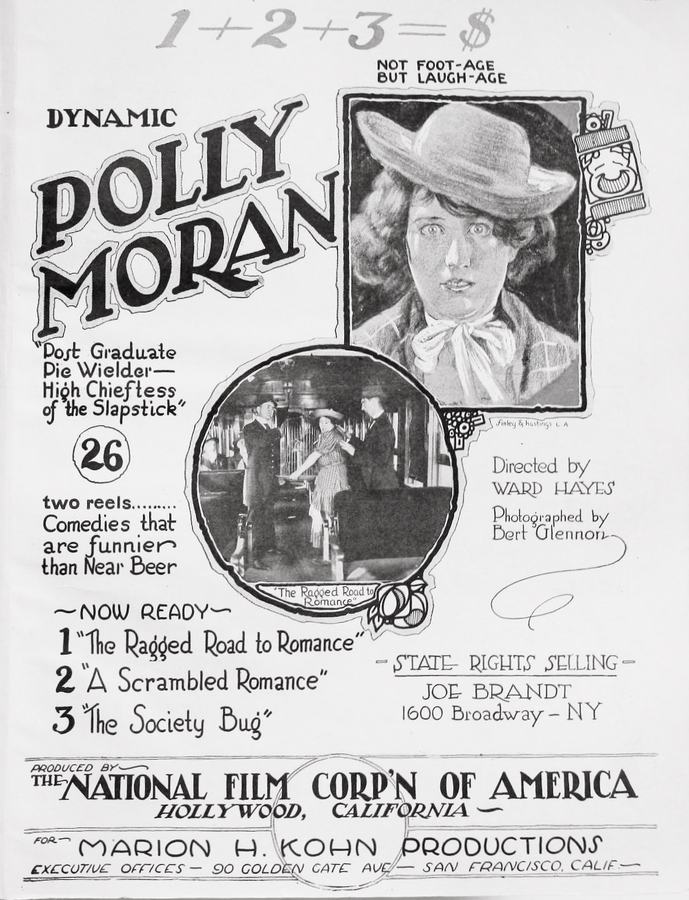
There are comedies that tickle; then there is The Society Bug, a nitro-glycerin custard pie hurled straight at the monocle. Ninety-odd years after its whisper-quiet release, the film still feels like a champagne bottle shaken by a subway train—its fizz acidic, its cork lethal.
Polly Moran, a performer whose voice the gods never bothered to fit with a volume knob, invades the frame like a one-woman cavalry charge. She is Lulu McBluff, a name that sounds typed by a drunk telegraphist, and she embodies the great American delusion that class is just another commodity—stack it high, sell it cheap, slap a crest on it. The screenplay, attributed to a committee of gag-men who probably owed favours to the mob, is less a narrative than a demolition derby in whalebone corsets.
The first reel introduces us to a ballroom so oppressive it could double as a mausoleum for dead manners. Crystal chandeliers drip like frozen stalactites; violins saw away at a Strauss waltz until it bleeds. Enter Lulu, sporting a tiara that might once have graced a beer-promoting beauty queen. She clutches a parchment—her passport to the inner sanctum—bearing a family tree inked by a forger who charged by the squiggle. The real aristocrats, a parliament of cadaverous ghouls, greet her with the sort of smiles usually reserved for tax collectors. Moran’s eyes, bead-bright and predatory, flicker with the knowledge that she is both infiltrator and entertainment.
What follows is a sequence of social sabotage so precise it feels like a heist. Lulu must procure, within a single night: a lock of hair from a duke, the signature of a duchess on a pawn-shop IOU, and a parrot trained to croon My Country, ’Tis of Thee. The hunt is framed as a harmless parlour game, yet every clue is booby-trapped to expose her vulgarity. She sidesteps each trap with the grace of a drunk tight-rope walker, inadvertently exposing the ruling class as grafters, philanderers, and secret wearers of ready-made shirts.
Director Larry Semon—yes, the same manic imp who later tried to drown A Phantom Fugitive in surrealism—films every pratfall like a bank robbery in slow motion. When Lulu’s bustle snags a waiter’s tray, the resulting cascade of turtle soup baptises a dowager whose shriek shatters a stained-glass saint. The editing is staccato, almost Soviet in its willingness to sacrifice continuity for impact. One moment Moran is sliding down a banister; the next she is somersaulting through a window, bloomers aflutter like surrender flags. The effect is both hilarious and oddly liberating: the mansion becomes a playground, the servants silent co-conspirators.
Compare this to the venomous jealousy in Envy, where social striving curdles into homicide. The Society Bug refuses to grant its blue-bloods even the dignity of tragedy; they are too ridiculous to merit pity. When Lulu finally brandishes the evidence that half the guest list bought their titles from the same forger who serviced her, their outrage implodes into a collective spit-take. The film’s sympathies lie, unequivocally, with the fraud who at least knows she’s faking it.
Moran’s performance is a master-class in calibrated excess. Watch the way she modulates her shoulders: thrust forward when Lulu is on the offensive, receding into her neck like a startled tortoise the instant she senses defeat. Her voice—though silenced by the medium—echoes through gesture: hands that flutter like semaphore flags, eyebrows that vault skyward as if attempting to escape her face. Contemporary critics dismissed her as a bargain-bin Mabel Normand; history has proven she is something closer to a proto-Lucille Ball, minus the studio polish but with double the anarchic voltage.
The camera, normally a neutered observer in silent comedies, becomes her co-conspirator. In one sublime gag, Moran breaks the fourth wall—just a sly flick of the iris, a half-smile that invites us to share her contempt for the stuffed dodos around her. It lasts maybe twelve frames, yet it collapses the distance between spectacle and spectator. Suddenly we are accessories to the crime, co-forgers of the counterfeit duchess.
Art director William Cameron Menzies—future visionary behind Ave Caesar!—fills every inch of the frame with venomous detail. Notice the wallpaper: peacocks whose tail-feathers morph into clutching human hands. Or the grandfather clock whose pendulum bears the crest of a family whose fortune began with slave ships—time literally swinging on the bones of the exploited. Even the shadows are aristocratic: long, languid, contemptuous of the electric light that dares to expose them.
Against these baroque flourishes, Moran’s garish wardrobe explodes like a dye-pack in a bank vault. Her gowns are Technicolor nightmares imposed upon a monochromatic world: stripes that clash with damask, polka dots that pick fights with filigree. The closer she edges toward acceptance, the more outlandish her outfits become, as though the universe itself resists her assimilation.
Silent cinema loved to dress men in frocks for cheap laughs; The Society Bug dresses society itself in drag. Titles are revealed as mere accessories—top hats to be donned or discarded according to whim. Lulu’s greatest triumph is not that she fools the elite, but that she exposes their own masquerade. The Duke’s crest turns out to be mail-order; the Duchess’s pearls, cultured in a New Jersey clam shack. By the time the curtain falls, everyone stands naked—or at least in discount underwear—proving that pedigree and polyester are separated only by price point.
This thematic audacity links the film to Odette, another forgotten gem where a woman weaponises performance to infiltrate enemy territory. Yet while Odette opts for tragic opera, The Society Bug chooses vaudeville burlesque, tickling ribs while slicing tendons.
The climax arrives when Lulu, cornered like a raccoon in a pantry, sets fire to the parchment that started it all. The flames leap—double-exposed by the lab so they resemble orange demons—consuming not only the lie but the very drapes that uphold the room’s grandeur. Characters flee, corsets aflame, tiaras melting like sherbet in a blast furnace. It is both catastrophe and catharsis, a purging by fire of a society too bloated to survive.
Yet the film refuses to end on punitive moralising. Lulu strides into the dawn astride a milk cart commandeered for her escape, her hair singed but her spirit unbroken. Behind her, the mansion smolders like a giant discarded cigar. She does not look back; she has already set her sights on the next castle, the next con, the next counterfeit crown.
Modern viewers may scoff at the melodramatic title cards—each a miniature novella of exposition—but ignore them and you miss half the fun. The intertitles, penned by satirist Arthur ‘Bugs’ Baer, crackle with Roaring-Twenties slang: “She’s got more cheek than a taxidermist’s squirrel!” or “His blood’s so blue it clots.” They function like snarky Greek chorus, winking at the audience while the images race ahead.
Restoration efforts have been spotty; most prints circulate in 480p fog on niche streaming sites that look like they were designed on a potato. Yet even through the murk, Moran’s vitality flickers, irrepressible. Imagine a 4K scan: every bead of sweat on her upper lip, every glint of mischief in those porcupine-quill eyes. Until then, we piece together the film’s brilliance like archaeologists reassembling a shattered urn, guessing at the colours from the shards.
Comparisons abound: Peace and Riot likewise torched bourgeois respectability, but lacked Moran’s comic grenades. The Catspaw flirted with class satire yet retreated into spy-thriller mechanics. Only The Society Bug dares to laugh while the chandeliers crash, to lampoon while the flames rise.
So seek it out, fellow cine-masochists. Watch it at 2 a.m. when your faith in meritocracy is at low tide. Let Polly Moran stampede across your retinas, trampling every illusion that taste can be taught, that class is anything more than a story we agree to tell while counting our inherited spoons. And when the screen fades to black, remember: the bug may be society, but the joke—merciless, magnificent—remains on us.
IMDb —
1921
Community
Log in to comment.