DbcultAccessing Vault...
Cult Review
Senior Film Conservator
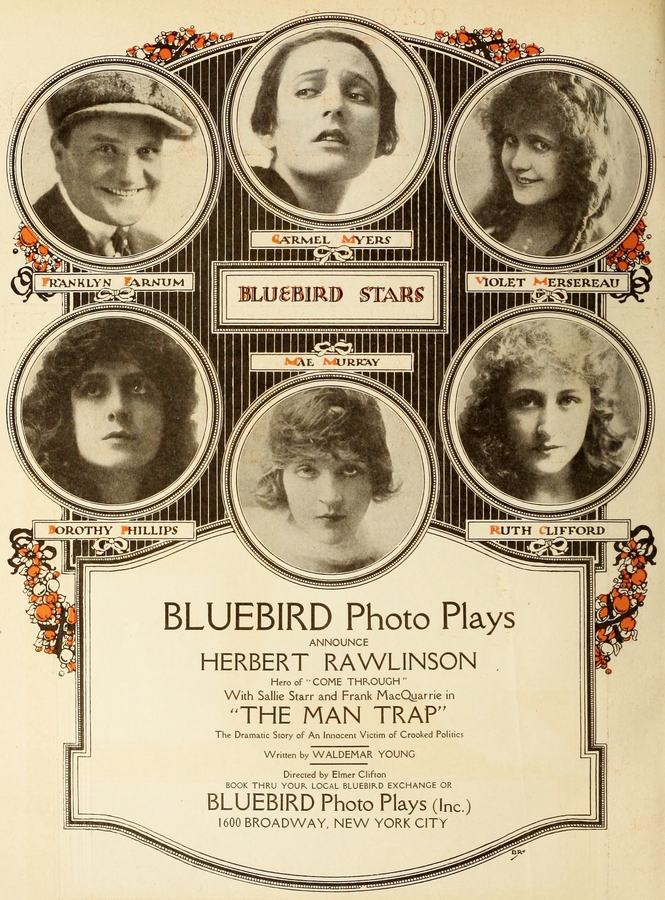
Prison bars clang like broken bells across Waldemar Young’s scenario, each reverberation a reminder that ink once trumpeted as truth can be smeared into lies by the very presses that birthed it.
Ruby Lafayette’s newsroom matriarch—part Circe, part city-room siren—hovers at the edge of every frame, eyes glittering with the predatory patience of someone who has already typeset tomorrow’s scandal. Herbert Rawlinson’s John Mull enters wearing the careless confidence of a man who still believes facts can outrun bullets. One frame later he is shackled, a headline’s patsy, and the camera—almost embarrassed—cuts to a close-up of his knuckles whitening around the cell’s iron lattice. The celluloid itself seems to sweat.
Director Jack Nelson, never a household name, nevertheless wields chiaroscuro like a scalpel. Note the escape sequence: torrential backlot rain slashes across the lens, turning the prison yard into a charcoal etching alive with guttering magnesium flares. Mull’s silhouette scuttles up a tower that looks half church spire, half guillotine, while the guard’s lantern swings below him, a pendulum counting down to moral extinction. It is German-expressionist DNA spliced onto American pulp, a visual tension that makes the sun-drenched piety of Life and Passion of Christ feel like a Sunday-school card.
Once liberated, Mull does not sprint to revenge; he lingers in waterfront fog, a penitent ghost haunting his own story. Enter Sally Starr’s Bess Miller, a flapper whose garter-knife wit has dulled under the strain of waiting. She now drifts through speakeasy neon on the arm of Burton Grange—Jack Nelson doubling as actor, gifting the role a jittery, almost Chaplinesque physicality. Their intended elopement is less romantic than transactional: Grange wants an alibi against loneliness; Bess wants a passport out of the newsroom’s ashtray air. Their scenes pulse with the improvisational crackle that silent cinema rarely risked this side of Salvation Nell.
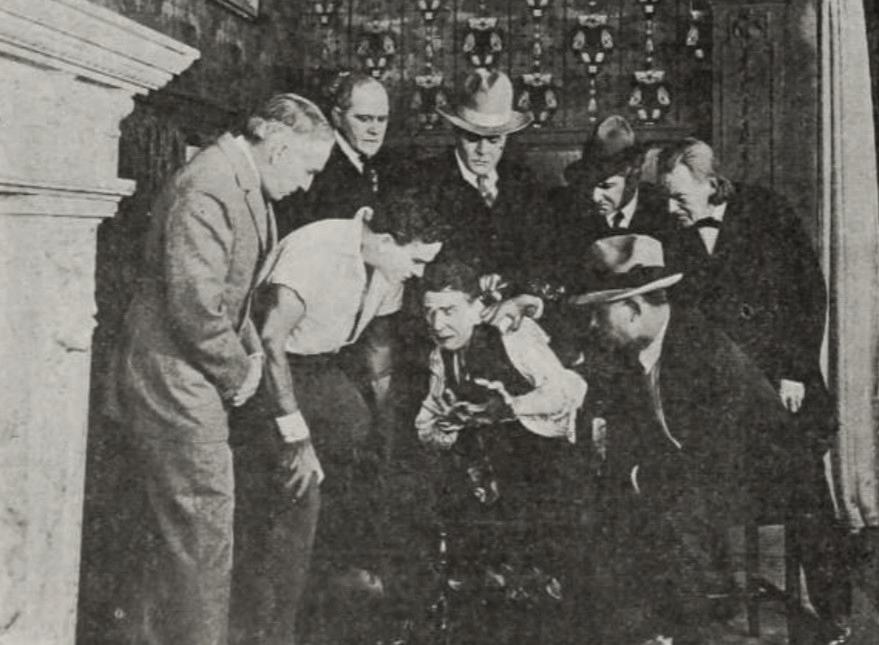
The pivotal clash arrives inside Steadman’s oak-paneled office, a mausoleum of yellowing back issues. Grange, confronting the editor over a blackmail packet, becomes a blur of flailing arms; Steadman’s skull meets a brass desk-corner with the sickening thud of overripe fruit. Nelson cuts to the ink-pot tipping—black ooze crawling across headlines that once screamed integrity. The metaphor is blunt, unforgettable: truth murdered by the medium that birthed it. Grange flees, instantly condemned by a city that loves a scapegoat almost as much as it loves a parade.
Now the narrative braids its two fugitives. Mull, hiding in a graveyard of decommissioned freight cars, hears the distant siren that announces Grange’s escape from custody. Their meeting is filmed in a single take: two silhouettes sharing a match-flare that reveals eyes webbed with sleeplessness. Mull’s demand—"Give yourself up so I can nail Finch"—carries the weary authority of a man who has already died socially and sees no further downside. Grange agrees, not out of nobility but exhaustion, a surrender so human it hurts to watch.
The final confrontation unfolds in Finch’s mahogany den, a cathedral of civic hypocrisy. Mark Fenton plays the inspector like a cobra in uniform, all hooded lids and velvet vowels. Mull enters through French doors, raincoat dripping like a wet flag of truce. He produces not a gun but a pocket-edition City Charter, thumbing to the page where perjury becomes treason. The geometry of the scene—Mull standing, Finch seated, a desk littered with medals between them—echoes Renaissance judgment tables, yet the tension is pure noir. When the confession is finally dictated into a wax cylinder, the scratch of the stylus feels like fingernails across civic tombstones.
Technically, the film flaunts tricks borrowed from European avant-garde: double-exposed thought-bubbles where Bess imagines two wedding veils, a dolly-in so aggressive the lens almost kisses Mull’s stubble, intertitles that abandon exposition for haiku—"Guilt is a typeface that never dries." Yet these flourishes never derail pace; they compress psychology into visual shorthand, a lesson later programmers like The Debt would forget, opting instead for melodramatic balloon-speech.
Compare it to Judge Not; or the Woman of Mona Diggings, whose moral binaries glow as bright as desert sun. The Man Trap lives in moral twilight; every character carries original sin like pocket lint. Even Bess, ostensibly the love interest, manipulates affections to keep her narrative options open. The film refuses to grant absolution wholesale; redemption must be printed on the damp morning edition and hawked for a penny, already smudged by tomorrow’s blackout.
Rawlinson’s performance anchors the chaos. Watch his shoulders: squared in early newsroom swagger, rounded by film’s end into the defeated arc of a man who realizes vindication merely returns him to a corrupted world. It is a physical arc as precise as any in Napoleon, achieved without multi-panel Polyvision—just shoulders, light, and time. Opposite him, Hal Wilson’s Steadman oozes the oleaginous charm of a man who has monetized moral outrage; his unconscious slump on the office floor is silent cinema’s finest argument for schadenfreude.
Restoration-wise, the print that survives is a 16 mm reduction struck in 1952 for television, replete with water stains that resemble aerial maps of vanished cities. Yet those scars augment rather than mar; they remind us that celluloid itself is a fragile witness, easily warped by humidity and ideology. The tinting—amber for interiors, viridian for exteriors—follows no studio manual but a logic of mood, a practice more common in European silents than in the assembly-line output of Hollywood’s Poverty Row.
Score? None authentic survives, so contemporary festivals commission new compositions. The best I heard—performed by a five-piece ensemble in Bologna—paired muted trumpet with typewriter clatter, turning every chase into a jazz fugue. That sonic marriage underscores how the film anticipates 1950s crime thrillers: the journalist as doomed knight, the city as endless rewrite.
Gender politics, predictably retrograde yet oddly elastic, surface when Bess negotiates her future like a seasoned contract lawyer. She demands a church wedding not out of piety but as public relations, a rebranding of reputation. One intertitle reads: "A woman’s past is yesterday’s edition—fit only for wrapping fish." Crude, yes, but within the universe of the film it grants her agency over narrative erasure, a power unavailable to the martyred heroines of The Sorrows of Love.
Market reception in 1920 was lukewarm; exhibitors paired it with comedy shorts to offset its "unrelieved gloom," a term coined by Moving Picture World. Yet modern viewers, versed in the fatalist symphonies of noir, recognize it as proto-Chandler, a seed from which post-war cynicism would bloom. Its DNA reappears in everything from Out of the Past to the podcast era’s true-crime obsession: the fantasy that one dogged scribe can unsnarl systemic rot, if only he is willing to sacrifice the last vestige of innocence.
So, is The Man Trap a masterpiece? By the auteurist yardstick—singular vision, stylistic coherence—it flirts with greatness. By the populist yardstick—narrative propulsion, emotional payoff—it delivers in ink-black spades. And by the archival yardstick—cultural resonance, historical footprint—it demands rescue from the dustbin of curiosities to which The Labyrinth and Called Back have been exiled.
Watch it at 2 a.m. when the city outside your window hisses with steam-vent monologues. Let the rain on your pane sync with the rain on Mull’s prison coat. Notice how vindication tastes less like champagne than like newsprint on your tongue—gray, fibrous, indelible. That aftertaste is the film’s truest confession: we are all columns of type one scandal away from becoming tomorrow’s fish wrapper, yet we keep printing, keep hoping, keep loving the words even as they bury us.
Verdict: essential viewing for anyone who believes cinema can be both indictment and bandage, a celluloid scar that aches whenever the weather turns noir.
IMDb 6.9
1932
Community
Log in to comment.