DbcultAccessing Vault...
Cult Review
Senior Film Conservator
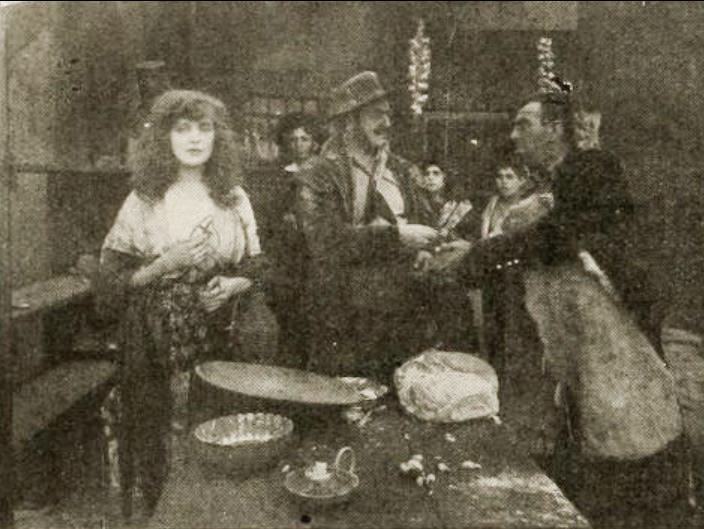
Stepping back into the cinematic past, one encounters works like The Spanish Jade, a film that, even through the veil of time and the inherent limitations of the silent era, manages to resonate with a raw, almost operatic intensity. This isn't just a motion picture; it's a meticulously crafted tapestry woven with threads of passion, vengeance, sacrifice, and an unwavering pursuit of freedom, all set against the sun-baked, tumultuous backdrop of mid-19th century Spain. It's a testament to the power of pure storytelling, where grand gestures and profound emotions speak volumes without uttering a single word. The film, adapted from the novel by Maurice Hewlett and brought to the screen by Louis Joseph Vance, delves deep into the human condition, exploring the extremes of love and hate, loyalty and betrayal, with a dramatic flair that feels both timeless and deeply rooted in its historical context.
Our journey begins with Manuela, portrayed with captivating vulnerability and burgeoning strength by Bess Meredyth. Her initial circumstances are dire: a young woman sold into a life of servitude as a dancing girl to a strolling musician. It’s a life defined by hardship, vulnerability, and a profound lack of agency, painting a stark picture of the social injustices prevalent in that era. This opening act immediately establishes a sense of pathos, drawing the audience into Manuela's plight. Her existence is one of constant movement, a transient shadow flitting through provincial towns, her very being a commodity. This initial depiction of Manuela's subjugation subtly echoes themes found in works like Slave of Sin, where characters are often trapped by societal constraints or the whims of others, their freedom a distant, almost unattainable dream.
The narrative gains a significant jolt with the introduction of Don Bartolome, brought to life with a volatile intensity by Arthur Tavares. He is a figure steeped in romanticized criminality, a highwayman whose path has diverged sharply from his impoverished father, Don Luis. Bartolome is a man of fierce passions, and upon encountering Manuela, he is instantly smitten. His love, however, is possessive, impulsive, and ultimately destructive. In a fit of jealous rage or perhaps a misguided attempt at liberation, he murders the musician and absconds with Manuela. This act, while freeing Manuela from one oppressor, merely transfers her into the orbit of another, albeit one who professes love. Bartolome embodies a certain kind of tragic villainy, a character whose inherent charisma is constantly at war with his darker impulses. His actions set in motion a chain of events that will ripple through the lives of everyone connected to him, a dramatic catalyst that pushes the story forward with relentless momentum.
The arrival of Osmund Manvers, the English squire portrayed by Wilfred Lucas, introduces a stark contrast to the passionate, often brutal world Manuela inhabits. Manvers is a paragon of British rectitude and honor, a man whose presence in this wild Spanish landscape feels almost anachronistic. Bartolome, ever the opportunist, attempts to use Manuela to ensnare Manvers in a robbery, but his plan backfires spectacularly. Manvers, witnessing Manuela's distress and the predatory nature of Bartolome's gang of drifters, intervenes decisively. His rescue of Manuela is not merely an act of heroism; it's a symbolic offering of a different kind of life, one based on respect and genuine affection, rather than coercion. Their burgeoning connection is palpable, a silent promise of sanctuary and understanding in a world that has offered Manuela little of either. The contrast between the two male leads – the fiery, dangerous Spaniard and the stoic, honorable Englishman – provides a rich thematic tension that drives much of the film's dramatic core.
Manuela's journey from passive victim to an agent of her own destiny culminates in a shocking act of violence. When Bartolome, his possessive nature resurfacing with menacing threats, corners her, Manuela retaliates with a desperate, fatal stab. This moment is pivotal, marking her definitive break from a life dictated by others. It’s a visceral assertion of self, born not of malice, but of an instinct for survival. This act, however, propels her into a new kind of peril: that of a fugitive. The subsequent flight of Manuela and Manvers’ determined search for her forms a compelling segment of the narrative, imbued with a sense of urgency and longing. The question of Where Is Coletti? might well be rephrased as 'Where is Manuela?' as Manvers scours the countryside, driven by a love that transcends cultural divides and legal boundaries. The emotional weight of this separation is keenly felt, amplified by the silent film's reliance on expressive acting and evocative cinematography.
The film then shifts its focus to the consequences of Bartolome’s death, introducing his father, Don Luis, portrayed with a profound sense of paternal grief and rigid honor by Frank Lanning. Don Luis, devastated by the loss of his son, seeks vengeance, challenging Manvers to a duel. This confrontation highlights a clash of cultures and codes: the Spaniard's passionate demand for retribution versus the Englishman's more measured, perhaps even pacifist, approach. Manvers' refusal to engage in the duel, born of a desire to avoid further bloodshed, is misinterpreted as cowardice or disrespect, further inflaming Don Luis's servant, Tormillo, a character of unwavering, almost fanatical loyalty, played by Nigel De Brulier. Tormillo's swift, brutal stabbing of Manvers in the arm is a stark reminder of the volatile nature of the world Manuela and Manvers find themselves in, where honor can be defended with a flash of steel and lives hang precariously in the balance.
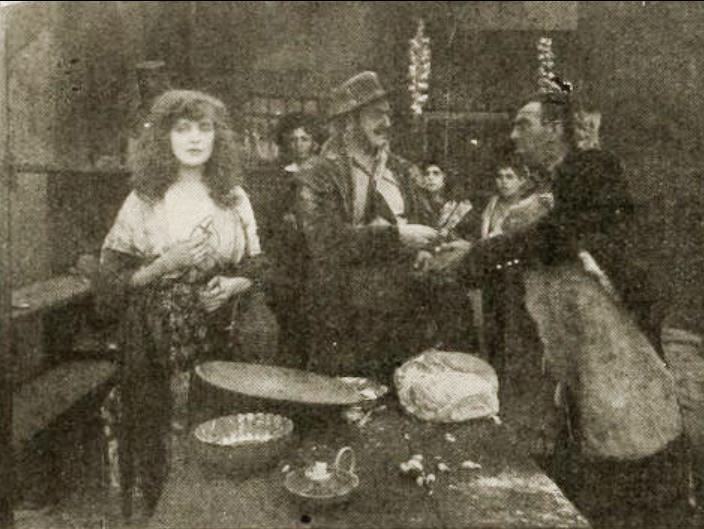
In a moment of breathtaking sacrifice, Manuela steps forward, offering her own life to Don Luis in exchange for Manvers'. This act of profound selflessness is the emotional apex of her character arc, transforming her from a pawn of fate into a woman capable of immense love and courage. Her willingness to die for Manvers finally breaks through Don Luis’s hardened exterior; he relents, recognizing the purity of her devotion. However, Tormillo, a force of relentless, unyielding vengeance, remains unconvinced, his fanaticism a dangerous, unpredictable element. This escalation sets the stage for the film’s truly unforgettable climax, a moment of tragic heroism that elevates the narrative beyond mere melodrama.
The ultimate resolution rests on the shoulders of Gil Perez, Manvers' valet and steadfast friend, played by Howard Davies. Gil Perez embodies the epitome of loyalty, a character whose devotion to Manvers is absolute. To neutralize Tormillo and secure Manvers and Manuela's safety, Gil Perez devises a desperate plan involving poison. The scene that unfolds is one of gut-wrenching tension and profound sacrifice. Tormillo, ever suspicious, demands that Gil Perez drink first. Without hesitation, Gil Perez complies, a silent testament to his unwavering commitment. Tormillo, convinced by this grim display, then drinks the poison himself, and both men collapse, dying. It’s a moment that resonates with the same potent, self-sacrificing spirit found in epics like Four Feathers, where honor and loyalty drive characters to make the ultimate sacrifice. Gil Perez's death, though tragic, is the catalyst for Manvers and Manuela's hard-won reunion, a bittersweet victory bought at an unimaginable cost. The profound impact of this scene lies in its portrayal of love and loyalty extending beyond romantic bonds, showcasing the deep camaraderie between friends.
The performances across the board are a masterclass in silent film acting. Bess Meredyth, as Manuela, conveys a complex emotional landscape with remarkable subtlety and power. Her expressive eyes and gestures communicate fear, defiance, love, and resolve, making her character's journey utterly compelling. Arthur Tavares's Bartolome is a whirlwind of conflicting emotions, his brooding intensity and sudden bursts of violence perfectly suited to the role of the passionate highwayman. Wilfred Lucas, as Manvers, projects an aura of steadfast nobility, a calm anchor amidst the Spanish tempest. But it is perhaps Nigel De Brulier’s Tormillo and Howard Davies’s Gil Perez who leave the most indelible marks in the film's climactic sequence. De Brulier’s portrayal of fanaticism is chillingly effective, while Davies’s quiet dignity in the face of certain death is truly heartbreaking. The ensemble, including Fernando Soler, Betty Bellairs, and Lloyd Ingraham, contributes to a rich tapestry of character, each playing their part in this grand, dramatic narrative.
The thematic richness of The Spanish Jade is undeniable. It explores the enduring power of love in the face of adversity, the destructive nature of vengeance, and the profound meaning of sacrifice. The film cleverly contrasts different forms of honor: Don Luis's rigid, traditional code of family retribution against Manvers's more modern, humane approach. It delves into the struggle for individual freedom against societal constraints and the relentless pursuit of justice, however convoluted that path may be. The Spanish setting itself becomes a character, its rugged beauty and inherent volatility mirroring the passions and conflicts of the characters. The cultural clash between the fiery Spanish temperament and the reserved English sensibility is a constant underlying current, adding depth to the interactions and motivations.
As a work of silent cinema, The Spanish Jade would have relied heavily on visual storytelling and the emotive power of its actors. The direction, though uncredited, would have needed to be precise, utilizing dramatic staging, compelling close-ups, and sweeping landscapes to convey the epic scope of the story. The screenplay by Louis Joseph Vance and Maurice Hewlett, based on Hewlett's novel, is clearly robust, providing a narrative framework capable of sustaining such intense drama without spoken dialogue. One can imagine the use of intertitles to convey crucial plot points and internal monologues, but the true strength would lie in the universal language of emotion expressed through gesture and expression. This film stands as a testament to the fact that compelling narratives and powerful performances transcend the limitations of technology, proving that a story well told can captivate an audience regardless of the era.
In conclusion, The Spanish Jade is more than a historical curiosity; it is a genuinely gripping drama that explores the depths of human emotion and the complexities of morality. Its narrative, while rooted in a specific time and place, speaks to universal themes of love, loss, vengeance, and redemption. The film's ability to evoke such strong feelings through purely visual means is a testament to the artistry of its creators and performers. For those who appreciate the rich heritage of silent cinema and narratives that aren't afraid to delve into the darker, more passionate aspects of the human spirit, The Spanish Jade offers a truly unforgettable experience. It’s a journey into a world where every glance, every gesture, every silent scream carries the weight of a thousand words, leaving an indelible mark on the viewer long after the final frame.
IMDb —
1918
Community
Log in to comment.