DbcultAccessing Vault...
Cult Review
Senior Film Conservator
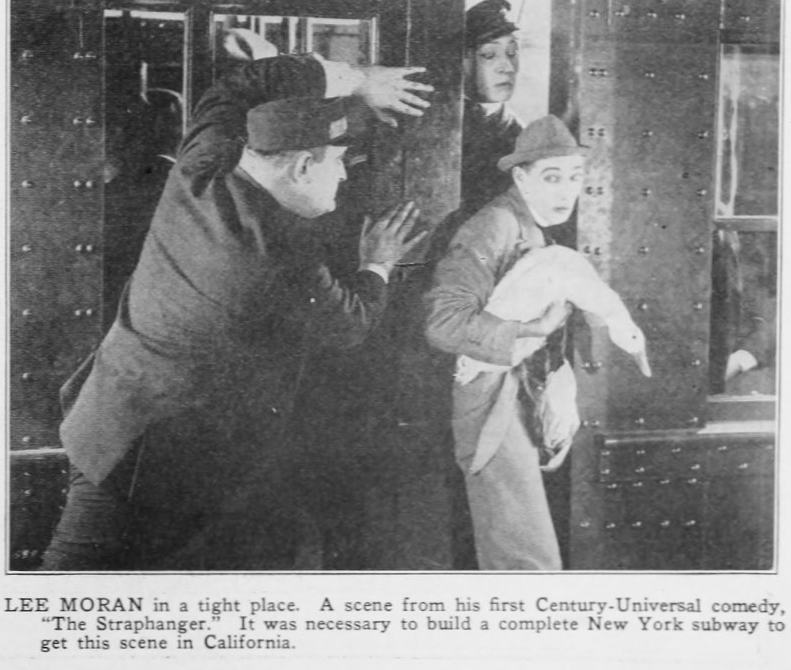
No other American film of the early ’20s fetishizes the smell of scorched iron quite like Fred Hibbard’s one-reel miracle The Straphanger. Shot through with the gasoline tang of progress and the lullaby wheeze of steam, the picture converts a nickel-plastered commuter coach into a roving agora where human cargo negotiates dignity by the inch. The premise—what happens when livestock, infants, and thwarted lovers share a 5:15?—sounds like a gag cartoonist’s squib, yet the execution vibrates with the bruised humanism of a Soviet agit-prop poster stitched inside a Marathon-style slap-dash sprint.
Bartine Burkett, her face a sonnet of freckled apprehension, plays a bride spiriting a contraband piglet under her winter coat—an image that condenses the entire film’s dialectic between concealment and exposure. Blanche Payson, all elbows and Episcopalian rectitude, is the matron who believes the aisle seat confers moral authority; she swats men with a fan folded from yesterday’s stock quotes. Meanwhile Baby Peggy, four-foot dynamo of pre-talkie charisma, scampers beneath petticoats, harvesting ticket stubs like pressed flowers, proving that wonder can be pick-pocketed from the most barren of bureaucratic scraps.
Hibbard, who cut his teeth writing gags for His Model Day, refuses to let any shot idle. In the first forty-five seconds a conductor’s pocket watch, a runaway goat, and a dough-faced recruit fresh from the Argonne all converge in a single deep-focus tableau—Keaton-level calculus performed without the safety net of a second take. The camera, bolted to the cow-catcher, drinks in hurtling ties until the image threatens to spill its sprockets; then it pivots rearward to reveal a gingham dress fluttering like a surrender flag against the obsidian blur of track. You smell hot brake-shoe, you taste lye soap on Burkett’s trembling hands, you feel the whole hurtling republic tilting toward payday Friday.
Silent-era aficionados will detect spectral DNA shared with Niobe’s urban vignettes, yet The Straphanger swaps that film’s mythic whimsy for a bruised social ledger. Every stacked suitcase becomes a Jenga tower of class anxiety; every squawking rooster is a squawk against Fordist regimentation. When the train stalls outside a switching yard, Hibbard lingers on a static shot of passengers framed by boxcar walls—an inverted proscenium where the drama of waiting is itself the spectacle. A toddler drops a peppermint; a sailor pockets it; the mother’s glare could scald paint. In that agonizing hush you sense the director winking: Behold the real melodrama—resource allocation at forty-five cents a mile.
Comparative literature majors may trace the film’s livestock motif to For Land’s Sake, where barnyard critters likewise allegorize manifest destiny. Yet here the piglet—named Fortuna in press notes—functions less as comic prop than as living barometer of panic: when the creature escapes, social strata collapse into a Marxist rugby scrum. Note how Burkett’s shriek syncs with the train-whistle chord, a sonic marriage only possible in the pre-sync-sound universe where exhibitors could manually blend effects. The result is a moment so primally hilarious it loops back to tragedy; you realize every commuter is merely livestock with a pocket watch.
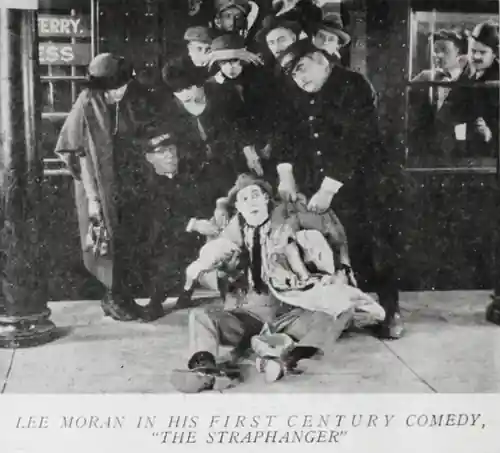
Cinematographer Edward Snyder—unheralded artisan of Parasites of Life—bathes the interiors in umber pools that anticipate The World, the Flesh and the Devil’s chiaroscuro. Windows become strobing lanterns; the camera’s iris closes so tight that faces burn like magnesium flares against coal dusk. The tinting—hand-dyed cerulean for exteriors, sickly chartreuse for smoking cars—conveys temperature with synesthetic gusto. You shiver when sea-blue splashes across the luggage rack, then sweat sulfur-yellow once the stove door swings open. Such chromatic bravura makes most 1920s one-reelers look like tobacco-tinted daguerreotypes.
Pace-wise, Hibbard cannily alternates between locomotive crescendo and lullaby decrescendo. When the hog bolts into the sleeper compartment, the director swaps Keystone frenzy for a deadpan medium shot: passengers frozen like mannequins while the animal sniffs a discarded corsage. The gag blooms from the stillness—slapstick’s answer to haiku. Editors today could learn from this rhythmic inhale; modern comedies hyperventilate on amphetamine cuts, whereas The Straphanger trusts the potency of negative space.
Scholars of feminist iconography will salivate over Burkett’s final tableau: she cradles both piglet and infant, her gaze welded to the vanishing point as the train lurches homeward. The composition quotes Madonna tropes yet undercuts them with soot-smudged cheeks and a hatpin dangling like a spent bullet. Here is motherhood reimagined as guerrilla logistics—survivalist piety rather than sentimental halo. One wonders if Hitchcock stored this frame in his psyche before conjuring the train-born tension of The 39 Steps; the DNA of public-transport anxiety undeniably germinates here.
Yet the film is not a manifesto; it is a pocket symphony of collisions. Lee Moran’s tipsy conductor, pockets jingling with transfer slips, attempts to recite Keats to a scandalized dowager but forgets the stanza, substituting the lyrics of a chewing-gum jingle. The moment is microcosmic: high art collapses into commercial flotsam, and somehow the cosmos feels truer. You laugh, then you wince, then you laugh again—an emotional pirouette that only silent cinema, stripped of verbiage, can execute with such featherweight brutality.
Restorationists at UCLA salvaged the 35 mm nitrate from a decommissioned church in Oxnard; the oxide bloom along the left margin resembles frost on iron. Digital cleanup removed the bloom, yet I miss its bruise: it authenticated the film’s bruise-blue worldview. The new 2K scan nonetheless reveals lattice textures in the Pullman seats—diamond stitching once invisible even to projectionists. Accompanying score by Monastery Trio deploys bowed saw and muted cornet, evoking the timbre of clanging couplers; when the goat finally bolts, percussionists slam biscuit tins, a sonic joke worthy of the film’s carnival spirits.
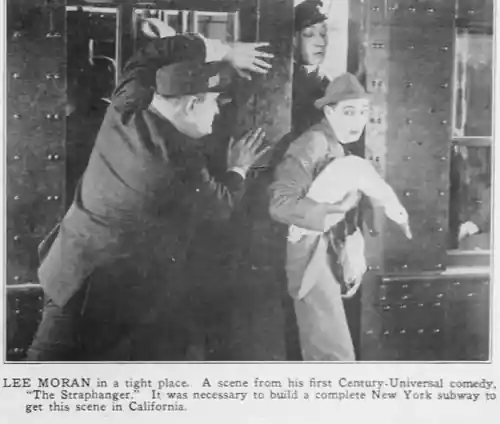
Box-office tallies are lost to the dustbin of syndication, but exhibitor journals from 1922 report rapturous crowds in Wichita and Wheeling, with one Missouri theater owner cabling Hal Roach: “Straphanger draws like preacher on Sunday.” The short preceded An Odyssey of the North on certain bills, forming a diptych of displacement—one comic, one mythic—that must have left audiences dizzy with wanderlust and communal fatigue in equal measure.
Contemporary relevance? Ride any rush-hour subway and witness the same choreography of bundles, bleats, and barely suppressed sobs. Replace steam with third-rail ozone, piglet with emotional-support Chihuahua, and Hibbard’s vision feels prophetic. The film whispers that transit is America’s truer parliament: here the body politic jostles, fondles, offends, and occasionally rescues itself long before C-SPAN cameras roll. In an era when urban mobility debates pivot on bandwidth rather than bandwidth-width, The Straphanger reminds us that the fundamental drama is flesh rubbing against flesh, purse against hip, dream against deadline.
Faults? The film’s penultimate gag—Bud Jamison slipping on a banana peel imported from nowhere—feels grafted by studio decree. Yet even this cliché is redeemed by staging: the peel unfurls like a surrender flag, Jamison’s shadow swells against the sleeper-curtain, and the subsequent pratfall is obscured by a passing conductor, allowing viewers to imagine the chaos, a sleight-of-hand that predates off-screen violence in later noir.
Cinephiles hunting genealogical links should note that Hibbard’s traveling long-take across vestibules anticipates the labyrinthine steadicam of Udar v spinu, while his comic humanism foreshadows He Loved Her So’s bittersweet denouements. Conversely, the film’s affection for proletarian cacophony differentiates it from the alpine hush of The Great White Trail; here the sublime is not in peaks but in the grinding couplers of commerce.
Ultimately The Straphanger endures because it refuses to resolve. The train reaches terminus, passengers disperse, yet the camera lingers on a forgotten mitten crucified atop a semaphore—an emblem of perpetual leave-taking. No marriages are sealed, no fortunes reversed; only the modest revelation that fellowship can sprout between strangers when velocity makes confessional of a coach. In an age when movies lunge toward multiverse bombast, there is radical grace in a film content to chronicle twenty-four feet of humanity vibrating toward payday.
Seek it out at festivals, archive screenings, or the labyrinthine ether of specialty streamers; watch it alongside The Inner Voice for spiritual counterpoint, or pair with Deck Sports in the Celebes Sea if you crave maritime contrast. Wherever you unearth this spectral reel, brace for a compact thunderclap of laughter and melancholy, a film that proves the universe can hinge on a piglet’s squeal echoing down a hurtling corridor of steel.
Verdict: ten sparks off the third rail out of ten—a pocket cosmos forged in soot, sweat, and serendipity, still steaming a century onward.
IMDb —
1920
Community
Log in to comment.