DbcultAccessing Vault...
Cult Review
Senior Film Conservator
If you like hunting through the history of cinema or you have a thing for black and white films that look like they were carved out of shadows, yes. You should watch it.
If you need fast-paced action or clean, digital sound, you will probably hate this. It’s slow. It’s crackly. It feels like a dream someone had in 1938.
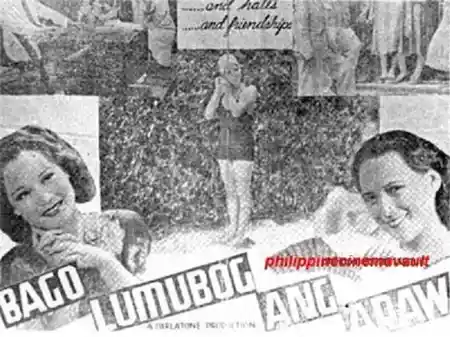
I found a copy of this and sat down with a huge mug of tea, not really knowing what to expect. Bago lumubog ang araw (which means Before the Sun Sets) is one of those movies that feels like it’s barely holding onto the screen because the film stock is so old.
But man, Gerardo de Leon already had the magic back then. He wasn't just pointing a camera; he was painting with it.
There is a scene near a window where the light hits Mona Lisa’s face and it’s just... stunning. She has these eyes that seem to hold about a hundred years of secrets.
The story itself is a bit of a tear-jerker. It’s the kind of stuff they don't really make anymore because we’re too cynical now.
It’s about love and those big, heavy sacrifices people make when they think they’re doing the right thing. Rogelio de la Rosa is the leading man here, and he’s got that old-school movie star charm where every hair is perfectly in place.
I noticed this one moment where a character walks across a room and the floorboards actually creak in the audio track. It’s not a sound effect. It’s just the realness of the set they were on.
I love that stuff. It makes it feel human.
The movie doesn't have the polish of something like The Actress, but it has more heart in its pinky finger.
Sometimes the dialogue gets a bit too much. Like, they talk in these long, poetic sentences that nobody actually says in real life.
But in the context of a 1930s drama? It works. You just have to lean into it.
The pacing is definitely weird by today's standards. One scene will feel like it’s rushing to get somewhere, and then the next scene just sits there for five minutes while people stare at the horizon.
I kept thinking about how different this is from something like Something to Do. This feels heavier, more anchored in a specific Filipino identity that was trying to find its voice before the war changed everything.
There’s a strange bit with a secondary character who keeps hovering in the background of a shot. I don't think they were supposed to be there, or maybe they were waiting for a cue?
It’s those little mistakes that make me love these old prints. They feel alive.
The ending isn't what I expected, either. It doesn't tie everything up in a neat little bow.
It leaves you feeling a bit heavy. Like you actually watched a sun set and now you're just sitting in the dark for a minute.
The music is way too loud in the emotional parts. My speakers were vibrating.
I think Rogelio de la Rosa might have the best jawline in the history of Philippine cinema. Seriously.
The way they use silence in the middle of the film is actually really brave. Most movies from this era are terrified of a quiet room.
Is it a masterpiece? Maybe not. But it’s a mood.
It’s the kind of movie you watch on a rainy Sunday when you don't want to talk to anyone.
I’m glad I found it. It’s better than 90% of the loud, shiny stuff on streaming right now.
Anyway, if you can find a version that isn't too damaged, give it a go. Just for the way Gerardo de Leon handles the camera.
It's special. In a quiet, dusty sort of way.
IMDb —
1924
Community
Log in to comment.