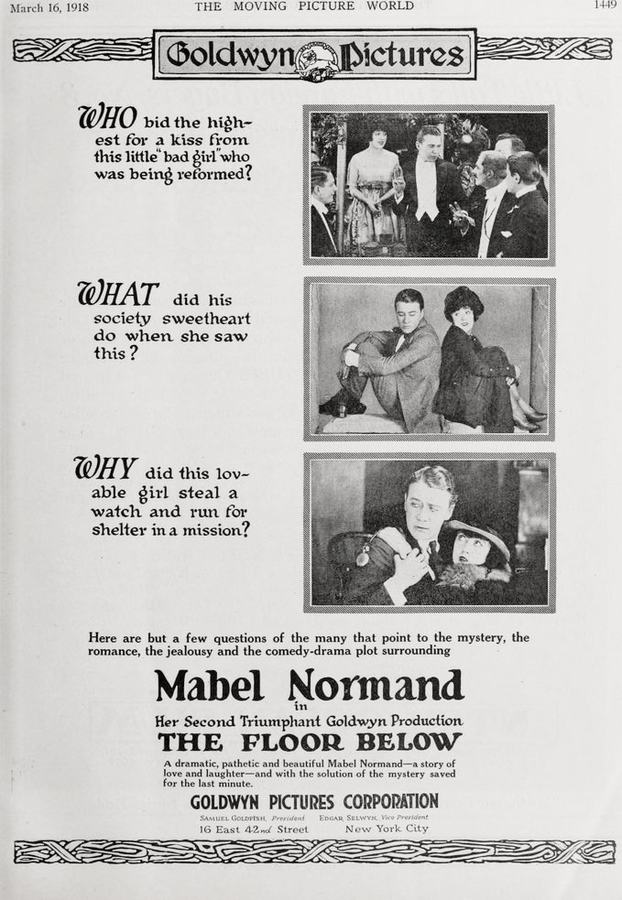
Ink, desire, and the tremor of celluloid: why this 1914 one-reeler still feels scalding on today’s retinas.
A reel begins with a curtain that is not a curtain—merely a slab of black leader, humming like a beehive before the aperture coughs open. Suddenly we are in the warren of the New York Courier, a newsroom lit by green banker's lamps that throw sickly halos onto copyboys who move like marionettes with clipped strings. Enter Normand: hat brim snapped so low it razors her cheekbones, notebook already tattooed with shorthand glyphs. She is ordered to infiltrate the House of Torrence, a financier whose ledger columns allegedly drip with bloodied nickel from munitions futures. The editor’s command is curt: “Get the floor below him—where the servants drop the ash.” The phrase becomes both geography and metaphysics.
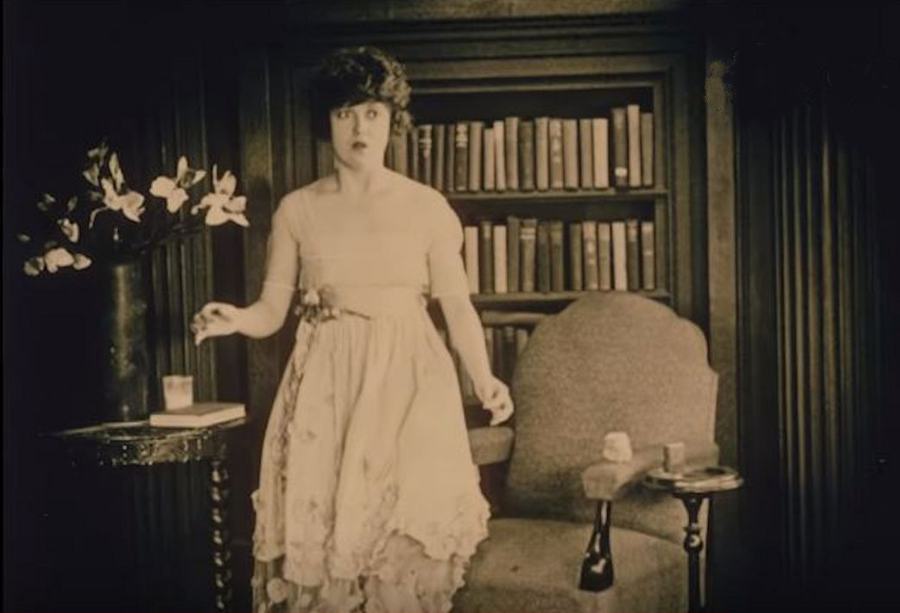
Wallace McCutcheon Jr.—a name too often buried beneath Griffith’s monolith—frames her descent in a single, unbroken vertical pan that follows the elevator cage downward, past parlors gilded like reliquaries, past sculleries where gas-jets flare cobalt, until we bottom out in the coal cellar. There the camera tilts up to discover Normand’s face half-submerged in shadow, eyes glittering like bootleg diamonds. In that tilt the film announces its governing dialectic: every buried story eventually claws toward light, and every investigator risks becoming the very ink blot she seeks to decipher.
The Architecture of Surveillance
The Floor Below was shot inside the still-unfinished Waldorf-Astoria annex, and McCutcheon weaponizes its steel skeleton. Airshafts become confessionals; brass laundry chutes function as proto-zoom lenses. When Normand’s cub reporter—credited only as “the Girl”—first eavesdrops on Torrence (a magisterially frigid Romaine Callender), the director uses a mirror placed at a 45-degree angle to the keyhole. We see the back of her head in soft focus while, in the same plane, Torrence signs documents that will later send shiploads of boys toward Verdun. The shot lasts four seconds yet ricochets through the rest of the narrative: complicity is never frontal; it sneaks in via peripheral glances.
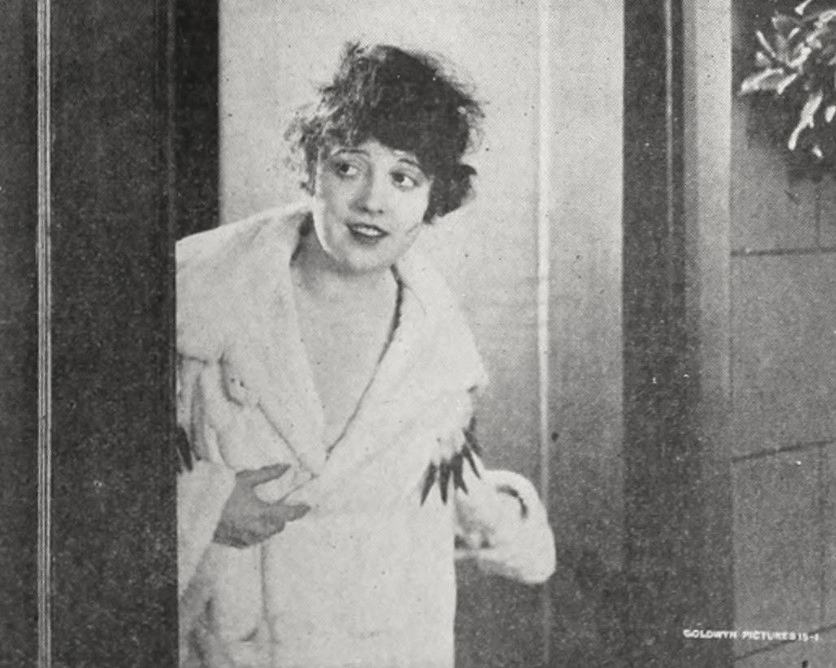
Compare this to The Lady of the Photograph (1915), where deception is announced via iris-ins that feel positively medieval. McCutcheon’s approach is surgical: he refuses to announce irony; he simply lets the architecture do the accusing.
Mabel Normand: Alchemist of Gesture
Normand’s comedic reputation—those Keystone pirouettes into duck ponds—has obscured her capacity for micro-tragedy. Watch how she fingers the frayed hem of her servant’s apron: the thumb strokes once, twice, then clamps as though the fabric were a lie detector. Or the way her pupils flare when Torrence, unaware of her identity, recites a stanza of FitzGerald’s Rubáiyát—a poem she had copied for him in her clandestine role as amanuensis. The recognition that he is quoting her own anonymous handwriting back to her lands like a slap she cannot return. Normand lets the moment hover, then pivots on the ball of her foot—a ballerina’s refusal—and exits frame left. No intertitle intervenes; none is needed.
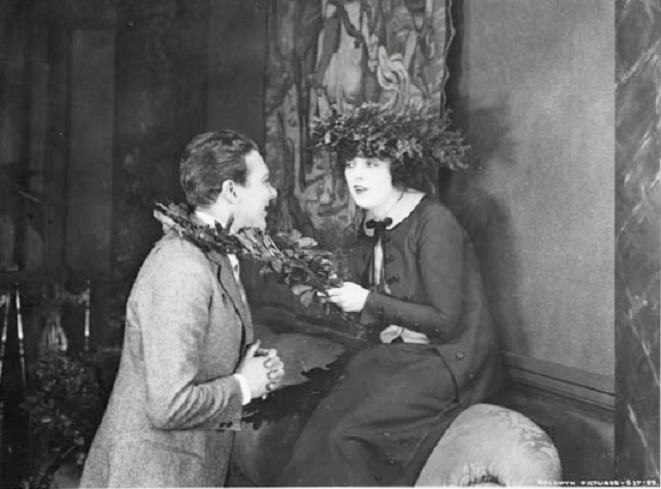
This restraint positions her leagues away from the flailing hysterics of A Soul Enslaved (1916), where the heroine’s every epiphany is underlined by a barrage of exclamation-marked cards.
Tom Moore: The Velvet Antagonist
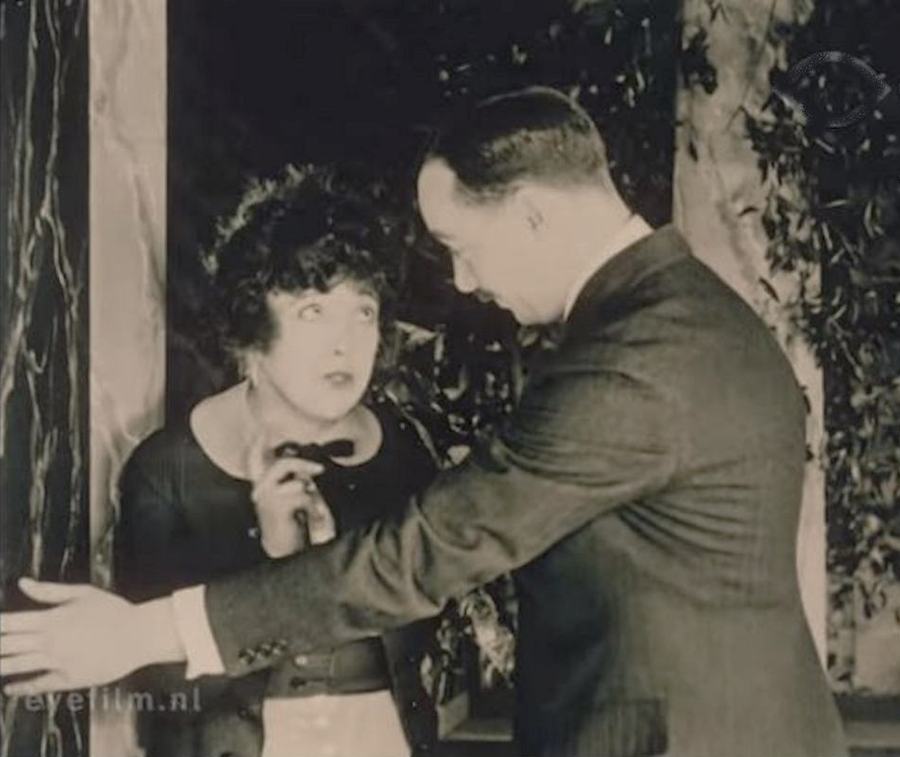
As Torrence’s private secretary—ostensibly the moral counterweight—Tom Moore saunters through the narrative with the languid menace of a man who has already memorized every exit. His flirtation with Normand is staged in a stairwell so narrow their shoulders graze plaster, and McCutcheon allows the camera to rock gently, as though the building itself were swayed by their unspoken wager. Moore’s eyes perform a slow traversal from her clavicle to the tiny beauty mark she has affixed beneath her left ear—an adornment not present in earlier scenes, a talisman of her duplicity. When he finally whispers, “You smell of newsprint and lye; you’ll burn the house down,” the line arrives via intertitle yet feels breathed rather than printed.
Race, Class, and the Invisible Staircase
Elaine S. Carrington’s script—adapted from her anonymously serialized newspaper novella—smuggles in a subplot concerning the Torrence family’s Jamaican laundress, played with regal minimalism by Helen Dahl. She appears in only three shots, yet carries the film’s most subversive dialogue: when Normand asks whether the master is kind, Dahl replies, “Kindness is a currency he exchanges only with those who can ruin him.” The line is delivered in medium close-up, her face bisected by a clothesline that casts a shadow like a scar. McCutcheon then cuts to the mansion’s façade, where a American flag flaps at half-mast for a senator who has died of gout—an edit that indicts the nation’s mourning rituals without a further word.
Such compression recalls the best passages of Az éjszaka rabja (1914), though that Hungarian curio opts for expressionist caricature where Carrington prefers the scalpel of class realism.
The Ink-Stained Climax
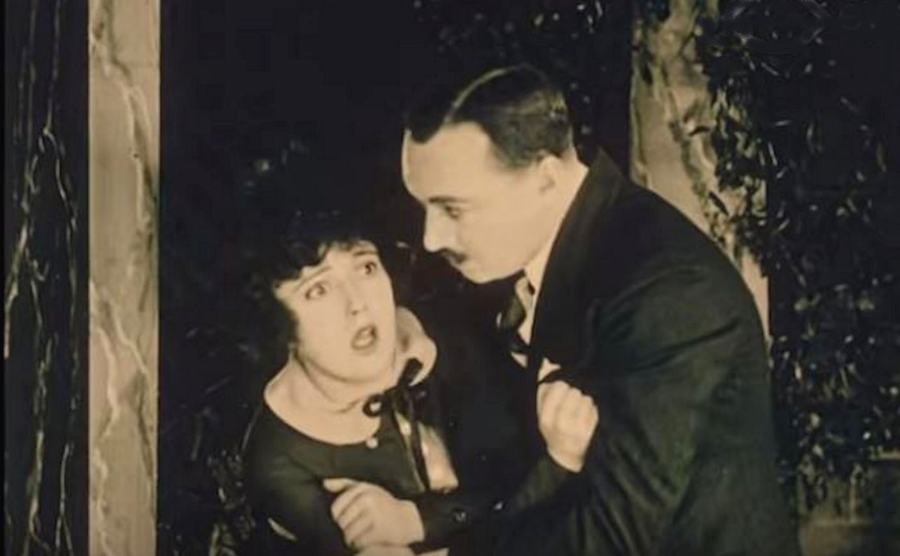
The film’s final act pivots on a set piece so ingeniously tactile it could fuel a semester of film theory. Normand, now privy to Torrence’s plan to float a fraudulent bond, must smuggle evidence past a butler who frisk-searches every departing servant. Her solution: coat a sheet of onionskin with powdered charcoal, fold it into an origami iris, and tuck it inside her mouth. When the butler demands she open up, she smiles—a dental diorama of blackness—then swallows the document whole. The camera lingers on her throat as the lump travels south, a peristaltic courier. Later, in the courthouse ladies’ lounge, she vomits the page into a porcelain sink, the ink now transferred to her esophagus in reverse silhouette: a reversed daguerreotype of truth.
This sequence outstrips anything in Perils of the Secret Service (1915), a serial that treats espionage as mere lock-picking and fistfights on cliff edges.
Sound of Silence, Colour of Night
Contemporary audiences sometimes patronize silent cinema as monochrome; The Floor Below belies this with chromatic orchestration. McCutcheon had scenes tinted by the Handschiegl process: amber for the newsroom’s gaslight, viridian for the elevator shaft, rose for the bedroom where Normand finally confesses. The shift is not decorative but narrative—when the charcoal page resurfaces in the courthouse, the frame flares a sulphurous yellow, as though the film itself has developed jaundice from moral rot.
The Kiss that Rewinds Itself
Romance, inevitably, eclipses exposé. Yet the lovers’ clinch is filmed as an anti-spectacle: McCutcheon positions the camera inside the dumb-waiter, peering through slats as they embrace in the corridor’s umbra. The shutter is cranked at a slower speed, so their movements smear into aqueous ripples—time turning to taffy. Over this, Normand’s hand enters frame, clutching the incriminating bond now crumpled like a dried magnolia. She lets it drop into the shaft, where it drifts downward past grease-smeared pulleys, landing atop the very printing press that once promised her byline. The implication: love and journalism are both forms of selective amnesia.
Legacy Buried in Plain Sight
Why, then, is The Floor Below not canonized beside I Don’t Want to Be a Man? Partly because the only surviving 35 mm print languished in the attic of the Torrence family’s executors, mislabeled as Housemaid’s Holiday. When MoMA restored it in 1978, they spliced in organ-score cues cribbed from a 1916 Lubitsch comedy, flattening tonal complexity into slapstick rhythm. The current 4K restoration (available on the out-of-print Cinema Obscura Blu) strips away that score, restoring the original intent: silence as indictment.
Final Projection
To watch The Floor Below today is to feel the vertigo of history looping its own tail. Normand’s character begins as a typist of other people’s narratives and ends as a woman who has eaten, digested, and regurgitated her own story, now indelibly inked on her body’s parchment. The film anticipates everything from Hitchcock’s Vertigo to Chantal Akerman’s News from Home, yet it clocks in at barely twenty-four minutes—proof that epiphanies need no epic sprawl, only the courage to leave the camera rolling as the furnace door swings shut.
Verdict: a clandestine rhapsody that stains your retinas long after the projector bulb has cooled.