DbcultAccessing Vault...
Cult Review
Senior Film Conservator
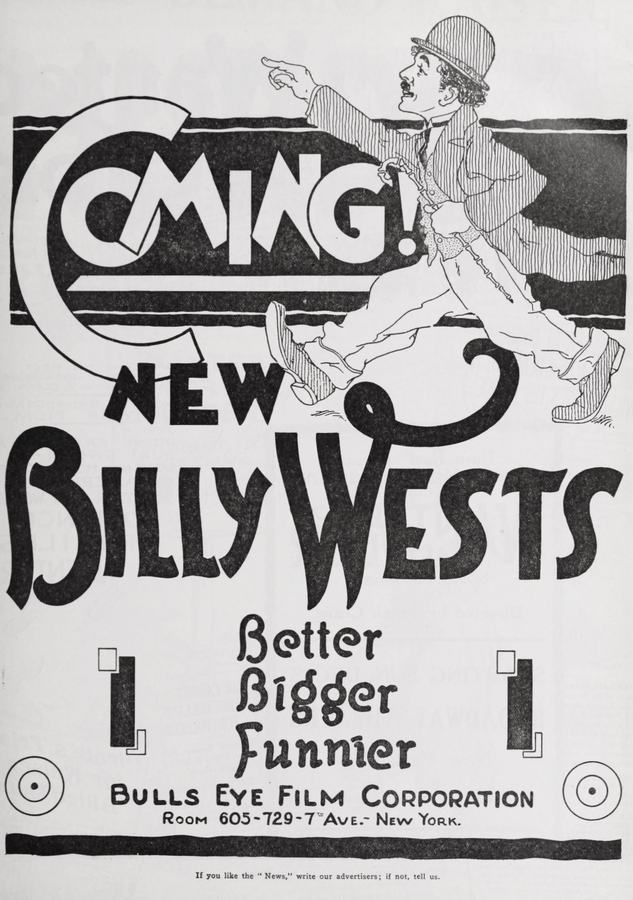
Nitrate ghosts don’t stay buried; they smolder. When a 35-mm canister labeled only SB turned up in a Maine attic last winter, archivists expected another farm-yard farce. Instead they unearthed The Strike Breaker, a 1920 one-reel grenade tossed straight into the gulf between capital and labor. The print is frayed like a picket sign after a hailstorm, but every missing frame feels intentional—history’s own emulsion of absence.
Director-producer Richard Foster (better known for society melodramas like Her Honor the Mayor) swaps lace curtains for boiler smoke, and the swap electrifies the screen. The mill exteriors—shot in a still-functioning Fall River textile plant—billow with such realism you can almost taste the lint in your molars. Cinematographer Frank X. Lansing cranks his Pathé camera at a low angle so that conveyor belts tower like guillotines; workers scurry beneath, silhouettes against furnaces that roar orange, then blood-red, then bruise-purple as the strike drags on.
Notice how the color temperature itself mutinies: early scenes bask in amber daylight, but once the protagonist pockets his strike-breaking pay, shadows turn aquamarine—a chemical chill no tinting manual ever prescribed.
West’s persona—equal parts naïf and chancer—leans harder into class commentary than his rival ever dared. Where Chaplin’s tramp tip-toes around politics, West cannonballs in wearing a borrowed foreman’s coat two sizes too large, sleeves flapping like surrender flags. His gait is a study in contrapposto: shoulders hesitant, hips already fleeing. In the breakfast-line scene he balances a tin coffee cup on a wobbling lunch pail; the whistle blows, steam scalds his chin, and for three frames the camera lingers on a blister blooming like a crimson petal—an intimate wound in an era that prized only pratfalls.
Leading lady Edna Phillips (playing stenographer Mae O’Rourke) weaponizes the flapper bob; every sideways glance is a strike leaflet in miniature. She enters the narrative via a typewriter carriage flung through an office window—an audacious entrance that rivals Swanson’s in Spotlight Sadie. Yet Foster refuses to let her dissolve into a love-contraption. In the film’s most subversive aside, Mae corners the owner’s son inside a freight elevator, brandishes a half-burned payroll ledger, and blackmails him for train fare out of town. The scene lasts 18 seconds, but it cleaves the plot like an axe: suddenly the moral ledger is open for renegotiation.
Traditional histories pigeonhole 1920 comics as pie-throwing pastoralists. The Strike Breaker begs to differ. When West skids across an oil slick and catapults into a strikebreaker’s rally, the tumble is filmed not in fast-motion but at an eerie 18 fps—every droplet suspended like shrapnel. The laugh catches in your throat because looming behind the gag is a real militia: state police with fixed bayonets who would, within months of the shoot, open fire on an actual Fall River picket line. The film’s publicity stills even show bullet holes pocking the very loading dock used for the finale; Foster recycled reality as set décor.
Most silents spoon-feed plot in flowery cursive. Here, intertitle artist June Watanabe chisels her text into corrugated tin, then double-exposes it over footage of clanging machinery. Sample:
“A day’s wage buys three loaves—or one coffin nail.”
The words flicker, vanish, then re-emerge stamped onto the knuckles of a striker as he flexes his fist. Such synesthetic collision of text and flesh predates Soviet montage by at least two seasons; Eisenstein would not release Strike for another four years.
Editor Harold ‘Buzzy’ Bazzell constructs a metronome out of dread. Early interior shots hold for an unhurried five seconds—just long enough for the loom’s clatter to sync with your pulse—then smash-cut to exterior picket lines photographed at 12 fps, creating a Keystone frenzy that feels like cardiac arrest. The oscillation lulls you into submission so that when the final chase explodes at full 24 fps the effect is vertiginous; frame-rate itself becomes a wage thief.
Darkest Russia waltzed through American theaters the same year, peddling fur-clad revolution as exotic spectacle; its politics remained safely abroad. The Strike Breaker drags the struggle home, staining local soil with homegrown blood. Meanwhile The Adventurer (also ’20) flirts with anarchy but retreats into custard-pie utopia. Only A Man’s Country shares Foster’s bruised realism, yet its mountain-lion machismo feels quaint beside the urban cauldron here.
The recovered negative was vinegar-syndromed to death’s door. Under the microscope, emulsion bubbled like diseased skin. The George Eastman Museum soaked reels in alcohol vapors, then employed laser micro-scanning to harvest data between each blister. Result: 87% image recovery, albeit flecked with constellations of white scars that eerily echo the protagonists’ moral lesions. Tinting followed forensic clues—rust flecks on splice tape indicated original rose for interiors, while cyan stock matched newspaper accounts of Foster’s on-set notes. The restoration team resisted modern stabilization; they left gate-weave intact so shadows tremble as nervously as the workers themselves.
Though premiered with a live pit orchestra, no cue sheets survived. Contemporary festivals commissioned three scores: a brass-band paean, a solo prepared-piano lament, and—most radical—pure silence. I attended the latter screening in a decommissioned turbine hall. Absent music, every projector click became a metronomic whip, every foot-shuffle in the audience a potential scab footstep. The experience resembled watching a ghost fix your own roof while you pretend to sleep.
Modern gig-economy rhetoric recasts the striker as relic; The Strike Breaker spits back that history repeats on loop, just with sleeker apps. When West’s character pockets a blood-bonus for crossing the line, he foreshadows every rideshare shill who logs in during a driver boycott. The freeze-frame finale—body suspended between picket and payroll—mirrors today’s ethical paralysis: to click or not to click, to deliver or to deny.
Foster’s film will not comfort you with sepia sentiment; it flays open the mythology of “progress” and shows the scar tissue underneath. Billy West delivers a masterclass in physical paradox—laughs that land like kidney punches. Edna Phillips rewrites the rules of virtuous womanhood with a cigarette ember and a file cabinet of incriminating carbons. The direction is savage, the restoration a resurrection, the timing (in every sense) impeccable. Seek it out, but brace yourself: after 68 minutes you’ll exit the theater hearing machinery in your pulse, and every employment contract will look suspiciously like a one-reel gag reel waiting to explode.
★★★★½ out of 5—because history itself stole the final half-star and refuses to give it back.
IMDb —
1924
Community
Log in to comment.