DbcultAccessing Vault...
Cult Review
Senior Film Conservator
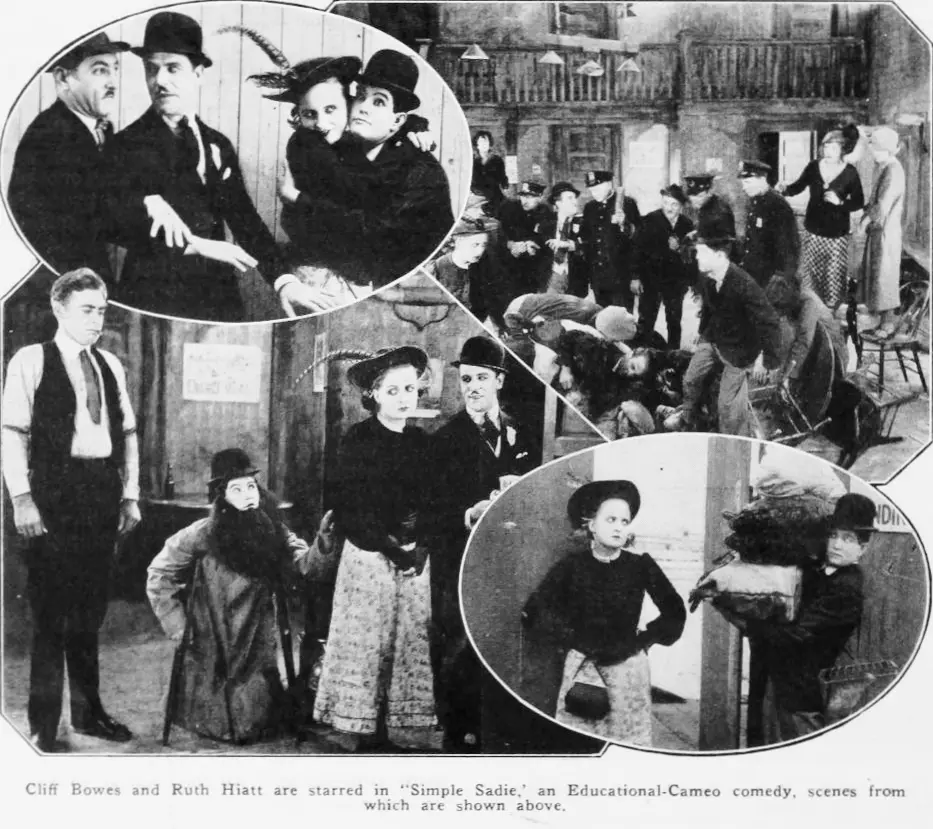
Stepping into the flickering glow of an early 20th-century motion picture, one often anticipates a certain set of archetypes and narrative conventions. Yet, every so often, a film emerges from the archives that, despite its apparent simplicity, manages to etch itself into the viewer's consciousness through a singular, audacious stroke. Such is the case with Simple Sadie, a cinematic artifact that, while adhering to many melodramatic tropes of its era, delivers a narrative crescendo so unexpectedly bold it demands closer inspection. This isn't merely a tale of damsels in distress and valiant rescuers; it's a fascinating glimpse into the nascent stages of cinematic storytelling, where the boundaries of heroism and civic duty were, perhaps, more fluid and open to dramatic reinterpretation than we might assume today.
The film unfolds against a backdrop that, even in its silent, monochromatic rendering, evokes the bustling, often perilous urban landscape of its time. We are introduced to the eponymous Sadie, an immigrant girl embodying the hopes and vulnerabilities of countless newcomers arriving on unfamiliar shores. Her arrival is portrayed with a quiet dignity, a moment pregnant with the promise of a new life, yet shadowed by the implicit dangers lurking in the sprawling metropolis. It's a poignant setup, immediately establishing a sense of empathy for a character who, by virtue of her very 'simplicity' and foreignness, becomes a universal symbol of the outsider navigating a complex new world. This particular narrative thread, the immigrant experience, resonates deeply, connecting Simple Sadie to a broader tapestry of American storytelling, even if its primary focus quickly shifts to more immediate, visceral perils.
The pivot arrives swiftly and brutally: Sadie is abducted by a band of nefarious crooks. This sudden plunge into peril is a classic melodramatic device, designed to heighten tension and underscore the fragility of safety in an urban environment. The film, in its silent eloquence, conveys the terror of the kidnapping with a raw immediacy that transcends the lack of spoken dialogue. The frantic, exaggerated gestures typical of early silent film acting, particularly from Ruth Hiatt as Sadie, would have communicated her distress with unmistakable clarity to contemporary audiences. The portrayal of the crooks, likely broad and archetypal, serves to establish them as clear antagonists, a menacing force against which the purity and vulnerability of Sadie are starkly contrasted. This narrative choice, while conventional, effectively ignites the central conflict, setting the stage for the dramatic intervention that is to follow.
Enter Sadie's sweetheart, a character portrayed with a blend of earnestness and burgeoning desperation by Mark Jones or Cliff Bowes, depending on the specific role attribution within the limited cast information. His love for Sadie is the propellant for the film's most memorable, indeed its most audacious, sequence. Upon discovering her plight, his initial impulse, naturally, is to seek the aid of law enforcement. Here, the film takes a fascinating turn, offering a subtle yet trenchant critique of institutional bureaucracy and public service. The local police force, rather than springing into action, is depicted as either indifferent, slow-witted, or perhaps simply overwhelmed. Their inaction, whether born of apathy or inefficiency, pushes the sweetheart to an extreme, almost unthinkable measure. This portrayal of the police as less than immediately helpful is a recurring motif in cinema, but the specific response it elicits in Simple Sadie is truly unique.
Frustrated by the impenetrable wall of officialdom, the sweetheart commits an act of public vandalism, defacing the very building meant to symbolize law and order. He scrawls his desperate plea directly onto the police station's facade, a bold, defiant act that is simultaneously an appeal and an accusation. This moment is the film's undeniable zenith, a flash of unconventional heroism that transcends the typical 'dashing rescue' trope. It’s an act born of sheer, unadulterated desperation, a raw scream for attention in a world that seems unwilling to listen. One can imagine the gasp this scene would have elicited from audiences of the time, accustomed to more straightforward portrayals of justice. It’s a moment that, in its startling originality, elevates Simple Sadie beyond mere melodrama, imbuing it with a surprising edge of social commentary.
This desperate gambit, this public shaming of the authorities, proves effective. The defacement, a spectacle impossible to ignore, finally jolts the police into action. The subsequent pursuit and rescue of Sadie, while likely executed with the energetic, sometimes frenetic pacing characteristic of silent-era action sequences, is the culmination of the sweetheart's audacious strategy. The resolution, while expected, is made all the more satisfying by the unconventional path taken to achieve it. It’s a powerful statement about agency, about how far one might go when conventional avenues fail, and about the unexpected places from which true initiative can spring.
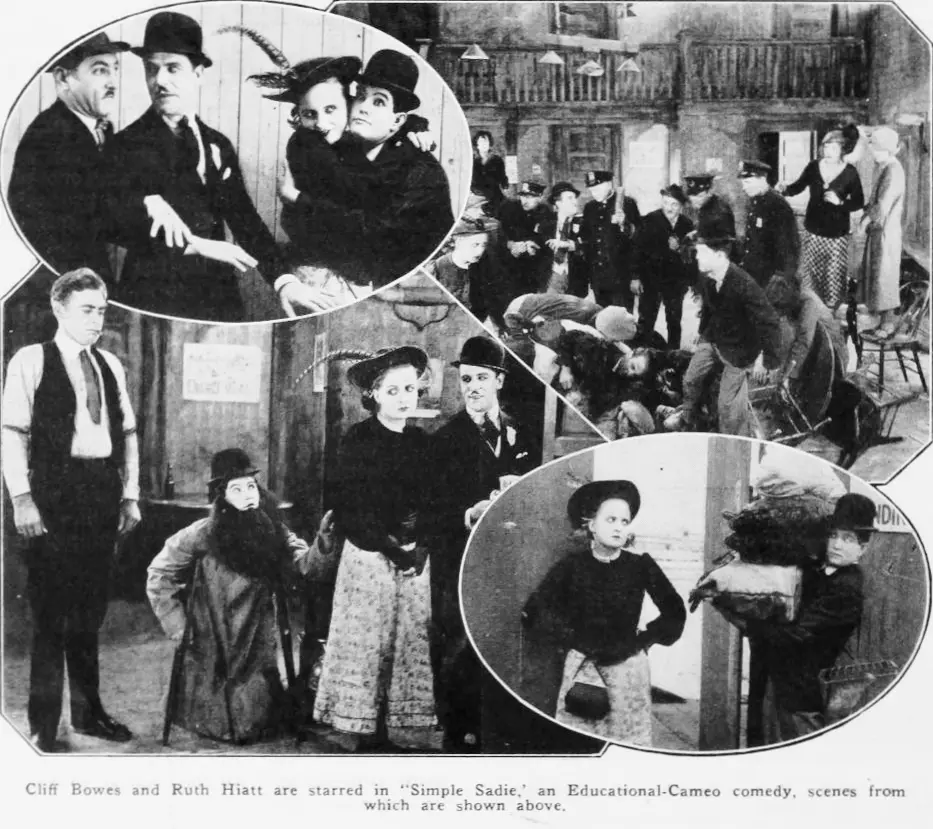
In comparing Simple Sadie to other films of its period, its unique approach to the hero's journey stands out. Consider, for example, the more traditional legal machinations at play in a film like For the Defense, where justice is sought through established channels, or the direct confrontation with villainy seen in The Lair of the Wolf. Sadie's sweetheart, by contrast, operates outside the accepted norms, his actions a testament to the idea that sometimes, to achieve justice, one must first disrupt the status quo. His act of defiance has a punk rock sensibility decades before such a concept existed, a beautiful, anarchic gesture born of pure, unadulterated love and frustration.
The performances, particularly from Ruth Hiatt, would have been crucial in conveying the emotional weight of the story without dialogue. Silent film actors were masters of physical expression, using their bodies and faces to communicate complex emotions. Hiatt's portrayal of Sadie, from her initial hopeful innocence to her terrified captivity and eventual relief, would have required a nuanced understanding of these techniques. Similarly, the sweetheart's journey from anxiety to desperate action to triumphant relief would have demanded a broad emotional range, making his character arc particularly compelling. The supporting cast, including the crooks and the police, would have served to provide the necessary dramatic tension and obstacles, their exaggerated mannerisms contributing to the overall theatricality inherent in silent cinema.
From a technical perspective, Simple Sadie likely utilized the developing cinematic language of its time. While details on specific camera work or editing are scarce, one can infer the use of intertitles to convey dialogue and exposition, close-ups to emphasize emotional moments, and perhaps parallel editing to build suspense during the kidnapping and subsequent rescue. The pacing of silent films often varied wildly, from static, theatrical scenes to dynamic, fast-cut chases. It is in the latter that a film like Simple Sadie would have truly shone, capitalizing on the visual medium's capacity for kinetic energy. The dramatic tension surrounding the sweetheart's desperate act, for instance, would have been amplified by judicious editing, building to the moment of his public defiance.
The themes woven into the fabric of Simple Sadie extend beyond mere adventure. The immigrant experience, even if briefly touched upon, speaks to a foundational aspect of American identity. The struggle against a seemingly indifferent system, personified by the police, is a timeless concern. And the power of individual agency, of one person's refusal to accept defeat, resonates with universal appeal. This film, in its own quaint way, touches on questions of justice, responsibility, and the lengths to which love will drive an individual. It’s a testament to the enduring power of classic storytelling, even when presented in a format that might seem primitive to modern eyes. The core human emotions – fear, love, desperation, triumph – remain as potent as ever.
Considering the social context of its release, Simple Sadie might also be viewed as a reflection of public sentiment regarding authority. While not as overtly critical as later, more sophisticated dramas, the depiction of a police force needing to be provoked into action by an act of vandalism is telling. It suggests a certain cynicism, or at least a recognition of bureaucratic failings, that found its way into popular entertainment. This aligns somewhat with the underdog narratives often celebrated in cinema, where the common person, through sheer will or cleverness, overcomes seemingly insurmountable obstacles, including institutional ones. It might not be as grand in scale as the moral dilemmas presented in The Fifth Commandment or the intense personal struggle depicted in A Man's Fight, but its core message about pushing boundaries for what's right is equally compelling.
The enduring appeal of films like Simple Sadie lies not just in their historical value, but in their ability to surprise. They remind us that even in the earliest days of cinema, filmmakers were experimenting with narrative, character, and social commentary, often in ways that feel remarkably fresh even today. The unique twist of the sweetheart's desperate act ensures that this film, despite its potentially forgotten status, holds a distinct place in the pantheon of early melodramas. It’s a story that, once heard, is difficult to forget, largely due to that one audacious moment of defiance against an unyielding system. It makes one ponder the nature of heroism itself: is it always about conventional bravery, or can it manifest in a scrawl on a wall, a desperate plea for justice?
Ultimately, Simple Sadie serves as a vivid reminder of the vibrant, innovative spirit of early cinema. It's a film that encapsulates the era's dramatic sensibilities while simultaneously injecting a dose of unexpected subversion. The performances, the plot's emotional arc, and especially that one unforgettable scene of desperation-turned-ingenuity combine to create a compelling, if brief, cinematic experience. For enthusiasts of film history, and indeed for anyone interested in the evolution of storytelling, this film, with its simple premise and remarkably bold execution, offers a rich, rewarding glimpse into a bygone era, proving that sometimes, the most profound statements are made with the most unconventional of gestures. Its legacy, however modest, is secured by its sheer narrative audacity, a trait that continues to captivate and provoke thought long after the final frame has flickered away. One might even draw parallels between the protagonist's unconventional methods and the resourcefulness seen in characters from films such as The Courageous Coward or even the cunning required in The Food Gamblers, where success hinges on outsmarting a rigid system.

IMDb 4
1932
Community
Log in to comment.