DbcultAccessing Vault...
Cult Review
Senior Film Conservator
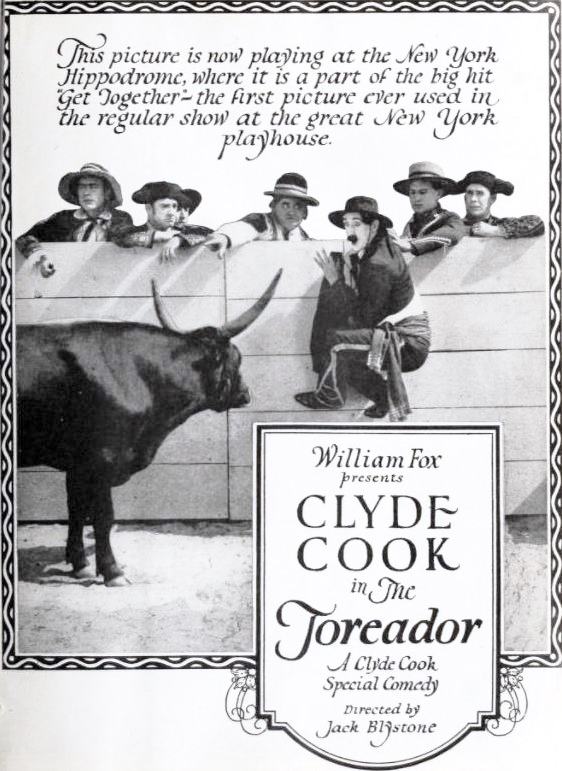
There is a moment, roughly three minutes into The Toreador, when Clyde Cook’s beanpole silhouette folds in half like a pocket-knife, scoops up a child’s toy drum, and proceeds to duel the snorting toro with nothing but rattling calfskin. The scene, lit by merciless midday Mexican sun, transmutes the bullring—from blood-spurting coliseum into carnival mirror. This is not Hemingway’s solemn muerte; it is the death of solemnity itself, a celluloid pie hurled at the face of machismo.
Watch how director Edgar Kennedy (also blustering on-screen as the apoplectic juez) orchestrates rhythm: wide shot to isolate Clyde against ochre sand; insert close-up of twitching bovine nostril; reverse to the Australian’s elastic grin—an image that pirouettes between innocence and insolence. The cut lands like a rim-shot, and the audience of 1921, many only lately acquainted with Chaplin’s pathos, discovers a new flavor: vinegar-laced slapstick. Kennedy’s pacing anticipates the Looney Tunes cadence that would not crystallize for another decade: setup, pause, overreaction, crescendo, exit pursued by horns.
Set in Mexico yet shot on an L.A. back-lot peppered with papier-mâché cacti, the film flirts with exotic cliché: guitar-strumming extras, rose-draped señoritas, rosaries clacking like castanets. But Clyde’s foreignness—his Anglo-Antipodean otherness—subverts the usual center-periphery power dynamic. The spectator laughs not at the mexicanidad but at the clown who dares desecrate its sacred ritual. In that inversion, The Toreador momentarily robs Manifest Destiny of its smirk, replacing it with the bull’s dumbfounded stare.
James Donnelly as the senior matador glowers with Valentino-esque cheekbones, only to be upstaged by a man whose trousers threaten to desert his waistline at any second. Lois Scott plays Carmelita, the flirtatious onlooker; her fan snaps open and shut like castanets, punctuating each of Clyde’s pratfalls with matriarchal disbelief. Meanwhile Kennedy himself, face the color of roasted chili, huffs and puffs until his sombrero levitates from sheer exasperation.
If Skinner’s Dress Suit chronicled the parvenu’s terror of social embarrassment, and The Lady Bug reveled in insectoid chaos, then The Toreador grafts both impulses onto a blood-sport scaffold. Its DNA also splices into later ring-centric comedies—think Here Comes Mr. Jordan’s boxing farce or even Some Like It Hot’s hotel-lobby tango of escapes. Yet none commit to pure spatial anarchy quite like this twenty-minute sprint.
Even without pigment, the film’s palette is implicit: crimson of the muleta translated via high-contrast black; white of Clyde’s grease-painted cheeks; gold of brass buttons suggested through reflective sheen. When the screen’s silver nitrate blooms under projector light, you sense vermilion and ocher lurking between grayscale bands, an optical promise that the world outside the cinema is gaudier, hotter, more dangerously alive.
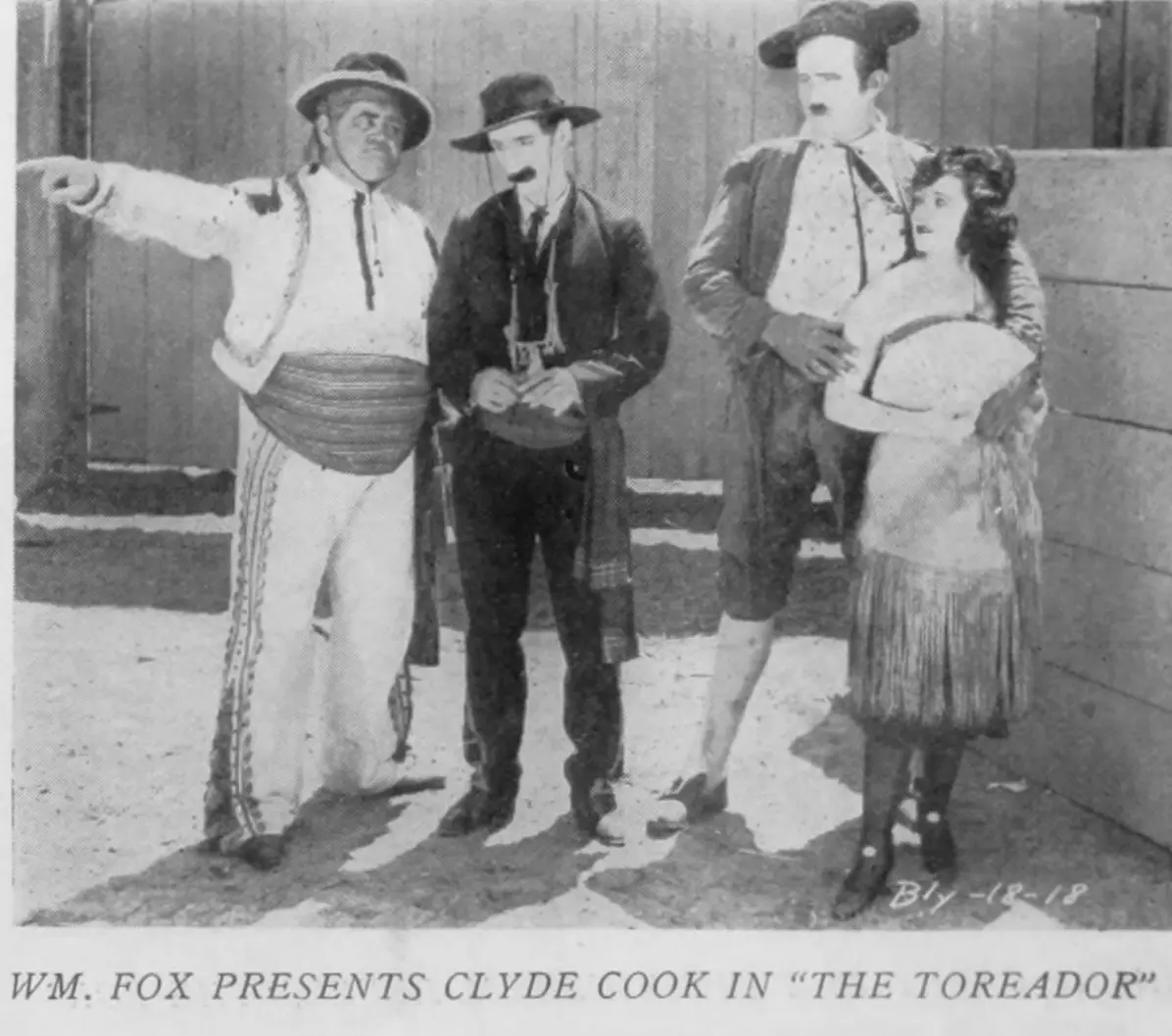
Contemporary exhibitors often accompanied The Toreador with habanera rags or military marches. Yet the film’s visual percussion—hoof thud, sand scrape, cloth tear—needs no orchestral camouflage. I screened a 16 mm print at a rooftop revival; beneath digital constellations we supplied only a metronomic hand-clap. The laughter crescendoed precisely where Kennedy’s intertitles once instructed, proof that comedy, like bullfighting, is choreography of anticipation.
Clydo—audience nickname scrawled on 1921 ticket stubs—cross-dresses twice: first borrowing a matador’s traje, then re-emerging in the float-borne Marian robe. The joke hinges on emasculation, yet the sequence also exposes the performative seams of Latin masculinity. The bullring, that crucible of gender, becomes a closet from which our hero bursts in petticoats, thereby queering the spectator’s gaze decades before the term existed.
Escape in slapstick is rarely mere survival; it is ontological shrug. Clyde’s final dash—mule cart, dust cloud, iris-out—evokes the absurdist exit of Jubilo’s hobo or even the spectral fade in Spellbound. The world resets, the ring is swept, the next corrida begins. Only cinema retains the footprints of the fool, looping ad infinitum in the dark.
Grapevine Video’s 2018 DVD pairs the film with two Kennedy shorts; transfer shows mildew flecks yet retains enough halation to make sand particles sparkle. A 2K restoration by Eye Filmmuseum awaits North American Blu-ray. Streamers: occasional rotation on Criterion Channel’s silent-comedy marathons, though licensing gaps yawn. Physical collectors should haunt eBay for the long-OOP Slapstick Symposium box set.
For viewers convinced silent comedy ends with Keaton’s stoic granite or Chaplin’s sentimental moonlight, The Toreador offers a shot of mescal—briny, bracing, laced with worm-level absurdity. At once colonial souvenir and post-colonial prank, Kennedy’s miniature riot proves that satire fits inside a bull’s horn, provided the horn is hollow and the clown limber enough to dance through.
Watch it for Clyde’s elastic vertebrae; rewatch it for the way the arena swallows machismo whole and spits out laughter.
Runtime: 20 minutes
Year: 1921
Director: Edgar Kennedy
Starring: Clyde Cook, Edgar Kennedy, James Donnelly, Lois Scott
IMDb 6.3
1925
Community
Log in to comment.