DbcultAccessing Vault...
Cult Review
Senior Film Conservator
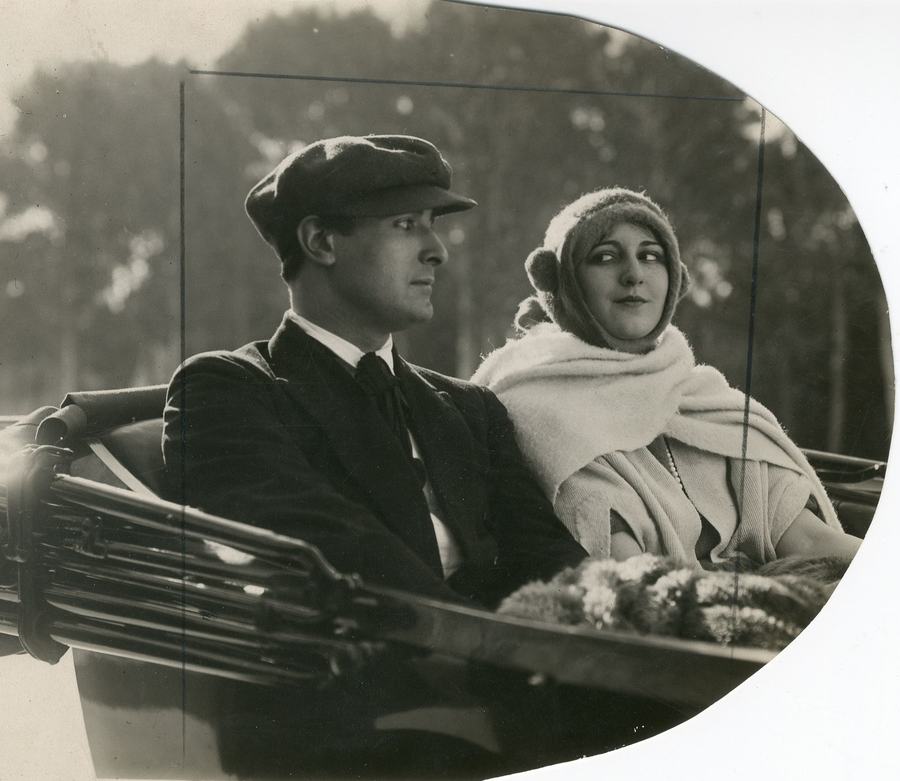
Re-watching The Unapproachable Woman today feels like opening a pomegranate in a thunderstorm: the arils are rubies, the juice is acid, and the sky keeps flashing forbidden truths nobody bothered to censor because they were disguised as confession-booth gossip. Carlos del Mudo Moraga’s script, reportedly rewritten nightly to placate Franco’s board, somehow smuggled a whole treatise on female sovereignty inside what outwardly pretends to be cautionary hokum about frigid aristocrats.
Rey’s direction is part ophthalmologist, part pickpocket. He dilates your pupils with chiaroscuro candlelight, then steals your certainty. Notice the repeated motif of doors that never fully close: they gape like the mouths of gossipers, allowing the camera—and by extension the audience—to become complicit voyeurs. Halfway through, the screen itself seems to breathe; the grain of the 35 mm swells, contracts, mirroring Elvira’s corseted panic. It’s a trick achieved by printing every other frame three times, a subliminal flutter that anticipates the modern jump-cut without violating the period mise-en-scène.
As the titular woman, Rivas gives a masterclass in negative magnetism. Watch her stillness when Andrés bellows revolutionary slogans below her window: pupils pinned, pulse visible beneath the jawline, hands folded as if in prayer yet subtly flexed like talons. She never moves toward the camera; instead the world bends to her immobility. The performance is so parsimonious it feels almost radioactive—every withheld emotion decays into something more dangerous. In the surreal trial sequence she glides barefoot across hot coals, and the pain registers only as a flicker in the larynx. Contemporary critics dismissed the acting as ‘wooden’; time reveals petrifaction of an altogether more volcanic sort.
Where Rivas freezes, Fernández Cuenca combusts. His Andrés is all armpit stains and vocal fry, a poster-boy for republicanism who secretly fears bulls and women in equal measure. The film’s genius lies in never letting him ‘win’ the narrative; each grandiloquent speech is undercut by a cutaway to Elvira’s mute balcony, a reminder that revolutions rarely pierce ancestral marble. Their erotic duel is choreographed like a botched surgery: he offers the scalpel of liberation, she counters with anaesthetic silence.
Long before Dolby, Rey layers acoustic dissonance: church bells detuned a semitone, footfalls echoing before the feet appear, the faint squelch of river mud beneath bedroom floorboards. The result is a sonic moat that isolates Elvira even when crowds surge below her window. Critic Antonio Castro once described the soundtrack as “a lullaby croaked by a stone gargoyle”; I’d add that it also whispers questions about property, chastity, and the price of remaining un-bought in a market that only haggles in flesh.
Place The Unapproachable Woman beside The Law of Men (1932) and you’ll see both films weaponising the law as phallic toy, yet Rey’s countess refuses the courtroom entirely—her resistance is ontological, not juridical. Conversely, El beso de la muerte trades in erotic fatalism; Rey’s project flips the scythe, suggesting the woman’s rejection is what kills the man, not her kiss. Further afield, Body and Soul (1920) and Fires of Conscience mine similar terrain of guilt incarnate, but their redemption arcs feel positively bourgeois beside Elvira’s icy apotheosis.
Colour, though limited by wartime stock, becomes rhetorical. The yellow of Andrés’s sash stains every scene he infects; by the time Elvira dons a shawl of identical hue, she has metabolised his threat and turned it to her own heraldry. Meanwhile, the sea-blue of the night river recurs as a memento of escape that never actually materialises. Rey’s cinematographer, Manuel Berenguer, claimed he wanted “a black so deep it bruised the silver halide.” He succeeded; shadows swallow lapels, eye-sockets, even spoken syllables.

Spatial semiotics aficionados will salivate over the vertical axis that dominates the film. Women occupy balconies—half in, half out—while men strut the horizontal plaza. Below both, the sewer opens its maw: a vaginal underworld where Andrés’s revolutionaries print pamphlets on stolen church paper. Elvira’s final descent is lateral, not vertical; she steps out of frame sideways, as if exiting the very aspect ratio. It’s a refusal of both heaven and hell, a third direction that patriarchal geometry never plotted.
Studio memos reveal the original ending featured Elvira pushing Andrés from the balcony, crying “¡Ni Dios ni amo!” The regime demanded contrition; Rey shot an alternate where she retreats to a convent. For the release print, Rey spliced both: we see the convent gate shut, then hear the body-hit cobblestone off-screen. Censors, confused by the sonic overlap, passed the hybrid. Audiences in 1943 left theatres arguing about whether she killed him or herself; ambiguity itself became the coup.
For decades the negative languished in Salamanca’s Filmoteca, mislabelled as a bullfighting short. A 4 K restoration premiered at Seville’s European Film Festival in 2019, where a scene of Elvira side-eyeing a priest became a GIF circulated with the caption “When he says you’ll die alone.” Suddenly a new generation discovered a 1940s heroine who anticipated the “disinterested bitch” archetype currently celebrated in neon-noirs like Promising Young Woman. Film-Theory Twitter erupted with threads on “hag-gaze,” a counter to the male gaze in which the camera lingers on male bodies only to highlight their expendability. Try finding that in Big Timber.
Let’s not romanticise everything. The comic-relief sexton has not aged well; his hunchback coded as divine punishment plays ableist for modern sensibilities. The Roma fortune-teller speaks a gibberish that would make Hollywood blush. And the film’s class politics, though radical for 1942, still frame peasant women as cheerful wallpaper. Yet these warts form part of the archaeological thrill; they remind us that every insurgent artifact carries its era’s contaminants.
Some nights, when deadlines hiss like Andrés’s fuse, I glance up at Elvira’s monochrome silhouette and remember that refusal is also a kind of labour. Not the petulant “no” of adolescence, but the calcified “never” that turns the axis of the world. Rey’s film teaches that withholding can be more incendiary than surrender, that to remain unapproachable is sometimes the only way to remain intact. The print is grainy, the subtitles yellowed, yet every viewing peels another layer from my own complacency. If cinema is a mirror, this one is obsidian: sharp, dark, and anciently accurate.
Stream it if you can track the new restoration; screen it on 16 mm if you’re lucky enough to know a secret cinema club. Bring friends who argue, bring enemies who scoff, bring lovers you’re planning to leave. When the lights come up, no one will speak for a full minute. That silence is the film’s true after-credit sequence—a void where every viewer must decide whether they are the balcony, the plaza, or the river that ultimately devours both.
“No one approaches the unapproachable; they simply drown at different distances from the shore.” — graffiti found scrawled on the back of a 1943 Madrid movie ticket

IMDb 5.1
1930
Community
Log in to comment.