DbcultAccessing Vault...
6.6/10
Senior Film Conservator
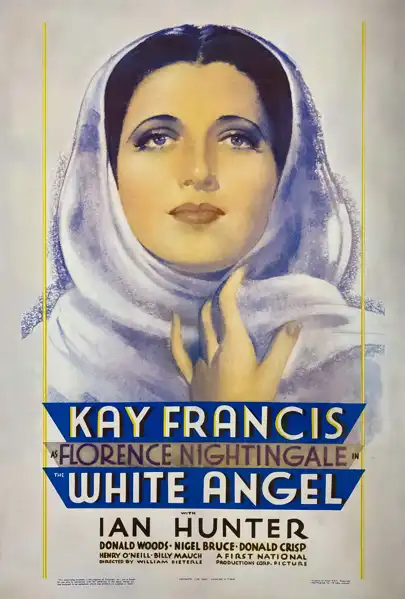
A definitive 6.6/10 rating for a film that redefined the boundaries of cult cinema. The White Angel remains a cornerstone of transgressive art.
If you are looking for a gritty, realistic look at 19th-century medicine, please look away now. The White Angel is really only for people who love dusty 1930s studio biopics where everyone has immaculate hair despite being in a war zone.
If you hate slow-moving historical dramas with loud, dramatic brass music playing every time someone makes a decision, you will absolutely despise this. It is a very specific kind of old-movie cozy that borders on being a comedy.
I watched this last night on a whim because I've been on a bit of a Kay Francis kick lately. She plays Florence Nightingale here, and she honestly tries so hard with the material she is given.
But the movie is just so incredibly polite. Even when the soldiers are supposedly dying of cholera, they look like they just need a quick nap and maybe a light sandwich.
There is one guy in the background of the hospital scene who is supposedly in agony. But if you look closely, he is just sort of... wiggling his toes under a very clean blanket.
It made me laugh out loud. The whole "grime" of the Crimean War feels like it was put together by a very neat housekeeper who was afraid of actual dirt.
And then there is Donald Crisp. He plays the chief medical officer, and his entire job in this movie is to stand in doorways and look intensely annoyed that a woman wants to clean a floor.
Seriously, he has about three different faces of disgust. I started counting them after the thirty-minute mark.
It is almost like watching The Great Lover but without any of the actual romance or fun. Instead, we get a lot of speeches about duty and the crown.
I kept waiting for Nigel Bruce to do something silly, since he's in this too. He plays a doctor, but he mostly just looks confused, like he wandered onto the wrong set while looking for his hat.
The movie really wants you to know that Florence is a saint. Every time she walks into a dark room, the lighting crew practically blasts a giant spotlight directly onto her forehead.
It’s not subtle at all. In fact, there is a shot where she is just holding her famous lamp, and she stares at it for so long I thought the stream had frozen.
You can almost feel the director behind the camera whispering, "Now, look holy, Kay. More holy." It gets a bit exhausting after the first hour.
Still, there is something weirdly comforting about these old Warner Bros. pictures. The sets are so obviously made of painted wood, but they have this cozy, theatrical quality.
It reminds me of watching old silent stuff like Aftermath, where the silence did some of the heavy lifting that these clumsy dialogues can't quite manage.
The script has some incredibly clunky lines. At one point, a soldier says something so incredibly poetic about her shadow that I cringed a little bit.
Who talks like that while their leg is being sawed off? Nobody, that's who.
But hey, that's the magic of 1936 cinema. If you want a cozy Sunday afternoon watch with a cup of tea, this is fine. Just don't expect to learn anything real about history.
IMDb 6.6
1933
Community
Log in to comment.