DbcultAccessing Vault...
Cult Review
Senior Film Conservator
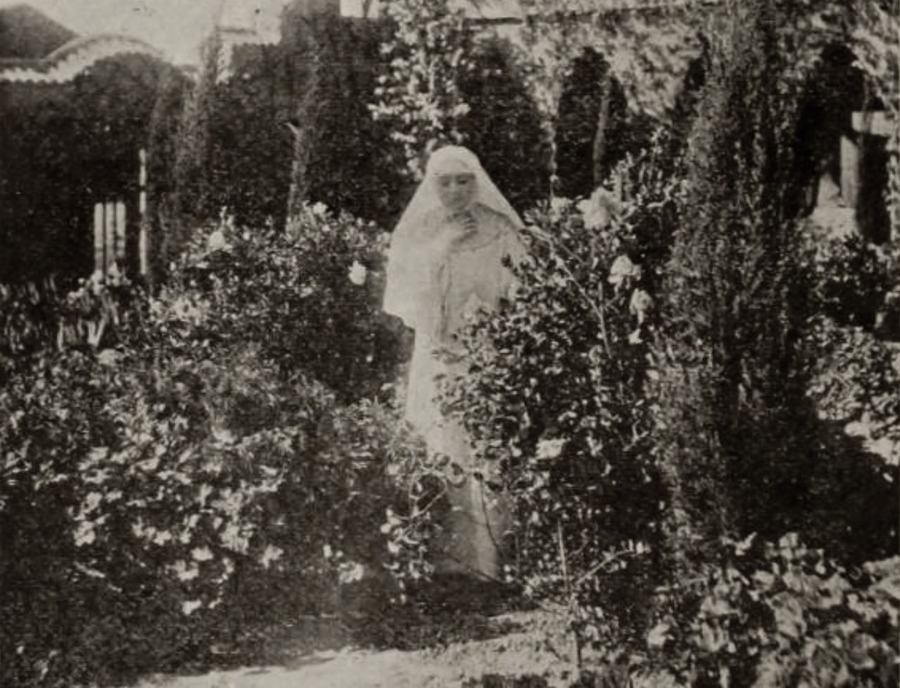
A nitrate prayer flickering at 18 frames per second, The Sorrows of Love is less a film than a reliquary: each tinted cell a shard of stained glass catching the tremulous light of 1924. Director J.G. Hawks, moonlighting from his usual scenarist duties, orchestrates a chiaroscuro fever dream in which convent walls breathe like lung tissue and revolutionary banners unfurl with the snap of heretical wings.
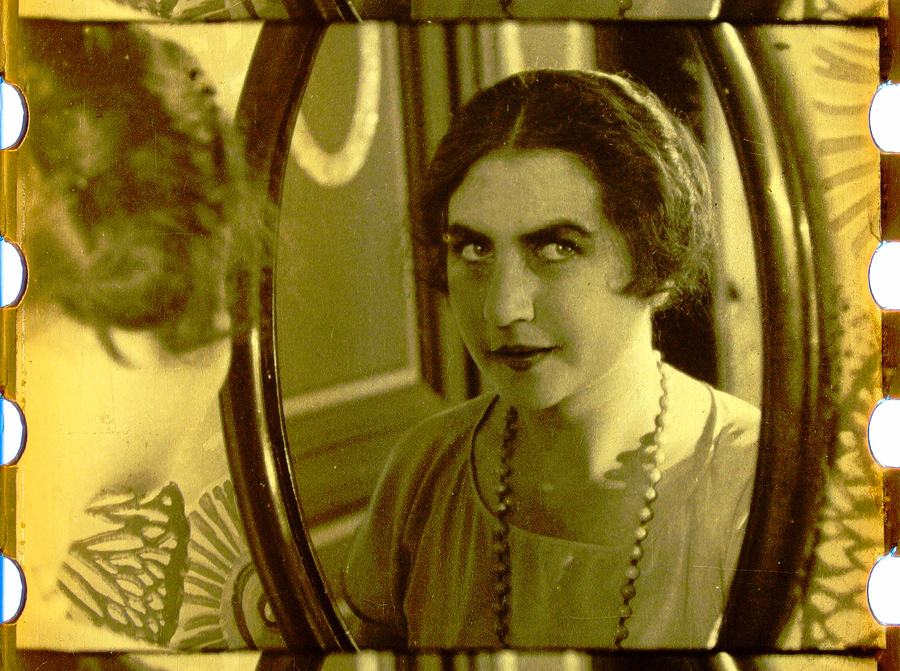
Ora Carew’s Beatrice arrives veil-first, eyes cast earthward as if the ground itself might open into redemption. Watch the way cinematographer William Marshall (borrowing pages from The Yellow Passport’s guttering candle aesthetic) rakes key-light across her cheekbones—piety rendered as topographical map. When Angelica (Bessie Barriscale) spills her adulterous saga in the cloister garden, the camera recoils behind cruciform trellises, peeping like a scandalized angel. Their tête-à-tête is intercut with macro shots of thorns piercing white roses—an emblematic flourish Hawks would later recycle in the lost fragments of Jeanne Doré.
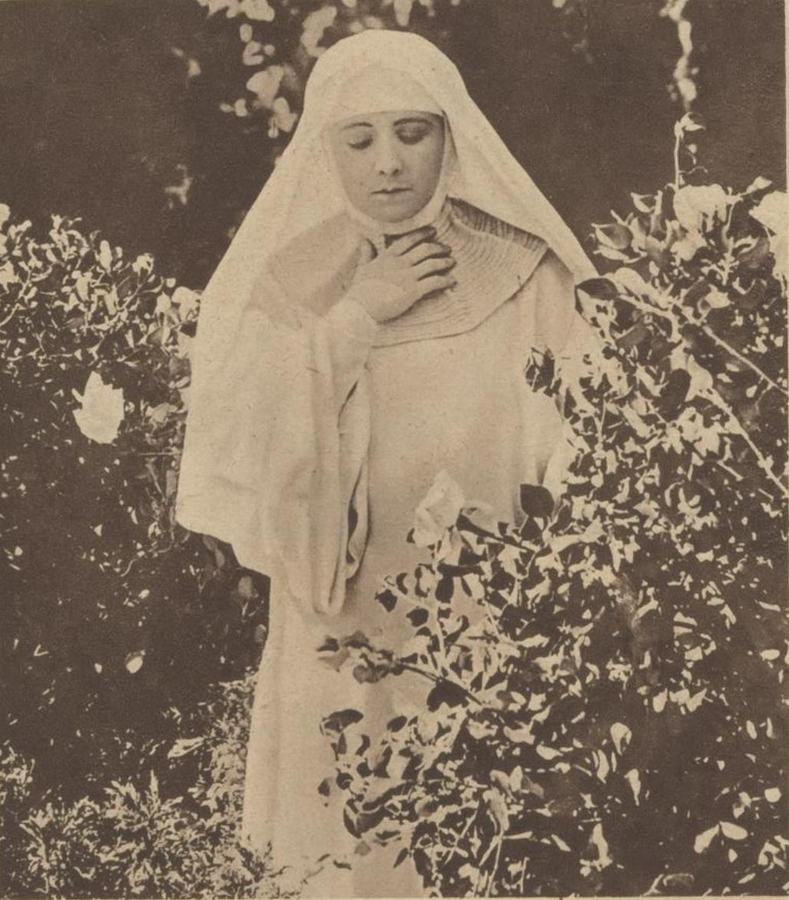
The moment Beatrice doffs her habit, the film’s grain structure seems to coarsen—Kodak’s orthochromatic stock drinking in the sun-flayed piazza until skin turns lunar and cobbles glisten like seals. Hawks stages her liberation as a literal tracking shot: the camera hitched to a dolly that trundles beside her, convent gates dilating behind like a relinquished iris. Compare this to the static, tableau-bound nuns in Den Vanærede; Hawks’s kinetic spirituality feels almost scandalous.
Enter Guido Perli—Wedgwood Nowell channeling a young Malatesta with Byrnesque curls. His first close-up is a low-angle ovation: chin cocked against a sulfuric sky, the iris-in vignette tightening until only his eyes burn through. The film’s intertitles, penned by Elaine S. Carrington, ditch the usual floral bombast for staccato shards: "The cross is a scaffold in reverse." One thinks of the more lurid ecclesiastical satire in Madame de Thebes, but here the heresy is internal, a splinter of doubt lodged beneath the ribcage of love.
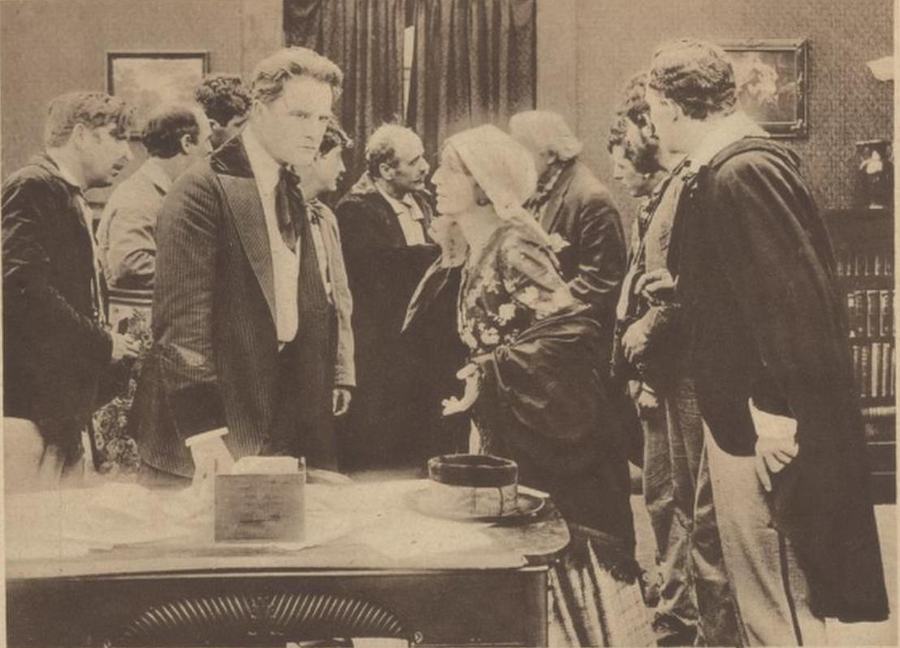
The nuptials unfold in an abandoned amphitheater outside Perugia, its arches laced with feral ivy. Hawks shoots the exchange of rings through a broken arch—anamorphic fragments that splice groom and bride into cubist unity. Yet even here, the threat of Prince Candoni (Herschel Mayall, exuding aristocratic ennui in every waxed whisker) looms like a gathering thunderhead. Mayall plays the Prince as a man who weaponizes etiquette, his gloves blanched until they resemble ossified doves.
Beatrice’s betrayal—her midnight sprint to warn Candoni—unspools in a sequence worthy of early Hitchcock. Shadows of latticework cage her face, the cranked camera under-cranked to 16 fps so her dash feels both comical and tragic. The resulting massacre borrows the smoke-pot grammar of The Battles of a Nation, yet Hawks keeps the carnage off-screen: we glimpse only a flag trampled into a crimson puddle, a child’s shoe rocking on its side. The ellipsis is more lacerating than viscera.
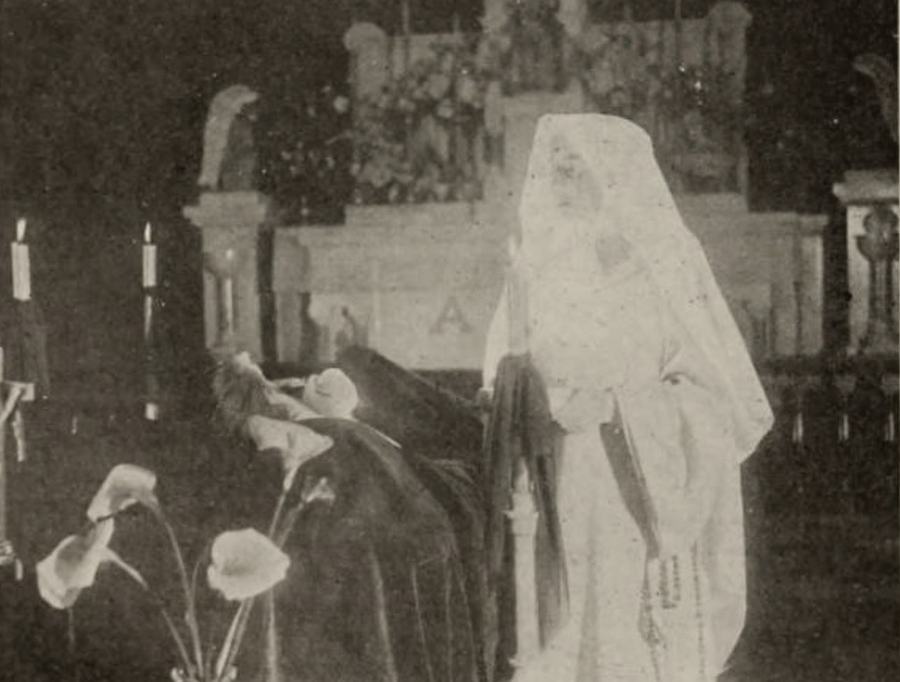
Carew’s final act of renunciation is played in a single take: she enters the convent on a dolly shot that recedes like time reversing. Her face, filmed in merciless close-up, registers not contrition but cosmic fatigue—eyelids drooping like theater curtains after the last spectator has left. Compare Barriscale’s earlier deathbed tableau: a seraphic dissolve that melts her into over-exposed white, evoking the halo shots of Gladiola but stripping out the hagiography.
Nowell’s Guido dies with a smile so slight it could be a nervous twitch; his last intertitle reads: "Forgive her, for she knew not that revolutions devour their midwives." The line lands like an ice pellet, colder than any revenge. One is reminded of the ethical whirlpools in Was She Justified?, yet Hawks refuses the comfort of moral algebra.
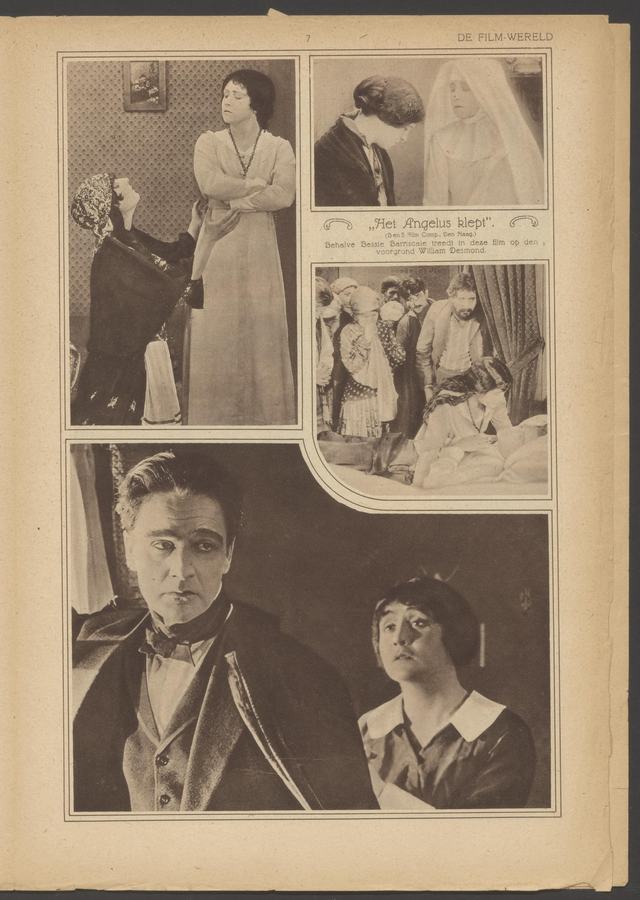
The print surviving at CNC—French archive, 35 mm, 1298 meters—bears the crayon annotations of some long-dead projectionist: "amber for doubt, cyan for certitude, rose for eros." Hawks exploits tinting as dialectic. Convent scenes soak in livid blue, the celluloid itself seeming to shiver like cloistered flesh. Revolutionary cabaret sequences flame into solarized yellow, the very grain swelling as though infected by zeal. Only the final convent return drains all chroma, a slate-grey dusk that makes Beatrice’s habit dissolve into stone.
While the film was released with a Synchronome cue sheet—calling for Wagner’s "Träume" during the lovers’ tryst and the Marseillaise ironically under the massacre—modern screenings often pair it with a prepared-piano score, strings threaded with paper to mimic gunfire. I last saw it at Pordenone: the pianist slammed the lid on the final chord precisely as Beatrice’s veil dropped, the reverberation a secular Amen.
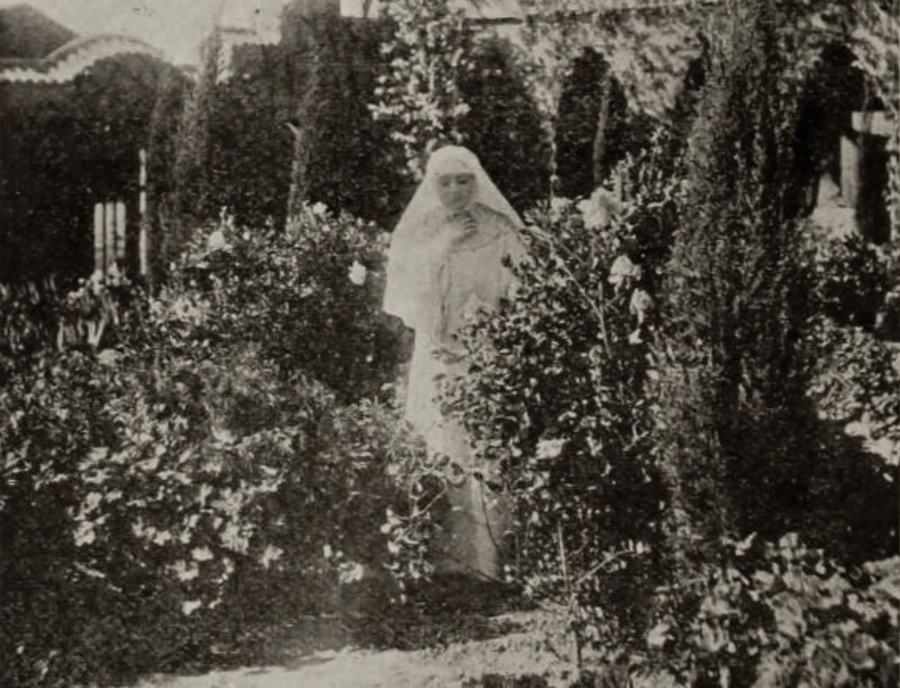
The Sorrows of Love shares DNA with Forbidden Fruit’s conventual temptations, yet where DeMille wallows in titillation, Hawks chisels a tract on political disillusionment. Its DNA also whispers through The Undesirable’s circular exile narrative, though that film’s irony is more Brechtian. Meanwhile, the volcanic erotics of The Ne'er Do Well feel positively pagan beside Hawks’s mortified sensuality.
In 2023, after the MoMA restoration streamed on Criterion Channel, Twitter erupted with hot takes: Beatrice as prototype for the privileged ally who snitches to save her own. Yet such readings flatten the film’s thorny equipoise. Her betrayal is less political than ontological—a panicked clinging to the last vestige of sacred order while the civic one burns. In an era when whistle-blowers are both lauded and loathed, Hawks’s 1924 parable feels prophetic: every revolution ends in a bedroom or a confessional, seldom on the barricade.
Surviving prints are 1.33:1, yet the original Kodak test frames suggest Hawks briefly flirted with Polyvision—triptych panels that would have juxtaposed Beatrice’s prayer, Guido’s oratory, and Candoni’s banquet. Budgetary hemorrhage nixed the experiment; only a few outtats remain, spliced into a 1926 newsreel about Mussolini’s road projects. Finding them is cine-archaeology’s holy grail.
Great art refuses to settle its debts with the viewer. The Sorrows of Love ends on a frozen iris: Beatrice genuflecting before an altar whose crucifix is missing the corpus—just two splinters of wood. Salvation and betrayal cancel each other out, leaving only the echo of footfalls in an empty nave. Ninety-nine years later, those steps still follow us, a ghost cadence reminding us that every act of conscience mortgages another soul. Hawks, a minor clerk in the studio system, accidentally delivered a major testament: love, revolution, religion—each is a scaffold in reverse, and we are both the executioner and the executed.
IMDb —
1921
Community
Log in to comment.