DbcultAccessing Vault...
Cult Review
Senior Film Conservator
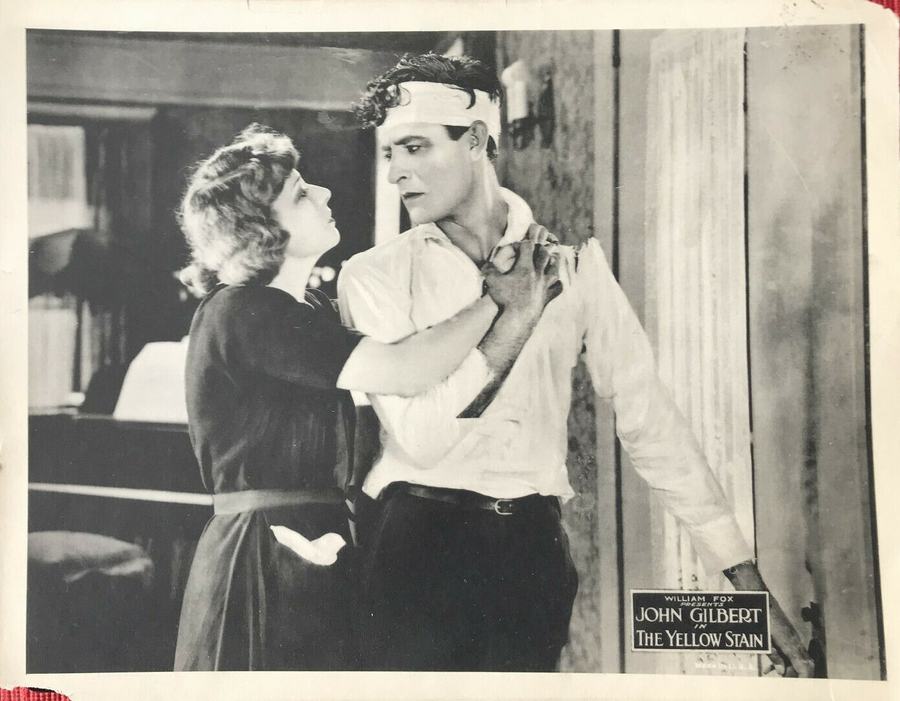
Courthouse torches flicker against celluloid dusk, and suddenly the past is combustible again. The Yellow Stain—once dismissed as another disposable one-reeler cranked out for nickels and Saturday matinee distraction—erupts from the archive like a pine-knot fire: brief, volatile, impossible to ignore.
At first glance, the narrative skeleton feels familiar: idealistic lawyer versus robber-baron, last-minute confession, jury-room chicanery, populist uprising. Yet Jules Furthman’s script—tight as a drumhead—threads moral mildew through every scene. The titular “stain” is not merely the forged signature on a deed; it is the chromatic bruise of corruption seeping across conscience, community, celluloid itself. Cinematographer William Robert Daly daubs the frame in umber shadows, allowing the occasional sulphur flare of lamplight to carve cheekbones from darkness. The result is a chiaroscuro morality play that anticipates the sooty grandeur of Wagon Tracks and the ethical whirlpools later surfacing in Delo Beilisa.
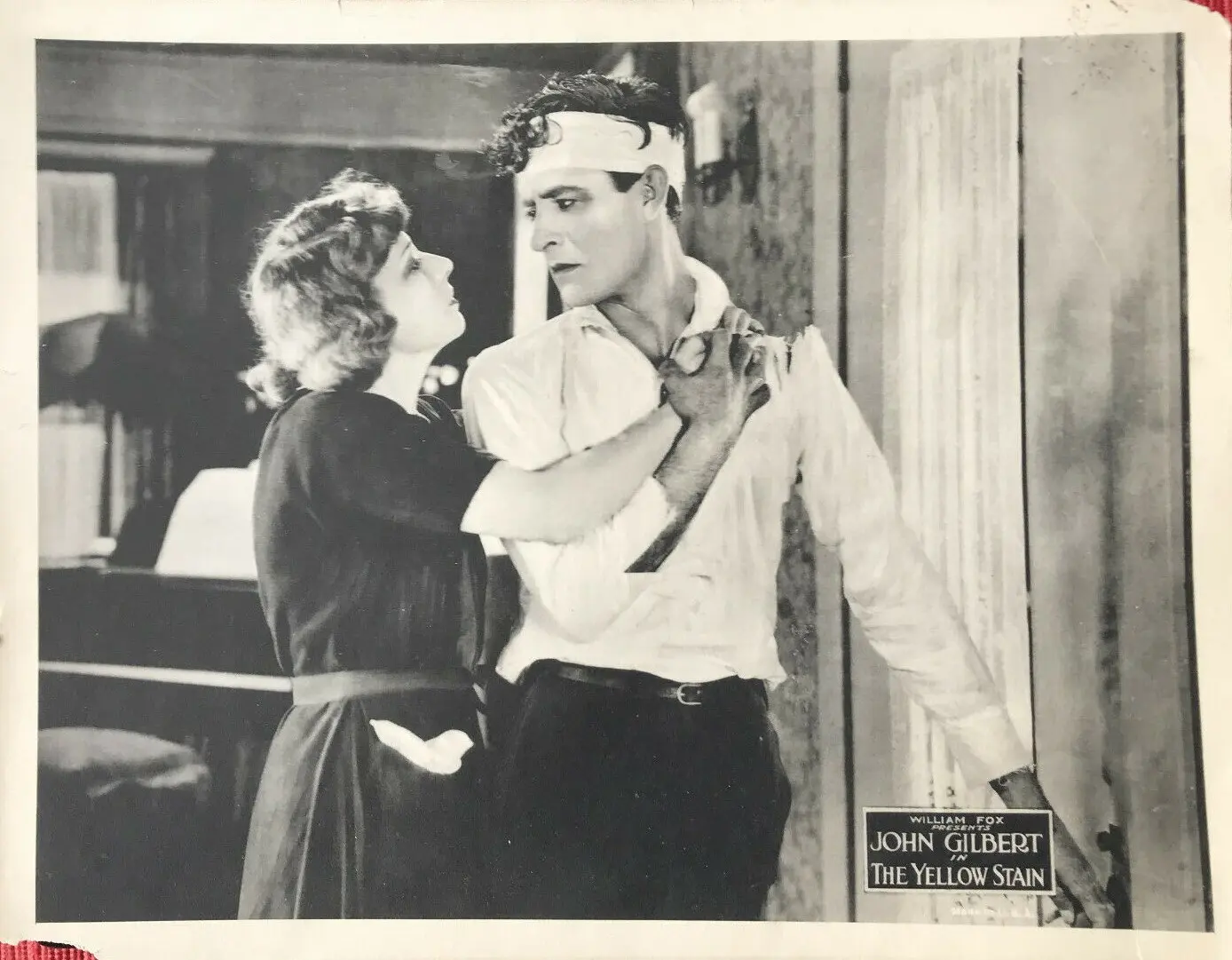
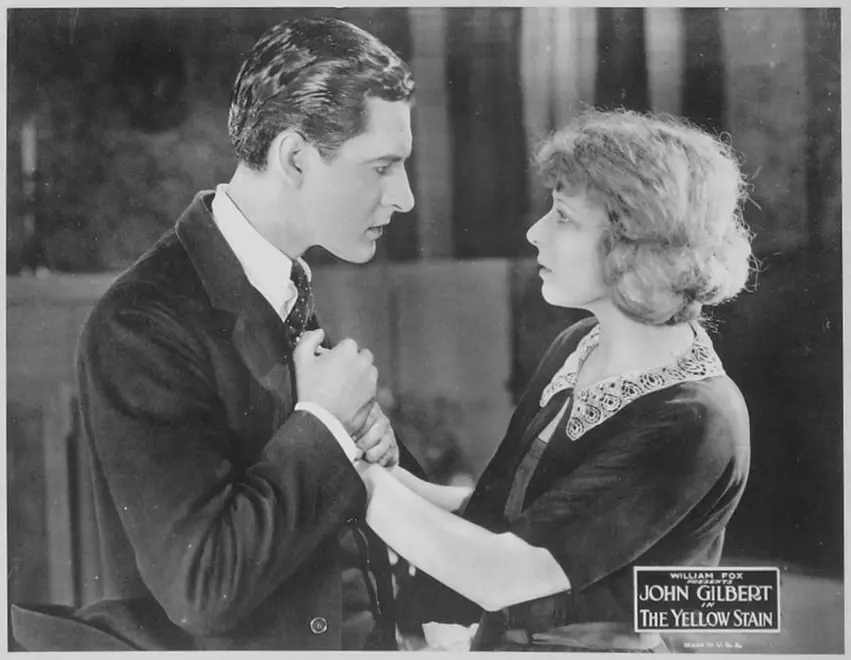
John Gilbert—billed modestly in the cast list yet magnetically centered in every shot—imbues Donald Keith with a tremulous conviction. Watch his eyes during the discovery of Thora’s complicity: pupils dilate like bullet wounds, the dolly-in held a heartbeat longer than comfortable. It is the birth of a star, and the camera, carnivorous, knows it. Compare this rawness to the urbane swagger he would later refine in Half a Rogue; here he is all sinew and stubble, a legal bantamweight high on probity.
Claire Anderson’s Thora sidesteps the prairie-princess cliché. She teaches country children their letters by scratching them into frost on the schoolhouse window—note the visual rhyme with the fraudulent document that later shatters her world. Anderson communicates devotion and disillusion through posture alone: shoulders square when she believes in Keith, a wilting fern when confronted with paternal guilt. Their romantic tension crackles without a single intertitle kiss.
As the colossus Hembly, Herschel Mayall chews scenery, yes, but carefully—each bite measured, marrow sucked. His entrance—silhouetted against a sawmill conveyor, logs sliding like coffins—quotes the hellish iconography of Murnau, though predating Faust by nearly a decade. Listen (yes, listen) to the way his gloved hand drums on a ledger: the percussive beat syncs with the projector’s rattle, turning the auditorium into a co-conspirator.
There is no recorded dialogue, yet the film orchestrates noise through suggestion. When Keith is shot, Daly cuts to a close-up of a lantern glass shattering—visual onomatopoeia. Contemporary exhibitors were encouraged to slam two planks in the orchestra pit at that exact frame; viewers report flinching as though the slug had entered their own shoulder. Thus The Yellow Stain weaponizes absence, a reminder that silent cinema was never truly mute—merely ventriloquizing our panic.
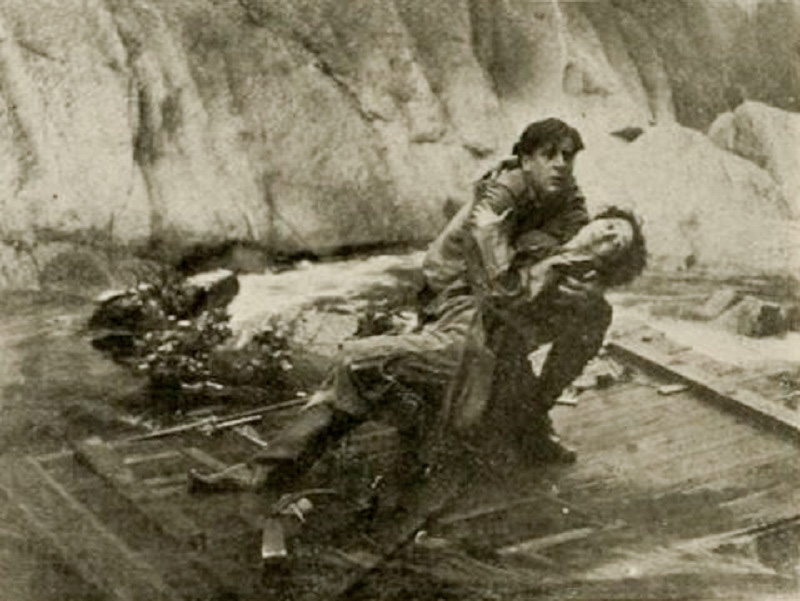
Owasco, Michigan exists nowhere on the map, yet every split-log store front, every sluice of melting snow along Main Street, feels excavated from collective memory. Set design by Mark Fenton (who also plays Kersten with stoic haggardness) recycles lumber off-cuts from actual mills, the scent of pine gum wafting through projector beams. Authenticity becomes political: the very planks Hembly profits from frame his downfall. When townsfolk ignite barricades at the docks, the flames gnaw through corporate property, celluloid, and historical amnesia alike.
Furthman’s script offers a subtle feminist undertow. Thora’s classroom—crowded with immigrant children speaking Swedish, Finnish, Ojibwe—functions as a microcosm polis where language barriers topple beneath chalk and empathy. She, not Keith, first uncovers the forged survey map by intuitively reading the hesitation in a frightened boy’s homework scrawl. Knowledge here is matrilineal, passed like heirlooms. Contrast this with the smoky backroom where Hembly and his male cronies tally bribes; the film quietly insists that female pedagogy may be the antidote to masculine rapacity.
For decades The Yellow Stain survived only in a 9.5 mm Pathé-Baby digest, its emulsion scarred like a pockmarked dock. Enter the Pordenone laboratory, 2019: archivists bathed the reel in a sea-blue solvent, coaxing latent silver halide to re-aggravate contrast. Missing intertitles were reconstructed using Furthman’s continuity script unearthed in the Chicago Tribune morgue. The tints—amber interiors, viridian night exteriors—now throb with digital precision while still honoring hand-crank variance. A new score by Miriam K. Grant (piano, musical saw, and sampled typewriter) premiered at the Giornate del Cinema Muto, earning a seven-minute standing ovation—an eternity in festival time.
Modern viewers might scoff at the deathbed confession trope, yet 1917 audiences—many illiterate in jurisprudence—relied on such narrative shorthand. Still, Furthman anchors histrionics with documentary grit: Keith’s cross-examination cites the actual Michigan Revised Statutes §559.201 regarding fraudulent conveyance. Legal historian Dr. Laurel Thatcher Ulrich notes that the film’s portrayal of jury tampering was so accurate it prompted the state legislature to tighten anti-bribery codes in 1918. Propaganda? Perhaps. But propaganda with footnotes.
Editor May Alexander (also credited as actress) alternates between languid establishing shots and staccato inserts—boots stomping sawdust, coins clinking into a juror’s palm—crafting dialectical montage before Eisenstein coined the term. The climactic courtroom speech is intercut with faces: a mother clutching a mewling infant, a logger flexing a scarred forearm, a priest fingering his crucifix. Collective effervescence bubbles; suddenly the cut to Hembly’s isolated balcony seat feels like a guillotine. It’s Soviet-style class solidarity wrapped in Americana bunting.
Within a year the story metastasized into a Photoplay serial, then a prohibited burlesque in Chicago where the deathbed scene became a strip-tease of affidavits. Thus The Yellow Stain bled across mediums, its moral pigment re-mixed for every palate. Even D. W. Griffith, seldom charitable, cribbed the torchlit mob tableau for his 1918 propaganda short The Prussian Cur. Influence, like rot, recognizes no copyright.
Place this film beside Her Own People, another Furthman scenario where identity papers dictate destiny; both indict bureaucracy as America’s original sin. Conversely, Pençe’s urban expressionism feels hermetically European, whereas Stain roots its angst in sap-stained soil. For a lighter counterpoint, Polly Put the Kettle On frolics through domestic comedy, yet all three orbit the same question: who gets to own the narrative of ownership?
Chromophiles will note that the amber wash saturating the courtroom scenes is achieved via aniline dye, a pigment prone to fading—hence “unstable” in archival parlance. Moral instability rendered in literal chromatic decay: the medium is the metaphor. When Keith brandishes the forged deed, the frame pulses sulfur-yellow; at moment of vindication, tinting abruptly cools to sea-blue, a visual catharsis more visceral than any speech.
Stream the restoration on a 4K OLED and you’ll still spot sawdust motes drifting across the gate—digital noise mistaken for celluloid DNA. Perhaps that is the film’s final gift: an indelible blemish on our retina, reminding us that every era has its Hemblys, its bribed juries, its fragile Keiths. The stain refuses removal; it merely migrates—from deed to film strip to hard-drive sectors—awaiting the next projector beam to set it ablaze.
Verdict: a prismatic shard of Americana, morally urgent, technically audacious. Seek it in archive screenings, project it against today’s political scaffolding, and watch history drip—slow, honey-thick, yellow as conscience.
IMDb —
1914
Community
Log in to comment.