DbcultAccessing Vault...
Cult Review
Senior Film Conservator
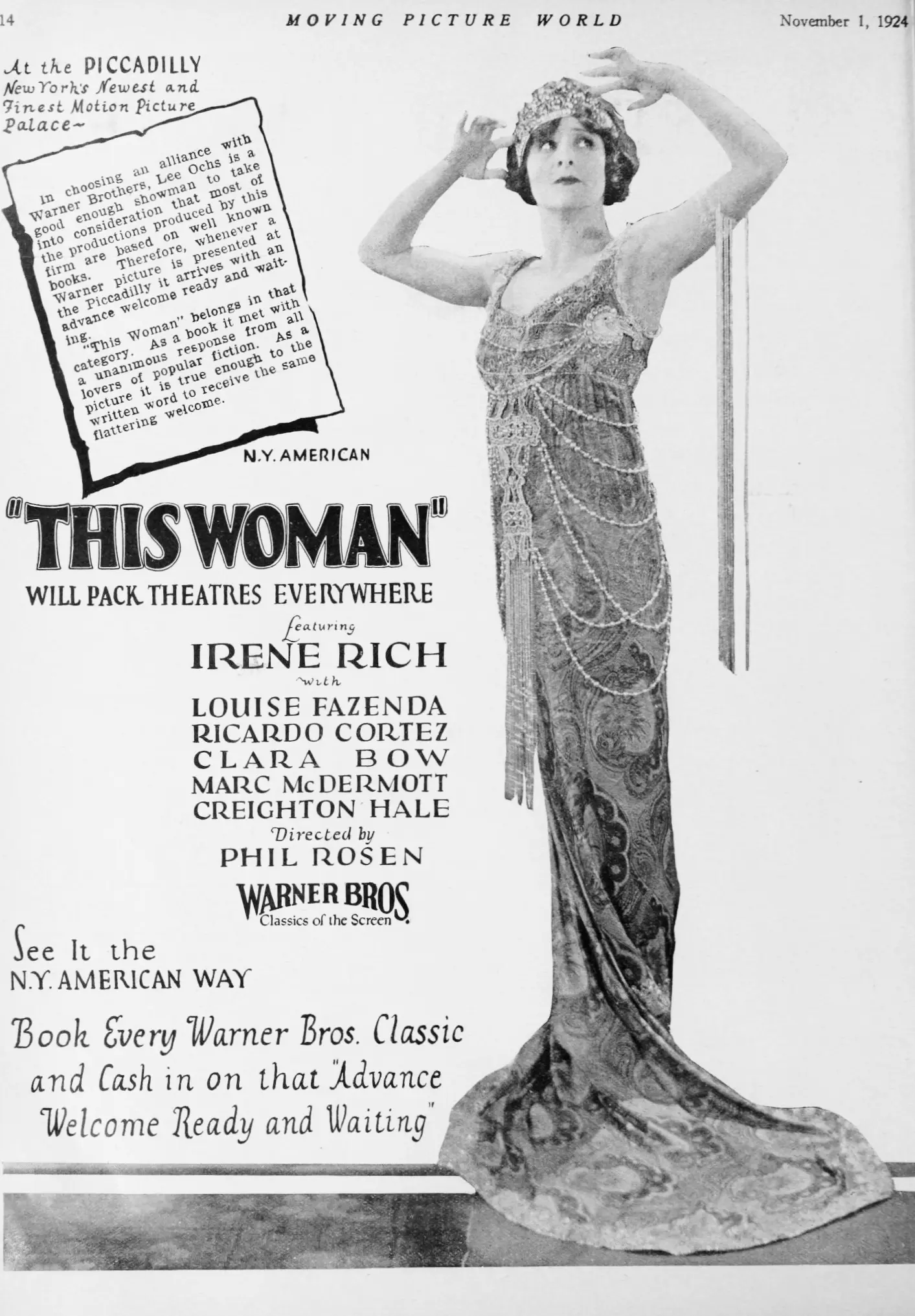
The 1924 silent feature This Woman serves as a hauntingly beautiful tapestry of urban despair and the eventual triumph of the human spirit. In an era where the cinematic medium was still exploring the nuances of visual storytelling, this production manages to convey a profound emotional depth that transcends its age. The film is not merely a melodrama; it is a sociological examination of the pre-Depression era's rigid class structures and the precarious nature of female survival in a world governed by patriarchal caprice.
The opening sequences of the film are steeped in an atmospheric gloom that rivals the most poignant works of the period, such as Once to Every Woman. We find Carol Drayton, portrayed with a fragile yet resilient dignity by Irene Rich, at the absolute nadir of her existence. The cinematography captures the cold, unyielding textures of the city, emphasizing Carol’s isolation. When she is saved from the brink of suicide by Rose, we see a rare moment of subterranean solidarity. This isn't the sanitized charity of the wealthy; it is the raw, instinctual empathy of the downtrodden.
The subsequent raid on the cafe is a masterclass in silent tension. The chaos of the police intervention is contrasted sharply with the cold, calculated mendacity of Gordon Duane. Marc McDermott plays Duane with a chilling sense of entitlement, representing a class that views the poor as expendable pawns. This injustice mirrors the thematic weight found in Dead Men Tell No Tales, where the truth is often buried beneath the weight of social standing and deception.
The narrative pivot occurs through the character of Bobby Bleeker, played with a delightful, bumbling charm by Creighton Hale. His intoxicated request for Carol to sing beneath the window of his beloved, Aline Sturdevant, is a plot device that feels both whimsical and fated. It is here that we witness the first glimmer of Carol's latent power. Though the film is silent, the reactions of those listening—particularly the impresario Stratini—must carry the weight of her vocal talent. Ricardo Cortez, as Stratini, provides a grounded, soulful performance that anchors the second half of the film.
As Carol moves into the sphere of Stratini, the visual palette of the film shifts. The squalor of the jail cell and the dim cafes are replaced by the opulence of the musical salon. However, this new world is no less treacherous. The introduction of Clara Bow as Aline Sturdevant adds a layer of electric volatility to the proceedings. Even in this early role, Bow’s screen presence is undeniable; she radiates a kinetic energy that threatens to upstage the more somber elements of the plot. Her jealousy toward Carol provides a sharp counterpoint to the blossoming romance between Carol and Stratini.
No silent drama of this caliber would be complete without the looming threat of blackmail. The butler’s attempts to exploit Carol’s past highlight the central anxiety of the era: the impossibility of truly escaping one’s history. Carol’s struggle for respectability is a recurring motif in silent cinema, often explored in films like The Purple Lily. The tension is amplified by the presence of Whitney Duane, Gordon’s brother, whose affection for Carol is constantly poisoned by the venom of gossip. The dichotomy between the two brothers—one who falsely accused her and one who doubts her—serves as a poignant metaphor for a society that refuses to grant women a second chance.
The conflict involving Rose and the borrowed money is the ultimate test of Carol’s character. In a world that demands she sever all ties with her disreputable past to achieve social standing, Carol chooses loyalty. This act of defiance against the social mores of the time is what elevates This Woman from a standard melodrama to a significant work of feminist subtext. She refuses to trade her soul for a seat at the table of the elite.
The direction by Phil Rosen (while the screenplay was penned by the talented trio of Lighton, Loring, and Rockey) exhibits a sophisticated understanding of pacing. The transition from the gritty realism of the first act to the high-stakes emotionalism of the finale is handled with remarkable fluidity. The use of lighting is particularly noteworthy; the shadows in the cafe scenes feel oppressive and heavy, while the lighting in the Stratini household is airy and ethereal, reflecting Carol’s tenuous hope.
The film’s exploration of faith—not necessarily in a religious sense, but in the belief in one's own worth—echoes the spiritual yearning seen in The Faith Healer. Carol is her own healer, finding the strength to rise above the machinations of those who wish to see her fail. The marriage to Stratini at the conclusion is not merely a romantic resolution; it is a professional and personal validation. He is the only man who saw her not as a victim or a project, but as an artist and an equal.
Irene Rich delivers a performance of remarkable subtlety. In an age known for histrionic gestures, her restraint is revolutionary. Her eyes convey a lifetime of sorrow and a flicker of unyielding hope that keeps the audience tethered to her journey. Opposite her, Ricardo Cortez provides the perfect foil—his Stratini is a man of culture and compassion, avoiding the tropes of the overbearing mentor. The chemistry between them is built on mutual respect rather than fleeting passion, making their eventual union feel earned and substantive.
We must also acknowledge the supporting cast. Otto Hoffman and Helen Dunbar provide the necessary social scaffolding that makes the world of the film feel inhabited and real. The interplay between the characters creates a microcosm of a society in flux, caught between the Victorian shadows and the neon lights of the modern age. The film captures a specific moment in time when the old guard was being challenged by the rising tide of individual agency.
This Woman is a testament to the power of silent cinema to tell complex, adult stories with nuance and empathy. It avoids the easy moralizing of its contemporaries, choosing instead to find beauty in the struggle. It is a film that demands to be seen not just as a historical curiosity, but as a living piece of art that still speaks to the themes of justice, redemption, and the enduring power of loyalty.
For those who appreciate the delicate balance of high-stakes drama and character-driven narrative, this film is an essential watch. It occupies a unique space in the 1924 landscape, offering a more grounded and psychologically complex experience than many of the year's more flamboyant offerings. As the final iris out closes on Carol and Stratini, we are left with a sense of profound satisfaction—a rare feeling in the often-tragic world of silent-era melodrama. It is a reminder that even when the world is at its most malevolent, the human spirit has a remarkable capacity for orchestration and harmony.
IMDb —
1918
Community
Log in to comment.