DbcultAccessing Vault...
6.9/10
Senior Film Conservator
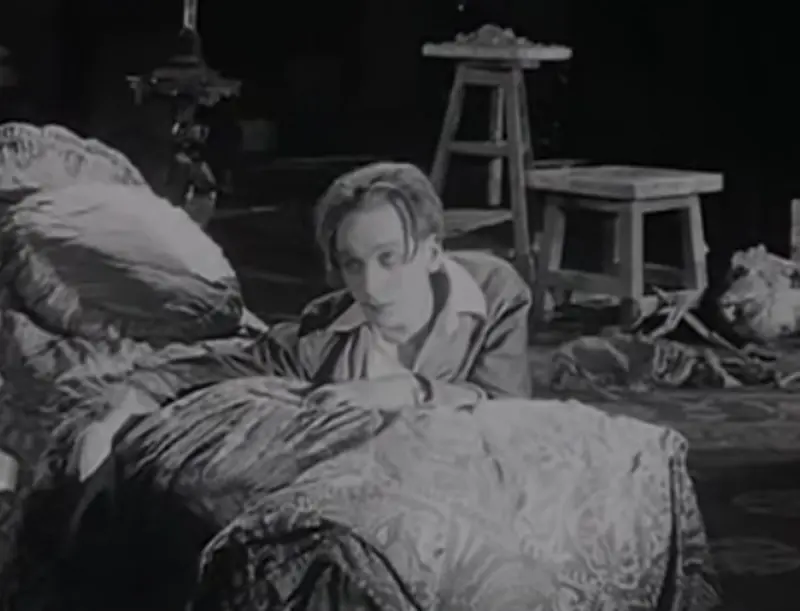
A definitive 6.9/10 rating for a film that redefined the boundaries of cult cinema. Who Is the Man? remains a cornerstone of transgressive art.
To traverse the annals of silent cinema is to often encounter relics of moral didacticism, yet Walter Summers’ 1924 effort, Who Is the Man?, emerges as a starkly modern interrogation of the human condition. Unlike the whimsical escapism found in Aladdin and the Wonderful Lamp, this film plunges headlong into the crepuscular depths of Parisian addiction and the agonizing weight of familial loyalty. It is a work of somber beauty, a celluloid confession that feels remarkably prescient in its handling of the 'tortured artist' trope.
For the contemporary cinephile, the primary allure of this archival treasure is undoubtedly the presence of a young John Gielgud. Making his screen debut as Daniel, Gielgud provides a glimpse into the burgeoning gravitas that would eventually define British theater for a century. While the silent medium often compelled actors toward the hyper-expressive pantomime—a style seen in the more rugged Cyclone Smith Plays Trumps—Gielgud exhibits a nascent restraint. His Daniel is a creature of internal tempests, a foil to the more overtly melodramatic beats of the plot. It is fascinating to observe how his physicality, even without the benefit of his legendary vocal resonance, commands the frame.
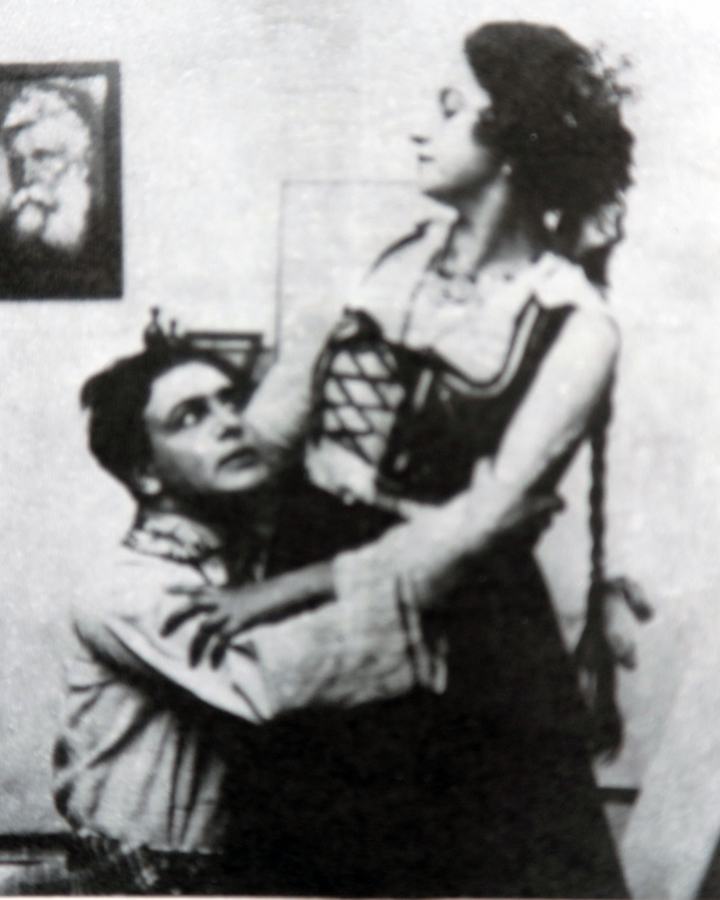
Langhorn Burton, portraying the central artist, delivers a performance of harrowing vulnerability. His depiction of addiction does not rely on the caricature of the 'dope fiend' often found in early cinema, but rather on a quiet, rhythmic decay. There is a palpable sense of the 'lost generation' here, a sentiment echoed in the atmospheric gloom of Shattered. Burton’s character is not merely a plot device for his sister’s salvation; he is a living embodiment of the era’s disillusioned soul, seeking solace in the needle and the glass because the reality of post-war Europe offers no sanctuary.
Walter Summers, a director frequently associated with the gritty veracity of Kitchener's Great Army in the Battle of the Somme, brings a surprisingly lyrical touch to the Parisian underworld. The cinematography eschews the bright, flat lighting of contemporary American imports like A Perfect 36, opting instead for a textured, almost tactile atmosphere. The artist's studio is a masterpiece of set design—cluttered with half-finished canvases that mirror the protagonist’s own incomplete life. It feels lived-in, smelling of turpentine and stale smoke, a far cry from the sanitized domesticity of Where Is My Wife?.
The narrative pacing, while occasionally beholden to its theatrical origins as a play by Louis Verneuil, manages to sustain a tension that is both psychological and social. The central conceit—the artist taking the fall for his sister’s lover—is a classic 'sacrifice' plot, yet Summers elevates it by complicating the moral landscape. We are forced to ask: is this sacrifice an act of pure love, or is it the artist’s final, desperate attempt to find meaning in a life he has already surrendered to his demons? This thematic ambiguity reminds one of the complex moral quandaries in Oltre l'amore.
Isobel Elsom, as the sister, provides the necessary emotional anchor. Her character is trapped between the rigid expectations of her marriage and the illicit passion that threatens to undo her. Elsom avoids the tropes of the 'damsel in distress,' instead projecting a woman paralyzed by the sheer weight of societal judgment. The film serves as a scathing critique of the double standards of the 1920s elite—where a woman’s reputation is a fragile glass ornament, and a man’s addiction is a convenient tool for absolution. This social commentary is far more biting than the standard fare found in The Exiles or the lightheartedness of The Handy Man.
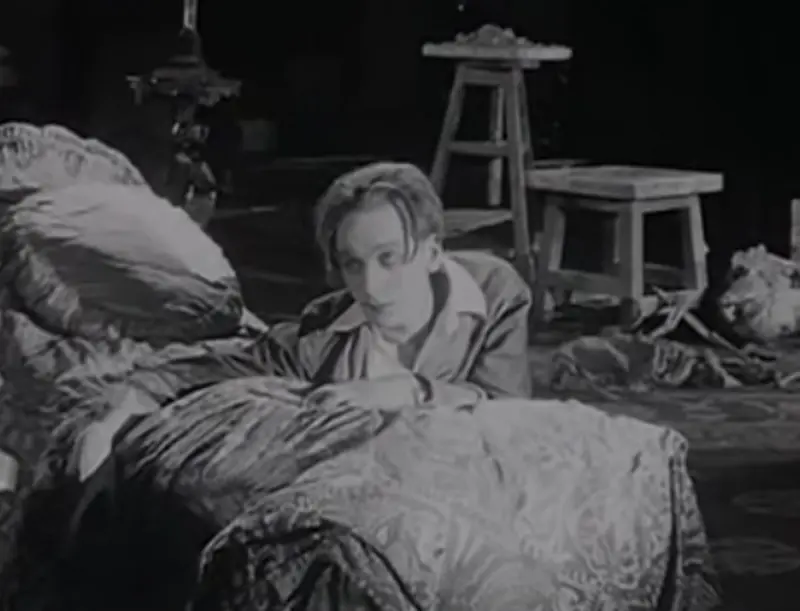
The interaction between the siblings is the film's beating heart. There is a tragic irony in the fact that the 'addict,' the man society has deemed worthless, becomes the savior of the 'respectable' sister. This inversion of moral hierarchy is a recurring theme in European silent cinema, particularly in the Hungarian school represented by Az utolsó bohém. It challenges the audience to look past the surface of 'vice' and 'virtue,' a task as difficult today as it was in 1924.
The screenplay, co-written by Summers and Verneuil, manages to condense the dialogue-heavy play into a series of potent visual metaphors. The use of intertitles is sparse but effective, allowing the actors’ physiognomy to carry the narrative burden. In an era where many films relied on convoluted plots—such as the labyrinthine A Child of Mystery—'Who Is the Man?' benefits from its singular, focused trajectory. It is a slow burn that culminates in a finale of profound emotional resonance, avoiding the tidy, saccharine endings of From Dusk to Dawn.
Furthermore, the film’s exploration of 'hoarded secrets'—not unlike the material obsession in Hoarded Assets—adds a layer of suspense. The 'Man' of the title is not just a person, but a symbol of the hidden truths we all carry. The artist becomes a repository for the sins of others, a human vessel of atonement. This elevates the film from a mere 'weepy' to a genuine piece of art-house cinema that predates the formalization of that genre.
When compared to the racial and social tensions of The Sport of the Gods, 'Who Is the Man?' feels more insular, yet no less significant. It deals with the internal colonization of the mind by addiction and the external colonization of the self by family duty. It lacks the sweeping vistas of A Daughter of the West, but its claustrophobic interiors serve as a more effective mirror for the characters’ psychological states. The film is a masterclass in using space to denote emotional entrapment.
In conclusion, 'Who Is the Man?' stands as a testament to the sophistication of early 1920s British and French co-productions. It is a film that demands to be viewed not just as a historical curiosity—the 'Gielgud debut'—but as a searing piece of drama that remains relevant. It captures a specific moment in time when the world was reeling from trauma and seeking answers in the bottom of a bottle or the stroke of a brush. It is a haunting, evocative work that lingers in the mind long after the final frame has flickered out, proving that the silent screen was more than capable of articulating the loudest of human agonies.
This review was penned by a critic who believes that every frame of silent film is a ghost trying to tell us a truth we have forgotten. 'Who Is the Man?' is one of the most eloquent ghosts you will ever meet.

IMDb —
1923
Community
Log in to comment.