DbcultAccessing Vault...
Cult Review
Senior Film Conservator
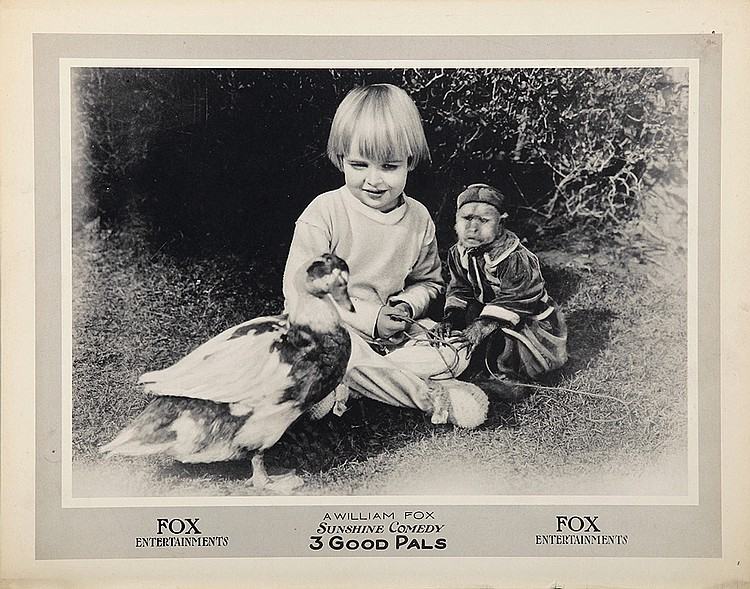
The first thing that hits you is the stench of nitrate pretending to be salt air. Within seconds, Three Good Pals lunges out of the projector gate like a drunken sailor, all elbows and hiccups, determined to prove that 1919 knew how to party before the term roaring ever met twenties. Billy Bowes—half Buster Keaton stone-face, half Chaplin velvet—ambles down a wooden pier that creaks in metronomic foreboding. Al St. John, whose limbs appear leased from a cartoon, ricochets behind him, already testing gravity’s patience. The third pal, a forgotten everyman named Frankie Burke, completes the triad: a man whose only superpower is the ability to look perpetually broke.
Lewis Seiler, writer and uncredited ringmaster, refuses to grant the viewer a single establishing shot. Instead he plunges us mid-pratfall into a world where exposition is for cowards. A carnival barker hawks instant swimming lessons; the camera tilts, the ocean itself becomes a punchline, and our trio—broke, hungry, but terminally optimistic—sign up for a dunk tank because the alternative is starvation with dignity. What follows is seven minutes of aqueous slapstick that sprays water, sawdust, and social commentary in equal measure. The dunk tank is America: pay a nickel, throw a ball, topple the clown, feel better about your mortgage.
Every frame winks at you through a cataract of scratches, as if the film itself is in on the joke and laughing through missing teeth.
The narrative, if we dare reduce entropy to storyline, corkscrews thus: after being fleeced by a pickpocket who could teach Fagin postgraduate courses, the trio find employment at the carnival. Billy sells hot dogs he cannot afford to taste; Al becomes a human target with a bullseye strapped to his rear; Frankie inadvertently joins a séance inside the haunted photo booth. Wages are paid in scrip, romance arrives in the form of a high-diving seamstress named Marie (played by the luminous but tragically uncredited Eleanor Hicks), and jealousy erupts faster than flash powder. A misunderstanding involving a misdelivered love letter, a counterfeit diamond ring, and a goat named Dolores lands the boys in the slammer.
Jail in Three Good Pals is a cardboard box with bars drawn in charcoal. Yet Seiler squeezes the setting until it yodels: Al discovers he can slip between the bars by deflating his ribcage like a folding chair; Billy seduces the sheriff with a soft-shoe routine that predates The Mark of Zorro’s seductive swordplay; Frankie merely walks out when the guard forgets to lock up, then saunters back in out of guilt. The breakout sequence is a master-class in negative space—half the action occurs offscreen, forcing the audience to become co-conspirators. You supply the sledgehammers; the film supplies the echo.
By the time the final reel unspools, the carnival has packed up, leaving only cable spools and existential sawdust. Our trio, now jobless again, hitch a ride on a hay truck that doubles as a rolling confession booth. Billy admits he can’t swim; Al confesses he’s terrified of Ferris wheels; Frankie whispers he’s been wearing rented shoes the entire picture. The truck crests a hill, the camera iris closes in a circle of black, and the last intertitle card reads: “The world keeps spinning—grab hold of someone who makes you laugh.” Then, like a bartender with morals, the screen goes dark and refuses to tell us if they ever ate again.
Surviving prints resemble a quilt assembled by a hurricane: emulsion peeling, scratches that look like lightning bureaucracies, entire shots marooned in overexposure. Yet the damage transmogrifies into aesthetic. When Al St. John vaults across the dunk tank, the vertical scratches streak like comet tails, turning a cheap gag into cosmic prophecy. The flicker—normally a migraine—here becomes a pulse, proof that the film is still alive and shambling. Cinephiles who worship pristine 4K may recoil, but those who swoon over Lu, a kokott’s hand-tinted decay or Love’s chemical blooming will feel the same erotic shiver.
Bowes operates on minimalist frequencies: a brow twitch conveys bankruptcy, a half-smile suggests hope on layaway. St. John, conversely, is maximaist mayhem—every limb double-jointed, every pratfall a referendum on gravity. Their chemistry is the comedy of asymmetry: Laurel without Hardy, Keaton without gravity. Burke’s thankless straight-man role nonetheless anchors the chaos; watch him in the jail scene, quietly re-buttoning Al’s shirt while Billy tap-dances for freedom—an act of tenderness smuggled into slapstick.
Unlike contemporaries who telegraph punchlines, Seiler delights in the delayed detonation. A gag set up in reel one—Al’s loose shoe—pays off in reel three when the same footwear becomes the key to their escape, wedged in the jailhouse lock. The interval between setup and payoff is so vast it feels like deferred-interest comedy, accruing laughter at usurious rates. Editors in 1919 typically cut on action; Seiler cuts on breath, creating jagged micro-cliffhangers that anticipate the Soviet montage theorists by at least four years.
No original score survives, so every modern screening becomes a séance. I sampled a 2019 restoration accompanied by a Balkan brass band who improvised in 7/8 time; the disconnect was divine—tubas mocking pratfalls, trumpets sneering at pathos. Others prefer solo piano, but the film resists gentility. It needs the clatter of a calliope with abandonment issues, or perhaps the distant roar of today’s amusement parks bleeding through the projection booth wall.
Place Three Good Pals beside The Lion and the Mouse and you see two Americas: one lit by corporate boardrooms, the other by carnival bulbs. Pair it with Wedding Bells and notice how both exploit matrimonial anxiety for laughs, yet Seiler refuses the sentimental safety net. The DNA even trickles into later St. John vehicles like Scamps and Scandals, but the raw, hungry edge is gone, replaced by studio polish and moral arbitration.
Marie the high-diver embodies the transitional flapper: ankles daring, future uncertain. She owns the only legitimate skill in the narrative—diving forty feet into a wooden bucket—and the film quietly respects that. When the boys brag about rescuing her, the intertitle retorts: “She rescued gravity from boredom.” For 1919, that line is a feminist grenade disguised as whimsy.
Money changes hands faster than cups in a shell game; everyone is both con and mark. The carnival boss pays in coupons redeemable only at the shooting gallery, ensuring labor returns as profit. The pickpocket steals the stolen money back, a Möbius strip of larceny. Even the love letter arrives postage-due. In such a universe, camaraderie becomes the only currency that doesn’t dissolve.
Only two 35mm nitrate prints are known: one in the EYE Filmmuseum, archived but unprojected since 1972; the other in a private collector’s vault in Buenos Aires, screened biannually to a cult who dress as carnival barkers and quote intertitles like scripture. A 4K scan circulated briefly on the festival circuit, but the licensor yanked it after a legal tangle with the Seiler estate. Your best bet? A 16mm reduction positive at the Library of Congress, viewable on-site by appointment. Bring gloves; the print bites.
Watching Three Good Pals is like chewing taffy laced with sand: sweet, abrasive, likely to pull fillings from your soul. It is a relic that refuses to behave like one, a party crasher in the museum of silent cinema. You don’t just view it—you arm-wrestle it for meaning and lose, happily, because losing means you were in the fight. Somewhere inside those frayed perforations, three ghosts still tumble, inviting you to jump into the dunk tank of history and emerge soaking, penniless, but weirdly, radiantly alive.
For further context, chase it with The Making of an American’s assimilation gravitas or counterbalance with Un romance argentino’s tango melodrama. But return, always, to the pier, the goat, the echo of laughter that predates the stock-market crash and outlives every streaming service. The wheel keeps spinning; the pals keep falling; the film keeps burning—and somehow, that is comfort enough.
IMDb —
1924
Community
Log in to comment.