DbcultAccessing Vault...
Cult Review
Senior Film Conservator
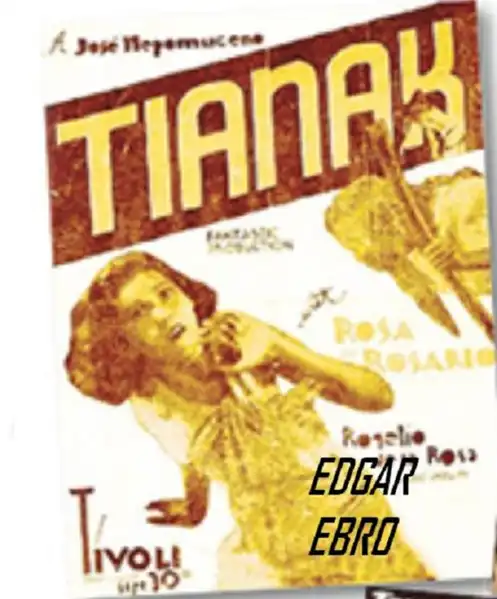
Alright, let’s talk about Tianak. Is it worth digging up today? Well, if you’re a film history buff, or someone who loves seeing how different cultures approached horror in the early days of cinema, then absolutely. It’s a fascinating look at early Filipino filmmaking, with some genuinely *creepy* ideas. But if you’re expecting modern jump scares or slick CGI, you’ll probably find it a bit of a snooze. This one’s for the patient viewers, the ones who appreciate a slow burn and some old-school charm. Others might just get frustrated by the pacing. 🕰️
The story kicks off with a couple, very much the picture of innocent happiness. Rogelio de la Rosa, with his perpetually earnest gaze, and Rosa Del Rosario, who just glows. They find a baby. Just… a baby, left alone in the woods. Now, any horror fan knows this is where you run. You do *not* pick up the mysterious, abandoned baby. But they do. And that’s where things start to get wonderfully, agonizingly wrong.
The initial moments after they bring the infant home are all sweetness. But there’s always this *undercurrent*. You can almost feel the movie trying to whisper, “_something is not right here_.” The way the camera lingers on the baby’s face, for just a beat too long, it sets you on edge even before anything truly spooky happens. It’s effective, that subtle unease.
Then, the whispers start. The local folk, they know things. They try to warn our sweet couple, but love, or maybe just plain stubbornness, makes them deaf. There’s a scene with an old woman, her face etched with concern, trying to explain the dangers of the ‘tianak’ – a creature from local folklore. Her warnings are brushed aside. **Big mistake.**
When the creature finally shows its true colors, it’s… well, it’s a product of its time. The special effects aren’t exactly subtle. The baby puppet, or whatever they used, has this *jerky* motion that’s both a little funny and kinda unsettling. It’s not graceful, not smooth. It just *moves*, abruptly. And that’s what makes it work in a weird way. It feels unnatural.
There’s a particular shot where the camera is low to the ground, almost from the baby’s perspective, as it crawls towards someone’s feet. It’s a really clever bit of framing for a film this old. You don’t see the whole monster, just enough to know it’s *there*. That negative space really lets your imagination do the work.
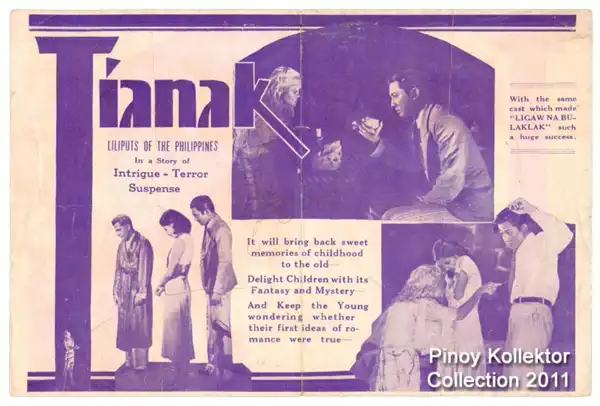
Rogelio de la Rosa’s gradual realization that his beloved child is a demon is quite something. He doesn't go from blissful father to frantic monster-hunter in one jump. It’s a slow burn of disbelief turning to horror. You see the doubt in his eyes, then the fear. It feels *earned*.
And Rosa Del Rosario? Her character goes through such a transformation. From loving mother to a woman utterly terrified and desperate. Her screams, when they come, are raw. You feel that. The movie gets noticeably better once it stops taking its sweet time and really leans into the terror. The last 20 minutes are a frantic chase, a real rollercoaster by 1930s standards.
The scene where the tianak reveals its *full* form is a moment. It’s not subtle. It's almost theatrical, like something out of a stage play. The sudden growth, the sharp teeth. It's a clear signal: **no more pretending.**
"The scene goes on about 20 seconds too long, and the silence starts to feel awkward rather than emotional... but then something happens, and you realize it was all building up to that one *sharp* sound."
This film really knows how to use darkness. Not just shadows, but genuine, inky blackness. There are scenes where you can barely make out what’s happening, and it makes you lean in. The uncertainty is the real fright here. It’s not just a creature feature; it’s a story about the destruction of innocence, and how quickly joy can turn to dread. The ending, without giving anything away, is pretty bleak. It doesn't pull any punches, which is kinda bold for a film of this era. It leaves you with a feeling of unease, long after the credits roll.
It’s not perfect, not by a long shot. Some dialogue feels a bit stiff. And yes, some scenes definitely drag. But for a piece of cinematic history, especially one so rooted in local folklore, it’s absolutely worth a look. It's got heart, it's got genuine scares for its time, and it’s a reminder that good horror doesn't always need a massive budget. It just needs a good story, and maybe a really creepy baby. 😉
IMDb —
1935
Community
Log in to comment.