DbcultAccessing Vault...
Cult Review
Senior Film Conservator
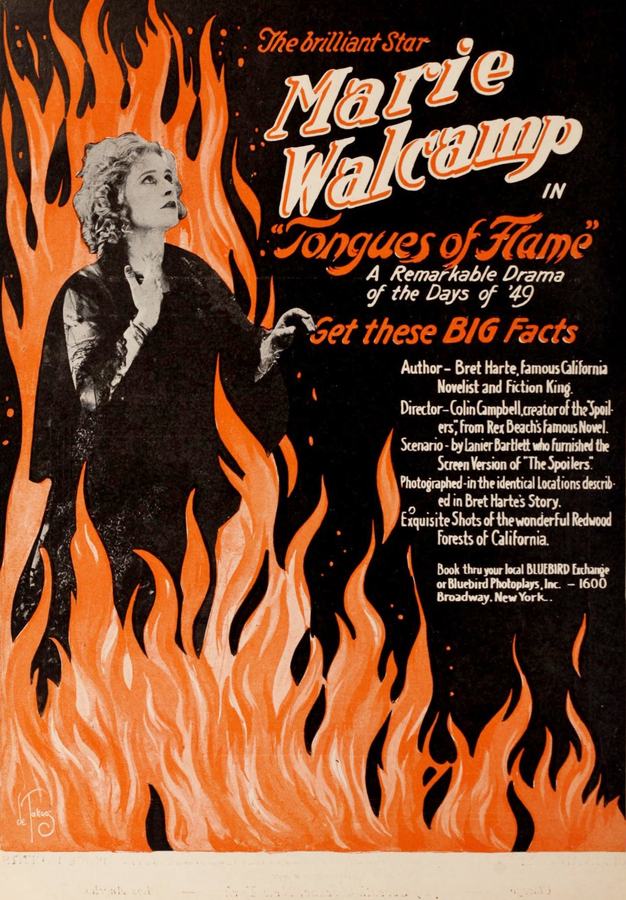
Ah, the silent era! A time when narratives were painted with broad strokes of emotion, where the grand gestures and poignant glances spoke volumes beyond mere dialogue. Among the myriad cinematic offerings of this formative period, Tongues of Flame emerges as a particularly potent concoction of human frailty, primal passion, and the indomitable power of the natural world. It’s a film that, despite its age, still crackles with an intensity that belies its lack of spoken words, a testament to the enduring power of visual storytelling and the raw magnetism of its lead, Marie Walcamp.
At its core, Tongues of Flame plunges us into the tumultuous life of a dance-hall girl, a creature of vibrant energy and volatile affections. Her existence, a kaleidoscope of fleeting joys and crushing disappointments, is abruptly shattered by an act of jealous rage. This isn't a measured, calculated crime; rather, it's the eruption of a soul pushed to its limits, a visceral response to betrayal that resonates with the desperate, all-consuming love often depicted in early cinema. The initial act itself, though brutal, serves as a catalyst, propelling our protagonist into a harrowing journey that strips away the superficialities of her life, exposing the bare bones of her character.
Marie Walcamp, a formidable presence in early cinematic serials and features, brings a compelling intensity to this unnamed woman. Her portrayal eschews simple villainy, instead imbuing the character with a tragic humanity that makes her flight from justice not merely an escape, but a desperate quest for survival and, perhaps, a sliver of redemption. One might draw parallels to the raw emotionality found in films like My Madonna, where a woman’s desperate circumstances drive her to extreme measures, or even the intense, often destructive passions explored in Herod. Walcamp’s ability to convey a whirlwind of emotions—despair, defiance, fear, and a nascent hope—without uttering a single word is nothing short of masterful. It's a performance that anchors the film, making her plight deeply felt.
The escape sequence is handled with a palpable sense of urgency. The sheriff, portrayed with stoic determination by Gayne Whitman, becomes a relentless, almost elemental force of law and order. His pursuit is not just a chase; it represents the societal consequences that inevitably follow transgressive acts. Yet, the true antagonist, or perhaps the ultimate arbiter, reveals itself to be the wilderness itself. Our protagonist, driven by instinct, flees into the colossal embrace of a redwood forest, a setting that instantly elevates the film beyond a simple crime drama.
Here, amidst the ancient giants, she stumbles upon an unexpected sanctuary: the hollowed-out abode of a recluse, played by Alfred Allen. Allen's presence lends a rugged authenticity to the role, embodying the solitary existence of a man who has chosen to live on the fringes of civilization. This unlikely pairing—the desperate fugitive and the hermitic woodsman—forms the emotional core of the film's middle act. Their interactions, initially marked by suspicion and fear, gradually evolve into a hesitant understanding, a shared acknowledgment of their mutual vulnerability in the face of the vast, indifferent forest. This dynamic echoes the themes of unexpected human connection found in films like The Wall Between, where disparate individuals are forced to bridge divides.
Just as the tension between the girl, the recluse, and the pursuing sheriff reaches a fever pitch, the narrative introduces its most spectacular and terrifying element: a raging forest fire. This isn't merely a plot device; it's a character in itself, a destructive force that obliterates all pre-existing moral boundaries and personal vendettas. The 'tongues of flame' become a metaphor for purification, for the leveling of all human distinctions in the face of absolute peril. The visual spectacle of the fire, especially for its time, must have been breathtaking, even harrowing. The filmmakers, under the guidance of writers Lanier Bartlett and Bret Harte, understood the dramatic potential of such a natural disaster, using it to forge an undeniable, primal connection between the disparate characters.
The cinematography, though limited by early 20th-century technology, effectively conveys the encroaching danger. Shadows dance menacingly, smoke billows across the screen, and the sheer scale of the redwoods provides a stark contrast to the vulnerability of the human figures scrambling beneath them. One can imagine the logistical challenges of filming such a sequence, adding another layer of appreciation for the creative ambition behind Tongues of Flame. The use of natural elements as a formidable adversary can be seen in other films of the era, such as A Daughter of the Old South, where characters frequently contend with the harsh realities of their environment.
The climax of the film sees the sheriff, the girl, and the recluse forced into an uneasy alliance against the inferno. The relentless hunter must now collaborate with his quarry, their shared humanity overriding the dictates of law and vengeance. This powerful shift in dynamic is where the film truly shines, exploring themes of shared struggle and the fundamental instinct for survival. It’s a compelling argument for the notion that in the face of overwhelming odds, our commonalities often outweigh our differences. The performances here, particularly from Walcamp, Allen, and Whitman, achieve a remarkable synergy, conveying the raw fear, desperate courage, and nascent trust that binds them. Supporting cast members like Hugh Sutherland, Lillian Clark, and J.P. Wild, while perhaps having smaller roles, undoubtedly contributed to the overall atmosphere of peril and desperation.
The tension is masterfully built, not just through the visual drama of the fire, but through the understated interactions between the characters. A glance, a gesture of assistance, a shared moment of exhaustion—these are the building blocks of their temporary truce. This narrative arc, where adversaries are united by a greater threat, is a timeless storytelling device, one that resonates deeply. It elevates the film beyond a simple chase picture, imbuing it with a moral complexity that lingers long after the credits roll. One might recall the collective struggle against overwhelming odds in a film like The Struggle, or the forced camaraderie in The Secret Seven, although Tongues of Flame uses nature itself as the ultimate unifier.
Lanier Bartlett and Bret Harte's narrative, though adapted for the screen, retains a certain literary quality, a sense of grand drama unfolding against an epic backdrop. Their combined storytelling prowess likely contributed to the film's robust structure and compelling character arcs. The film's ability to sustain such high emotional stakes and visual spectacle without dialogue is a powerful reminder of the artistry inherent in silent cinema. It forces the audience to engage more deeply, to interpret every facial expression, every body movement, every camera angle. This active participation creates a uniquely immersive experience, one that modern cinema, with its reliance on dialogue and sound, sometimes struggles to replicate.
The enduring appeal of Tongues of Flame lies not just in its thrilling plot, but in its exploration of universal themes: love, jealousy, justice, survival, and the profound, often humbling, relationship between humanity and the natural world. It's a film that speaks to the wildness within us, and the wildness without. For those interested in the foundational works of cinema, or simply in a gripping tale well told, Tongues of Flame offers a rich, unforgettable experience. It stands as a vibrant example of how early filmmakers harnessed the nascent power of the medium to craft narratives of profound impact, proving that some stories, like a forest fire, leave an indelible mark long after they've passed.
Beyond the immediate narrative, Tongues of Flame provides a fascinating window into the technical and artistic ambitions of early 20th-century filmmaking. The scale of the production, particularly the depiction of the forest fire, indicates a significant investment of resources and ingenuity. Capturing such destructive natural phenomena on film, often without the safety nets of modern special effects, was a perilous endeavor, highlighting the dedication of the cast and crew. This commitment to realism, even at great risk, is a hallmark of many pioneering cinematic works. Consider the daring stunts and practical effects in films like Borgkælderens mysterium or One Million Dollars, which similarly pushed the boundaries of what was achievable on screen.
The direction, which skillfully balances intimate character moments with sweeping landscape shots, is another element worth commending. The camera isn't merely a passive observer; it actively participates in the storytelling, guiding the viewer's eye, emphasizing emotion, and conveying the vastness of the natural setting. The use of intertitles, the textual explanations interspersed throughout the film, is judicious, providing necessary context without overwhelming the visual narrative. This careful balance ensures that the film's pace remains engaging, allowing the audience to be swept along by the unfolding drama without feeling lost.
The psychological depth afforded to the characters, particularly Walcamp's dance-hall girl, is also noteworthy. Silent films often relied on archetypes, but Tongues of Flame strives for something more nuanced. Her journey from impulsive murderer to desperate survivor, and eventually to a participant in a collective act of bravery, represents a significant character arc. This transformation, conveyed through subtle changes in posture, expression, and interaction, speaks volumes about the human capacity for growth and adaptation under duress. The recluse, too, evolves from a figure of isolated stoicism to one of reluctant compassion, demonstrating how extraordinary circumstances can break down even the most entrenched personal barriers.
Ultimately, Tongues of Flame is more than just a thrilling adventure; it's a profound meditation on the human spirit's resilience when confronted by overwhelming forces. The forest fire, while a literal threat, also serves as a potent symbol for the internal fires of passion, guilt, and the burning desire for survival. It purifies, destroys, and ultimately leaves behind a landscape forever changed, much like the characters themselves. The film's conclusion, without giving away specifics, offers a powerful resolution that resonates with the hard-won wisdom gained through adversity. It suggests that while justice may have its own path, sometimes the most profound judgment comes from the crucible of shared experience and the stark realities of life and death.
In a cinematic landscape that often celebrated grand heroes and clear-cut villains, Tongues of Flame presents a more ambiguous, yet ultimately more human, narrative. It reminds us that even those who commit grave errors are capable of redemption, and that in the face of nature’s awesome power, all human beings are fundamentally equal. Its impact continues to burn brightly, a testament to the timeless power of storytelling and the indelible mark left by its fiery narrative and compelling performances. It's a film that deserves to be rediscovered and appreciated for its bold vision and enduring emotional resonance, standing proudly alongside other cinematic explorations of intense human drama and the untamed wild.
IMDb 5.3
1933
Community
Log in to comment.