DbcultAccessing Vault...
Cult Review
Senior Film Conservator
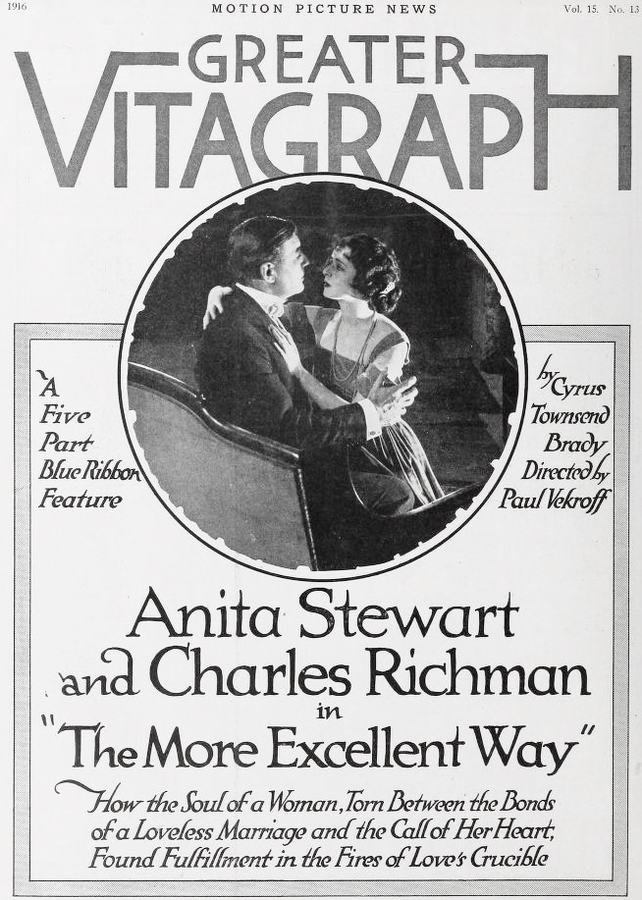
The silent era, often dismissed by casual viewers as a quaint precursor to modern cinema, was in fact a fertile ground for profound human drama, exploring intricate moral quandaries with a visual eloquence that few contemporary films dare to emulate. The More Excellent Way, a compelling narrative crafted by the minds of Garfield Thompson and Cyrus Townsend Brady, stands as a testament to this period's capacity for nuanced storytelling. It's not merely a love triangle; it’s an exhaustive psychological exploration of commitment, disillusionment, and the arduous path to self-knowledge, all unfolding against a backdrop of societal expectations and personal failings.
At its core, the film presents Chrissey Desselden, portrayed with a delicate yet palpable emotional arc by Anita Stewart, as a woman caught between two vastly different archetypes of masculinity. On one side stands John Warburton, embodied by the dignified Charles Richman, a figure of unwavering rectitude and profound patience. He is her guardian, her protector, and eventually, her husband by promise. On the other, we have Robert Neyland, brought to life with a captivating if ultimately sinister charm by Rudolph Cameron, a character who epitomizes the allure of the forbidden, the dangerous romanticism that often masquerades as passion. The immediate conflict is clear: the sensible, secure choice versus the intoxicating, perilous one. Yet, the film delves far deeper than a simple choice, charting Chrissey’s tumultuous journey through infatuation, regret, and ultimately, a hard-won maturity.
Chrissey’s initial fascination with Neyland is entirely understandable within the dramatic conventions of the period, and indeed, within the timeless complexities of human attraction. He represents a departure from the measured stability offered by Warburton. His very unworthiness, paradoxically, might have held a certain magnetic pull for a young woman perhaps unaccustomed to the sharper edges of life. It’s a classic narrative device, echoing the thematic undercurrents found in other dramas of the era where societal expectations clash with personal desires. One might draw parallels to the spirited protagonists in films like Gloria's Romance, where a woman's heart is similarly swayed by forces beyond conventional wisdom, or even the darker implications of choice seen in Damaged Goods, though the moral stakes here are distinctly personal rather than public health. The filmmakers, Garfield Thompson and Cyrus Townsend Brady, demonstrate a keen understanding of this psychological vulnerability, carefully constructing Neyland not as a cartoonish villain, but as a plausible, albeit deeply flawed, object of desire.
The eventual disillusionment, triggered by Neyland's 'misconduct,' is the narrative's first crucial turning point. It's the moment the veil lifts, revealing the true nature of his character—a necessary, if painful, step in Chrissey's awakening. This narrative beat is handled with commendable restraint, allowing the audience to infer the depth of Neyland's transgression through Chrissey's visceral recoil. Anita Stewart's portrayal here is key, conveying a profound sense of betrayal and shattered idealism through her expressions and gestures, a hallmark of powerful silent film acting. It solidifies her turn back to Warburton as a choice born not of passion, but of a newfound appreciation for integrity and stability, a poignant commentary on the often-conflicting desires of the heart and the mind.
The immediate aftermath of Chrissey and Warburton’s wedding provides some of the film’s most intriguing dramatic territory. Her plea to Warburton—to treat her 'still as a child until she knows her own heart'—is a remarkable moment of vulnerability and candor, and Warburton’s consent is an even more striking act of magnanimity. This decision elevates Warburton beyond a mere romantic rival, casting him as a figure of almost saintly patience and understanding. It speaks volumes about the depth of his affection and his profound respect for Chrissey's agency, even if that agency is still in its nascent stages. This unconventional arrangement sets the stage for the subsequent, and arguably more complex, moral dilemmas.
This period of chaste cohabitation is a narrative tightrope walk, fraught with potential for melodrama, yet handled with a surprising degree of psychological realism for a film of its time. It underscores the idea that marriage, particularly in an era where women's roles were more rigidly defined, was not merely a romantic union but a societal contract that required emotional and intellectual buy-in. Chrissey’s internal struggle during this period is palpable, even without spoken dialogue. Her quest to 'know her own heart' is a universal journey, one that resonates deeply even today, highlighting the film's timeless thematic relevance. The quiet dignity of Charles Richman as Warburton here is particularly effective, conveying an inner strength and a profound, almost tragic, hope that his wife will eventually come to truly love him.
The narrative takes another audacious turn with Chrissey's renewed conviction that she loves Neyland, despite his continued descent down the social ladder. This re-engagement with her past folly is perhaps the most challenging aspect of Chrissey’s character for a modern audience to fully embrace, yet it is crucial for the film's exploration of human fallibility and the often-irrational nature of desire. It suggests a lingering immaturity, a romanticized notion of love that prioritizes passion over principle, even when confronted with stark evidence of a partner’s depravity. This decision to outrage her marriage vow, even with Warburton's consent, is a bold move for a film from this period, reflecting a nascent exploration of women's autonomy, albeit one that is ultimately chastened by the narrative's conclusion.
Warburton's consent to her Reno divorce is a pivotal moment, perhaps stretching the bounds of credibility for some, yet it reinforces his almost superhuman capacity for self-sacrifice and his unwavering belief in Chrissey's eventual enlightenment. It’s an act that speaks to a love so profound it allows for the possibility of its own destruction, hoping that true happiness, even if found elsewhere, will prevail. This narrative choice elevates the film beyond a simple melodrama, imbuing it with a tragic grandeur. The journey to Reno, a symbol of liberation and new beginnings for many women of the era, becomes for Chrissey a path fraught with unforeseen perils, a misguided quest for a happiness built on shifting sands.
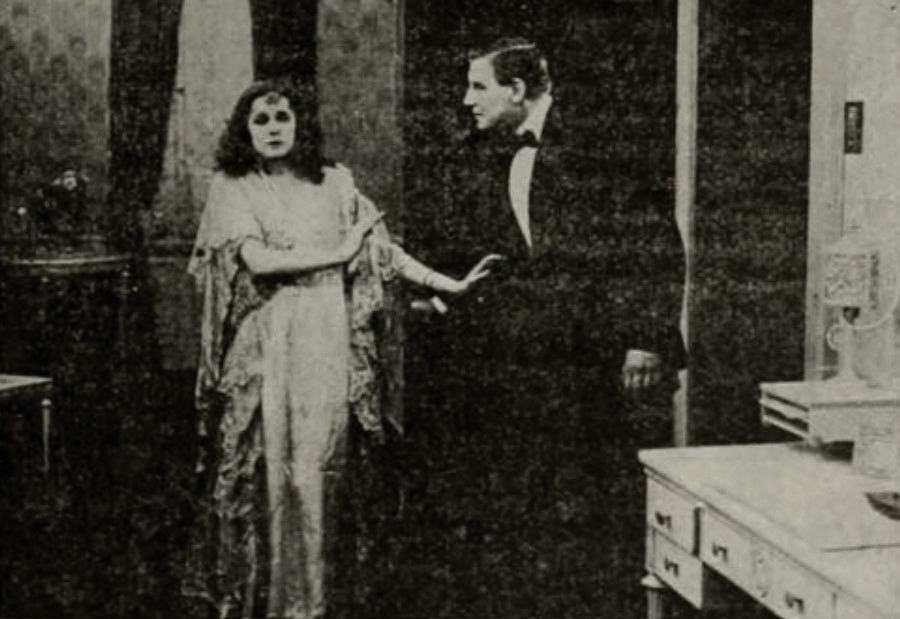
While Chrissey pursues her divorce, Neyland remains, revealing the true depths of his villainy through a plot to financially ruin Warburton. This introduces a layer of external conflict that escalates the stakes dramatically. Neyland’s need for money from Chrissey, which she wires, unwittingly implicates her in his scheme. This is where the film truly emphasizes the consequences of poor judgment and misplaced trust. The audience, having witnessed Neyland’s earlier misconduct, is not surprised by his treachery, but the scale of his perfidy—targeting Warburton’s financial well-being—adds a chilling dimension to his character. One might consider the financial machinations here alongside films like Tainted Money, where monetary greed similarly drives destructive plots, or even the more personal ruin depicted in A Man's Law.
The revelation of Neyland’s treacherous purpose is Chrissey’s ultimate crucible. It is the moment where her romantic illusions are not merely bruised but utterly shattered, revealing the stark, ugly truth of the man she thought she loved. This final betrayal is more profound than his earlier 'misconduct,' as it targets not just her heart, but her integrity and the well-being of the man who genuinely cared for her. Her decision to 'throw over Neyland' is not born of a fickle change of heart, but a profound, irreversible awakening to his true, irredeemable nature. Anita Stewart's portrayal of this shattering realization must have been a tour de force, conveying the weight of absolute disillusionment. Neyland’s subsequent demise, a culmination of his troubles leading to the 'one graceful deed of his life by ending it,' serves as a stark, if melodramatic, closure to his destructive presence, reinforcing the moral framework of the narrative.
Chrissey’s return to Warburton marks the narrative’s resolution, not as a retreat, but as an embrace of a more mature, profound love. She has traversed a difficult and often painful journey, learning through bitter experience the distinction between fleeting infatuation and enduring affection, between destructive passion and steadfast devotion. Her initial request to be treated 'as a child' is finally superseded by a readiness to be Warburton’s wife 'in fact,' signifying a complete emotional and intellectual commitment. This conclusion, while perhaps predictable for a film of its era, is earned through Chrissey’s arduous journey of self-discovery. It is a testament to the enduring power of patience, forgiveness, and the idea that true love is often forged in the fires of adversity.
The film, through its exploration of Chrissey's choices, offers a powerful commentary on the nature of 'the more excellent way'—a path not of immediate gratification or fleeting passion, but of integrity, loyalty, and a deep understanding of one's own heart and the hearts of others. It suggests that true happiness and fulfillment are found not in chasing illusory desires, but in recognizing and nurturing genuine connection. The performances, particularly by Anita Stewart and Charles Richman, are crucial in conveying these complex emotional landscapes, relying on the nuanced art of silent acting to communicate internal turmoil and eventual peace. The dramatic weight of their silent exchanges, their glances, and their gestures, carries the film's profound message.
The success of The More Excellent Way owes much to its writers, Garfield Thompson and Cyrus Townsend Brady, who constructed a narrative that, while adhering to the melodramatic sensibilities of the silent era, also managed to imbue its characters with a surprising degree of psychological depth. Their plot structure, with its twists and turns, its moments of profound patience and shocking betrayal, keeps the audience engaged, even as it forces a contemplation of complex moral choices. The pacing, a critical element in silent film, is expertly handled, allowing for moments of quiet introspection alongside bursts of dramatic tension. The directorial choices, though uncredited in the provided details, must have been equally astute, translating the intricate screenplay into a visually compelling and emotionally resonant experience. The use of close-ups to capture the subtle shifts in Chrissey’s expressions, the wider shots to establish the societal context, and the overall rhythm of the editing would have been paramount in delivering the story’s impact.
This film’s exploration of marital duty, romantic longing, and the consequences of one's decisions places it firmly within a rich tradition of silent dramas. It stands alongside other explorations of human folly and redemption, perhaps even touching on themes reminiscent of The Heart of Ezra Greer in its moral earnestness or the grand romantic struggles seen in Amalia. The writers clearly understood the power of a compelling moral dilemma, and they utilized it to drive Chrissey’s journey from naive infatuation to mature understanding. The narrative’s careful construction ensures that each twist, each revelation, contributes to Chrissey's growth, making her ultimate return to Warburton feel not like a surrender, but a conscious, informed choice.
In retrospect, The More Excellent Way offers a fascinating lens through which to view the social mores and dramatic conventions of its time, while simultaneously delivering a narrative that transcends its historical context. Its exploration of a woman's quest for self-knowledge, the complexities of marital commitment, and the enduring power of forgiveness remains as relevant today as it was during the silent era. The film challenges its audience to consider what truly constitutes 'the more excellent way' in matters of the heart and life's profound choices. Is it the exhilarating, yet ultimately destructive, path of passion, or the more arduous, yet ultimately rewarding, journey of integrity and steadfast love? The film’s answer, delivered with quiet conviction, firmly points towards the latter.
The cast, featuring strong performances from Charles Richman, Anita Stewart, Rudolph Cameron, and supporting players like Charles A. Stevenson, Gordon Gray, Katharine Lewis, and Josephine Earle, collectively weaves a tapestry of human emotion that speaks directly to the audience, bypassing the need for spoken dialogue. Their ability to convey complex internal states through gesture, facial expression, and body language is a testament to the unique artistry of silent cinema. Watching this film today is not just an exercise in historical appreciation; it is an engaging encounter with a powerful drama that speaks to universal themes of love, betrayal, and the often-painful path to self-discovery. It reminds us that even without sound, cinema possessed, and still possesses, an unparalleled ability to explore the deepest recesses of the human spirit, offering profound insights into the choices that define our lives.
The enduring appeal of films like The More Excellent Way lies in their capacity to hold a mirror to the human condition, reflecting our follies, our aspirations, and our capacity for both destruction and redemption. It’s a film that demands thoughtful engagement, rewarding the viewer with a narrative that is both emotionally resonant and intellectually stimulating. Far from being a mere historical artifact, it stands as a robust example of silent cinema’s power to tell a deeply human story with elegance and gravitas, prompting contemplation long after the final fade to black.
IMDb 6.7
1931
Community
Log in to comment.