DbcultAccessing Vault...
6.6/10
Senior Film Conservator
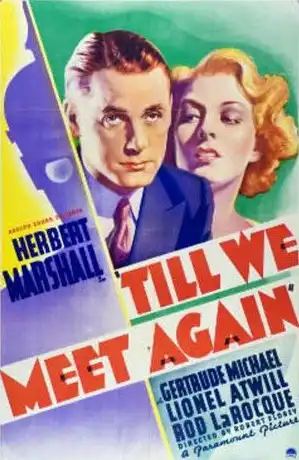
A definitive 6.6/10 rating for a film that redefined the boundaries of cult cinema. Till We Meet Again remains a cornerstone of transgressive art.
Okay, so you’re wondering about Till We Meet Again from way back in 1936. Is it worth digging up today? Well, if you have a soft spot for classic spy thrillers with a side of doomed romance, and don’t mind a slower pace, then yeah, probably. Folks who need explosions every five minutes or super complex plots might find it a bit… gentle, for lack of a better word. It’s for the patient ones, the ones who like to see how old Hollywood tackled a wartime love story.
The film kicks off with Elsa and Alan, all wrapped up in each other in London, August 1914. They’re planning to get hitched, everything’s grand. Then the war happens, just like that. 💥
Elsa, she just disappears. One minute she’s there, the next, *poof*, gone with the wind, leaving Alan heartbroken and confused. It’s a pretty abrupt way to kick things off, but it sets the stage, you know?
Alan, played by Herbert Marshall, he’s got this knack for German. The British Intelligence folks hear about it and basically go, “Well, that’s handy!” and suddenly he’s faking his own death. A bit dramatic, but effective.
He becomes 'Hans Teller,' a shell-shocked German prisoner. Marshall does this thing where he’s always a little dazed, like he’s trying to remember *not* to be his old self. You can almost see him putting on the act, which is kinda neat.
His first mission? Team up with another agent, Carl, to find this big German gun, 'Big Bertha,' that’s just hammering Paris. It’s less high-tech spy craft and more just… figuring things out. They do it too, surprisingly.
Meanwhile, Elsa (Gertrude Michael) pops up again, but not as the sweet fiancée. Nope, she’s a German spy now, very cool and collected, tempting Allied officers in Monte Carlo. Her transformation is pretty striking; she carries herself totally different.
When she’s recalled to Germany, her new assignment is to find the British spy ring. And guess who she bumps into? Our 'Hans Teller.' The moment she sees him, there’s this tiny flicker in her eyes, just a beat. She knows it’s Alan. But she keeps it totally locked down. 🤫
That whole dance, with her knowing and him not knowing that she knows, is where the movie really gets interesting. You’re just waiting for one of them to crack, or for her to give something away. It’s a quiet kind of tension.
There’s this scene where Alan, as Teller, is recounting some made-up story, and Elsa just watches him. Her face is so still, but you can feel the gears turning. She’s processing everything, deciding her next move.
Lionel Atwill plays Ludwig, her superior officer, and he’s *good*. He doesn’t need to shout or make big threats. He just gives these looks, these little head tilts, and you just know he’s suspicious. He’s always watching, like a hawk. 👁️
The pacing overall is definitely for folks who appreciate a slower burn. It’s not trying to rush anything. Sometimes it means you get to really sink into the characters' dilemmas, sometimes you just wish they’d pick up the pace a bit, especially during the travel bits.
The romance itself feels very much of its time. It’s understated, more about longing glances and sacrifices than big declarations. It’s a quiet kind of heartbreak, a very 1930s vibe.
The ending, as they try to make a run for it with Ludwig hot on their heels, it’s not some massive shootout. It’s more about the desperate hope against impossible odds. Will they actually meet again? That’s the big question the film leaves you with. It’s less about the explosions and more about the human cost of war, even in a spy caper.
It’s not a film that’s going to redefine the genre, but it’s a solid little piece of old Hollywood. If you’re into the historical context and don't mind a film that takes its time, you’ll probably find something to appreciate. It's got its charm, even if it feels a little dated in spots. And hey, seeing how they did spy stuff back then is kinda cool. 🕵️♂️
IMDb 4.7
1927
Community
Log in to comment.