DbcultAccessing Vault...
Cult Review
Senior Film Conservator
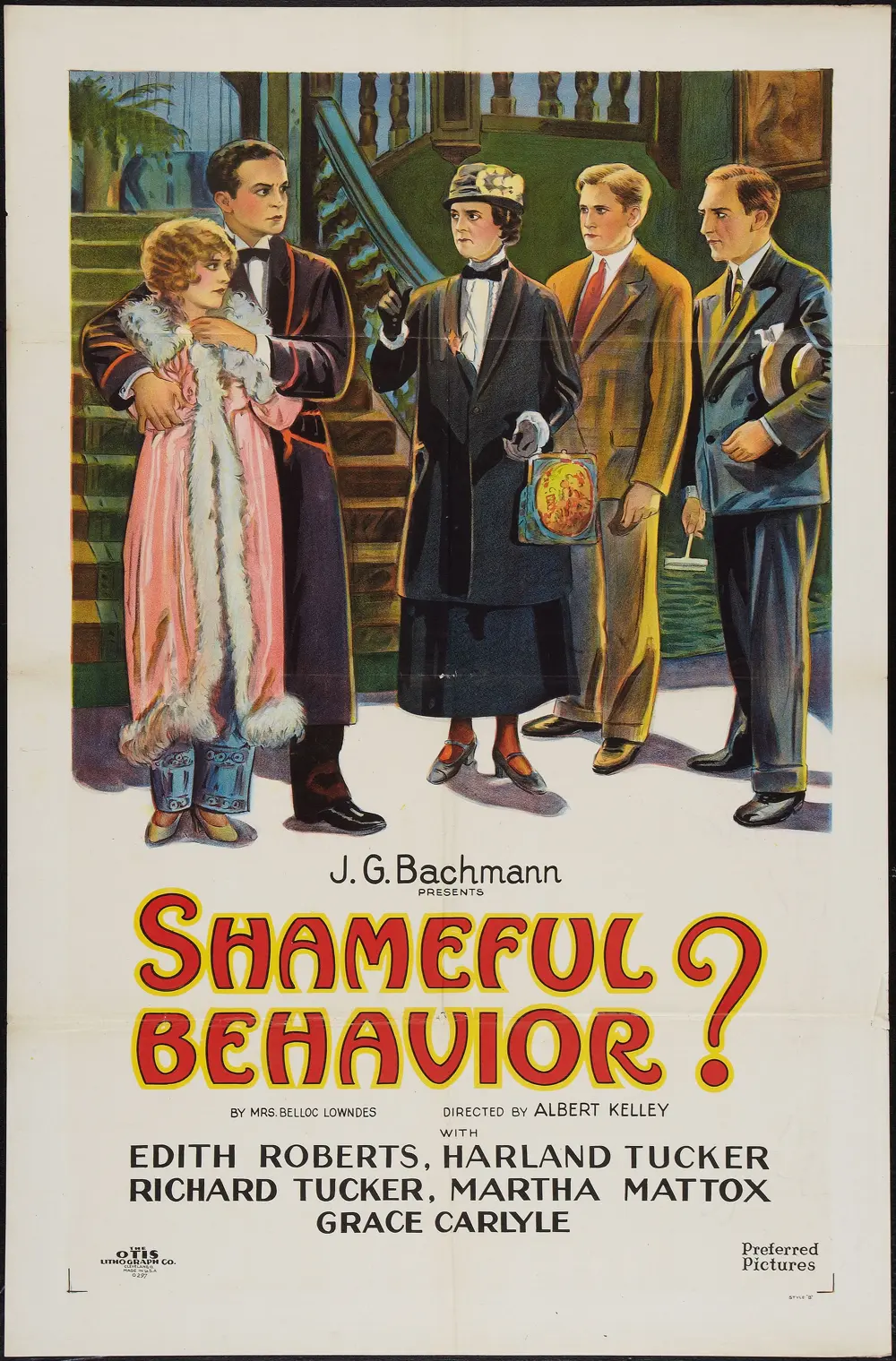
Is 'Shameful Behavior?' worth a watch in the modern era? Short answer: Yes, but only if you have a high tolerance for the manic, logic-defying energy of silent-era social satires. It is a film that thrives on a premise so absurd it would be laughed out of a modern writer's room, yet it possesses a kinetic charm that is hard to ignore.
This film is for the dedicated cinephile who enjoys seeing the early blueprints of the 'manic pixie dream girl' trope. It is NOT for those who demand grounded realism or sensitive depictions of mental health. It is a product of 1926, and it wears its era like a badge of honor, for better and for worse.
This film works because Edith Roberts delivers a performance that is genuinely unpredictable, shifting from a polished socialite to a wide-eyed 'lunatic' with impressive physical comedy.
This film fails because the third-act transition from a domestic farce into a home-invasion thriller feels disjointed and rushed, nearly derailing the comedic momentum.
You should watch it if you are a fan of 'reformation' stories like Fires of Rebellion or if you enjoy the mistaken identity chaos found in Come Out of the Kitchen.
If you are looking for a deep, emotional character study, you will be disappointed. However, as a historical curiosity, it is fascinating. The central conceit—that a woman would pretend to be a dangerous escapee just to get a man to look at her—is undeniably weird. It reflects a time when the 'New Woman' of the 20s was being explored through a lens of both admiration and mockery.
The film moves at a breakneck pace. It doesn't give you time to question the gaping plot holes. It simply demands that you enjoy the ride. For a film nearly a century old, it feels surprisingly vibrant. It is not a masterpiece. But it is fun.
The 1920s 'flapper' was more than just a fashion statement; she was a disruption. In 'Shameful Behavior?', Daphne Carrol represents the ultimate disruption. Her return from Paris isn't just about clothes; it's about a complete psychological overhaul. When she realizes that being 'polished' isn't enough to capture Custis Lee’s heart, she decides to burn the social playbook entirely.
The newspaper error is the catalyst. Jack Lee, the managing editor, is depicted with the typical hard-nosed cynicism of the era's journalists. The mistake of placing Daphne’s photo over the news of Sally Long’s escape is a classic silent film trope. It’s the kind of error that only happens in a world where information moves slowly and consequences are secondary to the plot.
Daphne’s decision to lean into the error is where the film finds its teeth. She doesn't just pretend to be Sally; she performs 'madness' as a form of flirtation. It’s a bizarre choice. In one scene, she enters Custis’s home with an intensity that borders on the grotesque. She disclaims him as her husband, creating a paradox where he must 'humor' her to stay safe. This leads to a series of interactions that are both uncomfortable and hilarious.
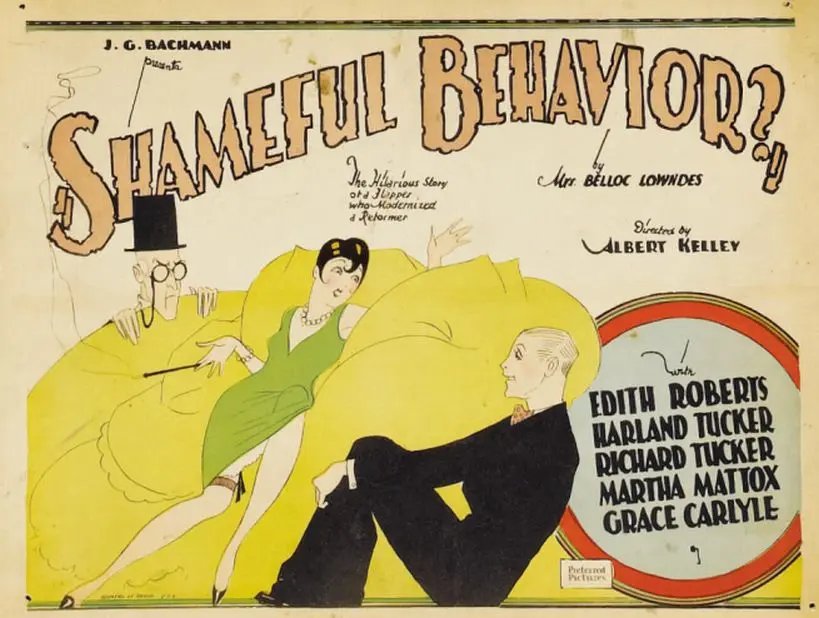
Edith Roberts is the engine of this film. Without her expressive face and athletic movement, the movie would collapse under its own weight. She manages to make Daphne’s borderline-sociopathic plan seem almost whimsical. Her performance reminds me of the energy in The Little Fool, where the female lead must navigate a world of rigid male expectations.
Richard Tucker as Custis Lee plays the 'straight man' with varying degrees of success. He is often sidelined by the sheer chaos Roberts creates. His reaction to Daphne's 'Sally' persona is a mix of terror and paternalistic concern. It’s a dynamic that hasn't aged particularly well, but within the context of 1920s comedy, it functions as a necessary anchor for the absurdity.
The supporting cast, including Martha Mattox and Louise Carver, provides the necessary social friction. They represent the 'old world' that Daphne is rebelling against. Their presence highlights the absurdity of the central plot, acting as the audience's surrogate in their confusion and dismay.
Directorially, the film is standard for the mid-20s. It lacks the experimental flair of some contemporary European cinema, but it is technically proficient. The lighting in the Lee household creates a sense of claustrophobia that aids the 'trapped with a madwoman' vibe. The use of close-ups during Daphne's 'episodes' emphasizes her commitment to the bit.
The pacing is where the film struggles. The first half is a tight, effective comedy of manners. The second half, however, introduces a robbery subplot involving Sally Long’s husband. This shift feels like a desperate attempt to raise the stakes. It turns a psychological farce into a generic melodrama. While the 'merry mix-up' in the climax is entertaining, it feels less earned than the earlier character-driven humor.
Compare this to The Woman from Nowhere, which handles its mystery elements with a bit more tonal consistency. In 'Shameful Behavior?', the shift is jarring. One moment we are laughing at Daphne's antics, and the next, there is a genuine threat of violence. It’s tonally messy. But it keeps you awake.
Beneath the slapstick, there is a cynical commentary on the newspaper industry and social reputation. Jack Lee’s willingness to exploit his own sister-in-law’s return for a 'conspicuous report' speaks to the sensationalism of the era. The fact that a simple printing error can ruin a woman’s reputation—or in this case, allow her to reinvent it—is a potent observation.
The film also touches on the concept of 'performance' in high society. Everyone is playing a role. Daphne is playing the flapper, then the madwoman. Custis is playing the protector. The 'real' Sally Long is playing a nurse. It suggests that identity in the 1920s was a fluid, often dangerous game of masks.
The title refers to Daphne Carrol’s scandalous decision to embrace a false identity as a dangerous asylum escapee. In 1926, such a deception was seen as the height of social impropriety, especially for a woman of her standing. The 'shame' lies in her willingness to abandon her dignity and the truth to secure a marriage proposal.
'Shameful Behavior?' is a fascinating relic. It works. But it’s flawed. It is a film that captures a specific moment in time when the world was changing, and the cinema was trying to keep up. The performance by Edith Roberts is the primary reason to watch. She is magnetic. The plot is a mess, but it’s a fun mess.
If you’ve enjoyed other period comedies like Zonnetje or the lighthearted deception in Broken China, you will find plenty to like here. Just don't expect a moral lesson. This is a film about the lengths people go to for love—or at least for a good laugh. It’s weird, it’s chaotic, and it’s undeniably 1926.
IMDb 7
1928
Community
Log in to comment.