DbcultAccessing Vault...
Cult Review
Senior Film Conservator
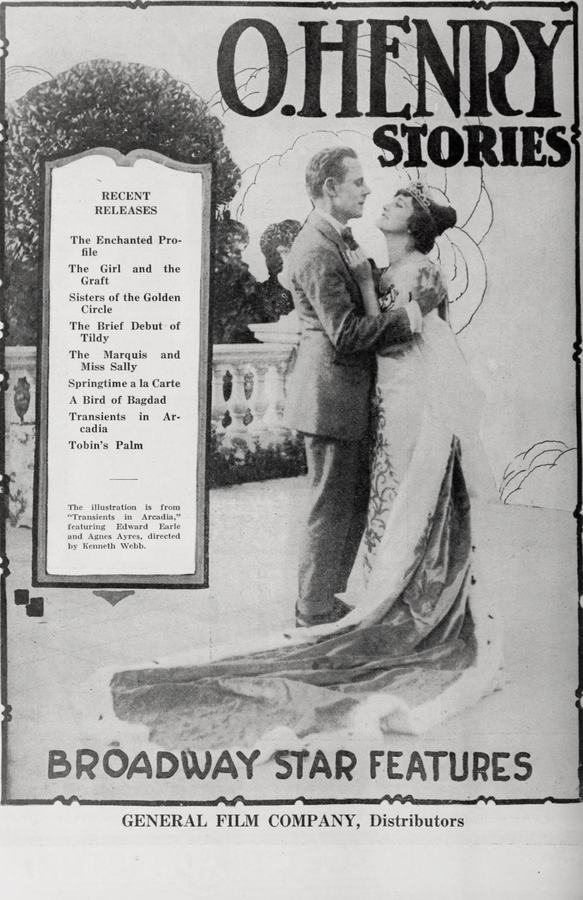
The cinematic tapestry of the silent era, often brushed aside as a mere precursor, holds within its threads a wealth of narrative ingenuity and visual poetry that continues to resonate with contemporary audiences. Among these often-overlooked treasures is 'Tobin's Palm,' a film that, despite its vintage, pulsates with a timeless human drama, deeply rooted in the distinctive narrative voice of O. Henry. It's a testament to the power of visual storytelling, where the absence of spoken dialogue only amplifies the profound expressiveness of its cast and the evocative power of its cinematography.
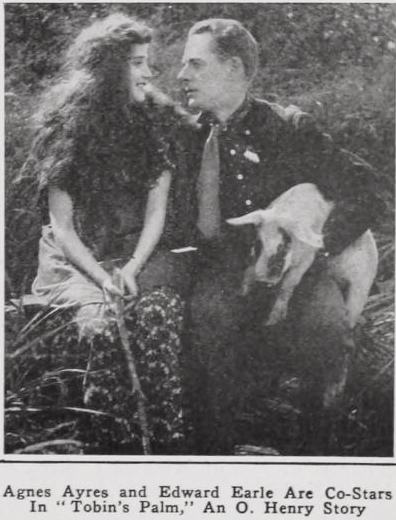
Agnes Ayres, a luminary of her time, delivers a performance as Vera Valmont that is nothing short of captivating. Her portrayal transcends the typical archetypes of the era, imbuing Vera with a complex blend of fragility and resolve. One moment, her eyes, luminous and deep, convey a world-weary sorrow, hinting at a past laden with hardship. The next, a flash of determination flickers, revealing a woman driven by a fierce, almost primal, will to survive. It is a masterclass in non-verbal communication, where every subtle shift in posture, every nuanced glance, speaks volumes. Ayres doesn't just play a character; she inhabits Vera, making her motivations, however morally ambiguous, utterly comprehensible and, indeed, strangely sympathetic. Her Vera is not a one-dimensional villainess, nor a damsel in distress, but a fully realized individual navigating a treacherous world with the only tools she possesses: wit, charm, and a deceptive façade. This layered portrayal is a significant reason why 'Tobin's Palm' retains its grip on the viewer, long after the final frame.
Edward Earle, as the idealistic but somewhat naive artist Julian Thorne, serves as the perfect foil to Ayres' Vera. Earle brings a youthful exuberance and an earnest vulnerability to the role, making Thorne's infatuation with Vera believable, even understandable. His artistic temperament, his dreams of grandeur, and his susceptibility to beauty and mystique are all conveyed with a natural grace. While Ayres' performance is a study in controlled intensity, Earle's is one of open-hearted passion, creating a dynamic tension that fuels much of the film's emotional core. The chemistry between them, though largely unspoken, is palpable, a delicate dance of attraction and manipulation that keeps the audience on tenterhooks. Their interactions are a microcosm of the film's broader themes: the collision of art and commerce, innocence and experience, and the often-blurry line between perception and reality.
The direction of 'Tobin's Palm' is particularly noteworthy for its ability to translate O. Henry's signature narrative style—marked by irony, wit, and unexpected twists—into a purely visual medium. The pacing is deliberate, allowing the audience to absorb the visual cues and emotional undercurrents, yet it never drags. Each scene is meticulously framed, often employing dramatic lighting to enhance the mood, whether it's the oppressive gloom of Vera's parlor or the fleeting brightness of Thorne's artistic aspirations. The use of close-ups, particularly on Ayres' expressive face, is highly effective, drawing the viewer into her inner world and making the unspoken emotions resonate with profound impact. The film understands the power of suggestion, allowing the audience to fill in the blanks, much like reading one of O. Henry's finely crafted short stories.
O. Henry's influence, of course, is the bedrock upon which 'Tobin's Palm' is built. His fascination with the lives of ordinary people in extraordinary circumstances, his keen observation of urban life, and his penchant for the ironic denouement are all faithfully rendered. The film captures the essence of his New York stories, where chance encounters, hidden motives, and a pervasive sense of urban anonymity combine to create a distinct narrative landscape. The 'palm' in the title, a classic O. Henry trope, is not merely a prop for a fortune teller but a potent symbol of destiny, deception, and the hidden truths that often lie beneath the surface of everyday interactions. It speaks to the idea that fate, much like a cleverly disguised clue, is often hiding in plain sight, waiting for the discerning eye to uncover it. This thematic depth elevates 'Tobin's Palm' beyond a simple melodrama, imbuing it with a philosophical resonance that lingers long after the credits roll.
Visually, the film is a masterclass in early cinematic artistry. The production design, while perhaps modest by today's standards, effectively evokes the atmosphere of the early 20th-century city. From the cluttered, mystical ambiance of Vera's palmistry parlor to the bohemian chaos of Thorne's art studio, each setting feels authentic and lived-in. The costumes, too, are period-appropriate, contributing to the overall sense of immersion. But it is the cinematography that truly shines. The play of light and shadow, a hallmark of silent cinema, is utilized with remarkable skill, creating depth, drama, and psychological resonance. Shadows lengthen and contort, mirroring the moral ambiguities of the characters, while shafts of light occasionally break through, hinting at moments of clarity or hope. This visual storytelling not only enhances the narrative but also speaks to the artistic aspirations of the filmmakers, who were clearly pushing the boundaries of what was possible with the nascent medium.
Comparing 'Tobin's Palm' to other films of its era, one can discern both its adherence to and subtle subversion of prevailing cinematic conventions. Like Corruption, it delves into the moral compromises individuals make when confronted with overwhelming circumstances, exploring the slippery slope of ethical choices. However, 'Tobin's Palm' injects a layer of O. Henry-esque irony that distinguishes it, making its moral landscape more nuanced and less overtly didactic. Similarly, while films like The Toll of Mammon explicitly tackle themes of greed and its destructive power, 'Tobin's Palm' approaches these ideas through the lens of personal desperation and a more intricate web of motivations, suggesting that the pursuit of wealth is often intertwined with far more complex human needs and desires. The film's romantic elements, though tinged with deception, echo the grand, sweeping gestures found in One Wonderful Night, yet it grounds its romance in a more gritty, urban reality, making the stakes feel more immediate and human.
The narrative's exploration of fate versus free will is particularly compelling. Is Vera merely a product of her environment, forced into a life of deception, or does she actively choose this path? Is Thorne's destiny to be a struggling artist, or can his encounter with Vera fundamentally alter his trajectory? The film doesn't offer easy answers, instead inviting the audience to ponder these existential questions. This ambiguity is a strength, allowing the story to resonate on a deeper, more philosophical level than many of its contemporaries. It’s a narrative that rewards contemplation, much like a well-crafted piece of literature.
The film also provides a fascinating glimpse into the social fabric of the period, particularly the roles available to women. Vera's profession as a palm reader, while illicit, grants her a degree of independence and agency that might have been denied to her in more conventional roles. This subversion of traditional gender roles, however subtle, adds another layer of intrigue to her character and to the film's overall commentary on societal expectations. Agnes Ayres, with her commanding screen presence, embodies this complex female figure with exceptional skill, making Vera a memorable character who defies simple categorization. Her performance is a testament to the fact that even in an era often characterized by rigid portrayals, there were opportunities for nuanced and powerful female characters to emerge.
The artistry of silent film, often underestimated, finds a powerful champion in 'Tobin's Palm.' It demonstrates how narratives can be conveyed with profound emotional depth and intricate detail without a single spoken word. The reliance on visual cues, exaggerated but effective gestures, and the evocative power of musical scores (even if only imagined by modern viewers) creates a unique cinematic experience. It forces the audience to engage more actively, to interpret the subtle nuances of performance and mise-en-scène, fostering a deeper connection with the story. This active engagement is a rare commodity in today's often spoon-fed cinematic landscape, making a re-watch of films like 'Tobin's Palm' a refreshing and enriching experience.
The film's legacy lies not just in its faithful adaptation of O. Henry but in its ability to stand on its own as a compelling piece of cinematic art. It showcases the talents of its lead actors, particularly Agnes Ayres, whose performance remains a highlight of her career. It also highlights the directorial prowess in translating complex literary themes into a visually coherent and emotionally resonant narrative. For silent film aficionados, it's a must-see; for those new to the genre, it serves as an excellent entry point, offering a story that is both accessible and deeply rewarding.
In a broader context, 'Tobin's Palm' stands as a testament to the enduring power of storytelling, regardless of the medium. O. Henry's themes of fate, irony, and the human condition are universal, and their translation to the screen in this particular film is executed with a grace and intelligence that belies its age. The film invites us to reflect on our own perceptions of truth and deception, on the choices we make, and on the unseen forces that often guide our lives. It’s a subtle reminder that the world, much like a carefully read palm, often holds more secrets than we initially perceive, and that the most profound insights often come from the most unexpected places. The intricate dance of ambition and vulnerability, of hope and despair, is portrayed with such finesse that it transcends the limitations of its era, speaking directly to the human heart across the decades. The film’s nuanced conclusion, characteristic of O. Henry’s work, avoids simplistic moralizing, instead leaving the audience with a lingering sense of the complex interplay of human motives and the often-unpredictable hand of destiny.
The craftsmanship evident in every frame – from the intricate sets that transport you to a bygone era, to the subtle yet powerful performances that convey entire emotional landscapes without a single spoken word – solidifies its status as a significant cultural artifact. It's a film that asks more of its audience, demanding attention to visual detail and emotional nuance, but it rewards that attention tenfold. The narrative, like a finely woven tapestry, reveals new patterns and colors with each viewing, making it a perennial favorite for those who appreciate cinema that truly engages the mind and the heart. The exploration of moral ambiguity, particularly through Ayres's masterful portrayal, ensures that the characters are never mere caricatures but fully formed individuals wrestling with the harsh realities of their existence. This depth of characterization is what ultimately separates 'Tobin's Palm' from many of its contemporaries, elevating it to a work of enduring artistic merit. It’s a film that doesn't just tell a story; it paints a vivid portrait of a particular time and place, while simultaneously exploring universal human experiences that remain relevant today.
IMDb 5.7
1931
Community
Log in to comment.