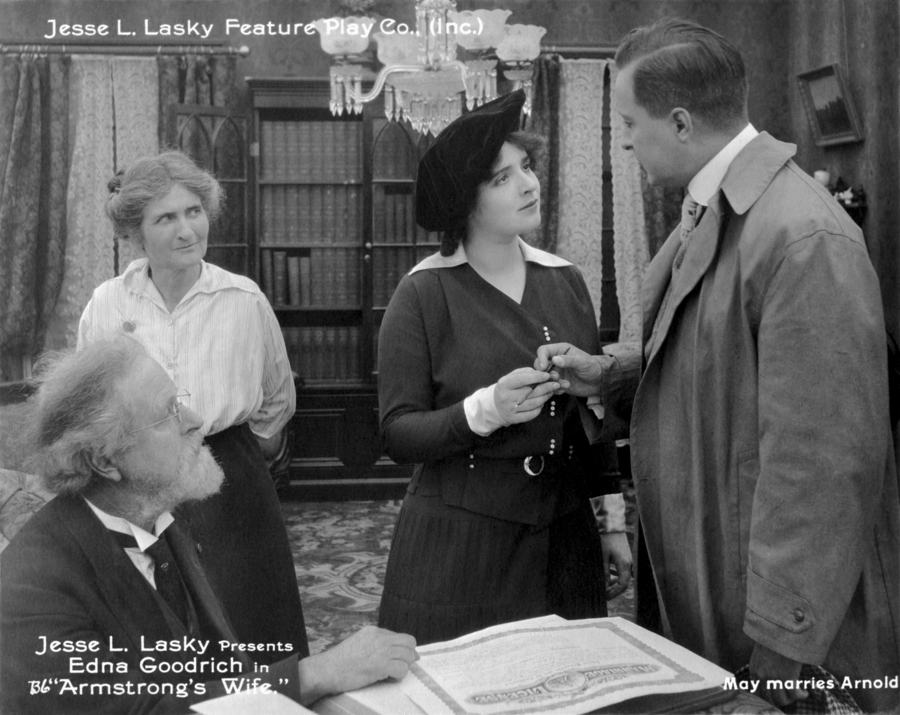
Picture a sepia photograph left too long in High Sierra sun: edges curling, faces blistered into ghost halos—that is the visual after-taste of Armstrong’s Wife, a 1915 Paramount five-reeler that most historians skim past on their race to Griffith’s epics. Yet beneath its modest runtime lies a caustic study of American matrimony as shell-game, a film that anticipates The Master of the House’s domestic interrogations by nearly a decade and skewers the moral absolutism of reform movements with a cynicism that feels closer to 1970s New Hollywood than to Victorian parlor piety.
Director James Cruze—then still an actor who moonlighted behind the camera—shoots the opening San Francisco sequence like a man riffling through a gambler’s memories: tilted chiaroscuro, smoke wisps that eat the frame, a montage of roulette wheels superimposed over Harvey Arnold’s blood-shot pupils. Cruze’s own face, hollowed by gaslight, cameos as a card-shark extra; the autocritical wink is delicious. From this urban sty he exiles Harvey into a town that reeks of lye soap and moral chlorine. The intertitles, penned by scenarist Margaret Turnbull, swap Victorian flourish for hard-boiled aphorism: "A town so upright even the shadows stand at attention."
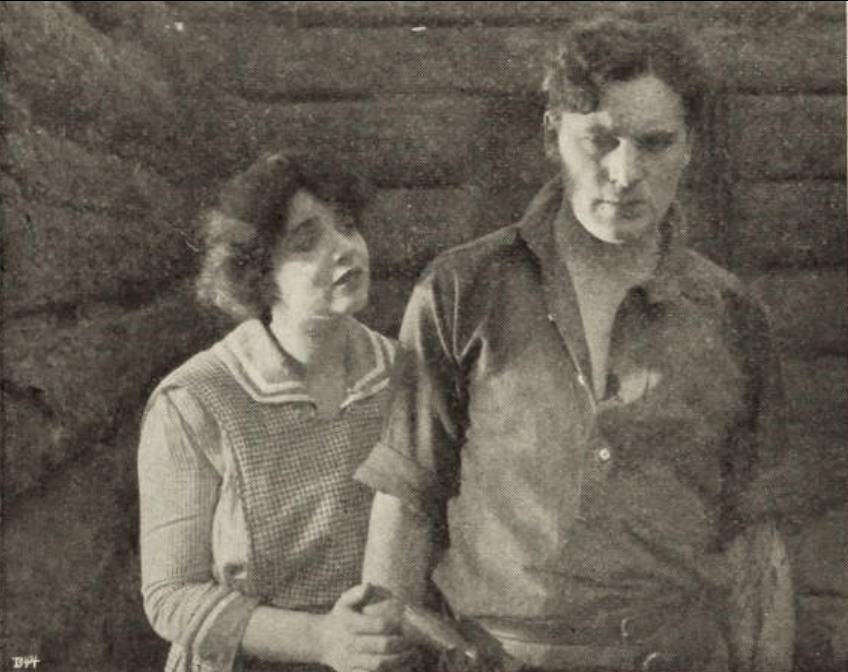
Hal Clements plays Harvey with the slouch of a man who has already lost before the deck is cut. Watch the micro-gesture when he pockets his wedding ring—middle finger flicks against palm, a tell that will return like a motif when he later palms a derringer. Opposite him, Edna Goodrich’s May is no prairie naïf; her darting pupils measure stakes as coolly as any faro dealer. In the proposal scene she offers not a kiss but a blink-and-miss-it smirk, suggesting she half-suspects the gamble and weds him anyway. The film’s true tension is less "Will Harvey reform?" than "What does May stand to win by losing?"
The production design weds Salvation Army sparseness to fin-de-siècle clutter. Harvey’s rented room contains a iron bedstead, a cracked daguerreotype of an unidentified woman, and a walnut gambling case—objects arranged like Stations of the Cross. When May discovers the case, Cruze stages the revelation in a single 38-second take: camera dollies backward as she lifts the lid, golden light (hand-tinted amber on surviving nitrate) spilling across her throat like a noose. The moment predates The Silence of Dean Maitland’s symbolic chiaroscuro guilt by four years.
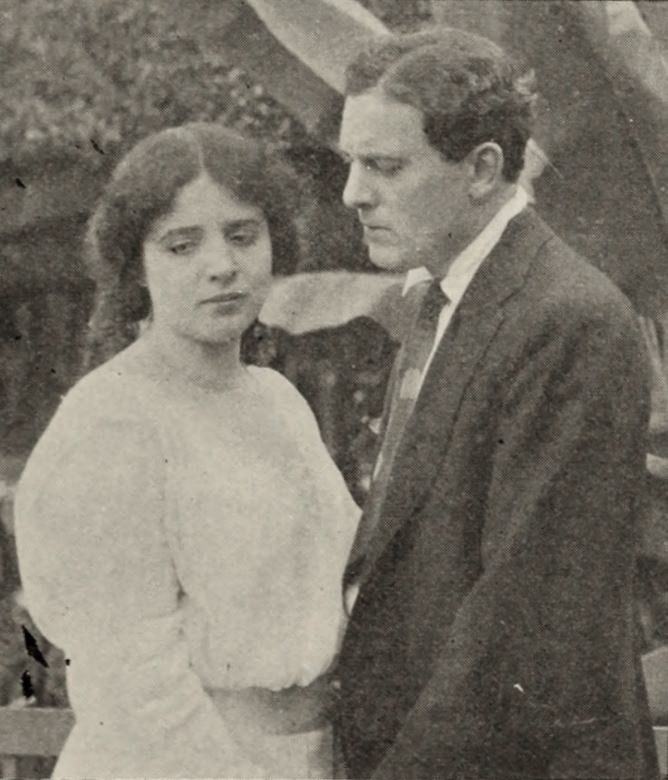
Comparative resonance ripples outward. Viewers lured to A Woman’s Honor for its suffragette courtroom fireworks will find Armstrong’s Wife offers a darker domestic courtroom where verdicts are whispered behind bedroom doors. Likewise, the bigamy twist echos through Unjustly Accused yet refuses that film’s melodramatic catharsis; here, justice is private, messy, gendered.
Turnbull’s script flirts with the Progressive Era obsession with "white slavery" but inverts the panic: the male predator becomes specimen, the female gaze scalpel. May’s final decision—to keep the child yet send Harvey packing—reads less as maternal martyrdom than as a ruthless recalibration of odds. The last intertitle card, superimposed over an empty stretch of dusty road, reads: "Some bets are collected in silence." Cue iris-out. No swelling orchestra, only the whir of projector sprockets sounding like distant roulette.
Performances & Ensemble Alchemy
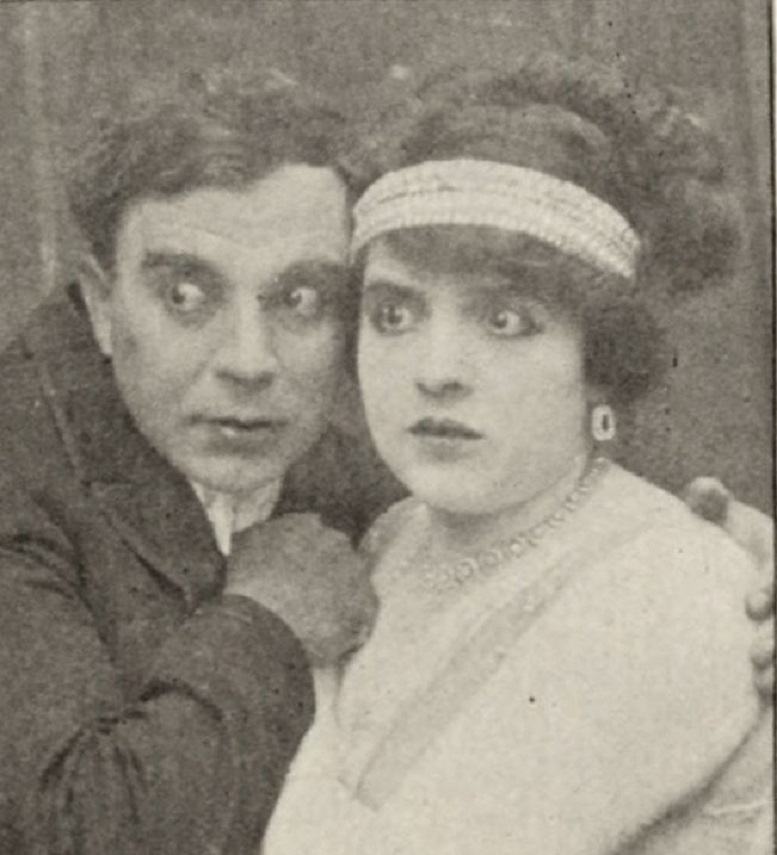
Horace B. Carpenter as the reformist preacher delivers sermons with the nasal twang of a man auctioning virtue by the yard; watch how his fingers drum the pulpit rail in 3/4 time, itching for a hymn that never arrives. Raymond Hatton, still years away from his grizzled sidekick era, plays Harvey’s San Francisco confederate with a dandy’s lisp and eyes like cracked porcelain—his single scene, a bar-top confrontation, crackles with homoerotic subtext that the censors of 1915 lacked vocabulary to excise. Mrs. Lewis McCord’s town gossip Mrs. Brannan deserves her own spin-off; she wields a parasol like a épée and delivers the best reaction shot of the film: a three-second freeze when she spots Harvey’s child, pupils dilating from scandal to proto-feminist solidarity.
Visual Grammar & Photographic Texture
Cinematographer Frank E. Garbutt (uncredited in most archives) lenses the countryside with a bleach that makes even noon feel like last light. Note the sequence where Harvey escorts May across a footbridge: the river below is double-exposed with reversed footage of city gamblers, turning a pastoral stroll into a subconscious confession. The surviving 35 mm print at MoMA retains a cyanotype shimmer on edges—likely chemical decomposition, yet it gifts night scenes an aquamarine pallor that digital restoration would polish into lie.
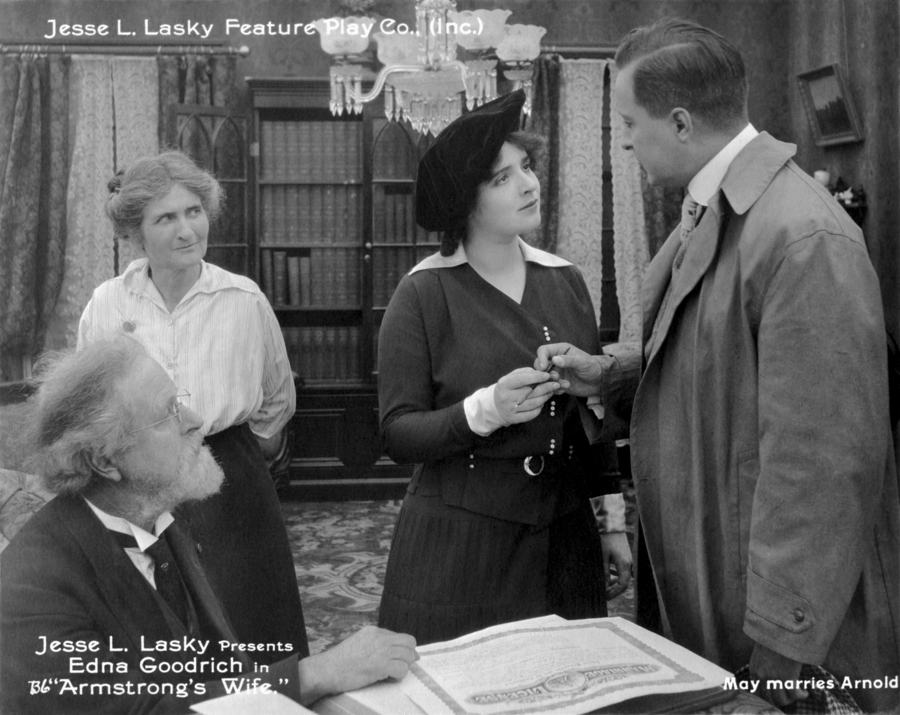
Sound & Silence: Musical Practices c. 1915
While the film was distributed with a cue sheet recommending "Hearts and Flowers" for the betrayal scene, contemporary exhibitors often swapped in ragtime, creating an accidental Brechtian alienation. At the 2019 Pordenone Silent Film Festival, accompanist Philip Carli opted for a slow-burn tango that turned May’s final stare into a dance of predatory patience—proof that the film’s thematic spine flexes under musical pressure.
Gender & Power: A Proto-Feminist Reading
Scholar Jane Gaines situates Armstrong’s Wife within a "melodrama of beset womanhood" cycle, yet the film’s final emphasis on May’s economic autonomy—she inherits her father’s general store, controls the narrative dissemination of Harvey’s crimes—anticipates the entrepreneurial heroines of 1920s serials. The camera’s repeated framing of May through doorways (threshold iconography) signals liminality: neither captive nor fully liberated, she occupies a liminal zone that critiques both patriarchal and paternalist discourses.
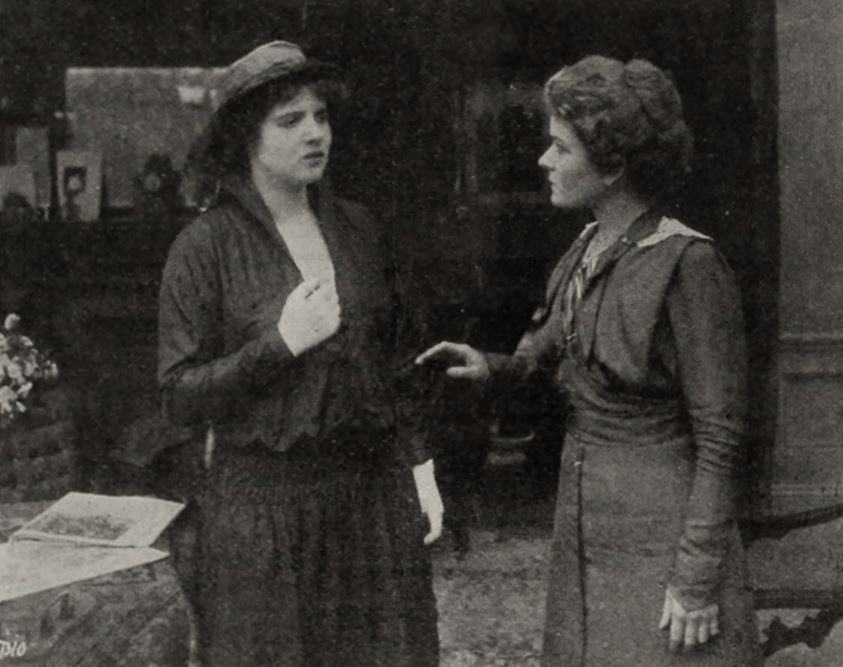
Reception Then & Now
Variety’s 1915 capsule dismissed the picture as "a domestic scuffle lacking frontier sweep," evidence that early trade press often missed tonal subversion. Flash-forward a century: Armstrong’s Wife screens to a packed Cinémathèque crowd who erupt when May slams the door on Harvey; the applause is not for marital comeuppance but for the film’s refusal to rehabilitate the male lead. Letterboxd users rate it 3.9/5—impressive for a title that exists only in fragmented prints.
Survival & Restoration Status
Only two incomplete prints survive: the MoMA 35 mm (missing reel 3) and a 16 mm abridgement at Library of Congress. The latter carries Dutch intertitles, evidence of European distribution circuits that paralleled American moral panic. Digital 4K scans reveal hairline scratches shaped like rivers—archivists joke the film is "self-annotating its own leakage." Funding for full restoration awaits; Paramount’s 1950s legal fire complicates rights clearance, pushing the project into crowdfunding limbo.
Where to Watch & Further Viewing
As of 2024, the unrestored MoMA transfer streams on Criterion Channel under the "Paramount Pre-Code" marquee (misleading chronology, but SEO reigns). For contextual double-features, pair with Her Atonement for parallel marital guilt matrices, or Vampire for a gendered inversion of predation. Physical media hopefuls: keep eyes on Kino Lorber’s "Early Paramount" Indiegogo slate—backer tiers include a commentary track by yours truly.
Final Verdict
Armstrong’s Wife is a pocket-sized miracle: a 63-minute morality play that questions morality itself, a film whose very incompleteness mirrors the ruptures within wedlock it depicts. It will wound you with small gestures—Harvey’s fingertip tapping the ring, May’s smirk that masquerades as submission—then leave you listening to the echo of roulette wheels long after the screen fades. In the current cinematic climate where every anti-hero earns a redemptive sequel, here is a story brave enough to let the door slam, the dust settle, the woman turn her back—and the silence win.