DbcultAccessing Vault...
Cult Review
Senior Film Conservator
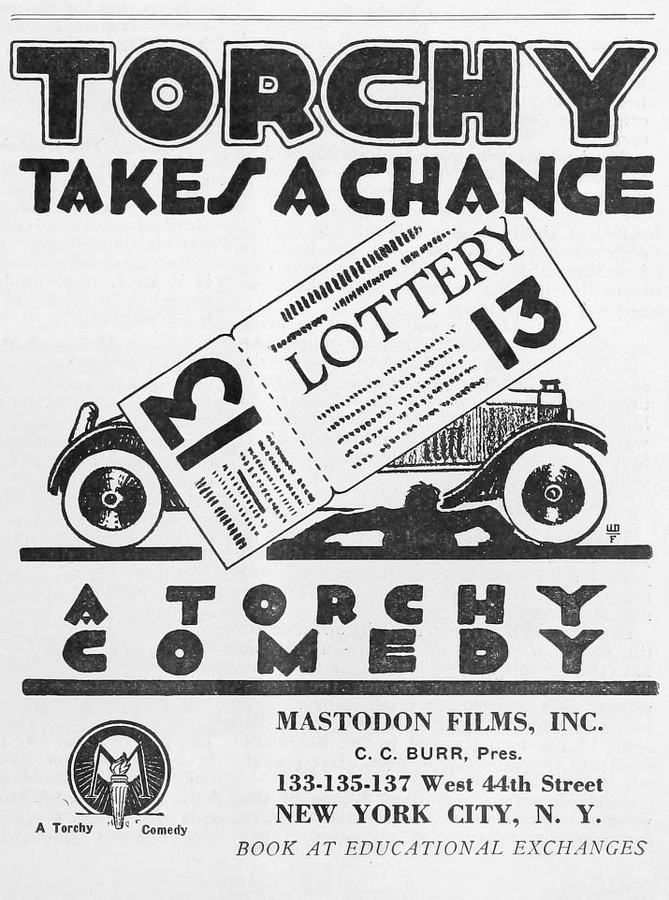
The silent era was often characterized by its giants—Chaplin, Keaton, Lloyd—but nestled within the vibrant ecosystem of 1921 was a performer of singular, jittery brilliance: Johnny Hines. In Torchy Takes a Chance, we aren't just witnessing a comedy; we are observing the industrial-age anxiety of the 'common man' distilled into a frantic quest for a motorcar. This film, directed with a breathless pace that rivals the mechanical subjects it idolizes, serves as a fascinating specimen of the 'Torchy' series, adapted from the popular Sewell Ford stories.
Johnny Hines doesn't move like his contemporaries. While Keaton was a stoic mathematician of movement and Chaplin a balletic waif, Hines’ Torchy is a creature of pure, unadulterated nervous energy. He represents the white-collar aspirations of the early twenties, the office boy with a dream and a haircut that seems to defy gravity. The premise—a lost raffle ticket—is the ultimate Hitchcockian MacGuffin, yet it carries more weight here because it represents the only path to the middle class for our protagonist. When the wind steals his ticket, it isn't just paper flying away; it is his social mobility. This desperation is palpable, lending a layer of pathos to the slapstick that we rarely see in contemporary works like The Janitor's Harem.
The cinematography captures this desperation through a series of increasingly complex location shots. Unlike the controlled environments seen in The Garage, where the comedy is derived from the mechanical interplay within a fixed space, Torchy Takes a Chance utilizes the sprawling Manhattan-esque backdrop as a living, breathing obstacle course. The wind acts as an invisible puppeteer, leading Hines through alleyways and over rooftops, a sequence that mirrors the psychological disorientation found in La tempesta in un cranio, albeit with a much lighter, more comedic touch.
There is an almost religious fervor in how Torchy pursues that slip of paper. In an era where the automobile was the ultimate status symbol—a theme explored with more gravity in Social Ambition—the raffle represents the 'chance' that the title promises. Sewell Ford's writing shines through the intertitles, providing a snarky, rapid-fire commentary that elevates the physical comedy. The script understands that for a man like Torchy, luck is not a windfall; it is a fleeting visitor that must be tackled and wrestled into submission.
"The wind in this film is more than a plot device; it is the chaotic manifestation of an indifferent universe, mocking the protagonist's attempts at upward mobility."
The technical execution of the chase sequences deserves significant praise. The editing is remarkably modern, utilizing rhythmic cuts to build tension as the ticket eludes Torchy’s grasp by mere inches. It lacks the dark, brooding shadows of The Invisible Power, opting instead for a high-key, sun-drenched clarity that emphasizes the public nature of Torchy's humiliation. He is a man performing his failure for the entire city to see, a motif that resonates with the themes of public image in The Follies Girl.
One cannot discuss this film without acknowledging the source material. Sewell Ford’s 'Torchy' was a literary sensation before he was a cinematic one. The transition from page to screen required a lead who could embody the 'freshness'—a 1920s term for audacity—of the character. Johnny Hines was that vessel. In Torchy Takes a Chance, we see the blueprint for the modern rom-com lead: the bumbling but well-meaning striver. This contrasts sharply with the more melodramatic archetypes found in The Mother Instinct or the rigid moralism of The One Woman.
The film’s pacing is a masterclass in escalation. Each time Torchy nears the ticket, a new variable is introduced—a stray dog, a passing trolley, a gust from a ventilation shaft. This iterative frustration builds a rapport with the audience. We aren't just watching him; we are rooting for him with a fervor that borders on the spiritual, much like the characters seeking answers in The Ouija Board. However, unlike the supernatural mysteries of that film, Torchy’s obstacles are purely material.
In the absence of dialogue, Hines uses his entire body as an instrument of communication. His facial expressions—a mix of wide-eyed panic and toothy optimism—carry the narrative weight. This era of filmmaking relied on a universal language of gesture, a skill that seems to have peaked in 1921. When we look at contemporary films like Kiss Me, Caroline, we see a similar reliance on domestic physical comedy, but Torchy takes that energy and explodes it onto the city streets. The scale is larger, the stakes are more public, and the choreography is more daring.
The specific sequence involving the ticket stuck to the back of a moving vehicle is a highlight of silent era stunt work. It requires a precision of timing that is often undervalued by modern audiences spoiled by CGI. Here, the danger is real, the asphalt is hard, and the comedy is derived from the genuine risk to the performer’s dignity and physical safety.
When placed alongside A Gentleman from Mississippi, the character of Torchy feels like a breath of fresh, albeit chaotic, air. While the former deals with the stiff formalities of political life, Torchy Takes a Chance is unapologetically blue-collar. It doesn't care about the 'throne' or the 'price mark' (referencing From Broadway to a Throne and The Price Mark); it cares about the immediate, visceral experience of the hustle. It is a film about the 'now,' capturing the frantic pulse of a nation preparing for a decade of unprecedented excess, a sentiment echoed in the documentary-style fervor of America Preparing.
Even the more whimsical elements of the film, such as the almost magical way the ticket evades capture, feel grounded in the reality of the 1920s. There is a touch of the ethereal, perhaps a nod to the spirit of Peggy, the Will O' the Wisp, in how the ticket seems to possess a mind of its own. It is the 'will o' the wisp' of the industrial age—a flickering promise of wealth that stays just out of reach.
Ultimately, Torchy Takes a Chance is a testament to the enduring power of simple storytelling executed with high-level craftsmanship. It doesn't need a complex plot or a deep philosophical inquiry to engage the viewer. It relies on the universal experience of loss and the dogged, almost irrational hope of recovery. The film serves as a vibrant time capsule, preserving the fashions, the architecture, and the social anxieties of 1921 in a way that feels surprisingly relatable over a century later.
Johnny Hines may not be a household name in the 21st century, but in this film, he proves himself to be a master of the medium. He understands that comedy is not just about the fall; it is about the frantic scramble to get back up. As the film reaches its climax, the resolution is both satisfying and hilariously earned, proving that while the wind may be fickle, persistence—especially of the Torchy variety—is a force of nature in its own right. It is a cinematic experience that remains as refreshing as a gust of wind, even if that wind is trying to steal your future.
IMDb —
1921
Community
Log in to comment.