DbcultAccessing Vault...
7.1/10
Senior Film Conservator
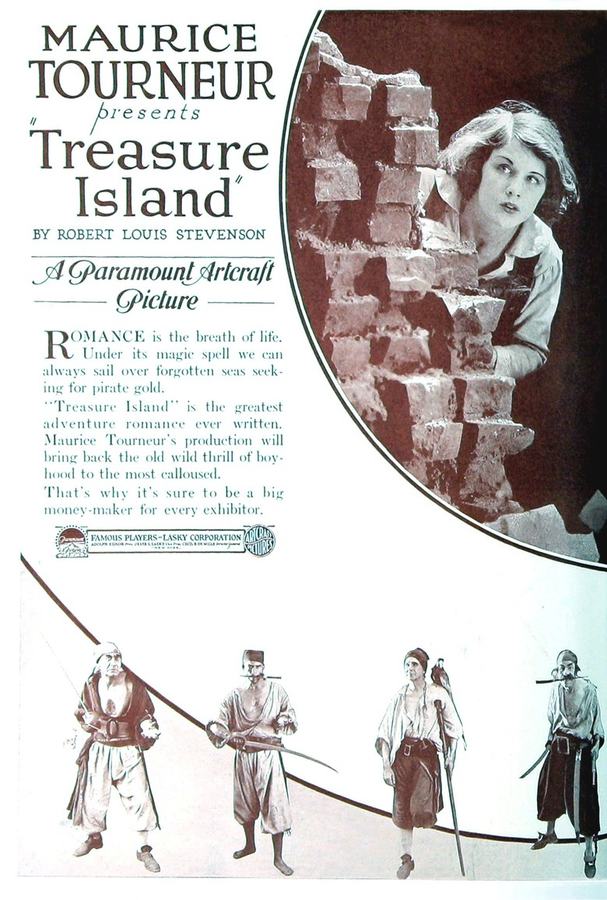
A definitive 7.1/10 rating for a film that redefined the boundaries of cult cinema. Treasure Island remains a cornerstone of transgressive art.
The cinematic landscape of the early 20th century, a canvas still largely unpainted with the vibrant hues of sound, often found its most compelling narratives in the grand, sweeping gestures of classic literature. Robert Louis Stevenson’s ‘Treasure Island’, a perennial favorite of adventure seekers, found an early, ambitious interpretation in the 1920 silent film adaptation. This particular iteration, arriving just over two decades into the new medium’s existence, stands as a testament to the era's burgeoning artistry, translating a rich, prose-driven narrative into a spectacle of visual storytelling. It’s a fascinating journey back to a time when expression, nuance, and plot progression relied solely on the power of the image, the intertitle, and the sheer talent of the performers.
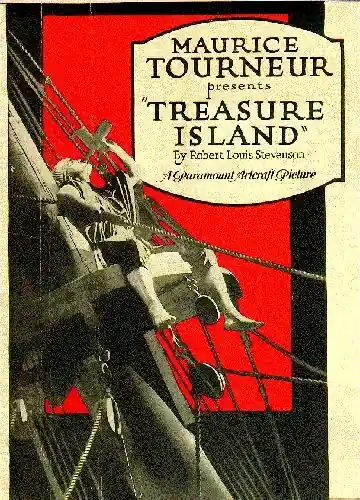
Jules Furthman, tasked with the formidable challenge of distilling Stevenson’s intricate plot for the silent screen, crafted a screenplay that, while necessarily streamlined, retained the essential spirit and thrilling core of the novel. His work here is a masterclass in adaptation, understanding that the silent film’s strength lay in its ability to convey emotion and action through visual shorthand, rather than verbose exposition. The narrative arc, from Jim Hawkins’ fateful discovery of Captain Flint’s map at the Admiral Benbow Inn to the climactic hunt for buried gold on the eponymous island, is meticulously paced. Furthman’s script wisely emphasizes the visual drama inherent in the story: the clandestine meetings, the tense voyages, the swashbuckling duels, and the primal fear of mutiny. It’s a testament to his skill that the audience, despite the lack of spoken dialogue, is drawn deeply into the moral ambiguities and high-stakes gambits that define Stevenson’s masterpiece.
The portrayal of Jim Hawkins by Shirley Mason is one of the film’s most enduring qualities. Mason, a prominent ingenue of the silent era, brings a captivating blend of youthful naiveté and burgeoning courage to the role. Her Jim is not merely a passive observer but an active participant, whose wide-eyed wonder slowly gives way to a steely resolve in the face of overwhelming peril. The subtle shifts in her expressions, from the initial excitement of adventure to the terror of discovering Silver’s true intentions, are expertly conveyed. Mason’s performance anchors the audience’s emotional journey, allowing us to experience the fear, the thrill, and the ultimate triumph alongside her. Her youthful energy, juxtaposed against the grizzled, hardened pirates, provides a crucial moral compass for the unfolding narrative.
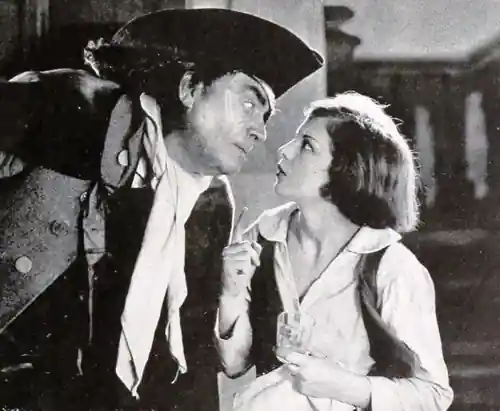
Opposite Mason, Bull Montana delivers a truly memorable, if physically imposing, performance as the iconic Long John Silver. Montana, known for his formidable physique and often cast in villainous or brutish roles, imbues Silver with a palpable sense of menace beneath a veneer of jovial charm. His one-legged gait, achieved through a cleverly constructed prosthetic, adds an authentic visual detail that instantly defines the character. Montana’s Silver is a complex figure: a manipulative schemer capable of great cruelty, yet possessing a strange, almost paternal affection for Jim. The silent medium amplifies the visual impact of Montana's performance, his towering presence and expressive gestures conveying the pirate’s cunning and brute force with chilling effectiveness. It’s a performance that eschews caricature for something more nuanced, showcasing the dual nature of a man driven by greed but not entirely devoid of humanity.

The ensemble cast surrounding Mason and Montana contributes significantly to the film’s rich tapestry. The legendary Lon Chaney, ever the chameleon, makes a remarkable appearance in multiple roles – as Pew, Merry, and George Merry. This early display of his transformative genius, even in what might be considered supporting parts, is a highlight. His ability to embody distinct, grotesque characters with such conviction, relying solely on makeup and physical acting, foreshadows the iconic roles that would define his career. The fleeting terror induced by his blind Pew, or the brutish aggression of his Merry characters, demonstrates Chaney's unparalleled command of his craft. Elsewhere, Charles Ogle, Joseph Singleton, Wilton Taylor, Eli Stanton, Al W. Filson, Josie Melville, Harry Holden, Sydney Deane, Charles Hill Mailes, and Thomas William Sheffield, among others, fill out the ranks of the Hispaniola’s crew and the island’s inhabitants, each contributing to the authentic, gritty atmosphere. Their collective portrayals of desperate, often morally ambiguous characters, create a palpable sense of danger and unpredictability that permeates every frame.
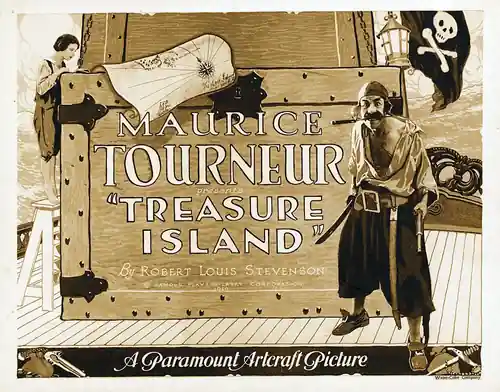
The visual storytelling of ‘Treasure Island’ (1920) is particularly noteworthy for its era. The production design, while perhaps lacking the extravagant budgets of later Hollywood epics, effectively creates the distinct environments of Stevenson’s world. The cramped, shadowy interiors of the inn, the creaking decks of the Hispaniola, and the lush, untamed wilderness of the island are all rendered with a keen eye for detail. The cinematography skillfully uses light and shadow to enhance mood and suspense. Dimly lit scenes of pirate plotting aboard the ship evoke a sense of claustrophobic dread, while the sun-drenched beaches of the island, initially appearing idyllic, soon become landscapes of terror and confrontation. The framing of shots, often emphasizing the vastness of the sea or the isolation of the island, underscores the epic scope of the adventure and the vulnerability of the characters. The action sequences, from sword fights to the chaotic skirmishes between the loyalists and the mutineers, are choreographed with a dynamic energy that transcends the limitations of the silent format, relying on swift cuts and compelling performances to convey their intensity.
Pacing and suspense, crucial elements in any adventure narrative, are handled with surprising efficacy in this silent rendition. The film builds tension gradually, allowing the audience to become invested in Jim’s journey before unleashing the full force of the pirate conspiracy. Intertitles are employed judiciously, providing necessary exposition without interrupting the visual flow. The silence itself, rather than being a hindrance, often amplifies the drama. The creak of a ship’s timber, the rustle of leaves in the jungle, or the ominous glint in a pirate’s eye become infinitely more pronounced without the distraction of dialogue, forcing the viewer to engage more deeply with the visual cues. This immersive quality is a hallmark of the best silent films, and ‘Treasure Island’ demonstrates it admirably. Compared to other early adventure films like ‘The Secret of the Submarine’ (1915), which relied on more overt technological thrills, or even the maritime drama of ‘Maid o’ the Storm’ (1917), this adaptation distinguishes itself through its psychological depth and the timeless resonance of its human drama.
The enduring themes of Stevenson’s novel—greed, loyalty, betrayal, courage, and the irresistible allure of the unknown—are all present and powerfully articulated. Jim’s coming-of-age journey, from an innocent innkeeper’s son to a resourceful hero, forms the emotional backbone of the story. The film effectively portrays the corrupting influence of gold, not just on the pirates but on the seemingly respectable figures who initially embark on the quest. The moral ambiguities, particularly in the complex relationship between Jim and Silver, are given sufficient weight, allowing the audience to ponder the nature of good and evil, and the shades of grey that often lie between. This silent film, much like its literary source, transcends a simple adventure tale, offering a profound exploration of human nature under duress. One might even draw parallels to the pursuit of wealth in films like ‘For $5,000 a Year’ (1918), though ‘Treasure Island’ grounds its quest in a more mythic, archetypal struggle.
In conclusion, the 1920 adaptation of ‘Treasure Island’ is far more than a historical curiosity; it is a vital piece of cinematic heritage that showcases the remarkable capabilities of silent film. It captures the essence of Stevenson’s epic, bringing its characters and adventures to vivid, wordless life through inspired performances, thoughtful adaptation, and effective visual design. For enthusiasts of silent cinema, or indeed anyone interested in the evolution of adventure storytelling on screen, this film offers a compelling glimpse into an era where imagination and ingenuity were the primary tools of cinematic magic. It stands as a testament to the timeless power of its source material and the enduring appeal of a well-told tale of pirates, hidden riches, and the treacherous journey into the heart of human desire. It is a foundational work that reminds us how deeply ingrained the spirit of adventure was in the nascent art form, paving the way for countless swashbuckling sagas that would follow.
IMDb —
1923
Community
Log in to comment.