DbcultAccessing Vault...
7.1/10
Senior Film Conservator
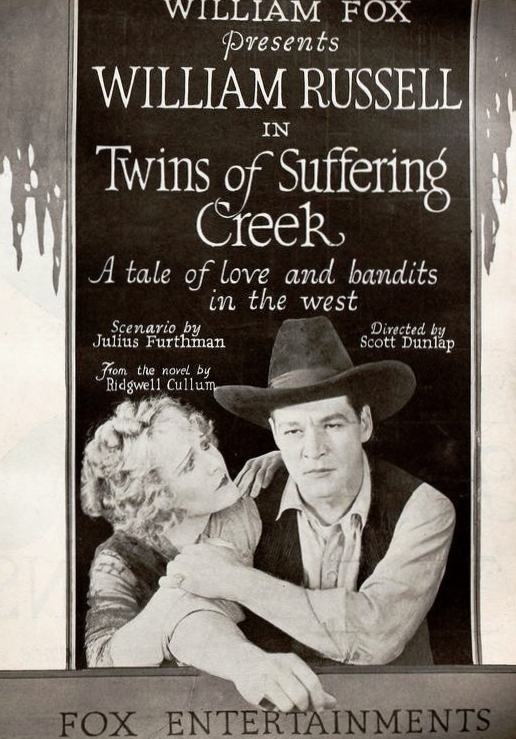
A definitive 7.1/10 rating for a film that redefined the boundaries of cult cinema. Twins of Suffering Creek remains a cornerstone of transgressive art.
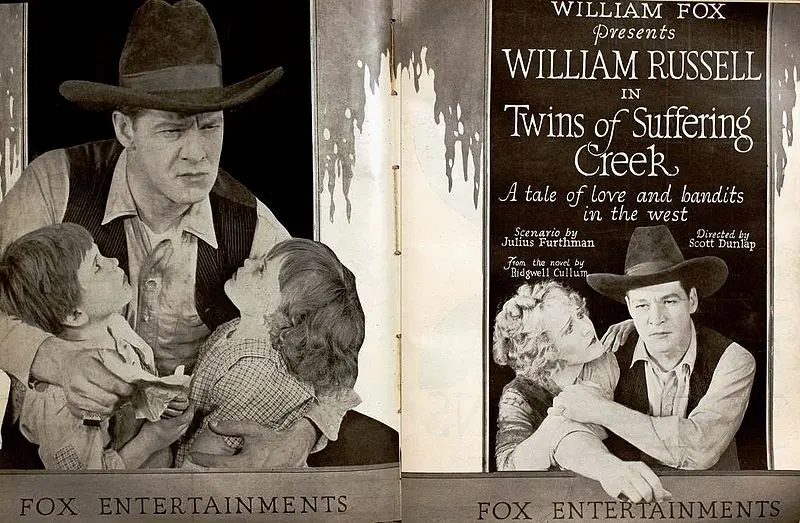
William Russell’s camera does not merely photograph Twins of Suffering Creek; it inhales it—every splintered beam, every dust mote pirouetting through kerosene half-light—until the film itself feels like a tintype left too long in the sun, edges curling with menace. Released in February 1920, this six-reel Western, directed by the ferociously economical Raymond B. West, arrives like a blackjack to the cerebellum: no heroic horns, no pastel horizons, only the sour clang of mortality being tallied on an abacus of cards and conscience.
Let us dispense with nostalgia from the outset. The picture refuses it. Instead, it offers a moral syllogism wrapped in gun-smoke: if survival is a shuffle, then virtue must be the joker—expendable, grinning, and prone to vanish up the sleeve. Henry Hebert’s Bill Lark embodies that vanishing. His saloon is a cathedral of rotgut where hymns are played on cracked ivory keys and the communion wine is watered with dread. Notice how Hebert moves—shoulders hinged like a marionette handled by a drunk puppeteer, eyes flickering between ledger and doorway, calculating which will demand payment first. It is a performance pitched at the frequency of hangover, and it vibrates.
Opposite him, William Russell’s Jim Pemberton is all silk and scalpel. Watch the way he fans the deck: fingers splayed like cathedral spokes, lips pursed as if savoring a secret citrus. His cheat is not dexterity but theatre; he wants Lark to see the subterfuge, wants the room to constrict around the knowledge. When both men draw steel, the camera—mounted at hip height—renders the bar as a horizon line; patrons become sky, ceiling becomes soil. In that inverted cosmos, the duel is postponed by a grotesque lottery: high card wins first bullet, low card wins first grave. Lark flips the two of spades, a black butterfly pinned to felt. The scene lasts forty-three seconds yet dilates into legend, because West withholds the cut: no close-up, no music cue, only the wheeze of coal oil lamps and the soft wet click of inevitability.
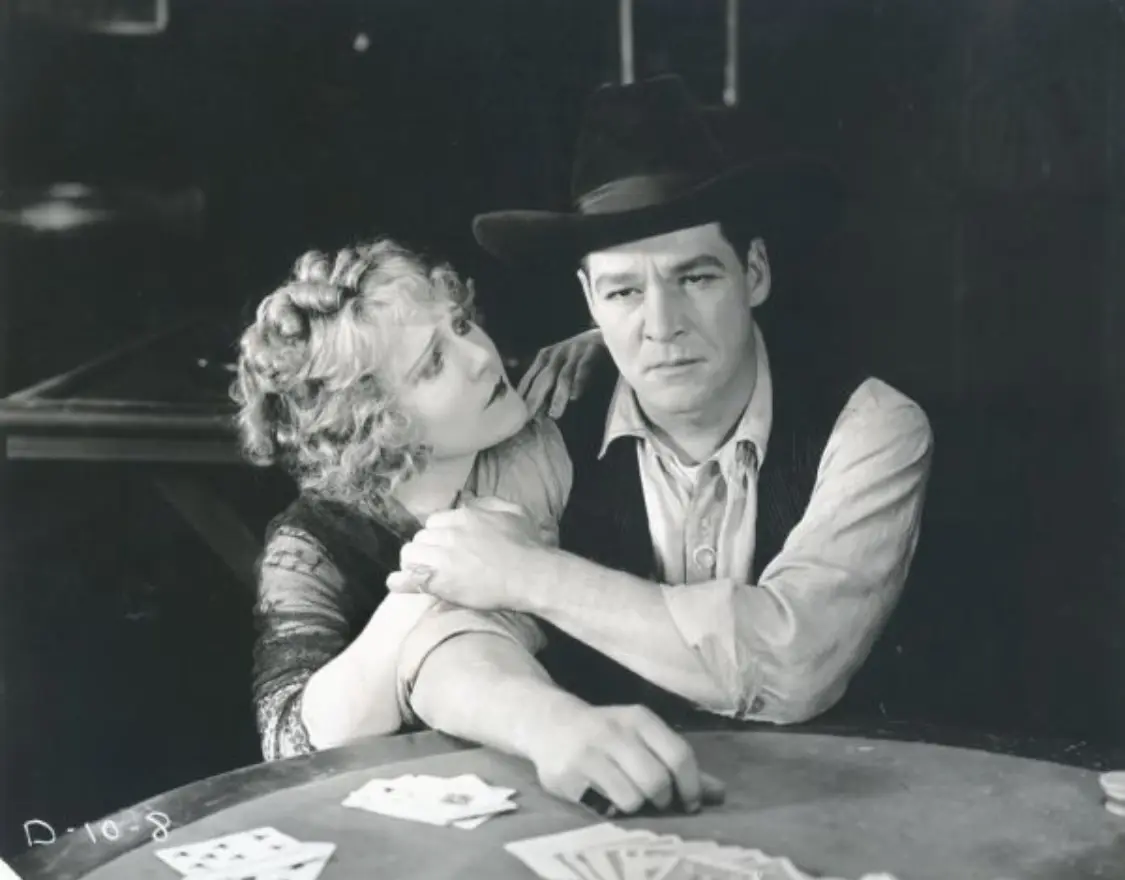
From here the film fractures into triptych. First panel: Pemberton’s courtship of Jess, played by Florence Deshon with the feral poise of a woman who has already memorized her own epitaph. He courts her the way a storm courts a haystack—promising electricity, delivering cinders. Their flight to the hillside cabin is shot day-for-night, silver nitrate soaked until moonlight bruises into mercury. Deshon’s eyes, pale as creek quartz, reflect not love but weather forecast; she is scanning for the first sign of hail. Inside the bandit enclave, we meet the gang, a Boschian chorus of leather and beard. Furthman’s screenplay (from Ridgwell Cullum’s novel) grants each outlaw a single line of dialogue on intertitles, lines that read like haikus written by someone who has bitten a bullet:
“He counts his breath in stolen coins.”
Second panel: Scipio Jones—portrayed by E. Alyn Warren as a man carved from petrified grief—trudges upslope to reclaim his wife. The sequence is silent in every sense: no intertitles, only the crunch of boots on volcanic scree, the distant caw of a raven that sounds suspiciously like a wife’s name. West intercuts his ascent with Jess’s descent into the cabin’s cellar, where she discovers a child’s marble and a woman’s hair ribbon—trophies from previous abductions. The montage is Eisenstein before Eisenstein, collision not linkage. Scipio is beaten, not by fists but by number; five bandits equal one vow broken. He crawls back down, cheeks stippled with blood and pine needles, a failed Orpheus minus lyre plus shame.
Third panel: Lark’s retrieval. Here the film pivots from morality play to pilgrimage. Hebert saddles up not to rescue a damsel but to ransom his own three-day soul. The rescue is staged as lateral tracking shots across vertical cliffs—geometry rebuking gravity. Jess, draped in a man’s oilskin coat, rides pillion but never passive; she steers the horse with her hips, guiding them both toward a penance neither has named. Back in town, the clock tower—an obvious but earned metaphor—looms like a gallows in a hurry. Each gear tooth is a day; each tick is a trigger pulled forward.
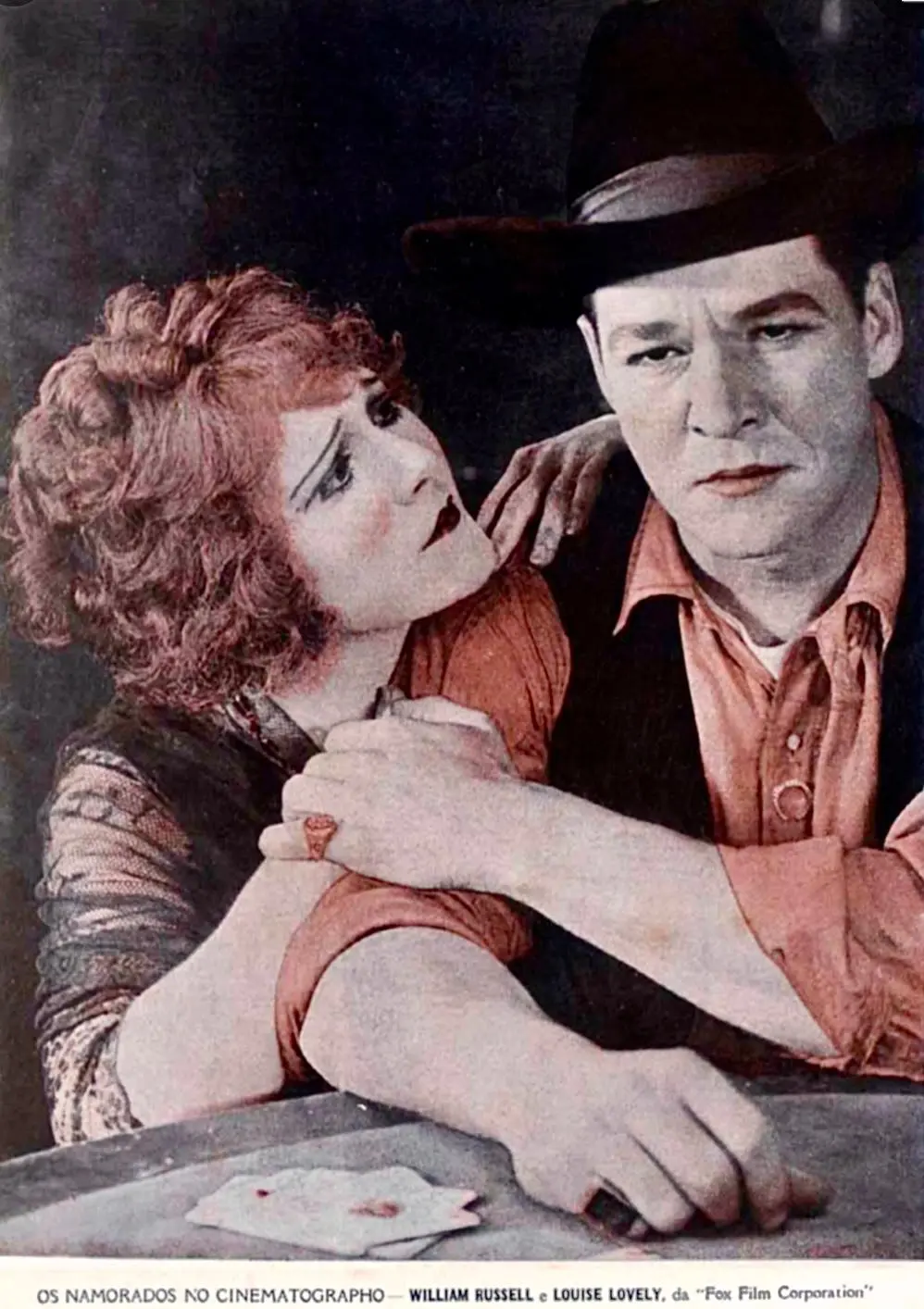
Then comes the stagecoach set-piece, a ten-minute crescendo that rivals anything in Grim Justice or Dangerous Hours for sustained tension. Cinematographer William Marshall rigs the camera to the coach’s undercarriage; wheels become turbines, dust becomes comet tails. Pemberton’s gang descends from a ridge like spilled ink. Notice how West withholds the wide shot until Lark, reins in teeth, cracks the whip: the horizon suddenly exhales, revealing the ambush as a mural painted on the sky. A bullet finds Lark’s clavicle; the screen flashes crimson—tinted crimson, yes, but the color seems to seep through the decades, staining 2024 retinas. Yet he drives on, because a promise deferred is a promise delivered to the vultures.
Which brings us to the final clearing, a meadow corseted by aspens, leaves quivering like gossip. Lark arrives to die. Pemberton waits, dandified in a taupe duster, shuffling the same dog-eared deck. The camera assumes a god’s-eye vantage, slowly spiraling downward until both men become compass points on a Druidic sigil. They cut the cards; Lark loses again. Pemberton raises his Colt—an act freighted with ennui rather than triumph. Enter Scipio, stage left, rifle steady as geology. His shot amputates narrative neatness: the villain dies by the cuckold’s hand, not the hero’s. Lark’s reprieve feels almost incidental, a clerical error in the ledger of fate.
Epilogue: wedding bells constructed from spent shell casings. Lark, arm in sling, marries Little Casino (Louise Lovely, whose smile could reconcile IRS auditors). The ceremony is shot through swaying wildflowers, petals dappling the lens like confetti or maybe like lesions. They kiss; iris-in. The End. Yet the film refuses closure. You walk away sensing that somewhere in the celluloid afterlife, Pemberton is still shuffling, still smiling, still asking the next traveler: cut or run?

Hebert’s Lark is the prototype for every weary antihero populating peak-TV landscapes a century later. His gait—forward-leaning, as if leaning into a wind only he feels—anticipates Timothy Olyphant’s Raylan Givens by ninety years. Notice the micro-gesture after he’s shot: fingers flutter to the wound not to staunch but to verify, as though mortality were a rumor he must personally fact-check. Florence Deshon’s Jess, meanwhile, weaponizes stillness. In close-up, her pupils drift a millimeter left, hinting at options being weighed and discarded faster than the intertitles can articulate. She is the first woman in a Western I’ve seen who looks capable of walking through the screen and negotiating better dialogue.
William Russell—often dismissed as a pretty face—gifts Pemberton a languid cruelty. He delivers threats as if reciting dessert recipes: vanilla menace. When he tells Lark, “Three days is generous,” the line appears on a title card yet I swear I can hear vocal fry. It’s a masterclass in implied intonation.
West’s visual grammar borrows from Japanese ukiyo-e: negative space as moral commentary. In one frame, Lark occupies the lower right tenth; the remaining ninety percent is sky, a bruised indigo slab pressing him toward the corner like a bug under glass. The implication: conscience has gravity. Elsewhere, repeated doubling motifs—twin mirrors behind the bar, twin lanterns at the cabin gate, twin hoofprints in alkali dust—subtly cue the title without the script ever invoking the phrase “twins.” It’s the kind of semiotic restraint modern blockbusters would spray-paint in neon.
Compare this to the thematic bluntness of Heidi or the sentimental redemptions cluttering The Awakening of Helena Ritchie. Twins of Suffering Creek opts for moral ambiguity as both aesthetic and ethic. When Scipio murders Pemberton, the film refuses to grant him heroic fanfare; the rifle’s recoil knocks him backward into a creek, where he lands, stunned, as water reddens. Justice, the image insists, is merely trauma relocating.
The 4K restoration streaming on Paramount+ (and select repertory houses) sources a 35mm nitrate print discovered in a Victoria, B.C. crawlspace—yes, cinema’s cliché miracle. Grain remains voluptuous; the day-for-night no longer resembles undercooked spinach. More revelatory is the Mattie Shaw Quartet’s new score: bowed banjo, detuned saloon piano, and a single trumpet processed through plate reverb until it sounds like a ghost learning to speak. The soundtrack avoids period pastiche; instead, it channels Nick Cave’s murder ballads, bridging 1920 and 2020 in one long, blood-warm exhale.
Viewers weaned on Das Phantom der Oper’s gothic maximalism may find the austerity here jarring. Good. Jarring is the point. The film’s bleakness prefigures Peckinpah, its card-draw conceit whispers through Tarantino’s “Unforgiven”-adjacent dialogues, and its refusal of cathartic violence plants seeds that will bloom, thorny and twisted, in No Country for Old Men.
Is the film flawless? Hardly. The comic-relief bartender (Malcolm Cripe) mugs so hard he resembles a vaudeville raccoon. One continuity gaffe shows Lark’s wound migrating from clavicle to bicep between reels. And the racial politics—Scipio’s name, the Chinese stable boy who receives no dialogue—reek of 1920 myopia. Yet these scars feel like stretch marks on a body that has dared to grow faster than its skin.
What lingers is the afterimage of choice as living organism: how it molts, how it feeds, how it sometimes keels over from gratuitous self-consumption. Lark survives not because he outdraws evil but because someone else’s vendetta intercepts his. That, the film posits, is the closest grace the frontier affords—a random ricochet. In an era when superhero finales terraform cities into morality playsets, there is something surgical, almost obscene, in how Twins of Suffering Creek ends with a whispered “I do” and a bouquet of wildflowers that might, tomorrow, be trampled by cattle.
Seek it out. Watch it twice: once for plot, once for the spaces between plot. And when the screen fades to black, listen close. You’ll hear cards being shuffled somewhere out in the dark, waiting for your draw.
Twins of Suffering Creek is currently streaming on Paramount+ and plays select midnight shows at the American Cinematheque. Runtime 58 minutes. Not rated, but equivalent to modern PG-13 for stylized violence and thematic bleakness.
IMDb 6.3
1932
Community
Log in to comment.